Raised Panel Vs Flat Panel Cabinet Doors: Best Choice
Choosing between raised panel and flat panel cabinet doors involves understanding their distinct looks, costs, and suitability for different design styles. Raised panels offer a classic, traditional feel with depth, while flat (or slab) panels provide a modern, minimalist aesthetic. Both have benefits, and the best choice depends on your personal style and functional needs.
Understanding Cabinet Door Styles
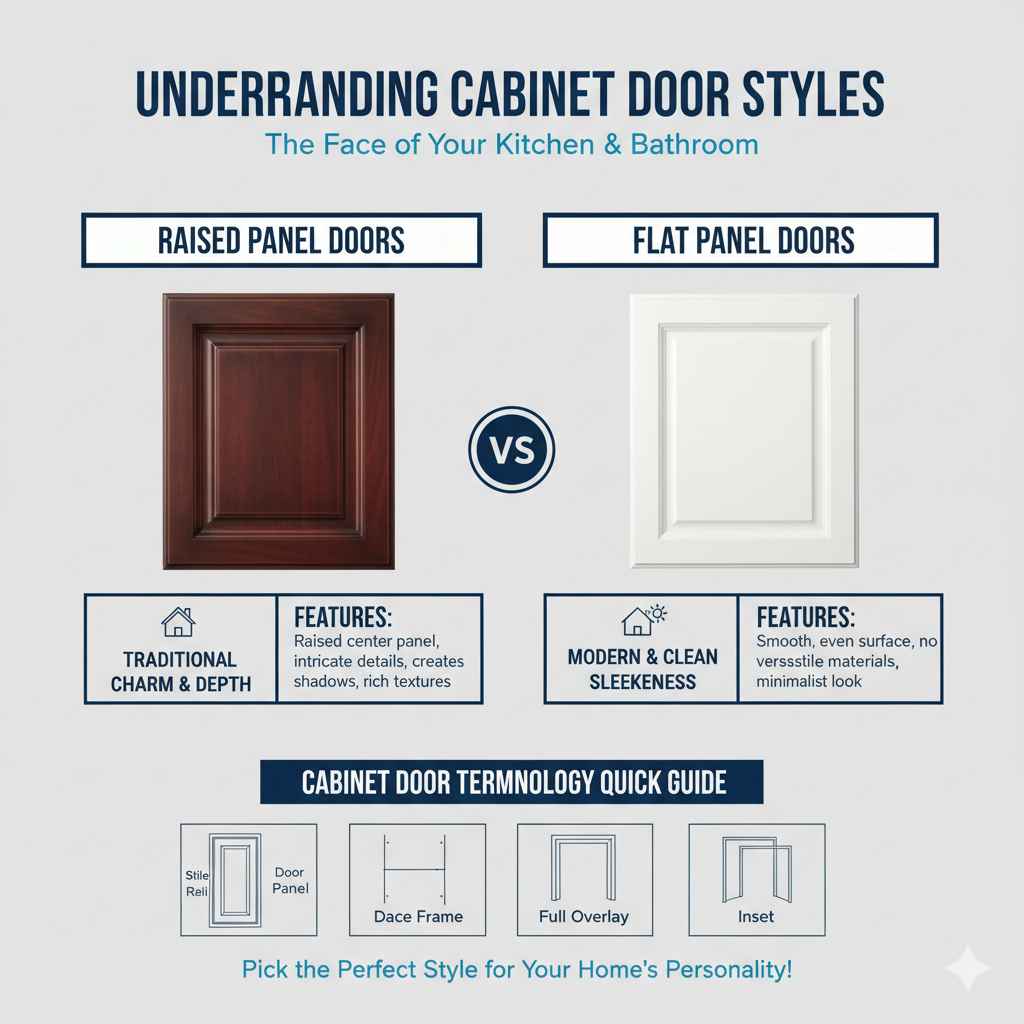
Cabinet doors are a huge part of your kitchen’s or bathroom’s look. They take up a lot of space. That’s why picking the right style matters. Raised panel doors have a center panel that is higher than the rest of the door. This gives them a lot of dimension. Flat panel doors, also known as slab doors, are just that – flat. They have a smooth, even surface.
The Charm of Raised Panel Doors
Raised panel doors have been around for a long time. They bring a sense of history and warmth to a room. Think of traditional homes or cozy farmhouse kitchens. The raised center section is often framed by a recessed panel or a decorative edge. This creates shadows and highlights. It makes the doors feel more substantial and detailed.
Wood types can really change the look of raised panel doors. Oak, maple, and cherry are popular choices. Each wood has its own grain pattern and color. This can add to the classic appeal. Raised panel doors are a great choice if you love traditional decor. They can also work in transitional designs. These are homes that blend old and new styles.
The Sleekness of Flat Panel Doors
Flat panel doors are the modern choice. They are super simple. They have a clean, smooth surface. This look is perfect for kitchens and bathrooms that are modern or minimalist. They don’t have a lot of fancy details. This makes them very easy to clean. No nooks or crannies for dust to hide.
Flat panel doors come in many materials. Wood is still an option. But you also see them in laminate, thermofoil, and MDF. These materials can be painted or finished in many colors. They can also mimic other materials. This gives you a lot of design flexibility. If you like a clean, uncluttered look, flat panel doors are a strong contender. They are also great for smaller spaces. Their simplicity can make a room feel bigger.
Cabinet Door Terminology Quick Guide
Face Frame: The wooden frame attached to the front of your cabinet boxes. Doors can be “overlay” (cover the frame) or “inset” (sit inside the frame).
Door Panel: The flat or shaped insert in the middle of the door.
Stile: The vertical side pieces of the door frame.
Rail: The horizontal top and bottom pieces of the door frame.
Overlay: How much the cabinet door covers the cabinet frame. Full overlay covers most of the frame. Partial overlay covers less.
Inset: The door sits flush within the cabinet frame, creating a very clean look.
Design Aesthetics: Which Fits Your Style?
Your home’s style is a big factor. Raised panel doors speak to tradition. Flat panel doors speak to the modern era. But there’s room for overlap. Let’s dig into how each style fits different design themes.
Traditional and Classic Homes
In a home with classic architecture, raised panel doors feel right at home. Think of homes with crown molding, detailed trim work, and a sense of history. Raised panel cabinets can be stained in rich wood tones like cherry or dark oak. This enhances their traditional feel. They can also be painted. White or cream paint with a glaze can give them an antique look.
The depth of raised panel doors adds visual interest. This is important in rooms that might otherwise feel flat. For example, a large kitchen might use raised panel doors on the main cabinets. Then, glass-front cabinets with a similar door style could be added. This creates a cohesive but varied look. They are a safe bet for a timeless kitchen.
Modern and Minimalist Spaces
Flat panel doors are the champions of modern design. They are all about clean lines. Their smooth surfaces are perfect for kitchens with sleek countertops and simple hardware. Think of handleless cabinets or cabinets with bar pulls. Flat panel doors complement these features perfectly. They don’t compete with other design elements.
These doors are often seen in high-gloss finishes. They can also be matte. Colors are often bold or neutral. White, gray, black, and even deep blues are common. If you love a minimalist look, where every element has a purpose and doesn’t add clutter, flat panel doors are ideal. They create a seamless look.
Transitional and Farmhouse Styles
What if your style is somewhere in between? Transitional design blends traditional and modern elements. Raised panel doors can still work here. You might choose a simpler raised panel design. Or, you could paint them a neutral color like white or gray. This can soften their traditional feel. They can be paired with modern hardware.
Farmhouse style often embraces warmth and a bit of rustic charm. Raised panel doors can fit well. Especially if they are painted white or a soft color. They can also have a slightly distressed finish. This adds to the farmhouse vibe. However, flat panel doors are also popular in modern farmhouse designs. These kitchens often have shaker-style cabinets, which are a type of flat panel door with a simple frame.
Style Matcher: Raised vs. Flat Panel
| Design Style | Best Fit | Why? |
| Traditional | Raised Panel | Depth, detail, classic look |
| Modern | Flat Panel | Clean lines, sleek, minimalist |
| Farmhouse | Both (depends on subtype) | Raised for rustic, Flat for modern farmhouse |
| Transitional | Both (with adjustments) | Paint or simpler raised designs work well |
Cost Considerations: What’s Your Budget?
The price of cabinet doors can vary a lot. This depends on the material, the construction, and the finish. Both raised and flat panel doors have options at different price points. But generally, there’s a trend.
The Price of Depth: Raised Panels
Raised panel doors often cost more than flat panel doors. This is because they involve more steps in their construction. The center panel needs to be shaped and fitted. The frame around it also requires precision. Solid wood construction, especially with hardwoods like cherry or walnut, will be the most expensive.
Customization also adds to the cost. If you want a specific wood species, a unique profile on the raised panel, or special distressing, expect to pay more. Even painted raised panel doors can cost more due to the labor involved in achieving a smooth, flawless finish on the varied surfaces.
The Simplicity Factor: Flat Panels
Flat panel doors are usually more budget-friendly. Their simple, slab construction means less material and less labor. This makes them a great choice for larger kitchens or if you’re trying to save money. Materials like laminate or thermofoil are often cheaper than solid wood. These finishes can look very good and are durable.
Even solid wood flat panel doors can be less expensive than their raised panel counterparts. This is because the manufacturing process is more straightforward. The main cost factor for flat panel doors might be the finish. High-gloss finishes, for example, can add to the price. But overall, they tend to be the more economical choice.
Cost Comparison Snapshot
Raised Panel Doors:
- Generally more expensive due to complex construction.
- Solid wood options are pricier.
- Customization adds significant cost.
Flat Panel Doors:
- Typically more affordable.
- Simple construction means lower labor costs.
- Laminate/thermofoil are budget-friendly options.
- Solid wood flat panels are still often less than raised.
Durability and Maintenance: Living with Your Cabinets
How easy are your cabinets to live with? This is super important. Kids, pets, cooking – these things affect your cabinets. The style of the door plays a role in how they hold up over time and how easy they are to clean.
Cleaning Raised Panel Doors
The detail in raised panel doors can be a challenge for cleaning. The recessed center panel and the edges of the raised section can collect grease, dust, and food debris. This means you’ll need to do more than just wipe them down. You might need a soft brush or a cotton swab to get into all the nooks and crannies.
Regular cleaning is key. A mild soap and water solution is usually best. Avoid harsh chemicals, especially on painted or glazed finishes. They can damage the surface. Wood cabinets need to be dried thoroughly after cleaning. Over time, if not cleaned, the buildup can be hard to remove.
Cleaning Flat Panel Doors
This is where flat panel doors really shine. Their smooth, seamless surface is incredibly easy to clean. A damp cloth is often all you need. Grease splatters from cooking can be wiped away in seconds. This makes them a practical choice for busy kitchens.
Materials also affect durability. High-gloss finishes can show smudges and fingerprints easily. But they are still easy to wipe clean. Matte finishes might hide fingerprints better. Thermofoil and laminate are very durable and resistant to moisture and stains. These are excellent choices for bathrooms or high-traffic kitchen areas.
Maintenance Tips
Raised Panel:
- Wipe down regularly with a soft cloth.
- Use a soft brush or swab for crevices.
- Avoid abrasive cleaners.
- Dry thoroughly.
Flat Panel:
- Wipe with a damp cloth.
- Grease and smudges wipe off easily.
- Consider the finish: high-gloss shows more, matte less.
- Laminate/thermofoil are very low maintenance.
Hardware and Accessories: The Finishing Touches
The hardware you choose for your cabinet doors can dramatically change their look. This is true for both raised and flat panel styles. The hardware should match the overall design aesthetic of the door and the room.
Hardware for Raised Panel Doors
For raised panel doors, you have many hardware options. Traditional styles might pair well with ornate knobs or pulls. Think of brushed nickel, oil-rubbed bronze, or antique brass. These finishes add to the classic feel. Cup pulls or bin pulls are also popular. They have a slightly more country or farmhouse vibe.
If you’re using raised panel doors in a transitional kitchen, you might opt for simpler hardware. Sleek bar pulls in a brushed finish can bridge the gap between traditional and modern. The key is to ensure the hardware complements the detail of the door without overwhelming it.
Hardware for Flat Panel Doors
Flat panel doors are versatile when it comes to hardware. Modern kitchens often use minimal hardware. Thin bar pulls or edge pulls that attach to the top or side of the door create a very clean look. Handleless cabinets with push-to-open mechanisms are also a choice for a super minimalist aesthetic.
For a slightly warmer modern feel, you might use simple round knobs or slim pulls in finishes like matte black, stainless steel, or even a brushed gold. If you are going for a Scandinavian look, natural wood or simple metal hardware works well. The simplicity of the door allows the hardware to be a statement piece.
Hardware Style Guide
Raised Panel:
- Traditional: Ornate knobs, cup pulls, antique finishes.
- Farmhouse: Bin pulls, simple knobs, matte black or brushed nickel.
- Transitional: Simple bar pulls, brushed finishes.
Flat Panel:
- Modern: Slim bar pulls, edge pulls, handleless, matte finishes.
- Minimalist: Push-to-open, or no hardware.
- Warm Modern: Simple round knobs, clean metal finishes.
Material Matters: Beyond Wood
While wood is a classic choice for both styles, other materials are very common, especially for flat panel doors. Understanding these materials can help you make a decision based on budget, durability, and look.
Wood and Wood-Based Materials
Solid Wood: The most traditional choice. Offers natural beauty, durability, and can be stained or painted. Hardwoods like maple, cherry, and oak are common. They are also typically the most expensive.
MDF (Medium-Density Fiberboard): A composite wood product. It’s very stable and smooth, making it excellent for painting. It’s often used for the center panel in raised panel doors or for entire flat panel doors. It’s more affordable than solid wood.
Veneer: Thin slices of wood applied over a substrate like plywood or MDF. This gives the look of solid wood at a lower cost. It’s often used for flat panel doors.
Plywood: Layers of wood glued together. It’s strong and stable. Can be used for both door styles, often with a wood veneer on top.
Non-Wood Options (Primarily for Flat Panels)
Thermofoil: A vinyl film that is heat-sealed to an MDF core. It’s very durable, moisture-resistant, and easy to clean. It comes in many colors and finishes, including wood grains. It’s a popular budget-friendly option.
Laminate: Similar to thermofoil but applied differently. It’s also durable and comes in many styles. Often used for high-traffic areas.
High-Gloss Acrylic: Gives a very modern, reflective look. It’s a great choice for a sleek, contemporary kitchen. It can be prone to scratching if not cared for.
Metal: Less common, but some modern designs use metal cabinet doors.
Material Breakdown
Wood Options:
- Solid Hardwoods: Maple, Cherry, Oak. Natural beauty, durable, most expensive.
- MDF: Stable, smooth for painting. Good for raised panels and flat panels. More affordable.
- Veneer: Wood look over substrate. Cost-effective.
- Plywood: Strong, stable. Often with veneer.
Non-Wood Options (Mainly Flat Panel):
- Thermofoil: Durable, moisture-resistant vinyl over MDF. Budget-friendly.
- Laminate: Similar to thermofoil, durable.
- High-Gloss Acrylic: Very modern, reflective.
When to Choose Raised Panel
So, when does a raised panel door make the most sense? I remember helping a friend remodel her older Victorian home. She wanted to keep the charm. Her cabinets were old and falling apart. We looked at so many options. When she saw the raised panel doors, she said, “That’s it! That feels like home.”
You should consider raised panel doors if:
You love traditional, classic, or historical home designs.
You want your kitchen or bathroom to feel warm and inviting.
You appreciate the detail and craftsmanship that goes into cabinet doors.
You have a larger space where the depth of the doors won’t make it feel crowded.
You don’t mind a bit more effort when it comes to cleaning.
Your budget allows for the slightly higher cost.
Raised panel doors add a sense of elegance and permanence. They can elevate the look of any space that leans towards the traditional.
When to Choose Flat Panel
Flat panel doors are the go-to for so many contemporary homes today. I was in a client’s apartment recently. She had a very small kitchen. It was narrow and a bit dark. She chose white, high-gloss flat panel cabinets. It made the space feel so much bigger and brighter. It was like magic.
You should lean towards flat panel doors if:
You prefer a modern, minimalist, or contemporary aesthetic.
You want a clean, uncluttered look.
You need a cabinet door that is very easy to clean and maintain.
You are working with a tighter budget.
You want a lot of flexibility with finishes and colors.
You have a smaller space and want to maximize the feeling of openness.
Flat panel doors offer a clean canvas. They let other elements in the room shine. They are practical and stylish for everyday life.
Key Decision Factors:
Raised Panel is good for:
- Traditional/Classic style
- Warm, detailed look
- Larger rooms
- Appreciation for craftsmanship
Flat Panel is good for:
- Modern/Minimalist style
- Clean, uncluttered look
- Easy cleaning
- Smaller rooms
- Budget-conscious projects
The Shaker Style Exception
It’s worth mentioning the Shaker style door. This is a very popular door style. It often gets grouped with flat panel doors, but it’s a bit of a hybrid. A Shaker door has a flat center panel. But it’s surrounded by a frame made of stiles and rails, just like a raised panel door. The difference is that the frame pieces are usually flat, not raised.
Shaker doors are incredibly versatile. They work in traditional, transitional, and modern farmhouse kitchens. They offer a bit more detail than a true flat panel door. But they are still much simpler and easier to clean than a raised panel door. If you’re undecided, a Shaker door might be the perfect compromise.
Can You Mix and Match?
Sometimes, people wonder if they can use different door styles in the same kitchen. For example, using raised panel doors on the main cabinets and flat panel doors on a pantry or an island. Generally, it’s best to stick to one style for a cohesive look. Mixing styles can sometimes look busy or disjointed.
However, there are exceptions. You might use flat panel doors for your base cabinets and a different style for your upper cabinets if they have glass inserts. Or, a kitchen island might be a different color or style than the perimeter cabinets. This is a common design trick. It adds visual interest. But it’s usually done with doors that have some similarity in their overall profile. For instance, using Shaker doors on the island if the main cabinets are also Shaker.
The safest bet is to choose one style for the entire kitchen or bathroom. If you want variation, consider doing it with color or hardware.
Looking at the Details: The Panel’s Depth
With raised panel doors, the “raise” can vary. Some panels are only slightly raised. Others have a much more pronounced, dramatic raise. The edge profile where the panel meets the frame also matters. It can be a simple bevel or a more decorative ogee or coved edge. These details can significantly change the door’s character.
Flat panel doors are simpler, but the edge profile can still matter. A simple square edge is very modern. A beveled edge can add a touch of softness. The thickness of the slab can also vary. Thicker slabs often feel more substantial and high-end.
My Own Experience with Cabinet Doors
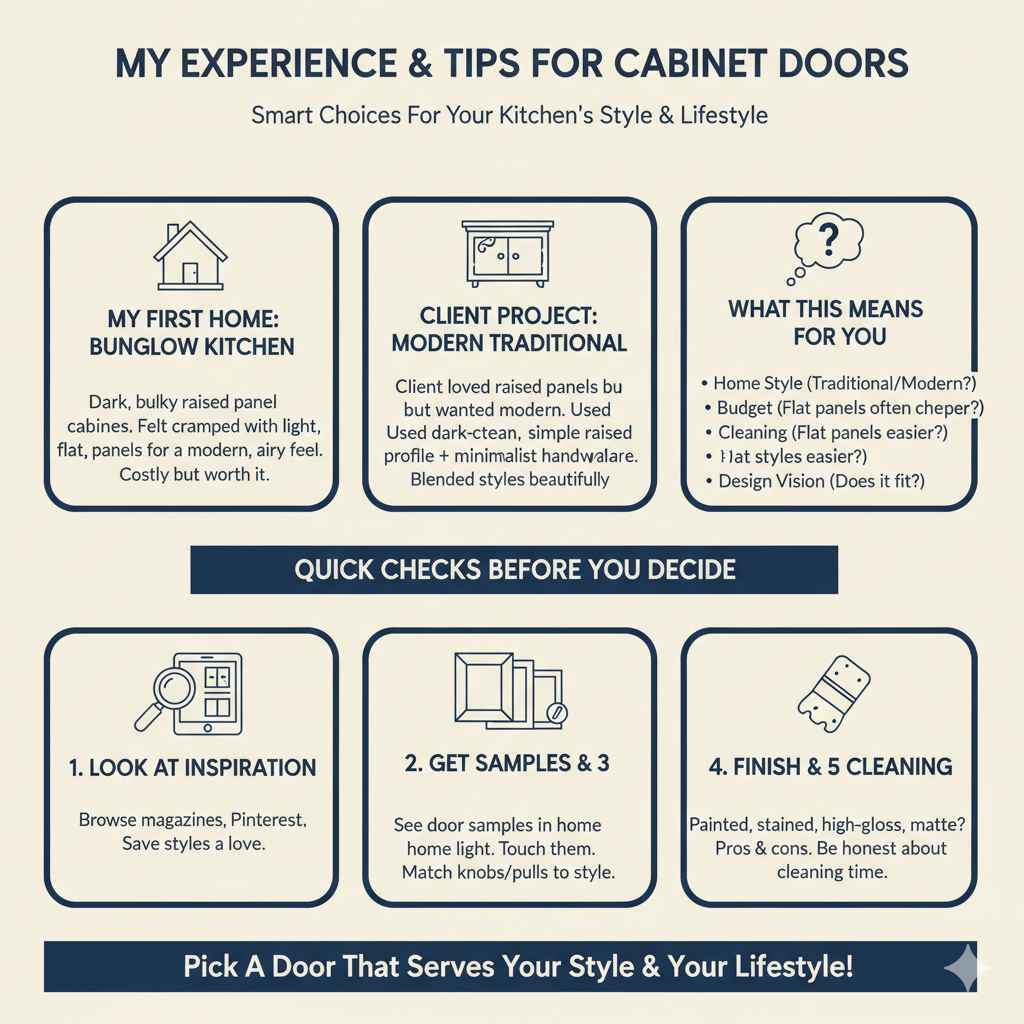
I remember my first home. It was a small bungalow. The kitchen had these dark, bulky raised panel cabinets. They made the space feel even smaller. I hated them. When I saved up enough, I
I also had a client who wanted a very high-end, custom look. She loved the detail of raised panels but wanted a more modern feel. We ended up choosing a dark stained wood with a very clean, simple raised panel profile and minimalist hardware. It blended the two worlds beautifully. It showed me that you can sometimes bend the rules if you are thoughtful about the details.
What This Means for You
When you’re deciding, think about your current home and your future plans.
Is your home traditional? Raised panel doors will likely fit best.
Is your home modern? Flat panel doors are probably your winner.
How much do you want to spend? Flat panels are often more budget-friendly.
How much time do you have for cleaning? Flat panels are much easier.
What’s your overall design vision? Does the door style support it?
It’s not just about picking a pretty door. It’s about picking a door that serves your style and your lifestyle.
Quick Checks Before You Decide
Before you commit, here are a few things to do:
1. Look at Inspiration: Browse magazines, Pinterest, and Houzz. Save pictures of kitchens and bathrooms you love. See what cabinet door styles are used.
2. Get Samples: If possible, get actual door samples. See them in your home’s lighting. Touch them. See how they feel.
3. Consider Your Hardware: Think about the knobs and pulls you want. Do they match the door style?
4. Think About the Finish: Painted, stained, high-gloss, matte? Each finish has its own pros and cons.
5. Factor in Cleaning: Be honest about how much cleaning you’re willing to do.
These simple steps can help you avoid costly mistakes.
Frequently Asked Questions
Are raised panel doors more expensive than flat panel doors?
Yes, typically raised panel doors are more expensive than flat panel doors. This is because they require more complex construction methods, involving shaping and fitting the center panel and framing it precisely. Solid wood construction for raised panels will be at the higher end of the price range.
Which cabinet door style is easier to clean?
Flat panel cabinet doors are significantly easier to clean. Their smooth, seamless surface means there are no nooks or crannies for dirt, grease, or dust to accumulate. A simple wipe with a damp cloth is usually all that’s needed.
Raised panel doors have more detailed areas that can trap debris.
Can I use raised panel doors in a modern kitchen?
While flat panel doors are the standard for modern kitchens, you can use raised panel doors if you want to blend styles or add warmth. Opt for simpler raised panel designs, choose a neutral paint color (like white or gray), and pair them with minimalist hardware to bridge the gap between traditional and modern aesthetics.
Are flat panel doors more durable?
Durability depends more on the material and finish than the style itself. However, flat panel doors made from materials like laminate or thermofoil are often very durable and moisture-resistant, making them excellent choices for kitchens and bathrooms. Solid wood flat panel doors are also very durable.
The simple construction of flat panels also means fewer points of potential failure compared to complex joints in some raised panel designs.
What is a Shaker cabinet door?
A Shaker cabinet door has a flat center panel surrounded by a simple, flat frame. It’s a popular style that bridges traditional and modern design. It’s simpler and easier to clean than a raised panel door but offers more visual interest than a true flat (slab) panel door.
Can I mix raised panel and flat panel doors in the same kitchen?
It is generally recommended to stick to one cabinet door style for a cohesive look. Mixing styles can sometimes make a kitchen feel busy or uncoordinated. If you want variation, consider using different colors or hardware for islands or accent cabinets, but keep the door profile consistent.
Conclusion
Choosing between raised panel and flat panel cabinet doors is a key decision for your kitchen or bathroom remodel. Raised panel doors offer traditional charm and intricate detail. They bring a classic, warm feel to a space. Flat panel doors provide a sleek, minimalist look. They are perfect for modern designs and are very easy to maintain.
Consider your home’s overall style, your budget, and your cleaning preferences. Both styles have their merits. Understanding the differences will help you select the doors that best suit your needs and your vision. Making this choice thoughtfully ensures you’ll love your cabinets for years to come.