
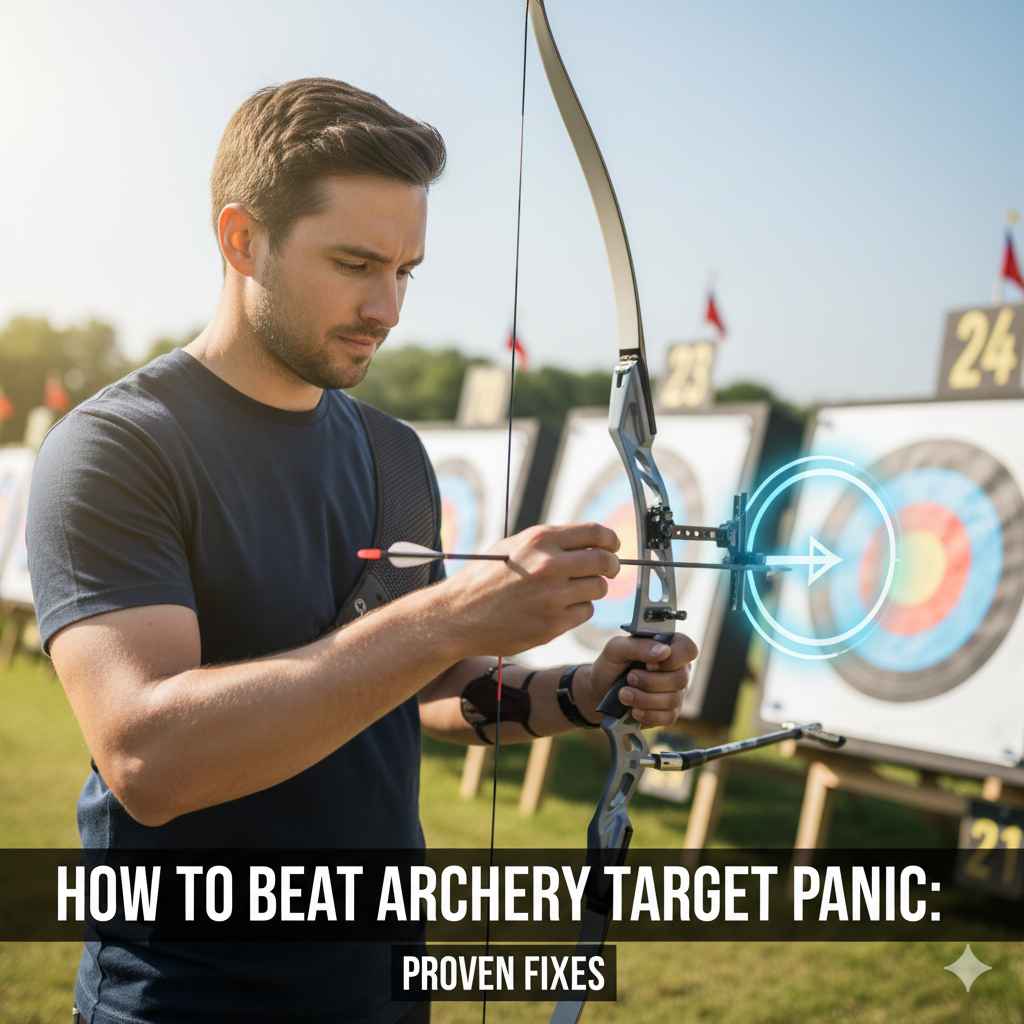
Archery target panic can be super frustrating, especially when you’re just starting out. It’s that sudden freeze or shake when you aim at the target, making it hard to shoot straight. Many new archers face this challenge, and it can feel like a huge hurdle.
But don’t worry, there are simple, proven ways to overcome it. This guide will walk you through step-by-step solutions to help you How to Beat Archery Target Panic (Proven Fixes) and shoot with confidence again.
Understanding Archery Target Panic
Target panic is a common problem for archers of all levels. It’s when your body and mind react negatively to the pressure of hitting the bullseye. This can cause involuntary muscle movements, a rushed shot, or an inability to release the arrow.
Many beginners experience this because they are focused too much on the outcome of the shot, rather than the process. Overcoming it requires understanding its root causes and applying specific techniques to retrain your shooting habits.
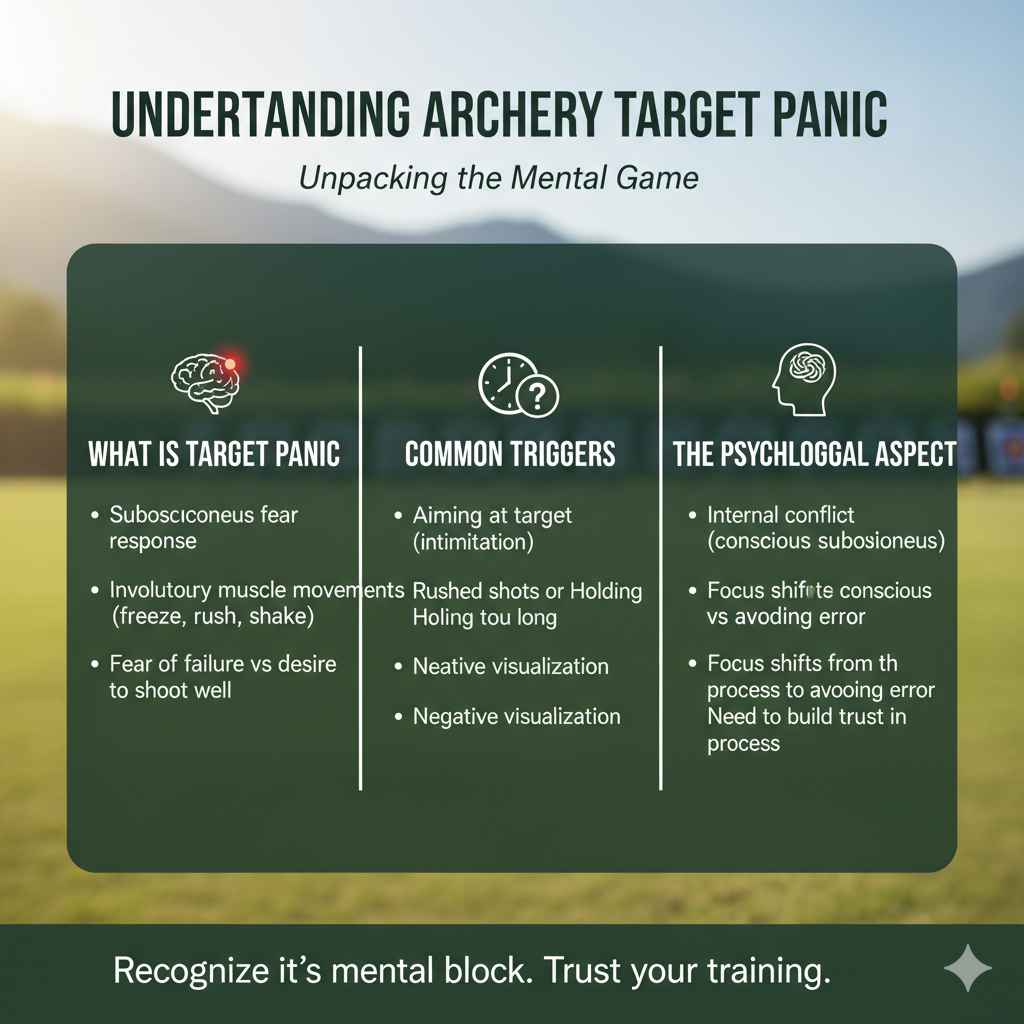
What is Target Panic
Target panic is essentially a subconscious fear response. When you pull back your bowstring and see the target, your brain can trigger a fight-or-flight reaction. This isn’t about skill; it’s about your nervous system.
It can manifest in different ways. Some archers freeze, unable to move their finger to the trigger or release. Others might punch the trigger too quickly, jerking the arrow off course.
Some might experience shaky hands or arms.
This fear often stems from an intense desire to shoot well, coupled with a fear of failure. When you’re learning, every shot feels important. This pressure can build up, and the target can start to look like a judge rather than a simple goal.
It’s a cycle: you worry about missing, you anticipate the panic, and then the panic happens. Recognizing that it’s a mental block, not a physical limitation, is the first step to conquering it.
Common Triggers
Several things can trigger target panic. For beginners, the sheer act of aiming at a distant target can be intimidating. The longer you hold the bow, the more time your mind has to generate negative thoughts.
Competition settings, where stakes are higher, are notorious for bringing out target panic. Even friendly matches can cause undue stress if you’re not prepared mentally.
Another common trigger is trying to shoot too quickly. When you rush your shot, you don’t allow your body to settle into a consistent process. This hurriedness often leads to jerky movements and rushed releases.
Conversely, holding the bow too long can also be a problem. This extended hold time gives your mind more opportunity to wander and create anxiety. Finding that sweet spot in your shot timing is key.
Visualizing success is important, but negative visualization can also be a trigger. If you constantly imagine yourself missing or freezing, you are priming your brain for that outcome. It’s like telling yourself not to think of a pink elephant; you’ll only think of a pink elephant.
The key is to focus on positive actions and the process of shooting, not the potential for error.
The Psychological Aspect
Target panic is deeply psychological. It’s about your internal dialogue and how you handle pressure. When you feel that familiar tensing or urge to rush, it’s your mind trying to protect you from perceived failure.
This might sound strange, but your brain is trying to help you avoid what it thinks is a bad outcome. Unfortunately, its method is counterproductive to good archery.
The focus shifts from executing a smooth shot to avoiding a bad one. This creates an internal conflict. Your conscious mind wants to shoot, but your subconscious mind is screaming to stop or rush.
This battle plays out in your muscles and your aim. Learning to quiet that inner critic and trust your training is essential. It’s about building confidence in your process so your subconscious can relax.
Proven Fixes for Archery Target Panic
The good news is that target panic is not permanent. With the right strategies and consistent practice, you can learn to manage and overcome it. These fixes focus on retraining your brain and body to react differently under pressure.
They involve breaking down the shot process, building confidence, and creating new, positive habits. Let’s explore some effective techniques.
Shot Process Re-Training
One of the most effective ways to tackle target panic is to break down your shot process into very small, manageable steps. When you focus on each individual step, you give your brain less opportunity to focus on the overall outcome of hitting the target. This helps to eliminate the pressure that often causes panic.
Start by focusing on just the draw and anchor. Hold there for a moment, breathing deeply and allowing your body to relax. Then, focus on your aiming process.
Don’t think about releasing the arrow yet. Just focus on keeping your sight pin steady on the target. This conscious effort to concentrate on specific actions, rather than the anxiety of release, can significantly reduce panic.
When you feel ready, focus on the transfer of back tension and the final pull through. The release should be a natural consequence of this movement, not a conscious decision to “let go.” This requires practice and patience. You are essentially teaching your subconscious mind that each step is safe and normal, building a new, positive association with the shot.
Blank Bale Shooting
Blank bale shooting is a fundamental practice for archers dealing with target panic. It involves shooting at a target that is very close, often just a few feet away. The target itself is usually a large, blank bale of straw or foam, with no specific aiming point.
The goal is not accuracy, but the refinement of the shooting process itself.
By removing the pressure of hitting a specific spot, you can focus solely on executing a smooth, consistent shot. You draw, anchor, aim vaguely at the bale, and release. The close proximity means the arrow will hit the bale regardless of minor aiming inaccuracies.
This practice helps to build confidence in your form and release, retraining your muscles and mind to perform the action without anxiety.
Spend time on the blank bale, aiming for a perfect shot execution every single time. Focus on your draw weight feeling consistent, your anchor point solid, your breathing calm, and your release smooth and surprised. As you get more comfortable, you can gradually increase the distance, always maintaining this focus on process over outcome.
This is a crucial step in rebuilding trust with your shot execution.
Expand and Contract Technique
This technique involves consciously tensing and then relaxing specific muscle groups in your back and shoulder as you hold at full draw. The idea is to create a controlled movement that naturally leads to the release. As you expand your back muscles to hold the draw weight, your finger naturally begins to relax, and the arrow is released.
You start by drawing the bow and anchoring. Once at full draw, instead of holding and waiting, you gently expand your back muscles, as if trying to pull them apart. This expansion creates a subtle, continuous pressure.
Your finger on the trigger or release aid will then respond by naturally letting go. It’s a smooth transition from drawing to releasing.
This method helps prevent the “target-fixation” where you stare intensely at the target, which often triggers panic. Instead, you focus on the physical sensation of expanding your back. The release becomes a result of this controlled physical action, rather than a conscious decision prompted by seeing the pin on the target.
It’s about creating a flow that bypasses the panic response.
Mental Rehearsal and Visualization
Your mind is a powerful tool, and you can use it to your advantage. Mental rehearsal involves vividly imagining yourself successfully executing a perfect shot, over and over. This isn’t just casual daydreaming; it’s a focused mental exercise.
Close your eyes and visualize yourself going through your entire shot process. See yourself drawing smoothly, finding your anchor, picking up your sight picture, and executing a surprise release. Feel the sensations: the steady bow, the solid anchor, the smooth draw, the controlled expansion, and the satisfying release.
Imagine the arrow hitting the center of the target.
Repeat this visualization regularly, especially before practice or competition. The more you mentally practice a successful shot, the more natural and ingrained that positive sequence becomes. This builds confidence and reduces the likelihood of a panic response because your mind already has a blueprint for success.
Adjusting Your Equipment
Sometimes, equipment can inadvertently contribute to target panic. A bow that is too heavy for you to draw and hold comfortably will naturally lead to tension and fatigue, which can worsen panic. Ensuring your draw weight is appropriate for your strength is vital.
The type of release aid you use can also make a difference. Some archers find that a back-tension release aid helps them overcome target panic because it requires a smooth expansion of the back muscles to activate, rather than a conscious finger trigger. This can make the release more of a surprise and less of a deliberate action that your panic can interfere with.
Consider the sight you are using. Some archers find that a simpler sight with fewer pins or features can be less distracting. For others, a sight with a clear aiming dot or a simple crosshair helps them focus on the act of aiming rather than overthinking.
Experimenting with these adjustments can help create a more comfortable and less anxiety-inducing shooting experience.
Gradual Exposure and Positive Reinforcement
Once you’ve practiced extensively with blank bale shooting and the expand-and-contract method, you can begin to reintroduce aiming at a target at a comfortable distance. The key here is gradual exposure. Start at a range where you feel confident, perhaps closer than your typical shooting distance.
Focus on executing your re-trained shot process. Even if your aim isn’t perfect, celebrate the successful execution of your steps. This is where positive reinforcement comes in.
Acknowledge and praise yourself for a smooth draw, a solid anchor, and a clean release, regardless of where the arrow lands. This positive feedback loop helps to build confidence and overwrite the negative associations linked to panic.
As you become more comfortable, slowly increase the distance. If you feel panic creeping in, take a step back to a distance where you can succeed. The goal is to consistently experience successful shots and positive feelings, gradually extending that comfort zone until you can aim and shoot confidently at your normal distances.
Advanced Strategies and Practice Drills
Once you’ve built a solid foundation by overcoming the initial stages of target panic, you can implement more advanced strategies. These drills are designed to maintain your progress, increase your resilience to pressure, and further refine your mental game. They build upon the techniques already discussed, adding layers of challenge and control.
The Focus Shift Drill
This drill is about actively shifting your focus away from the target itself and onto other sensory inputs. When you notice your mind starting to fixate on the bullseye with apprehension, consciously redirect your attention. This could be to the feeling of the bow in your hand, the pressure of the string on your fingers, or the sound of your own breathing.
During your shot sequence, instead of staring intensely at the target, try to maintain a softer focus. You still need to see the target to aim, but don’t let it dominate your visual field or your thoughts. Practice focusing on a specific point just below or to the side of the aiming dot.
As you expand your back tension, allow your sight picture to come into alignment naturally. This subtle shift can prevent your brain from locking onto the target and initiating the panic response.
Another variation is to focus on the feeling of your drawing hand’s position or the posture of your non-drawing arm. By consciously directing your attention to different physical sensations, you create a more grounded and less anxious shooting experience. This drill requires consistent effort, but it becomes easier with practice and helps build a more robust mental defense against panic.
“One Arrow” Mindset
This strategy is particularly useful when facing competition or high-pressure situations. It involves treating each arrow as an independent event. Don’t dwell on the previous shot, whether it was good or bad, and don’t think about the next one.
Your sole focus is on executing the current arrow perfectly.
Before you draw, take a moment to reset. Breathe deeply. Remind yourself that this one arrow is all that matters right now.
Execute your shot process with the same care and attention you would on a blank bale. Once the arrow is released, let it go. Acknowledge the result briefly, then immediately reset your mind for the next arrow.
This “one arrow” mindset prevents the accumulation of pressure. If you miss, it doesn’t have to affect the next shot. If you hit, it doesn’t mean the next one will be perfect, so you still need to focus.
It’s about maintaining a consistent process and emotional state shot after shot. This mental discipline can be the difference between succumbing to panic and performing consistently under stress.
Progressive Distance Shooting
This drill builds upon gradual exposure by systematically increasing shooting distances. Start at a range where you feel completely comfortable and confident, executing perfect shots without any hint of panic. This might be at 5 or 10 yards, depending on your current comfort level.
Once you can consistently shoot well at that distance, you then increase the distance by a small increment, perhaps 2-3 yards. Shoot a small number of arrows, focusing intensely on your process and the same techniques that worked at the closer distance. If you encounter panic, return to the previous comfortable distance for a bit before trying the longer distance again.
The key is not to rush this process. The goal is to build a chain of successful experiences at increasing distances. This reinforces the idea that you can perform well at any range, as long as you focus on your shot execution.
By progressively challenging yourself in a controlled manner, you build confidence and mental toughness that is directly transferable to any shooting scenario.
Mindfulness and Breathing Exercises
Mindfulness is the practice of being present in the moment without judgment. Incorporating mindfulness into your archery routine can significantly help manage target panic. This involves paying attention to your breath, your body, and your surroundings during practice and competition.
Before you even pick up your bow, take a few minutes to practice deep breathing. Inhale slowly through your nose, feeling your abdomen expand, and exhale slowly through your mouth. This calms your nervous system.
During your shot process, try to synchronize your breathing with your movements. Some archers find it helpful to hold their breath for a short moment at full draw, while others prefer continuous, slow breathing.
The awareness aspect of mindfulness means noticing when panic starts to arise. Instead of fighting it or letting it take over, simply acknowledge its presence. Recognize the physical sensations—the tension, the racing heart—without letting them dictate your actions.
This non-judgmental observation can create space between the feeling of panic and your reaction to it, allowing you to stick to your trained shot process.
Controlled Pressure Drills
These drills simulate the pressure of competition in a controlled practice environment. One effective method is to set specific scoring goals for yourself. For example, you might aim to score a certain number of points in a limited number of arrows, or to hit a particular small target area consistently.
Another option is to shoot with a time limit. You might have a set amount of time to shoot a certain number of arrows. This introduces a mild sense of urgency that mimics competition, forcing you to manage your pace and focus under a time constraint.
If you find yourself rushing, deliberately slow down and return to your controlled shot process.
The aim of these drills is not just to improve scoring or speed, but to practice executing your process when the stakes feel slightly higher. By regularly exposing yourself to controlled pressure, you train your mind and body to perform under similar conditions. Success in these drills builds confidence that you can handle real competition without succumbing to panic.
When to Seek Professional Help
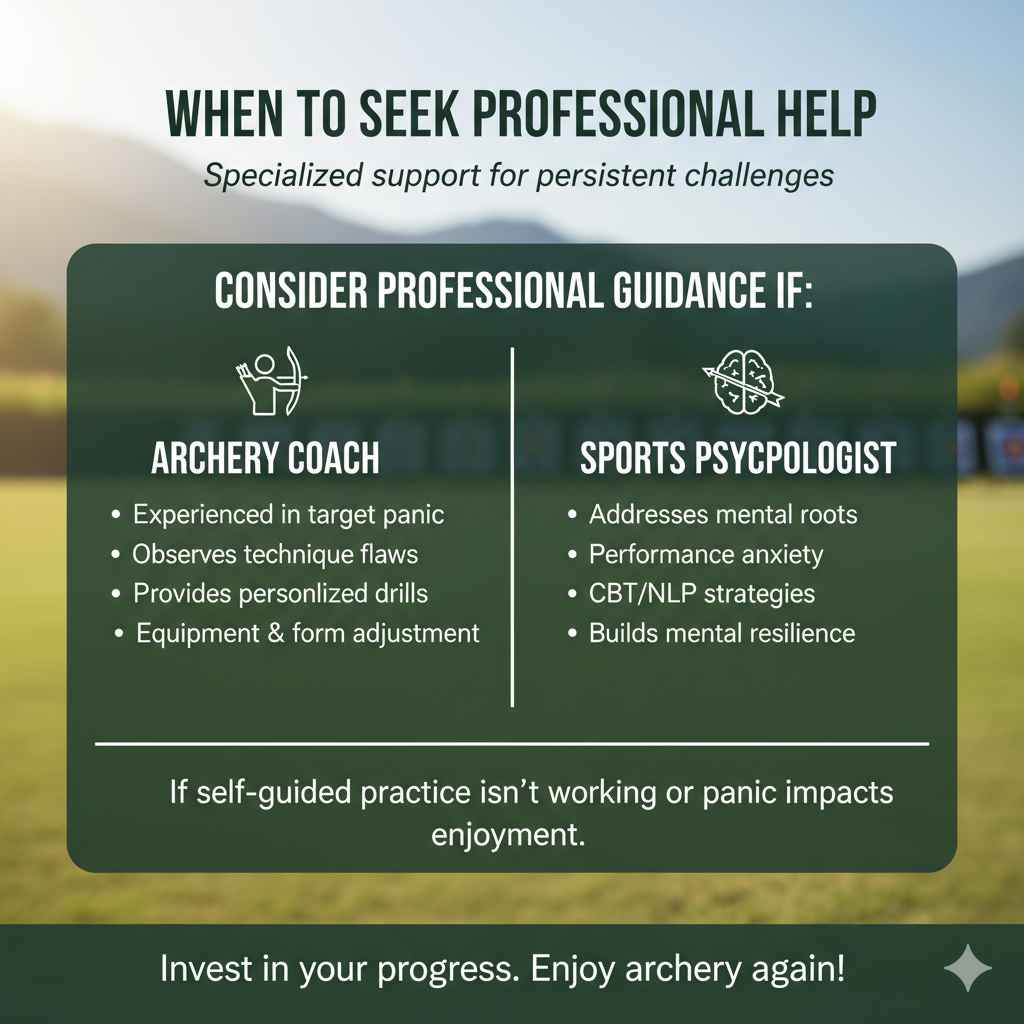
While many archers can overcome target panic with self-guided practice and the techniques mentioned, some may find it beneficial to seek professional guidance. If you’ve tried various methods consistently and are still struggling, or if the panic is significantly impacting your enjoyment of archery, a coach or sports psychologist can offer specialized support.
A qualified archery coach can observe your shooting in person, identify subtle flaws in your technique that might be contributing to panic, and provide personalized drills. They can offer objective feedback and help you adjust your equipment or shot process in ways you might not have considered.
A sports psychologist can help you address the deeper psychological roots of target panic. They can teach advanced mental conditioning techniques, such as cognitive behavioral therapy (CBT) or neuro-linguistic programming (NLP) strategies. These professionals are experts in helping individuals manage performance anxiety and build mental resilience, which are crucial for overcoming persistent target panic.
Frequently Asked Questions
Question: What is the quickest way to overcome target panic?
Answer: There isn’t one single “quickest” way, as it depends on the individual. However, consistently practicing blank bale shooting and the expand-and-contract technique are often cited as very effective starting points for rebuilding a solid shot process without pressure.
Question: Can target panic be completely cured?
Answer: Yes, target panic can be managed and overcome to the point where it no longer significantly impacts your shooting. It requires consistent practice and applying the right mental and physical strategies.
Question: Is target panic more common in certain types of archery?
Answer: Target panic can occur in any form of archery, but it is often more noticeable in disciplines that involve precise aiming and scoring, such as Olympic recurve or compound archery, especially in competitive settings.
Question: How long does it typically take to overcome target panic?
Answer: The timeline varies greatly from person to person. Some archers see improvement in weeks, while for others it might take months of dedicated practice and retraining.
Question: Should I stop shooting if I experience target panic?
Answer: No, it’s usually best not to stop shooting altogether. Instead, use techniques like blank bale shooting or shorter distances to continue practicing your form without the pressure of aiming, gradually working back to your full shooting range.
Conclusion
Overcoming archery target panic is an achievable goal. By understanding its causes, you can employ proven fixes like re-training your shot process and practicing blank bale drills. Advanced strategies such as the focus shift drill and a one-arrow mindset further build your mental resilience.
Consistent, patient practice with positive reinforcement is key to success.