How to Get Delgado Financial Aid Funds Released
Getting Delgado financial aid funds released can seem complex, but understanding the process can save you time and ensure you access the support you need for your education. This guide breaks down the typical steps and common hurdles, empowering you to navigate the system effectively. We’ll cover when to expect disbursement, what to do if your funds are delayed, and important considerations for managing your aid.
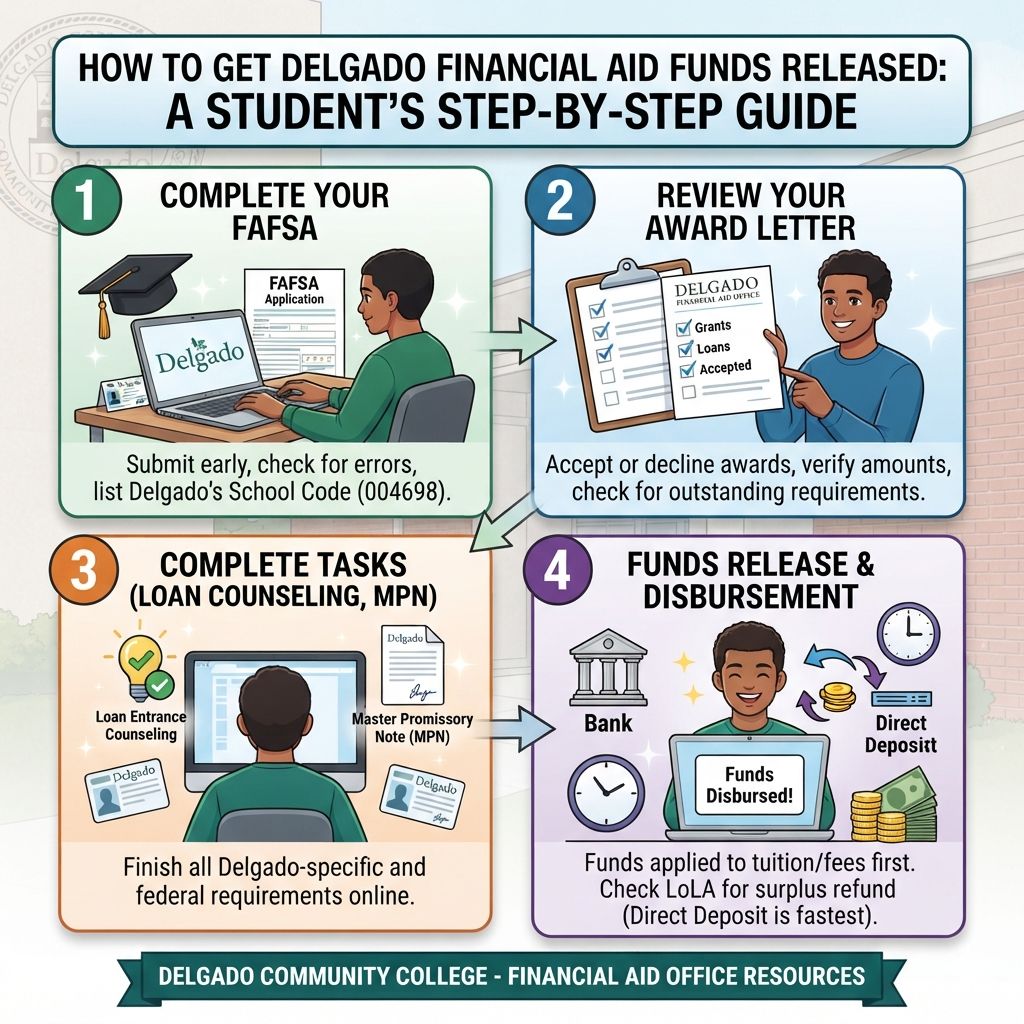
Simply put, Delgado financial aid funds are typically released per semester or enrollment period, usually after the add/drop period concludes and attendance is verified. Funds are disbursed directly to the student’s account or via direct deposit, and any credit balance is then refunded. Delays can occur due to missing documentation, enrollment changes, or verification issues, requiring proactive communication with the financial aid office.
Key Takeaways
- Delgado financial aid funds are generally disbursed after the initial enrollment period, following verification of attendance and eligibility.
- Most aid, including federal grants and loans, is released on a per-semester basis.
- Understand the typical disbursement timeline and potential causes for delays.
- Proactive communication with the Delgado Financial Aid Office is crucial for resolving any issues.
- Keep track of your student account and financial aid portal for updates.
Understanding Delgado Financial Aid Disbursement
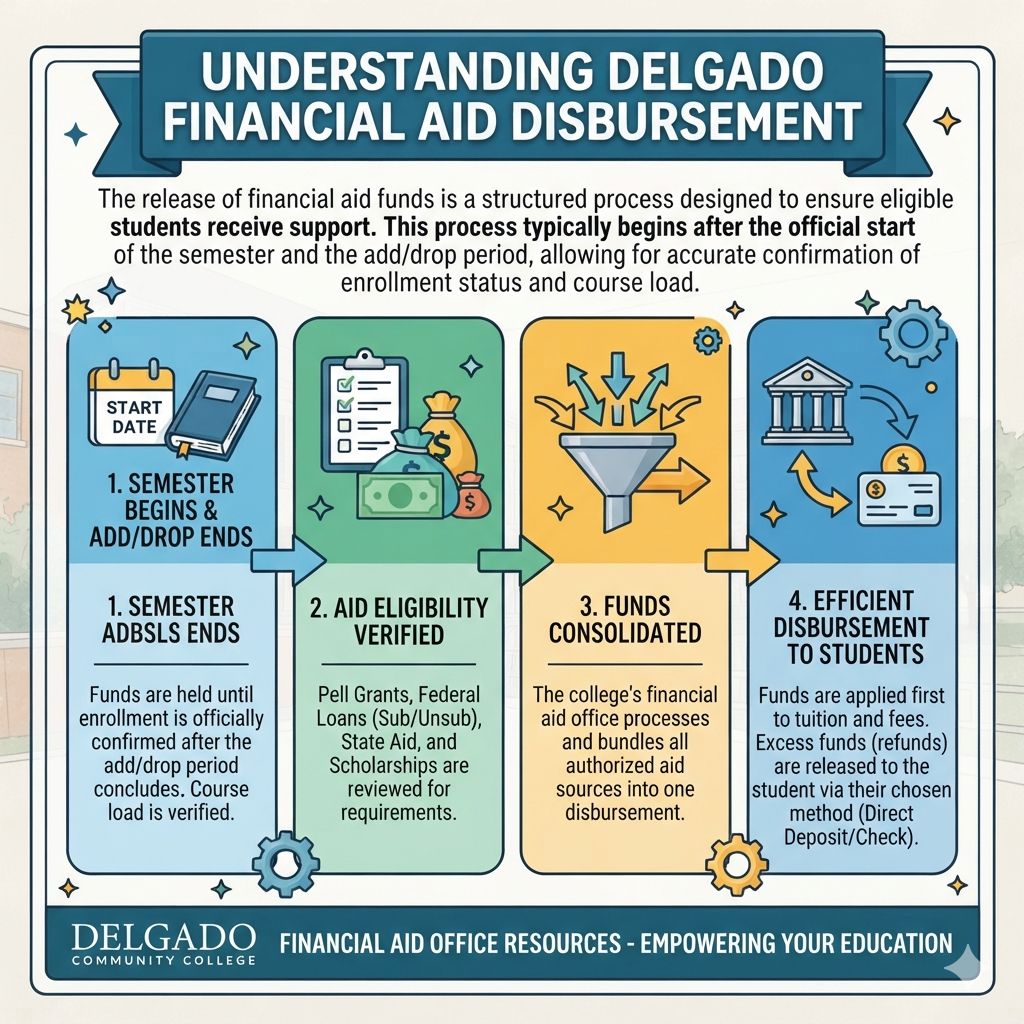
The release of financial aid funds at Delgado Community College is a structured process designed to ensure that eligible students receive the necessary financial support for their education. This process typically begins after the official start of the semester and after the add/drop period has concluded. This timeframe allows for accurate confirmation of student enrollment status and course load, which are critical factors in determining aid eligibility and amounts.
Financial aid can come from various sources, including federal grants (like Pell Grants), federal loans (subsidized and unsubsidized), state aid, and institutional scholarships. Each type of aid may have slightly different disbursement schedules and requirements. The college’s financial aid office works to consolidate these sources and disburse them efficiently to students.
It’s important for students to understand that financial aid is often disbursed in installments, typically once per semester. For longer academic programs, funds might be split between fall and spring semesters, or even divided into smaller disbursements within a semester if the aid period is structured that way. This phased approach helps manage the college’s resources and ensures ongoing support throughout the academic year.
- Federal Pell Grants: Based on financial need, these are often the first to be disbursed.
- Federal Direct Loans: These require completion of loan entrance counseling and a Master Promissory Note.
- Louisiana Office of Student Financial Assistance (LOSFA) Grants: Such as the Taylor Opportunity Program for Students (TOPS), have specific eligibility criteria.
- Institutional Scholarships: Awarded directly by Delgado, these follow the college’s disbursement schedule.
- Work-Study Programs: Earnings are typically paid directly to the student on a bi-weekly or monthly basis, not as a lump sum.
When to Expect Your Funds
The disbursement schedule for financial aid at Delgado Community College is generally aligned with the academic calendar. Most federal and state aid begins to be released shortly after the semester officially starts, usually after the last day to add or drop classes without academic penalty. This allows the college to confirm enrollment numbers and finalize each student’s financial aid package based on their registered credit hours.
For students with a credit balance on their account after tuition, fees, and other institutional charges are paid, a refund will be issued. Delgado utilizes a third-party service, often Touchnet or a similar platform, for refund disbursements. Students are typically given the option to set up direct deposit for faster access to their funds, or they may receive a check via mail.
Direct deposit is highly recommended to avoid mail delays.
The exact date for the first disbursement can vary each semester. Students are strongly encouraged to check their student account information online through the Delgado portal or to contact the Financial Aid Office directly for the most accurate and up-to-date disbursement calendar for the current academic term. Knowing these dates helps in planning personal finances.
- Confirm your FAFSA and Delgado Admissions Status: Ensure all admission requirements are met.
- Complete Required Financial Aid Forms: This includes the FAFSA, and any additional documents requested by the office.
- Accept Your Financial Aid Award: Log into your student portal and formally accept the grants, loans, and scholarships offered.
- Attend Classes and Verify Attendance: Many federal aid programs require confirmation of attendance within the first few weeks of the semester.
- Monitor Your Student Account: Check for any pending charges or notifications regarding your aid.
- Set Up Direct Deposit: If available, this is the fastest way to receive any credit balance refunds.
Common Reasons for Delayed Disbursement
Delays in receiving Delgado financial aid funds are frustrating but often stem from easily resolvable issues. One of the most common reasons is incomplete or missing documentation. This can range from not submitting verification documents requested by the Department of Education or the college, to failing to complete necessary forms like the FAFSA or specific loan entrance counseling.
Changes in enrollment status can also lead to delays. If a student drops below the required number of credit hours for their aid type (e.g., full-time to half-time), their eligibility may change, requiring a recalculation of their aid. This review process can take time, delaying disbursement.
Similarly, failing to meet Satisfactory Academic Progress (SAP) requirements can halt aid distribution.
Other factors include issues with bank information for direct deposit, discrepancies in social security information, or delays in processing funds from external scholarship providers. Sometimes, the sheer volume of applications during peak periods can cause processing backlogs within the financial aid office itself. Being proactive and checking your student portal regularly can help catch these issues early.
| Issue | Impact on Disbursement | Action to Resolve |
|---|---|---|
| Missing Verification Documents | Aid cannot be finalized until verification is complete. | Submit all requested documents promptly to the financial aid office. |
| Enrollment Status Changes | Aid may be reduced or canceled, requiring recalculation. | Contact the financial aid office immediately to understand the impact. |
| Incorrect Bank Information for Direct Deposit | Refund will be returned to the college, likely resulting in a mailed check. | Update your banking details in the student portal immediately. |
| SAP Appeals Pending or Denied | Aid disbursement will be on hold until appeal is resolved. | Follow up on your SAP appeal status and requirements. |
Addressing these common issues proactively is key to ensuring your financial aid is released on time.
What to Do If Your Funds Are Delayed
If you’ve checked your student account and the expected disbursement date has passed without your financial aid funds arriving, the first and most crucial step is to contact the Delgado Financial Aid Office. They are the primary resource for understanding the status of your aid and the specific reason for any delay. Be prepared to provide your student ID number and details about the aid you are expecting.
When you contact them, clearly state your name, student ID, the type of aid you are awaiting, and the expected disbursement date. Ask specific questions such as: “Has my aid been disbursed?” “Is there any outstanding documentation required from me?” “Has my enrollment status changed?” and “When can I expect the funds to be released?” Taking notes during your conversation can be helpful.
In addition to contacting the office, regularly monitor your student portal. Many colleges provide real-time updates on financial aid status, outstanding tasks, and disbursement notifications through their online systems. Look for sections related to “Financial Aid Status,” “Awards,” “Holds,” or “Account Summary” for clues.
If the delay is due to a system-wide issue or a large batch processing delay, the college might post a general announcement on its website or student portal.
- Call the Financial Aid Office: (Often the quickest way to get specific answers)
- Email the Financial Aid Office: (Good for documentation and follow-up)
- Visit the Financial Aid Office in Person: (Can be effective for complex issues)
- Check Your Student Portal Daily: Look for notifications, holds, or status updates.
- Review Your Award Letter: Ensure you understand the terms and conditions of your aid.
- Verify Your Direct Deposit Information: Double-check account and routing numbers.
Managing Your Financial Aid Funds Effectively
Once your Delgado financial aid funds are released, managing them wisely is as important as receiving them. The primary goal is to ensure these funds cover your educational expenses for the semester, including tuition, fees, books, and necessary living costs. Avoid using aid funds for non-essential items or entertainment, as this can lead to a shortfall later in the semester.
Create a budget to track your expected income from financial aid and your anticipated expenses. This will help you understand how much you have available and how long it needs to last. Prioritize essential costs like rent, utilities, food, transportation, and course materials.
If you receive a refund, consider putting a portion aside for unexpected expenses or for the next semester’s book purchases.
It’s also wise to understand the terms of any loans you’ve accepted. Interest typically accrues on unsubsidized loans while you’re in school, and on subsidized loans once your grace period ends after graduation or dropping below half-time enrollment. Making payments on loans while still in school, if possible, can significantly reduce the overall interest paid over time.
Remember to stay in touch with the financial aid office for any changes in your status or requirements.
Budgeting Your Aid
A simple budget can make a significant difference. List all your expected income from financial aid. Then, list all your essential expenses.
Subtract your expenses from your income to see your surplus or deficit. This provides a clear picture of your financial standing for the semester.
Understanding Loan Terms
Familiarize yourself with the interest rates, repayment periods, and grace periods for any student loans you take out. This knowledge is crucial for long-term financial planning.
| Expense Category | Estimated Cost | Notes |
|---|---|---|
| Tuition & Fees | $XXXX.XX | (Covered by aid) |
| Books & Supplies | $XXX.XX | (Plan for mid-semester purchases) |
| Room & Board | $XXXX.XX | (If applicable) |
| Transportation | $XXX.XX | (Gas, public transport) |
| Personal Expenses | $XXX.XX | (Food, toiletries, etc.) |
This table helps visualize where your aid is allocated.
Warning: Never assume your financial aid will cover every single expense. Always budget realistically and have a contingency plan for unexpected costs. Failure to do so could lead to debt or inability to complete your studies.
Satisfactory Academic Progress (SAP) Requirements
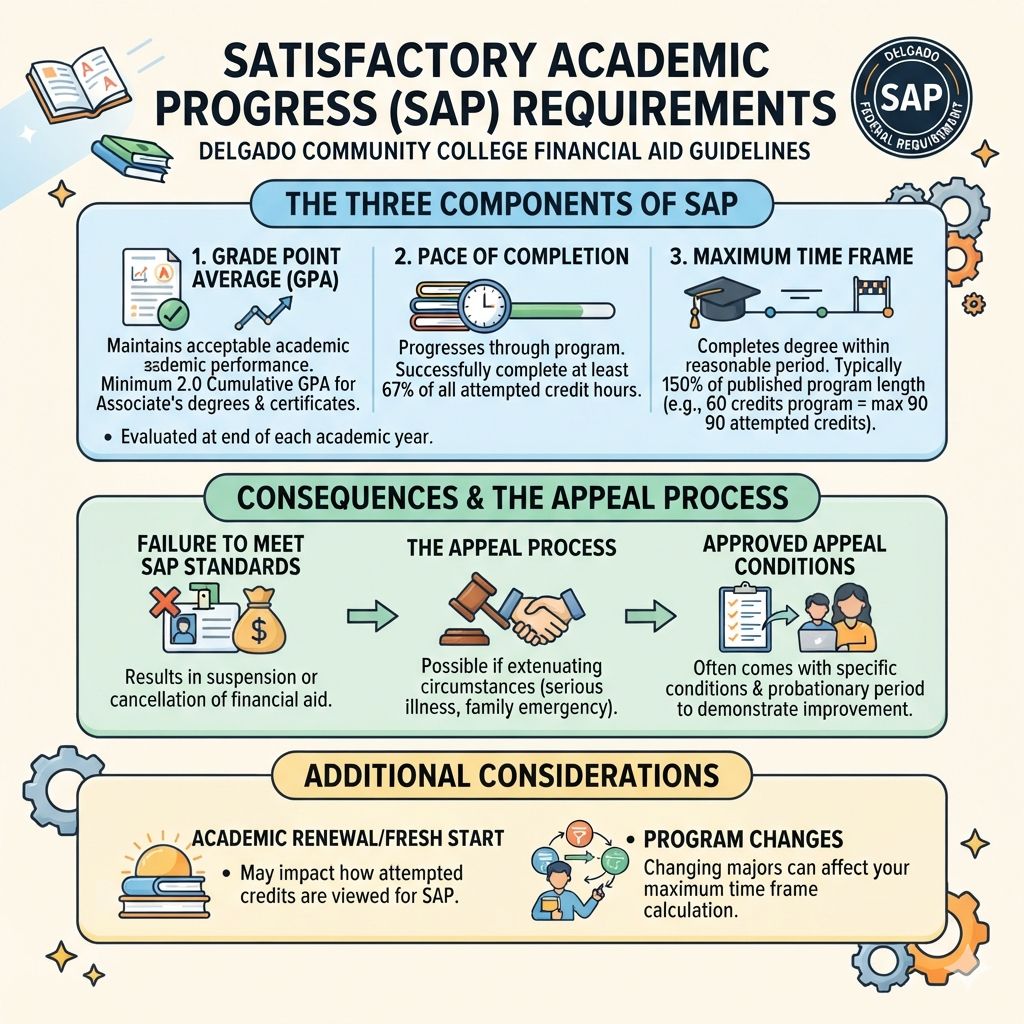
Maintaining Satisfactory Academic Progress (SAP) is a federal requirement for all students receiving financial aid at Delgado Community College. SAP is evaluated at the end of each academic year (or sometimes more frequently) and encompasses three components: GPA, pace, and maximum time frame.
The Grade Point Average (GPA) requirement ensures students are academically performing at an acceptable level. The pace of completion measures how quickly you are progressing through your program of study, usually expressed as a percentage of attempted credits versus completed credits. The maximum time frame limit ensures you complete your degree or certificate within a reasonable period, typically 150% of the published program length.
Failure to meet SAP standards can result in the suspension or cancellation of your financial aid. If your aid is suspended, you may still be able to appeal the decision if there were extenuating circumstances, such as a serious illness or family emergency. An approved appeal often comes with specific conditions and a probationary period to demonstrate improvement.
- Minimum GPA: Typically a 2.0 cumulative GPA for Associate’s degrees and certificates.
- Pace of Progression: Must successfully complete at least 67% of all attempted credit hours.
- Maximum Time Frame: Must complete the degree or certificate within 150% of the program’s published credit hours.
- Academic Renewal/Fresh Start: May impact how attempted credits are viewed for SAP.
- Program Changes: Changing majors can affect your maximum time frame calculation.
Frequently Asked Questions
When are financial aid refunds typically issued at Delgado?
Financial aid refunds are typically issued after the add/drop period for the semester has concluded and attendance has been verified. This usually occurs a few weeks into the semester. Check your student account and the official Delgado financial aid calendar for exact dates.
What happens if I drop classes after my financial aid has been disbursed?
Dropping classes after disbursement can affect your financial aid eligibility. If you drop below the required credit hours for your aid type, you may owe money back to the college or the federal government. Contact the Financial Aid Office immediately to understand the implications.
Can I use my financial aid refund for off-campus expenses?
Yes, your financial aid refund is intended to cover educational expenses, which include costs incurred both on and off-campus, such as housing, food, transportation, and personal supplies necessary for your studies.
How long does it take to receive a refund via direct deposit?
Direct deposit is generally the fastest method. Once processed by Delgado, funds typically appear in your bank account within 1-3 business days, depending on your bank’s processing times.
What if my financial aid doesn’t cover all my tuition and fees?
If your financial aid is insufficient, you will be responsible for paying the remaining balance by the tuition deadline. Options include payment plans, private loans, or other forms of personal financing. Contacting the Bursar’s office or the Financial Aid office can provide further guidance.
Final Thoughts
Successfully navigating the release of Delgado financial aid funds requires attention to detail and proactive engagement. By understanding the disbursement timeline, knowing common causes for delays, and managing your funds wisely, you can ensure your educational journey is financially supported. Always maintain open communication with the Delgado Financial Aid Office for the most accurate and timely assistance.