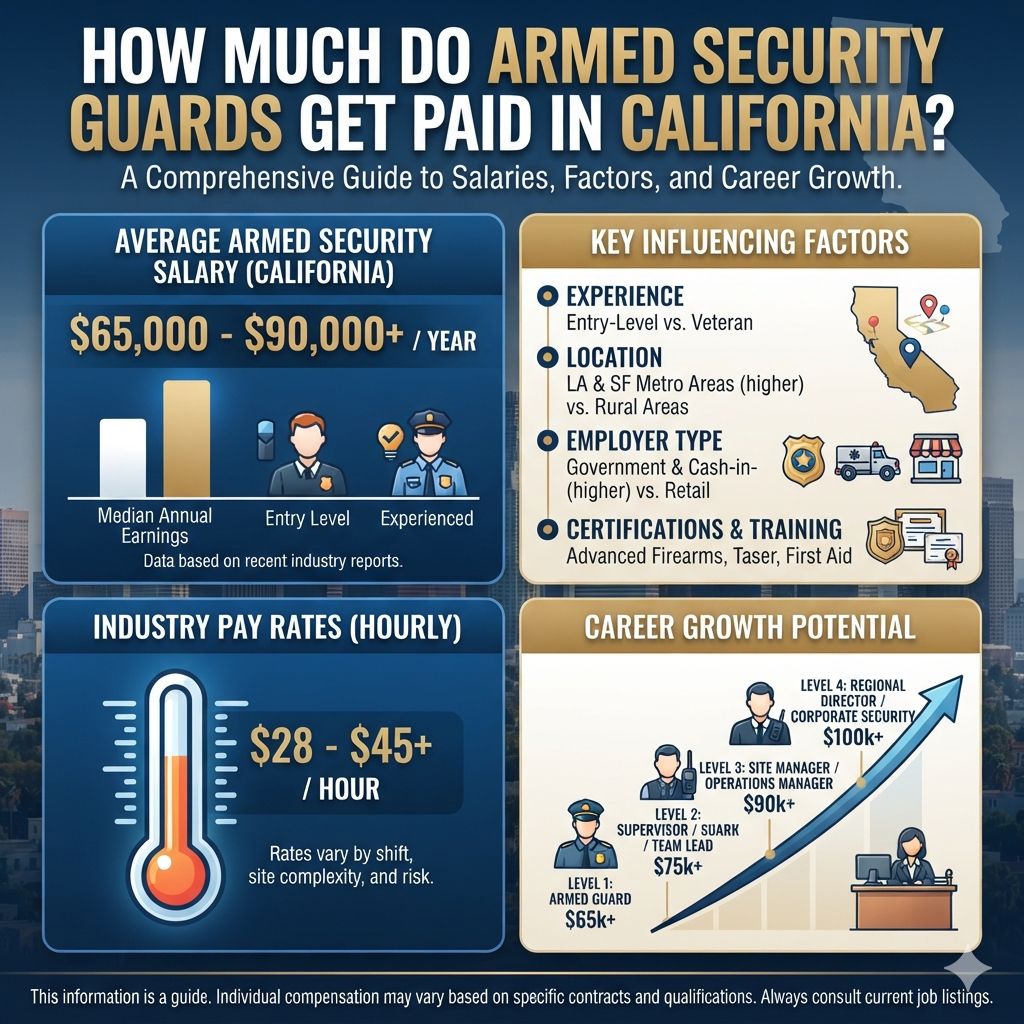
How much do armed security guards get paid in California? This question is paramount for individuals considering a career in security or for businesses evaluating security service costs. California, with its dynamic economy and high cost of living, often presents different salary landscapes compared to other states. Understanding the average earnings, influencing factors, and potential for growth is crucial for making informed decisions.
Simply put, the average annual salary for an armed security guard in California ranges from approximately $48,000 to $75,000, with experienced and specialized guards potentially earning over $80,000. Hourly rates typically fall between $23 and $36. Several factors, including location, experience, employer, and specific duties, significantly influence this pay.
Key Takeaways
- The average annual salary for an armed security guard in California falls between $48,000 and $75,000.
- Hourly rates for armed security guards in California generally range from $23 to $36 per hour.
- Geographic location within California is a major determinant of salary, with higher costs of living in major cities correlating to higher pay.
- Experience level is a significant factor, with entry-level guards earning less than seasoned professionals with specialized training.
- Employer type, client contracts, and the specific responsibilities of the armed security guard role all contribute to earning potential.
What is the Average Salary for Armed Security Guards in California?
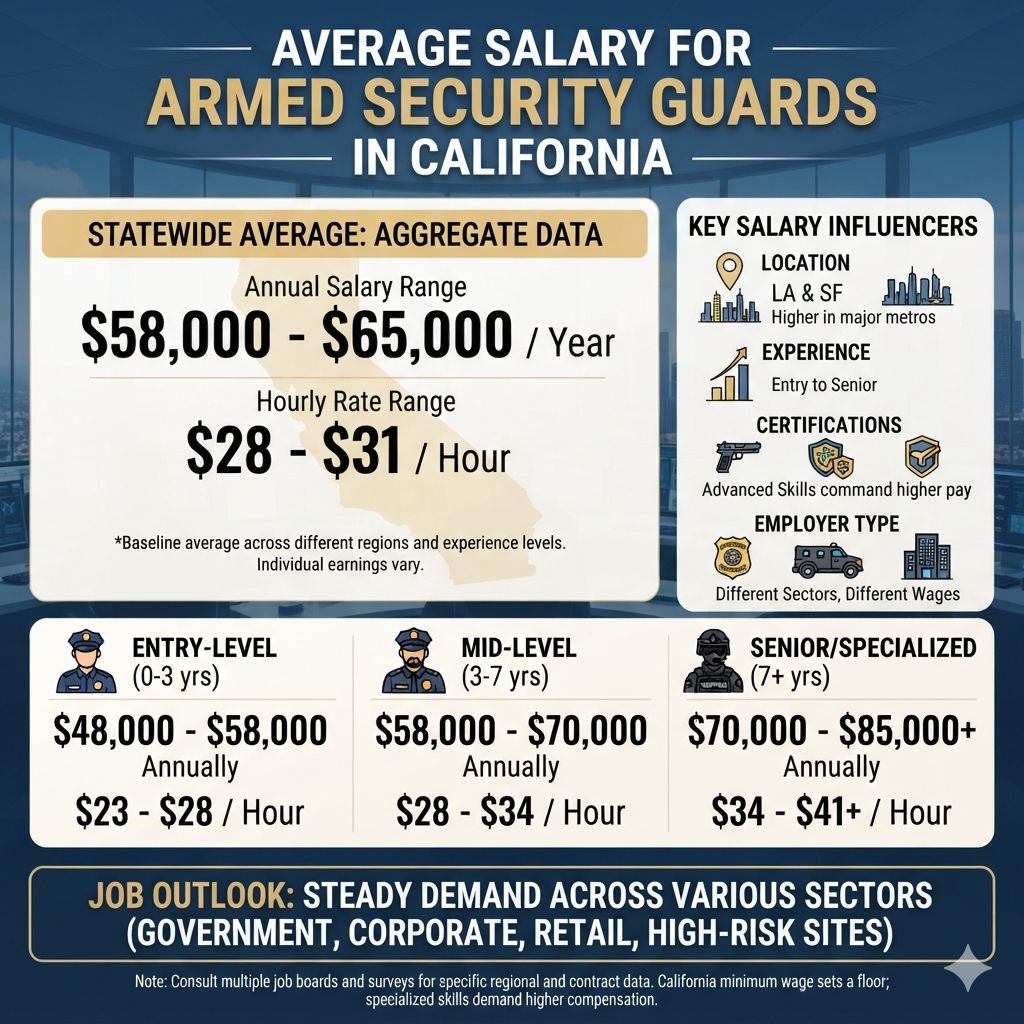
The landscape of armed security guard compensation in California is varied, but a clear average emerges when looking at aggregate data. Most sources indicate that the average annual salary for an armed security guard in California hovers around $58,000 to $65,000 per year. This figure represents a broad average across different regions and experience levels.
It’s essential to understand that this is a baseline, and individual earnings can deviate significantly.
On an hourly basis, this translates to approximately $28 to $31 per hour. This hourly rate is particularly important for guards who may work fluctuating schedules or on a contract basis. The minimum wage in California also sets a floor, but the specialized skills and responsibilities of armed security work command higher compensation than general security roles.
For many, this salary provides a solid living wage, especially when considering the cost of living in many parts of the state.
When considering salary expectations, it’s vital to consult multiple data points from reputable job boards and industry surveys. These sources often provide breakdowns by city and experience, offering a more granular view. For instance, entry-level positions might start closer to the lower end of the range, while supervisory or specialized roles can push earnings considerably higher.
The demand for skilled and trustworthy armed guards remains consistently high, which generally supports competitive compensation.
- Entry-Level Armed Security Guard: $48,000 – $58,000 annually ($23 – $28 per hour).
- Mid-Level Armed Security Guard (3-7 years experience): $58,000 – $70,000 annually ($28 – $34 per hour).
- Senior/Specialized Armed Security Guard (7+ years experience): $70,000 – $85,000+ annually ($34 – $41+ per hour).
- Factors influencing salary: Location, employer reputation, specific client contract, special certifications, overtime hours.
- Job outlook: Steady demand for qualified armed security personnel across various sectors.
What Factors Influence Armed Security Guard Pay in California?
Several critical elements converge to determine the salary an armed security guard can expect in California. Geographical location is perhaps the most significant driver. Major metropolitan areas like Los Angeles, San Francisco, San Diego, and their surrounding counties typically offer higher wages to offset the much higher cost of living.
Conversely, positions in more rural or less densely populated areas of California may offer lower compensation.
Experience plays a crucial role. A guard with years of proven service, a clean record, and a history of handling demanding situations will naturally command a higher salary than someone new to the field. Employers are willing to invest more in individuals who demonstrate reliability, professionalism, and advanced situational awareness.
This often includes specialized training and certifications, which further enhance a guard’s value and earning potential.
The specific employer also makes a difference. Large, well-established security firms that service high-profile clients often have more substantial budgets and can offer more competitive pay packages. Smaller local agencies or those with less lucrative contracts might have more limited salary ranges.
Furthermore, the nature of the contract with the client—whether it’s a retail establishment, a corporate office, a construction site, or a high-risk venue—will dictate the level of risk, responsibility, and consequently, the pay offered to the armed guard.
| Factor | Impact on Salary | Notes |
|---|---|---|
| Location | High (Major Cities) to Moderate (Rural) | Higher cost of living areas generally pay more. |
| Years of Experience | High | Seniority and proven track record lead to higher pay. |
| Employer Type | Moderate | Large firms with high-profile clients often pay more. |
| Specialized Skills/Certifications | Moderate to High | Advanced training (e.g., executive protection, crowd control) increases value. |
| Client Type & Risk Level | High | High-risk environments require higher pay. |
This table outlines the primary variables that dictate how much an armed security guard can earn in California, emphasizing that a one-size-fits-all answer is impossible.
Salary Breakdown by Major California Cities
California’s diverse geography translates into vastly different salary ranges for armed security guards, especially when comparing major urban centers to other regions. Cities with a high cost of living and a robust business presence naturally offer more competitive compensation to attract and retain qualified personnel. Los Angeles, as the state’s largest city, consistently shows some of the highest average salaries, often exceeding the state average.
San Francisco and the surrounding Bay Area, known for its extreme cost of living, also presents lucrative opportunities for armed security guards. The presence of tech giants, financial institutions, and high-value real estate contributes to a demand for top-tier security services. Similarly, San Diego, with its significant tourism industry and military presence, offers competitive pay.
Other cities like Sacramento, Oakland, and San Jose also reflect these trends, with salaries generally aligning with their respective economic and living cost profiles.
It’s important to note that while metropolitan areas offer higher base salaries, the cost of living can offset some of these gains. Guards must balance earning potential with their personal financial needs and lifestyle. Rural areas or smaller cities might offer lower nominal salaries, but the reduced cost of living can make the overall financial picture comparable or even better for some individuals.
Thorough research into specific city data is always recommended.
- Los Angeles: Average annual salary around $65,000 – $78,000.
- San Francisco/Bay Area: Average annual salary around $68,000 – $82,000.
- San Diego: Average annual salary around $60,000 – $72,000.
- Sacramento: Average annual salary around $55,000 – $66,000.
- Fresno: Average annual salary around $48,000 – $58,000.
- Bakersfield: Average annual salary around $50,000 – $60,000.
- Oakland: Average annual salary around $63,000 – $75,000.
These figures represent general averages and can fluctuate based on the factors previously discussed, particularly the specific employer and the guard’s experience.
The Role of Experience and Specialization in Earning Potential
The difference between an entry-level armed security guard and a seasoned professional with specialized training is substantial in terms of earning potential. For those just starting, obtaining the required permits and licenses in California is the first step. These roles often involve standard patrol duties, access control, and basic observation, reflecting an entry-level salary that aligns with the state’s minimum wage adjusted for the security industry’s demands.
As guards gain experience, they become more valuable. A guard with several years of consistent, positive performance can command higher hourly rates and annual salaries. This experience might include handling de-escalation situations, responding to minor incidents, and demonstrating a keen understanding of security protocols.
Employers recognize that experienced guards require less supervision and are more adept at independent problem-solving, making them a more reliable asset.
Specialization can dramatically increase earning potential. Armed guards who pursue advanced certifications in areas like executive protection, dignitary security, event security for high-profile gatherings, or even tactical security operations are in high demand and can often negotiate significantly higher rates. These specialized roles require a deeper skill set, often involving threat assessment, close protection techniques, and advanced firearm proficiency beyond basic requirements.
A study by the Bureau of Labor Statistics (BLS) indicates that security guards with specialized skills or working in high-risk environments tend to earn more than those in general roles.
Important: California has strict regulations for armed security guards, including licensing through the Bureau of Security and Investigative Services (BSIS). Obtaining and maintaining these licenses, along with additional certifications, is crucial for maximizing your earning potential.
Employer Types and Their Impact on Compensation
The type of company that employs an armed security guard can significantly influence their pay. Large national or international security corporations often have the most structured pay scales and benefits packages. These companies typically serve a diverse client base, ranging from multinational corporations and government facilities to large retail chains, which provides them with a stable revenue stream to offer competitive wages.
Mid-sized regional security firms can also offer competitive salaries, especially if they specialize in specific sectors or have strong relationships with local businesses. Their compensation might be slightly less standardized than larger corporations but can offer more flexibility or higher bonuses based on client contracts. Smaller, local security agencies might have more variable pay structures.
Their compensation can depend heavily on the size and type of clients they secure. While they may not always offer the highest base salaries, they can sometimes provide better opportunities for guards who prefer a more familiar, community-focused work environment.
Specialized security companies that focus on niche markets, such as event security for concerts and sporting events, executive protection services, or high-risk asset protection, often pay the highest rates. This is because these roles typically demand a higher level of skill, discretion, and responsibility, and the clients are often willing to pay a premium for that specialized expertise. The U.S.
Bureau of Labor Statistics reported in May 2022 that Protective Service Occupations, which includes security guards, earned an average annual wage of $38,970 nationally, but specialized roles and regions like California significantly exceed this average. The difference between an employer serving a small retail shop versus one protecting a high-security corporate headquarters or a VIP event can be tens of thousands of dollars annually.
- National/International Security Corporations: Often provide comprehensive benefits, steady employment, and competitive but standardized pay.
- Regional Security Firms: Can offer good pay with potential for bonuses, sometimes more flexibility.
- Local Security Agencies: Pay can vary greatly; may offer less in base salary but potentially better work-life balance or direct client interaction.
- Specialized Security Companies (e.g., Executive Protection, Event Security): Typically offer the highest pay due to specialized skills and high-risk environments.
- In-house Security Departments: Some large companies hire their own security staff directly, which can offer comparable or better compensation and benefits than external agencies.
Overtime and Additional Income Opportunities
For armed security guards in California, the base salary is only one part of the earning equation. Overtime pay can significantly boost annual income, especially for those working in industries with fluctuating demands or during peak seasons. Many security roles require coverage during holidays, weekends, and extended hours, which often fall under overtime provisions.
California has specific laws regarding overtime, typically mandating time-and-a-half for hours worked over 8 in a day and double-time for hours exceeding 12 in a day or working on the seventh consecutive day of a workweek.
Beyond standard overtime, there are other avenues for additional income. Many armed guards pick up extra shifts at different posts or work special details for events, concerts, or private parties. These “extra duty” assignments are often paid at a higher hourly rate than regular posts, reflecting the increased responsibility or temporary nature of the work.
Companies may also offer performance bonuses, retention bonuses, or incentives for guards who work holidays or fill critical staffing shortages.
Furthermore, guards who acquire specialized skills or certifications may find opportunities for contract work that pays a premium. This could include providing personal security for individuals, offering security consulting services, or working as a guard for high-risk transport or protection details. While these often require significant experience and a strong reputation, they represent a pathway to substantially higher earnings beyond a typical post-assignment salary.
According to industry reports, guards who actively seek out overtime and special assignments can increase their annual income by 15-30% or more.
Warning: Always clarify overtime policies, pay rates, and any potential bonuses in writing with your employer before accepting a position. Ensure your employer is compliant with California’s labor laws regarding overtime pay.
Cost of Living and Its Impact on Real Wages
While California consistently ranks among the states with the highest salaries for armed security guards, understanding the real wage requires a close examination of the cost of living. The Golden State is notorious for its high expenses, particularly in housing, transportation, and everyday goods. This means that a seemingly high salary in a place like San Francisco might not stretch as far as a moderately lower salary in a less expensive state or even a less expensive region within California.
For example, the median home price in California is significantly higher than the national average. This impacts not only potential homeowners but also renters, as housing costs form a substantial portion of most budgets. Utilities, groceries, and even gas prices tend to be higher in California compared to many other states.
Therefore, when evaluating job offers, it’s crucial to compare the offered salary against the local cost of living index.
A report from the Council for Community and Economic Research (C2ER) consistently shows that major California metropolitan areas rank among the most expensive in the U.S. for consumer goods and services. This disparity means that the purchasing power of an armed security guard’s salary can vary dramatically across the state.
A guard earning $70,000 in Bakersfield might have a higher disposable income than a guard earning $85,000 in San Jose, simply due to differences in living expenses. It’s a critical factor for guards to consider when deciding where to seek employment or when negotiating their compensation.
- Housing: California has some of the highest rent and mortgage costs in the nation.
- Transportation: Fuel prices and public transit costs can be substantial.
- Food & Utilities: Groceries and essential services are generally more expensive.
- Healthcare: While variable, healthcare costs can also contribute to overall living expenses.
- Discretionary Spending: Entertainment and leisure activities may also be pricier.
Factoring in these elements provides a more accurate picture of the actual financial well-being an armed security guard can achieve in different parts of California.
Licensing and Certification Requirements
In California, becoming an armed security guard involves meeting stringent licensing and certification requirements set forth by the Bureau of Security and Investigative Services (BSIS). These regulations are designed to ensure that only qualified, responsible individuals are permitted to carry firearms while performing security duties. The initial step typically involves obtaining a Security Guard Card (Guard Card), which requires completing 40 hours of training from a BSIS-approved school and passing a written examination.
This card is valid for two years and requires renewal.
To carry a firearm, an armed guard must then obtain a Firearm Permit. This process is more rigorous and includes additional training hours covering firearm safety, marksmanship, and legal aspects of using deadly force. Applicants must pass a psychological examination, undergo a thorough background check (including fingerprinting), and demonstrate proficiency with their approved firearm through a shooting test.
The firearm permit also requires periodic renewal, typically every two years, which involves requalification courses and retesting.
Beyond these state-mandated requirements, many employers and clients seek guards with additional certifications. These can include advanced first aid and CPR, non-violent crisis intervention training, tactical driving, or specialized training in areas like executive protection, crowd management, or terrorism prevention. Obtaining these certifications demonstrates a commitment to professional development and can significantly enhance a guard’s resume, leading to better job prospects and higher earning potential.
The investment in training and licensing is a direct pathway to improved compensation in the armed security field.
| Requirement | Description | Frequency |
|---|---|---|
| BSIS Security Guard Card | Basic training, written exam, background check. | Initial, then every 2 years (renewal training). |
| BSIS Firearm Permit | Advanced firearm training, psychological eval, shooting proficiency, background check. | Initial, then every 2 years (requalification). |
| Additional Certifications | First Aid/CPR, Executive Protection, etc. | Varies by certification. |
Meeting these requirements is non-negotiable for anyone looking to work as an armed security guard in California and directly impacts their employability and earning potential.
Future Outlook and Career Growth for Armed Security Guards
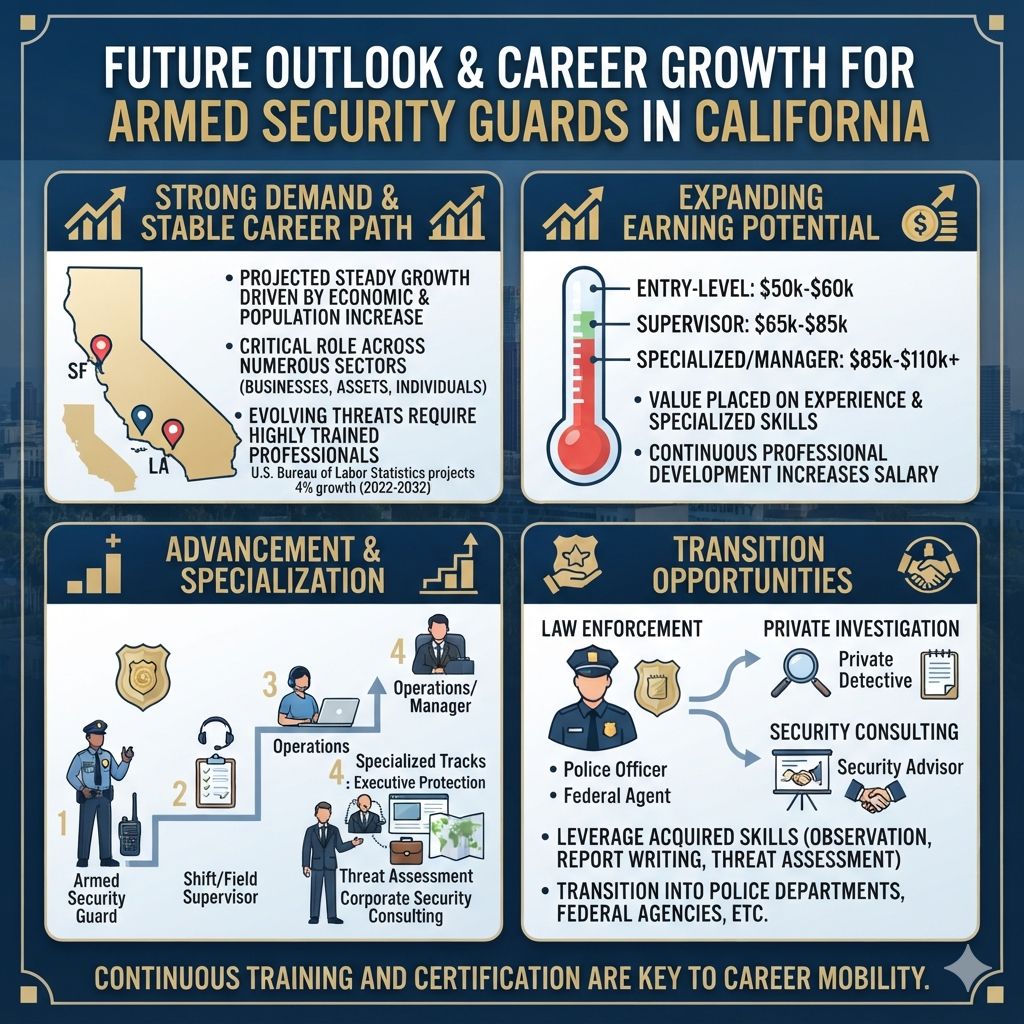
The demand for armed security guards in California is projected to remain strong, driven by a variety of economic and societal factors. As businesses grow and populations increase, the need for security to protect property, assets, and individuals also rises. This steady demand ensures a stable career path for qualified professionals.
The evolving nature of security threats, from petty crime to more sophisticated security breaches, means that the role of armed guards will continue to be critical across numerous sectors.
Career growth opportunities for armed security guards are plentiful. An individual starting as a guard can advance into supervisory roles, such as shift supervisor, field supervisor, or even security manager for a specific site or company. With further training and experience, career paths can lead into specialized areas like executive protection, threat assessment, corporate security consulting, or even law enforcement.
Many former security guards successfully transition into careers in police departments, federal agencies, or private investigations, leveraging their acquired skills and experience.
The earning potential for armed security guards in California is also expected to grow. As the complexity of security needs increases, so does the value placed on experienced and highly trained professionals. Continuous professional development, acquiring advanced certifications, and demonstrating a commitment to excellence will be key factors in advancing one’s career and salary.
For example, the U.S. Bureau of Labor Statistics projects employment of security guards to grow 4 percent from 2022 to 2032, about as fast as the average for all occupations. This growth, combined with California’s robust economy, suggests a positive outlook for compensation in this field.
- Advancement to Supervisor Roles: Shift leader, site supervisor, operations manager.
- Specialization Tracks: Executive protection, event security, dignitary protection, loss prevention management.
- Transition to Law Enforcement: Police officer, sheriff’s deputy, federal agent.
- Private Investigation: Using investigative skills honed in security roles.
- Security Consulting: Advising businesses on security strategies and implementation.
- Training and Development: Ongoing education is key to moving into higher-paying roles.
Frequently Asked Questions
How can I increase my earning potential as an armed security guard in California?
To increase your earning potential, focus on obtaining advanced certifications in specialized areas like executive protection or event security. Gaining more years of experience, maintaining a spotless work record, and seeking employment with reputable firms that serve high-profile clients are also crucial steps. Actively seeking overtime opportunities and special assignments can also significantly boost your income.
Is overtime common for armed security guards in California?
Yes, overtime is quite common for armed security guards in California, especially in roles that require coverage during weekends, holidays, and extended hours. Many employers offer overtime pay at premium rates (time-and-a-half or double-time) as mandated by California labor laws, which can substantially increase your overall earnings.
What is the typical hourly rate for an entry-level armed security guard in California?
For an entry-level armed security guard in California, the typical hourly rate generally ranges from $23 to $28 per hour. This can vary depending on the specific employer, location within the state, and the initial training and licensing obtained.
Are benefits like health insurance and retirement plans common for armed security guards in California?
Benefits packages vary significantly by employer. Larger national security firms and companies that employ guards directly for in-house security departments are more likely to offer comprehensive benefits such as health insurance, dental, vision, paid time off, and retirement plans (like 401(k)s). Smaller agencies or those working on contract might offer fewer benefits, so it’s important to inquire during the hiring process.
What is the minimum age requirement to become an armed security guard in California?
In California, you must be at least 21 years old to obtain a BSIS Firearm Permit, which is required for armed security guard positions. You must be at least 18 years old to obtain a basic Security Guard Card, but without the firearm permit, you cannot work as an armed guard.
Final Thoughts
Armed security guard salaries in California are competitive, reflecting the state’s high cost of living and the critical nature of the role. While the average annual pay ranges from $48,000 to $75,000, experienced guards in specialized roles, particularly in high-cost metropolitan areas, can earn substantially more. Factors like location, employer, experience, and specific certifications all play a significant role in determining final compensation.
By understanding these elements and focusing on professional development and acquiring necessary licenses, aspiring and current armed security guards can maximize their earning potential in the Golden State.