Armed Guard Salary: What Determines Your Pay
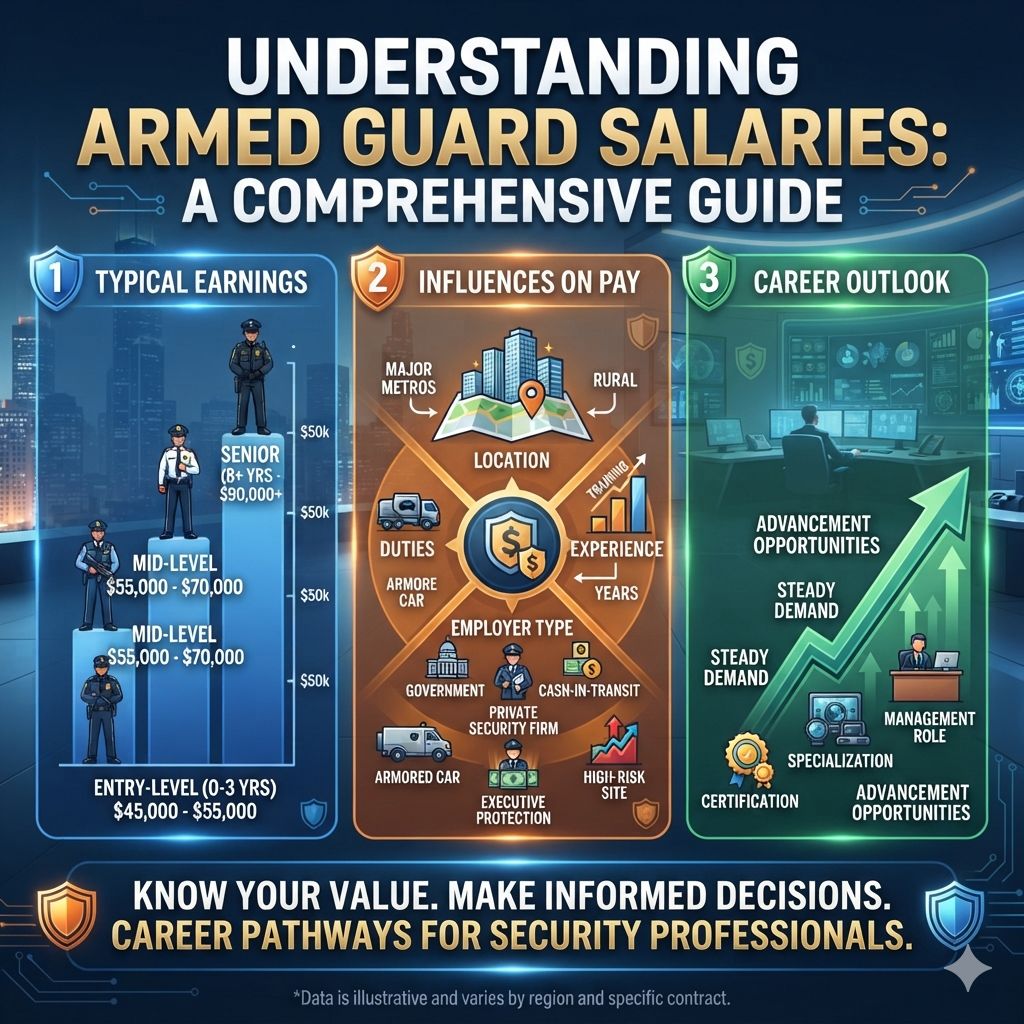
Simply put, the average salary for an armed guard in the United States hovers around $45,000 to $55,000 annually, but this figure is highly variable. Factors like location, experience, specialized skills, and the employer’s pay scale significantly impact the actual earnings, with some guards earning upwards of $70,000 or more in high-demand areas or for specialized roles.
Key Takeaways
- The average annual salary for an armed guard ranges from $45,000 to $55,000, but can be much higher.
- Geographic location plays a significant role, with higher costs of living and greater demand in urban areas often leading to better pay.
- Experience level is a major determinant, with entry-level positions paying less than those for seasoned professionals with specialized training.
- Additional certifications, skills (like close protection or executive security), and employer type (e.g., government contracts vs. private firms) impact earning potential.
- The demand for armed guards is influenced by economic conditions, security threats, and industry-specific needs, affecting job availability and salary trends.
What is an Armed Guard and What Do They Do?
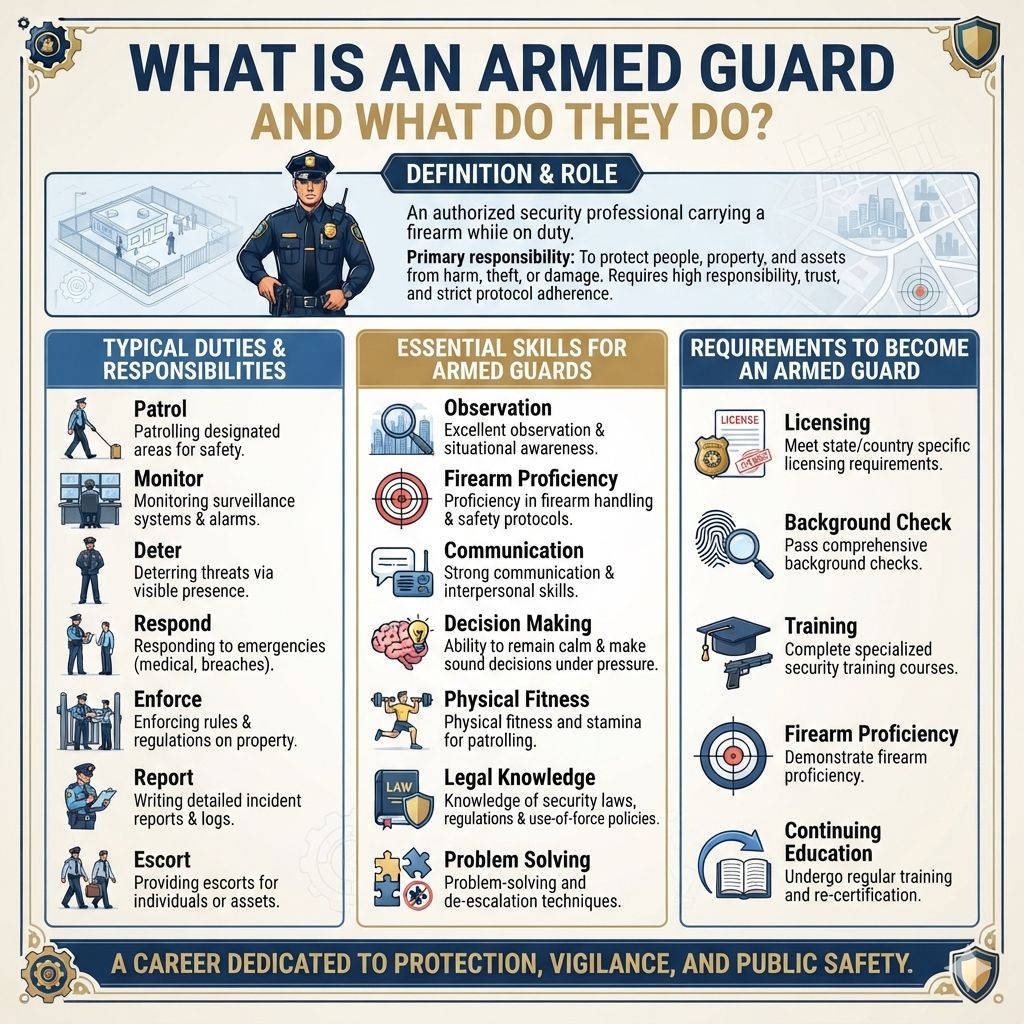
An armed guard is a security professional who is authorized to carry a firearm while on duty. Their primary responsibility is to protect people, property, and assets from harm, theft, or damage. This role requires a high degree of responsibility, trust, and adherence to strict regulations and protocols.
The duties of an armed guard can be diverse and demanding. They often involve patrolling assigned areas, monitoring surveillance equipment, responding to emergencies, deterring criminal activity, and providing a visible security presence. In some cases, they may be involved in escorting valuable goods or individuals, providing executive protection, or working in high-risk environments.
To become an armed guard, individuals typically need to meet specific licensing and training requirements, which vary by state and country. These requirements often include background checks, firearm proficiency tests, and specialized security training courses covering topics like use-of-force policies, de-escalation techniques, and emergency response procedures.
Typical Duties and Responsibilities
- Patrolling designated areas to ensure safety and security.
- Monitoring surveillance systems and responding to alarms.
- Deterring potential threats and criminal activity through visible presence.
- Responding to emergencies, such as medical incidents or security breaches.
- Enforcing rules and regulations on client property.
- Writing detailed incident reports and maintaining logs.
- Providing escorts for individuals or valuable assets when required.
- Apprehending suspects when authorized and necessary, following legal guidelines.
- Collaborating with law enforcement agencies during incidents.
Essential Skills for Armed Guards
- Excellent observation and situational awareness skills.
- Proficiency in firearm handling and safety protocols.
- Strong communication and interpersonal skills for interacting with the public and colleagues.
- Ability to remain calm and make sound decisions under pressure.
- Physical fitness and stamina for extended periods of standing or patrolling.
- Knowledge of relevant laws and regulations regarding security and use of force.
- Problem-solving and de-escalation techniques.
Factors Influencing Armed Guard Salaries
The salary of an armed guard is not a one-size-fits-all number. Numerous factors contribute to the compensation package, making it essential to understand these influences when evaluating potential earnings or job offers.
Geographic location is a primary driver of salary. Armed guards in major metropolitan areas or regions with a high cost of living, such as California, New York, or Washington D.C., generally earn more than those in rural areas or states with lower living expenses. This is often due to increased demand for security services and higher operating costs for security companies in these locations.
Important: States with stricter licensing requirements and higher demand for armed security, like those with significant financial districts or high-profile events, often correlate with higher salary ranges. Researching local market rates is crucial.
Experience also plays a substantial role. Entry-level armed guards, even with basic qualifications, will typically earn less than guards with several years of experience, a proven track record, and specialized training. Advanced certifications or a history of working in high-stakes environments can significantly boost earning potential.
Location and Geographic Differences
| Region/City | Estimated Annual Salary Range |
|---|---|
| New York City, NY | $60,000 – $75,000+ |
| Los Angeles, CA | $58,000 – $72,000+ |
| Houston, TX | $48,000 – $60,000 |
| Rural Midwest | $38,000 – $48,000 |
These figures illustrate how significant geographic location can be for an armed guard’s earning potential.
Experience and Seniority
- Entry-Level Guard: Typically requires basic licensing and minimal prior experience. Salary range: $35,000 – $45,000.
- Experienced Guard: Possesses 2-5 years of proven experience and may have advanced certifications. Salary range: $45,000 – $55,000.
- Senior/Lead Guard: 5+ years of experience, often with supervisory or specialized role experience. Salary range: $55,000 – $70,000+.
- Specialized Roles: Guards with expertise in executive protection, event security, or high-risk environments can command higher salaries regardless of years of general experience.
Employer Type and Industry
The type of company hiring an armed guard can also influence pay. Large, established security firms often have more structured pay scales and may offer better benefits. Government contractors, especially those working on federal or military installations, can offer competitive salaries and stable employment, sometimes exceeding private sector rates.
The industry in which the guard is employed is another factor. Guards protecting financial institutions, casinos, or high-value retail establishments might earn more due to the inherent risks and the need for specialized security protocols. Similarly, armed guards working for private security firms providing services to celebrities or high-net-worth individuals might see higher compensation.
Average Salary Ranges and Statistics
While individual salaries vary widely, statistical data provides a good benchmark for understanding the general earning potential of an armed guard. These statistics are often based on large surveys of compensation across various regions and employers.
According to the Bureau of Labor Statistics (BLS), security guards, in general, earned a median annual wage of $34,240 in May 2022. However, this statistic includes unarmed guards, who typically earn less. Armed guards, due to the added responsibility and training, are generally positioned at the higher end of this spectrum and often exceed these figures.
More specific data for armed guards often comes from private salary aggregators. These sources frequently report average annual salaries for armed guards in the range of $45,000 to $55,000. For example, some sources indicate a national average closer to $51,000 per year.
This means roughly half of armed guards earn more than this amount, and half earn less.
Hourly vs. Annual Pay
Most armed guard positions are compensated on an hourly basis. The national average hourly wage for security guards falls around $16.46 per hour, according to BLS data. For armed guards, this rate can often be higher, starting from $20 per hour and going up to $30 per hour or more for experienced professionals in demanding roles.
To convert an hourly wage to an annual salary, a common calculation uses a standard 40-hour work week and 52 weeks per year (40 hours/week 52 weeks/year = 2080 hours/year). So, an hourly rate of $25 would equate to an annual salary of $52,000 (2080 hours $25/hour).
Salary by Experience Level (Statistical Overview)
| Experience Level | Average Annual Salary | Average Hourly Rate |
|---|---|---|
| Entry-Level (0-2 Years) | $38,000 – $48,000 | $18.27 – $23.08 |
| Mid-Level (2-5 Years) | $48,000 – $58,000 | $23.08 – $27.88 |
| Senior/Lead (5+ Years) | $58,000 – $75,000+ | $27.88 – $36.00+ |
These figures provide a clear illustration of how accumulating experience can lead to substantially higher earnings in the armed guard profession.
Specialized Roles and Additional Income Opportunities
Beyond the standard armed guard duties, certain specialized roles and opportunities can significantly increase an individual’s earning potential. These positions often require advanced training, specific certifications, and a higher level of expertise.
Close protection or executive protection is one such area. Armed guards specializing in protecting high-profile individuals, executives, or dignitaries often command much higher salaries. This role requires discreet surveillance, threat assessment, advance planning, and the ability to react swiftly and effectively to protect the client.
Warning: Executive protection roles can be extremely demanding, involving irregular hours, extensive travel, and high-pressure situations. Ensure you are prepared for the lifestyle commitment.
Other specialized fields include working as an armed guard for armored car services, providing security for sensitive government facilities, or engaging in dignitary protection for international organizations. These roles often come with more stringent vetting processes and higher pay rates to compensate for the increased risk and responsibility.
Executive Protection Details
- Client Focus: Protecting individuals from physical harm, kidnapping, or harassment.
- Required Skills: Advanced defensive driving, tactical awareness, threat assessment, surveillance, medical first aid, close-quarters combat, and discretion.
- Training: Specialized courses often required, such as those offered by the Executive Protection Institute (EPI) or the International Security Driver Training (ISDT).
- Salary Potential: Can range from $60,000 to over $100,000 annually, depending on client profile and experience.
- Lifestyle: Often involves significant travel and being on call 24/7.
Armored Car Services
Working for an armored car service involves transporting cash, valuables, and other high-value items. This is a high-risk job that requires constant vigilance and adherence to strict security protocols.
- Duties: Securely loading, transporting, and unloading valuables.
- Requirements: Clean driving record, often military or law enforcement background preferred, extensive firearm training, and background checks.
- Pay: Salaries can be competitive, often ranging from $45,000 to $65,000 annually, with potential for overtime pay.
- Risks: High exposure to potential robberies and violent confrontations.
Government and Law Enforcement Support
Armed guards are frequently employed to support government agencies and law enforcement. This can include guarding federal buildings, correctional facilities, or providing security at military installations.
- Environment: Often highly regulated and secure environments.
- Compensation: Pay scales can be dictated by government contracts and union agreements, often providing steady employment and good benefits, with salaries typically in the $50,000 – $70,000 range.
- Requirements: May require security clearances, specific government-issued certifications, and rigorous background checks.
Job Outlook and Career Progression
The demand for security guards, including armed guards, is projected to remain stable. As businesses and communities continue to prioritize safety and security, the need for trained professionals to protect assets and deter crime is consistent. Factors like increased urban populations and the rise of corporate security needs contribute to this ongoing demand.
The job outlook for security guards is projected to grow 3 percent from 2022 to 2032, according to the BLS, which is about as fast as the average for all occupations. While this includes unarmed positions, the specialized nature and higher training requirements for armed guards often lead to more specific job opportunities and potentially higher demand in certain sectors.
Career progression for an armed guard can take several paths. Many guards gain experience and move into supervisory or management roles within private security firms. Others might leverage their experience and skills to transition into more specialized fields like executive protection, private investigation, or law enforcement.
Projected Growth Statistics
- BLS Projection: 3% job growth for security guards from 2022 to 2032.
- Number of Jobs: Approximately 1,165,600 jobs for security guards in 2022.
- New Jobs Expected: About 33,700 new jobs are projected to be created over the decade.
- Demand Drivers: Continued need for security in retail, entertainment, government facilities, and corporate environments.
- Armed vs. Unarmed: While overall growth is average, specialized armed roles often see consistent or above-average demand due to higher risk and responsibility.
Potential Career Paths
- Advance to Supervisory Roles: Become a shift supervisor, team leader, or operations manager within a security company. This typically involves managing other guards, scheduling, and overseeing operations.
- Specialize in Executive Protection: Pursue advanced training and certifications to protect individuals, often commanding higher salaries.
- Transition to Law Enforcement: Leverage experience, training, and discipline to join local police departments, sheriff’s offices, or federal agencies.
- Become a Private Investigator: Utilize observational skills, reporting abilities, and investigative techniques gained as a guard.
- Work in Corporate Security Management: Move into in-house security roles for large corporations, managing their overall security strategy.
- Become a Security Consultant: Offer expertise on security systems, risk assessment, and training to businesses.
Each of these paths offers opportunities for increased income and professional growth beyond the typical armed guard role.
How to Increase Your Earning Potential
For armed guards looking to maximize their income, several strategies can be employed. These focus on acquiring valuable skills, obtaining relevant certifications, and strategically choosing employment opportunities.
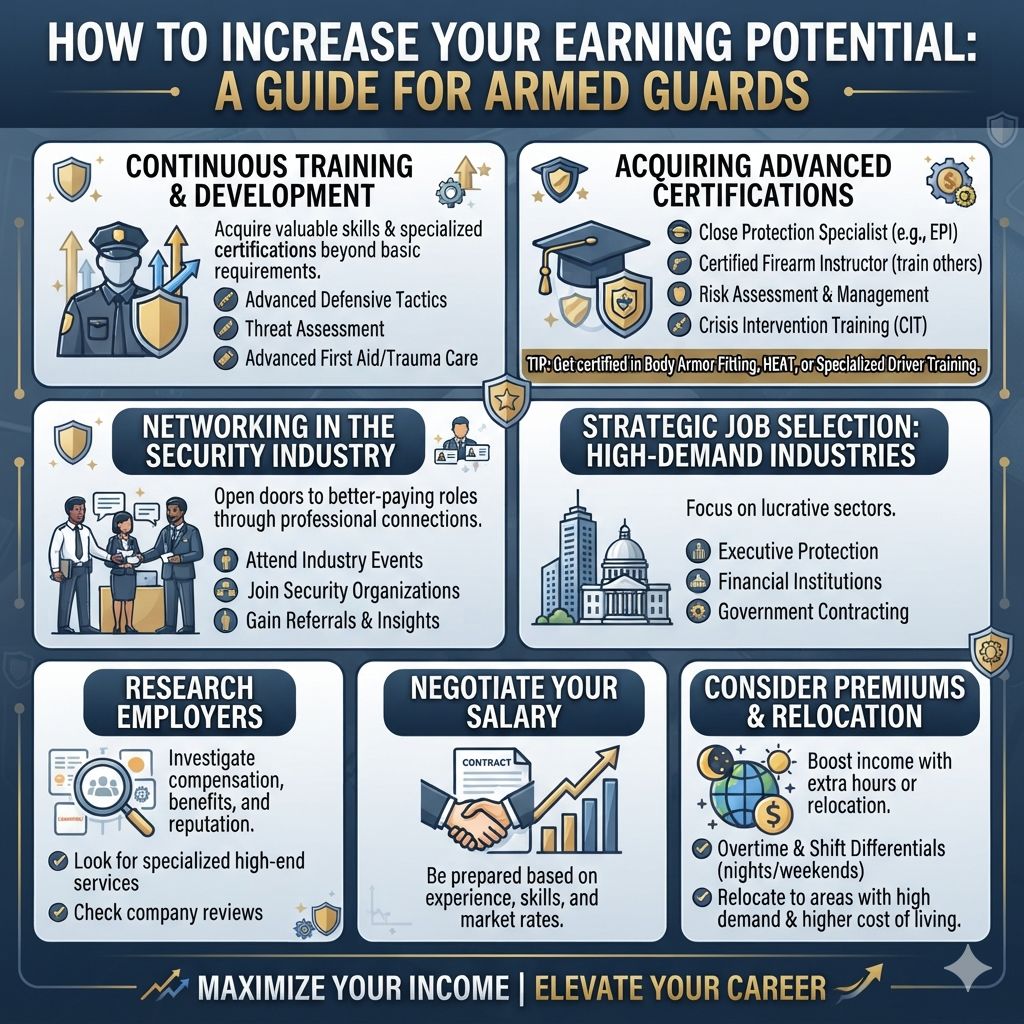
Continuous training and skill development are paramount. Obtaining specialized certifications beyond the basic requirements can make an armed guard more attractive to employers and justify higher pay. These might include certifications in close protection, advanced first aid, defensive tactics, or specific threat assessment methodologies.
Tip: Consider obtaining certifications in areas like body armor fitting, hostile environment awareness training (HEAT), or driver training for specialized vehicles. These add significant value.
Networking within the security industry can also open doors to better-paying opportunities. Attending industry events, joining professional security organizations, and maintaining professional relationships can provide insights into available high-paying positions and offer referrals.
Acquiring Advanced Certifications
- Close Protection Specialist: Training from reputable institutions like the Executive Protection Institute (EPI).
- Firearm Instructor Certification: If qualified, becoming a certified firearms instructor allows for additional income through training others.
- Advanced First Aid/Trauma Care: Certifications like EMT or Wilderness First Responder can be valuable in high-risk environments.
- Risk Assessment and Management: Courses focusing on identifying and mitigating security risks.
- Crisis Intervention Training (CIT): Useful for dealing with individuals in mental health crises.
Strategic Job Selection
- Target High-Demand Industries: Focus on sectors known for higher pay, such as executive protection, financial institutions, or government contracting.
- Research Employers: Investigate security companies and their reputation for fair compensation and benefits. Look for companies that specialize in higher-end security services.
- Negotiate Salary: Be prepared to negotiate your salary based on your experience, skills, and the market rate for the position.
- Consider Overtime and Shift Differentials: Some roles offer additional pay for working nights, weekends, or holidays, which can significantly boost overall income.
- Relocation: Be open to relocating to areas with a higher cost of living and greater demand for armed security, as these often offer higher salaries.
Frequently Asked Questions
What is the minimum salary an armed guard can expect?
The minimum salary for an armed guard can vary significantly by state and local regulations, as well as the specific employer. However, entry-level positions in lower-cost-of-living areas might start around $35,000 to $40,000 annually, or approximately $17 to $19 per hour. This is often dependent on meeting the basic licensing and training requirements.
Are there overtime opportunities for armed guards?
Yes, overtime opportunities are common for armed guards. Many security roles require coverage during evenings, weekends, and holidays, leading to frequent overtime shifts. Some employers offer premium pay for these extra hours, which can substantially increase an armed guard’s total annual earnings.
Do armed guards receive benefits like health insurance and retirement plans?
Benefit packages vary greatly among employers. Larger security firms and government contractors are more likely to offer comprehensive benefits, including health insurance, dental and vision coverage, paid time off, and retirement plans like 401(k)s. Smaller companies may offer fewer benefits or none at all, so it’s important to inquire during the application process.
What is the typical retirement age for an armed guard?
There isn’t a fixed retirement age for armed guards. Many continue working well into their 50s and 60s, provided they maintain the physical and mental fitness required for the job. Some may transition to less physically demanding roles within the security industry, such as dispatch or supervision, before fully retiring.
How does a clean criminal record impact an armed guard’s salary?
A clean criminal record is essential for obtaining and maintaining an armed guard license, which directly impacts employability. While it doesn’t directly increase salary, it is a prerequisite for most well-paying positions. Guards with no disciplinary issues on their record and a history of reliability may be favored for promotions or roles with higher pay.
Final Thoughts
The earning potential for an armed guard is influenced by a dynamic interplay of factors, from geographic location and years of experience to specialized skills and the type of employer. While the average annual salary offers a general guideline, individuals can significantly boost their income by pursuing advanced certifications, targeting high-demand industries, and seeking opportunities for career advancement. The role of an armed guard is one that demands significant responsibility, and compensation typically reflects this level of trust and capability.
Continuous professional development and strategic career planning are key to maximizing earnings in this vital security profession.