Standing Timber vs. Timber Tree: What’s the Difference?
Standing timber refers to trees still growing in a forest, ready or intended for harvest, while a timber tree is a specific tree within that standing timber that meets quality standards for lumber production. Understanding this difference is key for loggers, foresters, and anyone interested in the timber industry.

Forestry Suppliers
Forestry Suppliers Tree & Log Scale Stick,…
- Measures 31-1/2"L x 1-5/16"W x 5/8"H and provides a comfortable 25" reach for accurate measurements.
- Measures tree diameters from 10" to 40" DBH in 1" classes using the Doyle Scale for timber cruising and forest inventory.
- Estimates merchantable tree heights up to five 16' logs for fast timber volume calculations and field assessments.
As an Amazon Associate I earn from qualifying purchases.
Ever heard terms like “standing timber” and “timber tree” and felt a little confused? It’s like knowing the difference between a whole forest and a single, prize-winning apple on a tree. Both relate to trees, but they mean different things in the world of forestry and lumber. If you’re curious about where wood comes from or the steps involved in getting it, this guide is for you! If the standing tree in question is already dead, see our guide on whether dead standing trees count as seasoned wood. We’ll break down these terms simply, so you can understand them clearly. Let’s dive in and clear up any confusion, step by step.
What is Standing Timber?
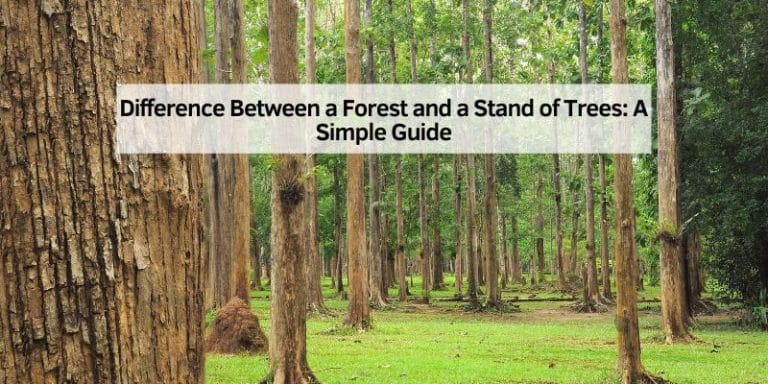
Standing timber, quite simply, refers to trees that are still growing in a forest and are intended for harvest. Think of it as the collective resource of trees that have reached a marketable size or age. It’s the raw material. These trees stand in the ground, rooted and alive, but they are earmarked for a future purpose: to be cut down and processed into lumber, wood products, or biomass. It’s the entire stand of trees that make up a forest’s timber potential.
The term “standing” emphasizes that the trees are currently upright and in their natural forest environment, as opposed to being felled or processed. This distinction is important in forestry management and timber sales. When someone talks about buying or selling standing timber, they are referring to the right to harvest those trees from a specific area of land.
Several factors determine if trees are considered standing timber and ready for harvest. These include:
Species: Certain tree species are more valuable or suitable for lumber production than others. Common timber species in North America include pine, fir, spruce, oak, and maple.
Size and Age: Trees need to reach a certain trunk diameter and maturity to be considered commercially viable. This varies by species and market demand. For example, a young pine might not be ready, but a mature Douglas fir well over 100 years old certainly is.
Quality: Even within a stand of trees, not all will be suitable for high-grade lumber. Factors like excessive branching, damage from insects or disease, or natural defects can influence a tree’s quality.
Market Demand: The economic viability of harvesting depends on current prices for timber and manufactured wood products.
When you’re looking at a forest, the aggregate of all these eligible trees is the standing timber. It’s the resource bank ready for the industry.
Legal and Ownership Aspects of Standing Timber
The ownership and legal rights associated with standing timber are crucial. When you purchase standing timber, you are typically buying the right to enter private or public land and harvest those trees. This often involves a contract with the landowner that specifies:
The species and quantity of trees to be harvested.
The harvesting methods allowed.
The timeframe for the harvest.
Regulations regarding reforestation and environmental protection.
It’s also important to understand that standing timber can be owned separately from the land itself. This is known as “severed timber rights” and can sometimes lead to complex legal situations. For instance, the landowner of a parcel might sell the surface rights but retain ownership of the valuable timber growing on it.
Evaluating Standing Timber
Foresters and timber cruisers are professionals who evaluate standing timber. They use specialized tools and techniques to estimate the volume, quality, and value of trees in a given area. This process involves:
Cruising: Systematically sampling the trees in a forest to get an estimate of the total timber volume.
Dendrometry: Measuring tree characteristics like diameter at breast height (DBH), height, and form.
Log Grading: Assessing the quality of potential logs based on visual criteria, which will determine their value for different lumber products.
This detailed assessment is vital for making informed decisions about when and how to harvest, ensuring the sustainability of the forest and maximizing economic return. The U.S. Forest Service provides extensive resources on forest inventory and timber management, highlighting the scientific basis for these evaluations.
What is a Timber Tree?
A “timber tree” is a much more specific term than standing timber. It refers to an individual tree that possesses characteristics making it suitable and valuable for timber production. It’s not just any tree in the forest; it’s a tree that meets certain standards for quality, size, and species.
Think of it this way: standing timber is the general category, like “all the fruits in an orchard.” A timber tree is then like “the perfect, unblemished apples chosen for prize-winning cider.”
Key characteristics that qualify a tree as a timber tree include:
Straight, Clear Bole: The main trunk of the tree should be as straight as possible, with minimal knots or branches for a significant portion of its length. This “clear” section is where the highest quality lumber comes from.
Good Form: The tree should have a well-proportioned shape, without excessive crooks or twists that would make milling difficult or create unusable wood.
Healthy Condition: The tree must be free from significant diseases, insect infestations, or physical damage that would compromise the integrity or quality of the wood.
Sufficient Diameter and Height: It needs to be large enough to yield commercially viable logs. What constitutes “sufficient” depends on the species and the intended use. For example, a mature oak that’s 24 inches in diameter at breast height (DBH) and 80 feet tall to the first usable log is often considered a prime timber tree.
Desirable Species: As mentioned before, certain species are more sought after by the industry. A towering redwood or a strong, clear Douglas fir is a classic example of a desirable timber tree.
A single stand of standing timber can contain many timber trees, but it can also contain many more trees that are too small, too crooked, or diseased to be considered timber trees.
The Process of Identification
Identifying a timber tree is a skill honed by experience, often by foresters and loggers. They look for the attributes mentioned above during timber cruises. This identification process is critical because only the timber trees provide the raw material for valuable wood products. The remaining trees might be left to grow, be thinned out to improve the growth of the best specimens, or used for lower-value products like pulpwood or firewood.
Value and Marketability
The value of a timber tree is directly tied to its quality and the market demand for its species. A perfect, large oak tree can fetch a significantly higher price than a smaller, knotty pine, even if both are considered standing timber. This is why detailed assessments during timber evaluations are so important. Companies like the U.S. Forest Products Laboratory in Madison, Wisconsin, conduct extensive research into wood quality and properties, providing scientific data that informs timber grading and valuation.
Key Differences Summarized
To make the distinction crystal clear, let’s put it side-by-side:
| Feature | Standing Timber | Timber Tree |
|---|---|---|
| Definition | Trees still growing in a forest, intended for harvest. | An individual tree meeting quality standards for timber production. |
| Scope | A collective resource; a volume of trees. | A single, specific tree. |
| Focus | The potential resource within a forest stand. | The quality and yield of an individual tree. |
| Condition | May include trees of varying quality, size, and health. | Typically characterized by straightness, clearness, and health. |
| Economic Concept | Represents the total marketable wood in an area. | Represents a unit of high-value wood. |
Understanding this difference helps in appreciating the nuances of forest management and the timber industry. It’s about recognizing the forest as a whole resource (standing timber) and then identifying the best individual components within it (timber trees) for specific uses.
Why Does This Distinction Matter?
Knowing the difference between standing timber and a timber tree is more than just a vocabulary lesson; it has practical implications for various stakeholders:
For Forest Landowners
If you own forest land, understanding these terms helps you manage your assets effectively. When you consider selling timber, you need to know if the trees on your land qualify as marketable standing timber. You also need to understand how to identify and value the individual timber trees to negotiate fair prices. Selling rights to “standing timber” means you’re selling the trees designated for harvest. A good forestry consultant can help you assess the volume and quality of your timber.
For Loggers and Forestry Professionals
Loggers and foresters rely on this distinction daily. Their job is to efficiently harvest the standing timber. However, their success and profitability hinge on identifying and prioritizing the highest-quality timber trees within that standing inventory. They need to know which trees to cut, how to cut them to maximize value, and how to manage the remaining forest sustainably.
For the Timber Industry
Sawmills and wood product manufacturers depend on a consistent supply of quality timber trees. Their operations are designed to process specific types and grades of logs. The quality of the raw material directly impacts the quality and marketability of the finished products, from lumber for construction to fine wood for furniture. The Forestry Suppliers, Inc. catalog, for example, lists many tools used by professionals to measure and assess these timber tree characteristics.
For Environmental Management
This distinction also plays a role in sustainable forestry. When harvests are planned, selective removal of targeted timber trees, while leaving younger or lower-quality trees to grow, is a common practice. This approach helps ensure the long-term health and productivity of the forest ecosystem. Organizations like the Forest Stewardship Council (FSC) promote responsible forest management practices, which often involve careful selection based on tree quality and health.
How to Identify a Timber Tree in Practice
Let’s say you’re exploring a forest, or perhaps you’re interested in the timber on your own property. How do you start to distinguish a potential timber tree from other trees? It involves a keen eye and an understanding of what makes a tree valuable for lumber.
Here’s a basic checklist for identifying a potential timber tree:
1. Assess the Species: Is it a species known for valuable timber in your region? (e.g., hardwoods like oak, maple, cherry, or softwoods like pine, fir, spruce).
2. Evaluate the Trunk:
Straightness: Does the trunk grow relatively straight from the ground up? Avoid trees with pronounced bends or twists.
Clear Length: How much of the trunk is free of branches? Look for a long, clear section before the first significant limbs appear. This is often called the “merchantable height.”
Diameter: Measure the trunk’s diameter at “breast height” (DBH), which is about 4.5 feet (1.37 meters) off the ground. A larger diameter generally means more lumber.
3. Check for Health:
Bark: Is the bark intact, or are there large areas missing or showing signs of disease or insect damage?
Crown: Does the tree have a healthy canopy of leaves or needles? Sparse foliage or dead branches can indicate stress or disease.
Rot/Damage: Look for any signs of decay, cracks, or significant wounds on the trunk.
4. Consider Site Conditions: Trees growing on good soil with ample sunlight tend to grow faster and have better form than those in poor conditions.
Even with these pointers, accurate assessment often requires professional tools and expertise. For example, specialized tools like increment borers are used to check tree age and health without causing significant harm.
Types of Timber Trees and Their Qualities
Different tree species offer distinct qualities valuable for various applications:
| Tree Species | Common Uses | Key Qualities |
|---|---|---|
| Oak (e.g., Red Oak, White Oak) | Furniture, flooring, cabinetry, barrels, construction | Hard, durable, strong, beautiful grain, good resistance to decay (especially White Oak) |
| Maple (e.g., Sugar Maple, Red Maple) | Furniture, flooring, musical instruments, butcher blocks | Hard, dense, fine texture, can produce “figure” (like bird’s-eye or curly maple), good wear resistance |
| Pine (e.g., Southern Yellow Pine, White Pine) | Construction framing, paneling, furniture, pulpwood | Relatively soft, easy to work with, good strength-to-weight ratio, readily available, aromatic (some species) |
| Fir (e.g., Douglas Fir, Balsam Fir) | Construction framing, structural beams, pulpwood | Strong, stable, straight-grained, good stiffness, can be milled into large dimension lumber |
| Walnut (e.g., Black Walnut) | High-end furniture, cabinetry, gunstocks, veneers | Extremely valuable, rich dark color, beautiful grain, strong, durable, relatively easy to work |
The value of a timber tree is not just about its species, but also its grade. Lumber grades are established by organizations like the National Hardwood Lumber Association (NHLA), which define standards for lumber defectiveness (knots, checks, splits, etc.). A higher-grade log, yielding higher-grade lumber, commands a higher price.
Forestry Management and Sustainability
The concepts of standing timber and timber trees are central to modern forestry. Sustainable forestry aims to harvest timber in a way that ensures the forest ecosystem remains healthy and productive for future generations. This involves:
Selective Harvesting: Carefully removing only specific trees based on age, species, health, or marketability. This often prioritizes cutting older, less vigorous timber trees to allow younger trees to thrive.
Reforestation: Planting new trees or encouraging natural regeneration after harvesting to replace what was removed.
Intermediate Treatments: Practices like thinning (removing some trees to reduce competition) help improve the growth and quality of the remaining timber trees.
Monitoring and Research: Ongoing studies help foresters understand forest dynamics, pest management, and the long-term effects of different harvesting methods. According to the USDA Forest Service Research and Development, this continuous study is vital for balancing timber production with other forest values like recreation and wildlife habitat.
Frequently Asked Questions
What is the primary difference between standing timber and a single tree in the forest?
Standing timber refers to all trees in a forest that are ready or intended for harvest, representing a collective resource. A timber tree is a specific, individual tree within that standing timber that meets quality, size, and health criteria to be valuable for lumber production.
Can any tree in a forest be considered standing timber?
Not usually. Standing timber typically refers to trees that have reached a marketable size and species. Younger, smaller, or undesirable trees might be present in the forest but are often not included in the definition of standing timber intended for commercial harvest.
Is there a legal definition for standing timber?
Yes, in many contexts, standing timber refers to trees that are legally recognized as property rights separate from the land. Purchasing standing timber means acquiring the right to cut and remove those designated trees from a specific parcel of land, governed by contracts and local regulations.
What makes a tree a “timber tree” versus just a “tree”?
A timber tree is an individual tree that is distinguished by its desirable characteristics for milling into lumber. These include a straight, clear trunk with minimal defects, sufficient diameter and height, and good overall health. A non-timber tree might be too small, crooked, diseased, or of an undesirable species.
Who decides if a tree is a timber tree?
Professionals like foresters, timber cruisers, and loggers make these decisions. They use established guidelines and their expertise to assess a tree’s potential yield and quality for lumber production based on species, form, size, and health.
Does the term “timber tree” imply it will be cut down soon?
Not necessarily. While timber trees are valuable for harvest, they might be left standing if the forest is managed for other purposes, or if they are part of a long-term growth strategy. However, they are the candidates for harvest when the time comes.
Are all standing timber sales focused only on the best timber trees?
Generally, landowners and buyers aim to harvest the most valuable timber trees. However, a standing timber sale might include a broader range of trees depending on the contract, market conditions, and the specific goals for forest management in the area. Lower-grade trees might be harvested for pulpwood or other uses if economically viable.
Conclusion
Understanding the difference between “standing timber” and a “timber tree” is fundamental to grasping the basics of forestry and the lumber industry. Standing timber is the collective resource—the forest’s potential wealth of wood—while a timber tree is the individual component of that resource that meets specific criteria for quality and value. This distinction impacts how forests are managed, how timber is bought and sold, and ultimately, the quality
Related pick: Check today's price on Amazon