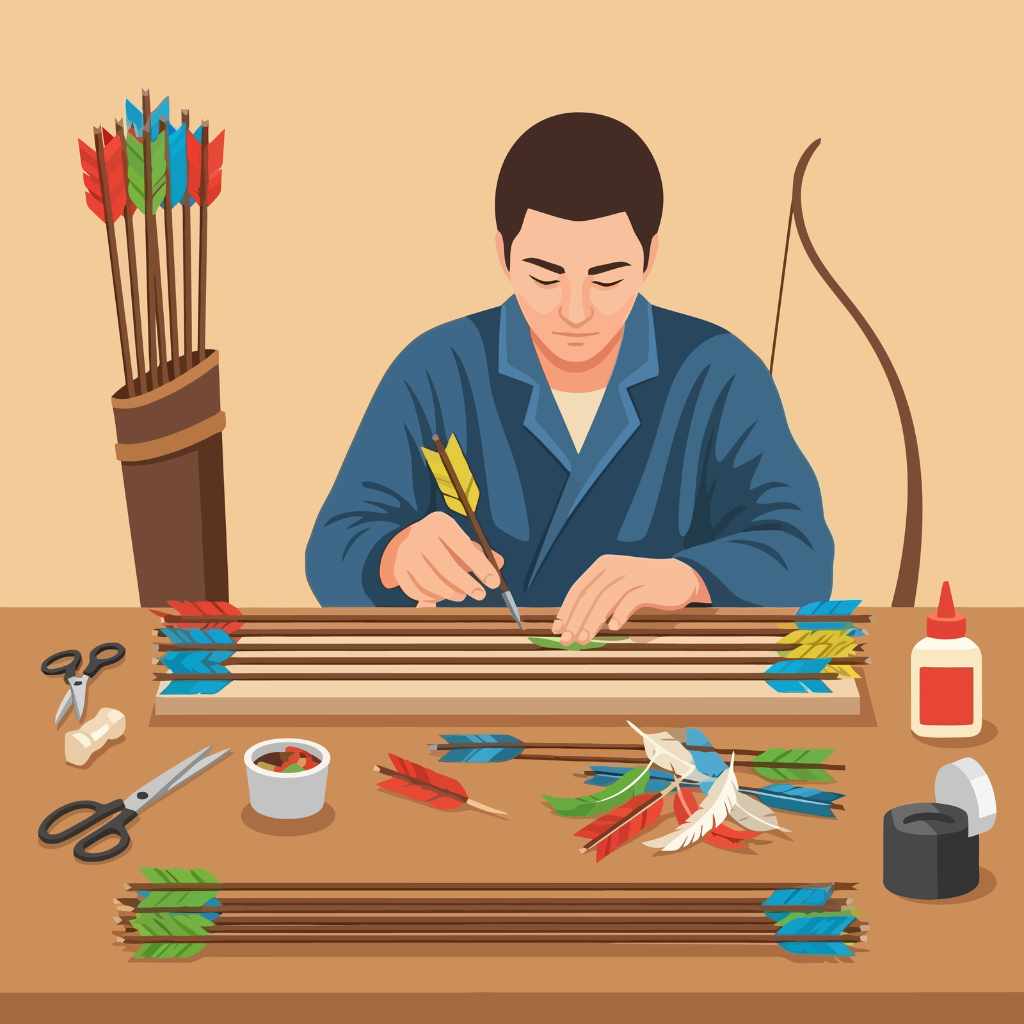
Using different color fletching on arrows is essential for easily identifying which arrow is yours, especially when shooting in groups or tracking shots. The distinct colors help you quickly spot a misplaced arrow and ensure you always grab the right equipment.
Welcome, friend! If you’ve ever shot arrows with friends or family, you know the frustration: all the arrows look the same sticking in the target! It’s hard to know which one is yours, right? This simple thing—choosing different colored fletching—can save you a lot of time and confusion at the range. Don’t worry about complicated setups. We are going to break down exactly why picking unique colors is a proven, essential step for every archer. This guide will show you how to use color to make your archery journey smoother and much more fun. Let’s simplify this setup right now!
Why Different Colored Fletching is Not Just for Looks: The Essential Advantage
As a beginner, you might think arrow customization is just about looking cool. While cool-looking gear is fun, the primary reason for using different color fletching on arrows is pure practicality and improved safety on the range. Think of it like assigning different colored seat cushions to different family members in the car—it instantly tells you who belongs where!
When you start shooting, you might buy a dozen arrows that all look identical. This quickly becomes a problem when you shoot at the same target as someone else, or even when you shoot alone and forget which arrow landed where. Choosing distinct colors is the easiest fix available.
The Core Needs Different Fletching Colors Solve
Different colored fletching addresses three main areas essential for any archer:
- Ownership Identification: Knowing instantly which arrow belongs to you.
- Troubleshooting Flight: Matching a poor flight pattern to a specific arrow setup.
- Safety and Recovery: Making arrows highly visible for quick tracking and retrieval around the range.
Arrow Basics for New Archers: What is Fletching?
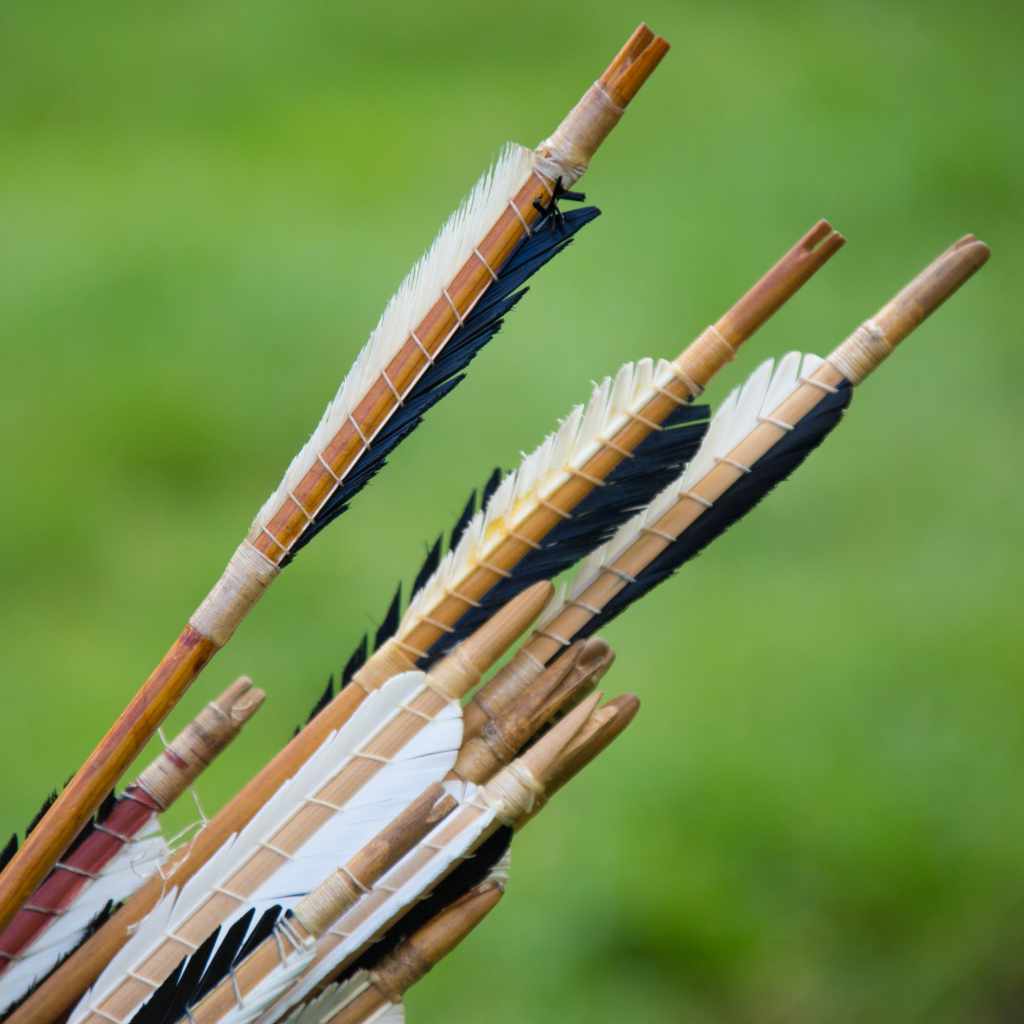
Before we dive deep into color strategy, let’s make sure we are on the same page. Fletching (sometimes confusingly called “vanes”) refers to the stabilization fins attached to the back end of your arrow shaft. They look like small wings. Their job is crucial: they make the arrow fly straight.
Think of a paper airplane. If you don’t fold the back edges right, it spirals down immediately. Fletching does this job for your arrow at high speeds. Most modern arrows use plastic vanes, but traditional archers might prefer feathers (natural fletching).
The Strategic Use of Color: A Beginner’s Guide to Setup
The goal here is differentiation. If you have a quiver of six arrows, you want them easy to tell apart instantly, even from a distance.
Method 1: Full Differentiation (The Easiest Way)
This is the simplest and most recommended method for beginners. You assign a completely unique color combination to every single arrow.
For example, if you have four arrows, you could set them up like this:
- Arrow 1: All Bright Yellow Fletching
- Arrow 2: All Neon Orange Fletching
- Arrow 3: All Hot Pink Fletching
- Arrow 4: All Bright Green Fletching
This approach works flawlessly when shooting in a group. If your friend has blue fletching and you see blue sticking in the target, you know immediately to leave that arrow alone.
Method 2: Positional Coding (For Advanced Troubleshooting)
Once you get more advanced, or if you are only shooting with one or two friends, you might use a simple positional code using the colors of the nock (the plastic piece fitting onto the string) combined with the fletching color.
For example, let’s say you and your buddy share a quiver but use different arrows. You stick to 3 fletchings (three fins) and your friend uses 4 fletchings (four fins). This is a basic mechanical difference, but color can also designate this:
- Your Arrows: Red Fletching, White Nock
- Friend’s Arrows: Green Fletching, Black Nock
This color-coding system makes it easy to organize your gear and ensures you aren’t accidentally grabbing an arrow that might be slightly different in spine or weight, which can affect accuracy.
Understanding Components: Nock vs. Fletching Color
It is important to note the difference between the fletching colors and the nock colors. Archery manufacturers often automatically color-code the nock (the cup that touches the bowstring) for you, usually making one vane a different color. This differently colored vane is called the “index vane” or “cock vane.”
The index vane must face outward (away from the bow riser) when you nock the arrow properly. If you are buying arrows with factory-installed fletching, you will notice one vane is a different color. This is a functional marker, but it doesn’t always help you identify ownership from a distance!
| Component | Primary Function | Owner Identification Role |
|---|---|---|
| Shaft (Body) | Structural integrity, carrying the point | Little to none (usually uniform color) |
| Fletching (Vanes/Feathers) | Stabilizing flight/making the arrow fly straight | Excellent Identifier (The main target for color choice) |
| Nock | Connecting the arrow securely to the bowstring | Helpful for correct orientation (Index Vane) |
| Point/Tip | Impact, gripping the target | Usually uniform, unless customized for hunting |
Choosing High-Visibility Colors: Practical Tips
When you are looking at arrow customization options, not all colors are created equal, especially when dealing with sunlight, shadows, or brushy retrieval areas. You need colors that pop!
The Best Fletching Colors for Visibility
The colors that stand out most against natural backgrounds (grass, dirt, trees) are fluorescent and ultra-bright hues. Think of safety vests—they use the same logic.
- Fluorescent Yellow/Lime Green: Often considered the gold standard for all-around visibility, especially in low light.
- Hot Orange/Blaze Orange: Excellent contrast against green foliage and brown dirt. A staple in hunting safety gear.
- Bright Pink (Hot Pink): Surprisingly effective, often standing out sharply against most natural backdrops.
- White: Good for contrast against dark targets, but can sometimes blend into bright skies or snow.
Colors to Use Sparingly or Avoid
Some colors look great in the package but are terrible on the range or in the field:
- Black: Almost invisible in deep shadow or against dark ground cover. Great for the index vane, terrible for primary identification.
- Dark Blue or Deep Red: These colors can be easily masked by natural shadows or dark soil.
- Camouflage Patterns: The ultimate bad choice for general target practice, as they are designed to disappear!
A Quick Note on Light Conditions
Consider where you shoot most often. If you shoot primarily indoors or on overcast days, muted colors might work. However, if you shoot outside midday, those fluorescent colors will be your best friend because the UV light makes them glow.
For more information on how light affects target sports safety, you can review local range guidelines, often shared by organizations focused on range management safety standards, such as those sometimes discussed by the National Shooting Sports Foundation (NSSF).
How to Implement Different Color Fletching on Your Arrows (The Practical Steps)
You have two main routes: buying arrows already set up this way, or customizing your own. For beginners, buying pre-fletched arrows with mixed colors is the fastest way to start using this essential technique.
Option A: Purchasing Pre-Fletched Arrows
When you buy a dozen arrows, look for packages specifically advertising mixed or “multi-color” fletching. If the package doesn’t explicitly say mixed, assume they are all the same color.
If you buy a 12-pack and they are all solid green, you might need to buy a small set of replacement vanes (fletchings) in a different color (say, orange) and swap out a few arrows.
Option B: Customizing Your Own Fletchings (The Confidence Builder)
If you need to re-fletch or want to customize bare shafts (arrow shafts without any fletching), this requires a bit more attention. You’ll need a fletching jig—a specialized tool that holds the vane perfectly straight while the glue sets.
Tools Required for Custom Fletching:
- Fletching Jig (essential for straight attachment)
- Fletching Cement/Glue (specific for vanes/carbon shafts)
- New Vanes (in your chosen high-visibility colors)
- Pencil and Ruler (for marking placement)
- Rubbing Alcohol (for cleaning the shaft surface)
Step-by-Step Fletching Setup:
This process ensures your arrows fly true and have your unique color scheme.
- Clean the Shaft: Use rubbing alcohol to wipe down the area where the fletching will attach. Any oil or dirt will ruin the adhesion.
- Select Your Scheme: Decide which arrow gets which color pattern. For identification, you might want two of one color and two of another (e.g., 2 Yellow/2 Orange on every arrow).
- Set Up the Jig: If using a 3-fletch system, load your first vane into the jig, ensuring the angle is set correctly (usually 1 or 2 degrees offset for helical or offset straight flight).
- Apply Glue: Run a thin, consistent bead of specialized glue along the base of the vane.
- Attach to Shaft: Place the shaft into the jig slot, making sure the vane is positioned correctly relative to the nock groove (this is where knowing the index vane placement helps).
- Cure Time: Allow the first vane to dry completely according to the glue instructions.
- Repeat: Rotate the jig for the next vane position and repeat steps 3 through 5 until all three or four vanes are attached.
- Final Check: Once cured, gently wiggle each vane. If it feels loose, remove it carefully and re-glue, or the arrow will not fly well.
While custom fletching is rewarding, if you want the fastest path to using different color fletching on arrow identification, stick to buying pre-fletched arrows with mixed colors, or ask a local pro shop to set up a few practice arrows for you!
Troubleshooting: When Fletching Color Helps Diagnose Flight Issues
This is where using different color fletching on arrow shafts moves from being simply convenient to actually being essential for skill improvement. When an arrow flies badly—wobbling, veering left or right—you need to know which arrow is causing the problem.
Scenario 1: One Arrow Always Misses Low
If you shoot four arrows (two red, two blue) and the two red arrows consistently hit lower than the blue ones, this tells you something about the red arrows specifically. Perhaps they are slightly heavier, or the tips are different, or maybe the fletching on that color is slightly looser.
Scenario 2: Distinct Tail Wobble Pattern
If you look closely at the back of the arrow as it flies (if you have very high frame rate video, or if you are an advanced shooter watching the arrow leave the bow), you might see a wobble. If that wobble only appears on the arrows with, say, yellow fletching, you immediately know those yellow-fletched arrows need inspection, restringing, or re-fletching because they are aerodynamically unstable compared to the others.
It helps eliminate variables. If all your arrows look the same, you can’t isolate the problem arrow. If they are distinctly colored, troubleshooting becomes a fast process of elimination.
| Observed Problem | Colored Arrow Affected | Likely Cause to Investigate |
|---|---|---|
| Consistent Veer Left | All Green Fletched Arrows | Check green arrows for spine stiffness variation or rear-end damage. |
| Heavy Wobble/Spiral | Only the Arrow with Pink Vanes | The pink vanes might be lifting slightly off the shaft due to poor glue application. |
| Missing an entire group | Friend’s Blue Arrows | Friend needs to verify they are using their own arrows versus yours. |
Safety Check: Using Bright Colors for Arrow Recovery
Beyond just knowing ownership, bright, different color fletching makes finding your arrows after you miss the target much easier. Missing the target occasionally is a normal part of archery practice! If your arrows are dark or camouflage, they can become hazards if left in the grass or woods bordering the range.
Bright colors:
- Stand out against brown dirt.
- Are easier to spot when walking through tall grass.
- Are visible when retrieved from brushy areas near the target butt.
A safer range is a more enjoyable range. Making retrieval fast and easy means you spend less time looking on the ground and more time shooting!
Frequently Asked Questions (FAQ) for Beginners
Q1: Do I have to use exactly three fletchings, or can I use four?
Most modern arrows are set up for three fletchings (vanes). While four fletchings offer slightly more stability at extremely high speeds, for beginner and intermediate target practice, three is standard and easier to manage. Always check your bow manufacturer’s recommendations for your specific spine if you deviate.
Q2: Does the color of the fletching affect how the arrow flies?
No, the color pigment itself does not affect flight. However, the material and size of the vane do. If you mix lightweight plastic vanes with heavier feather sets, that weight difference will affect how the arrow flies, regardless of the color.
Q3: What is the “index vane,” and do I need to worry about it?
The index vane is the one vane that is a different color than the others. Its job is to orient the arrow correctly on the string so that the two remaining vanes do not hit the bow riser (the stick part of the bow) during the shot. Yes, you must always ensure this vane is pointing outward or upward, depending on your bow setup.
Q4: Is it okay if my friend and I shoot arrows that look similar?
It is strongly discouraged. Even if you shoot at separate, clearly marked targets, accidentally misplacing an arrow can lead to confusion. If you are shooting at the same target face, using different colors is vital for safety and accuracy tracking. Always maintain strong color differentiation.
Q5: Can I use different lengths of fletching on different colored arrows?
You shouldn’t intentionally mix vane lengths on arrows you shoot together unless you are doing specific performance tuning. Mixing lengths (e.g., 4-inch vanes on one arrow and 2-inch vanes on another) will significantly change drag and speed. Stick to one consistent length for a batch of arrows intended for the same purpose.
Q6: Where is the best place to buy arrows with mixed fletching colors?
Most major archery brands offer multi-color fletched arrows in their beginner and general-purpose lines. Check with your local pro shop first, as they often have specialized setups. Online retailers also stock specific mixes, usually labeled “multi-color” or “mixed fletch.”
Building Confidence Through Clarity and Control
We’ve covered the why, the how, and the best colors to choose. Remember, archery is a journey that relies on consistent, repeatable actions. When you introduce the simple step of using different color fletching on arrow shafts, you immediately increase the consistency and clarity of your practice sessions.
No longer do you have to squint across the range wondering which arrow is yours after a great group shot. No longer will you waste time searching due to a dark-colored arrow hiding in the underbrush. You have taken a proactive step toward better organization and easier troubleshooting.
This small detail—the color of the stabilizing fins—gives you immediate visual feedback and ownership over your equipment. As you advance in archery, simple systems like this form the backbone of precise shooting. Be safe, keep practicing, and enjoy the satisfaction of instantly recognizing that perfectly placed arrow