Do Fire Arrows Damage Wood Rust
Fire arrows have been a subject of intrigue and debate among Rust players since their introduction. The core question, do fire arrows damage wood in Rust?, is pivotal for both offensive and defensive strategies. With bases often constructed from wood in the early stages, understanding the precise effects of fire arrows can influence raid tactics, base design, and resource allocation. Players often seek clarity amid conflicting information, patch notes, and anecdotal reports, making this topic essential for anyone invested in optimizing their gameplay.
This article examines the mechanics, real-world player tests, patch histories, and strategic uses of fire arrows against wood structures in Rust. We’ll break down the data, compare fire arrows to other tools, and provide actionable advice for maximizing your efficiency, whether you’re defending a wooden base or planning a raid.
By the end, you’ll have a comprehensive understanding of how fire arrows interact with wood, backed by facts, examples, and practical insights.
Key Takeaways
- Fire arrows do inflict damage to wooden structures in Rust, but their efficiency is context-dependent.
- The damage output of fire arrows is lower compared to explosives or melee tools for wood structures.
- Recent patches and updates have affected fire arrow mechanics, making up-to-date knowledge essential.
- Fire arrows offer tactical advantages beyond raw damage, such as area denial and visibility.
- Resource costs and practical risks often limit fire arrows’ use against wood in larger raids.
- Understanding comparative tools and their effects on wood is crucial for both attackers and defenders.
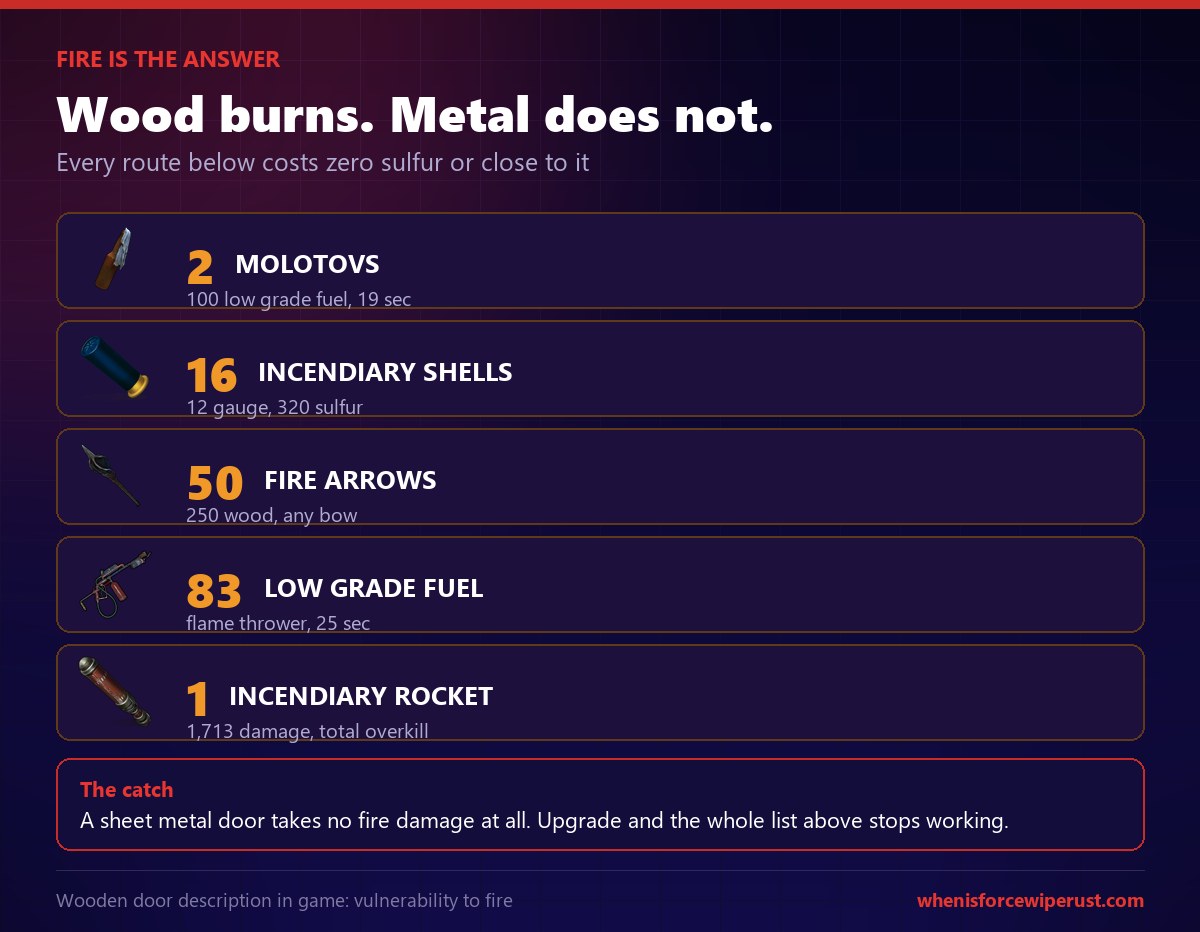
Credit: whenisforcewiperust.com
Fire Arrow Mechanics In Rust
The fire arrow in Rust is crafted by combining a regular arrow with low grade fuel and a cloth. Upon impact, it creates a small fire, dealing initial impact damage and then burn damage over time. The primary purpose of fire arrows is to damage wooden structures, ignite objects, and sometimes create area denial for enemy players.
Crafting And Usage
To craft a fire arrow, players need:
- 1 arrow
- 10 low grade fuel
- 5 cloth
Once crafted, fire arrows can be fired using a bow or crossbow. The mechanics are straightforward, but the burn effect introduces complexity. The fire lingers for several seconds, causing repeated damage to the affected structure or entity.
Damage Output And Burn Mechanics
Fire arrows deal two types of damage:
- Impact Damage: Upon hitting a wooden structure, the fire arrow delivers an initial hit. This is typically equivalent to a regular arrow’s damage, but slightly less due to the fire modifier.
- Burn Damage: After impact, a small fire is created, dealing damage over time (DoT) to wood and other flammable surfaces. The burn effect lasts for 6-8 seconds.
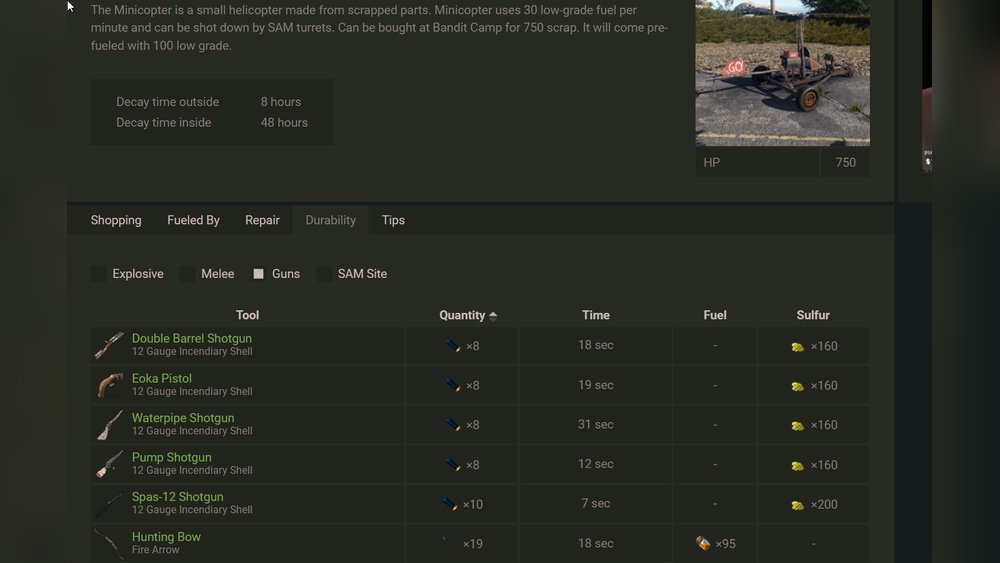
According to the official Rust wiki, a single fire arrow deals approximately 20 initial damage and 40 burn damage to wood walls, totaling about 60 damage per arrow (Source: Rust Wiki). However, this figure can fluctuate based on server settings, patch versions, and environmental factors.
Patch History And Updates
The mechanics of fire arrows have changed significantly over various patches. For example, the April 2020 update reduced burn duration but increased initial damage. As of 2026, fire arrows are less effective against higher-tier structures, but their role against wood remains relevant. Always check patch notes for up-to-date information. For full patch history, reference the official Rust update logs (Source: Facepunch Studios).
Area Denial And Tactical Effects
Beyond damage, fire arrows create fire zones that can deny access, flush out defenders, or illuminate dark areas. This is especially useful during nighttime raids or when trying to disrupt enemy movement. The fire also makes it easier to spot players attempting repairs.

Credit: www.youtube.com
Fire Arrows Vs. Other Tools: Damage Comparison
Understanding how fire arrows stack up against other tools is crucial for making strategic decisions. Let’s compare fire arrows to melee weapons, explosives, and other ranged options.
Comparison Table: Damage To Wood Structures
| Tool | Initial Damage | Burn/DoT Damage | Total Damage Per Use | Resource Cost | Time to Destroy Wood Wall |
|---|---|---|---|---|---|
| Fire Arrow | 20 | 40 | 60 | 10 low grade, 5 cloth, 1 arrow | ~34 arrows (~4 min) |
| Hatchet | 60 | 0 | 60 | 100 wood, 50 metal fragments | ~34 hits (~3 min) |
| Sword | 40 | 0 | 40 | 100 metal fragments | ~50 hits (~4 min) |
| Satchel Charge | 250 | 0 | 250 | 1 satchel charge | 2 charges (~1 min) |
| Molotov Cocktail | 10 | 90 | 100 | 20 low grade, 10 cloth, 5 metal fragments | ~20 cocktails (~3 min) |
Efficiency And Practicality
While fire arrows do damage wood, the resource cost and time required make them less efficient than explosives or melee tools. For early-game players, fire arrows can be viable due to easier resource acquisition. However, for larger raids, satchels and molotovs offer superior damage and speed.
Pro Tip:
If you’re low on explosives, fire arrows can be used to soften up wooden walls, but always supplement with melee attacks or other tools for maximum efficiency.

Credit: grimworkshop.com
Real-world Examples And Case Studies
Examining actual gameplay scenarios helps illustrate the practical effectiveness of fire arrows against wood structures.
Case Study 1: Early-game Raiding
A group of three players with bows and fire arrows attempted to raid a wooden base. They fired approximately 100 fire arrows at the wood walls, resulting in substantial damage but not complete destruction. After exhausting their fire arrows, they switched to hatchets to finish the job. The combined effort allowed them to breach the wooden wall in just under 10 minutes. This demonstrates fire arrows’ usefulness for weakening defenses but highlights their limitations as a sole raiding tool.
Case Study 2: Defensive Use
During a nighttime defense, a solo player used fire arrows to create fire zones around their wooden base. The flames illuminated enemy raiders and forced them to retreat, preventing melee attacks on the base. While the fire arrows did not destroy enemy equipment, the area denial effect was invaluable, giving the defender time to repair and regroup.
Example: Patch-driven Meta Shift
After the April 2020 patch, many players reported that fire arrows were less effective against wood, prompting a shift toward molotov cocktails and satchel charges. In my experience, the patch reduced burn duration, making fire arrows less viable for solo raiders.
This underscores the importance of staying current with game updates.
Strategic Uses Of Fire Arrows
Fire arrows can be used in various ways, depending on the context and objectives. Their flexibility makes them a valuable tool, despite limitations.
Raiding Wooden Bases
- Softening Defenses: Fire arrows can weaken wooden walls and doors before switching to melee or explosives.
- Resource Management: When low on explosives, fire arrows help conserve satchels and molotovs.
- Silent Raids: Fire arrows are quieter than explosives, allowing for stealthier approaches.
Defensive Applications
- Area Denial: Creating fire zones to block enemy movement or illuminate attackers.
- Repair Disruption: Fires prevent enemies from repairing damaged walls, prolonging vulnerability.
- Visibility: Fire arrows help spot attackers during nighttime or low-visibility conditions.
Pvp Combat
- Flushing Out Enemies: Fire arrows can force enemies out of cover or enclosed spaces.
- Crowd Control: Used to control movement in close-quarters combat.
Resource Efficiency
While fire arrows are not the most efficient tool for destroying wood, they are often more accessible in the early game. Players with limited resources can leverage fire arrows for tactical advantages, especially when teamed up with others.
Fire Arrow Limitations And Risks
Fire arrows, while versatile, come with notable drawbacks and risks.
Resource Consumption
Crafting fire arrows requires low grade fuel and cloth, both of which can be scarce early on. Large-scale raids may quickly deplete these resources, making fire arrows less sustainable than melee tools.
Reduced Effectiveness Against Upgraded Structures
Fire arrows are largely ineffective against stone, metal, and armored structures. Attempting to use fire arrows on these materials wastes resources and time. Always check the target’s material before committing.
Environmental Hazards
Fires can spread unpredictably, especially near flammable items. This can backfire, causing damage to friendly structures or assets. Players should be cautious when deploying fire arrows around their own base.
Patch Variability
Fire arrow mechanics are subject to change with patches. What works today may be obsolete tomorrow. Always stay updated with official patch notes.
Comparing Fire Arrows To Other Raid Tools
To decide if fire arrows are right for your strategy, compare them to alternatives in terms of efficiency, cost, and risk.
Melee Tools
- Hatchet: High damage per hit, low resource cost, but exposes player to risk.
- Sword: Moderate damage, faster attack rate, but less efficient than hatchet.
Explosives
- Satchel Charge: High damage, high resource cost, loud and attracts attention.
- Molotov Cocktail: High burn damage, area effect, moderate resource cost.
Ranged Options
- Regular Arrows: Minimal damage to wood, but useful for combat.
- Incendiary Ammo: Similar to fire arrows but used with guns, offers more range and damage.
Data Table: Tool Comparison For Raiding Wood
| Tool | Damage Efficiency | Resource Cost | Noise Level | Risk Factor |
|---|---|---|---|---|
| Fire Arrow | Moderate | Medium | Low | Moderate |
| Hatchet | High | Low | Low | High |
| Satchel Charge | Very High | High | Very High | High |
| Molotov Cocktail | High | Medium | Medium | Moderate |
| Incendiary Ammo | High | High | Medium | Moderate |
Choosing The Right Tool
- For early-game raids, fire arrows can be viable due to accessibility.
- For mid-to-late game, explosives and melee tools are more efficient for wood and essential for higher-tier materials.
- Consider noise level and risk factor: Fire arrows are quieter, making them ideal for stealth operations.
Patch History And Community Testing
Understanding how fire arrow mechanics have evolved is critical for making informed decisions.
Notable Patch Changes
- April 2020: Reduced burn duration, increased initial damage.
- June 2026: Improved hitbox detection, making fire arrows more reliable.
- February 2026: Adjusted resource costs, making fire arrows slightly more expensive.
Community Testing
Players frequently conduct tests to determine fire arrow effectiveness. Popular YouTube channels and forum posts document results, often showing that fire arrows require 34-40 shots to destroy a wood wall. These tests highlight discrepancies between patch notes and actual gameplay, emphasizing the importance of community-driven research.
Example: Player Test Results
A test by Reddit user _RustyRaider_ showed that after 38 fire arrows, a wooden wall was destroyed, supporting the official wiki’s data. However, server modifiers and latency can affect results.
Optimizing Fire Arrow Use In Raids
To maximize fire arrows’ effectiveness, deploy them strategically and combine with other tools.
Step-by-step Raid Strategy
- Scout the Target: Confirm the structure is wood and assess defenses.
- Prepare Resources: Craft sufficient fire arrows, plus melee tools for finishing.
- Attack in Waves: Fire arrows first, then melee to maximize damage.
- Monitor Fire Spread: Watch for environmental hazards and friendly fire.
- Switch Tools: If progress stalls, switch to hatchets or explosives.
Team Coordination
For group raids, designate roles:
- Fire Arrow Specialist: Focuses on softening defenses.
- Melee Finisher: Completes destruction after fire arrows.
- Lookout: Monitors for enemy response.
Pro Tip:
Use fire arrows to create distractions or force defenders to expose themselves. This can give attackers a tactical edge without committing all resources.
Building Defenses Against Fire Arrows
If you’re defending a wooden base, there are steps you can take to minimize fire arrow damage.
Upgrade To Stone Or Metal
The most effective defense is upgrading from wood to stone or metal as soon as possible. Fire arrows are ineffective against these materials, making your base significantly more secure.
Repair And Reinforce
- Keep repair tools handy to fix damage as soon as it occurs.
- Reinforce vulnerable areas with barricades or additional walls.
Fire Suppression
- Use water buckets to extinguish fires quickly.
- Deploy sandbags or other fire-resistant items near entry points.
Environmental Design
- Avoid clustering flammable items near walls.
- Design bases with fire breaks to limit spread.
Frequently Asked Questions
What Is The Maximum Damage Fire Arrows Can Do To Wood In Rust?
The maximum damage per fire arrow to wood is approximately 60 points, combining initial impact and burn effect. However, actual damage may vary due to environmental factors and server settings.
Are Fire Arrows Effective Against Stone Or Metal Structures?
No, fire arrows are ineffective against stone, metal, and armored walls. Their burn effect does not penetrate these materials, making them useful only against wood and certain deployables.
Can Fire Arrows Ignite Deployable Items Or Storage Boxes?
Yes, fire arrows can ignite some deployable items like storage boxes, sleeping bags, and wooden barricades. This can cause additional loss for defenders beyond structural damage.
How Can Defenders Counter Fire Arrow Raids?
Defenders should upgrade to stone or metal, keep repair tools ready, and use water buckets to extinguish fires. Strategic base design and fire-resistant items can also help minimize damage.
Do Fire Arrows Work The Same In All Rust Servers?
Fire arrow mechanics can vary by server modifiers and custom settings. Always test fire arrows in your server environment or consult admins for specific mechanics.
Fire arrows remain an intriguing and flexible option for Rust players targeting wood structures. While they do deal damage and offer unique tactical benefits, their efficiency is outclassed by melee and explosive tools for larger raids. Staying informed about patch changes and leveraging fire arrows’ area denial capabilities can provide a strategic edge, especially in early-game scenarios. Whether you’re raiding or defending, understanding the mechanics and limitations of fire arrows is essential for success in Rust’s ever-evolving landscape.