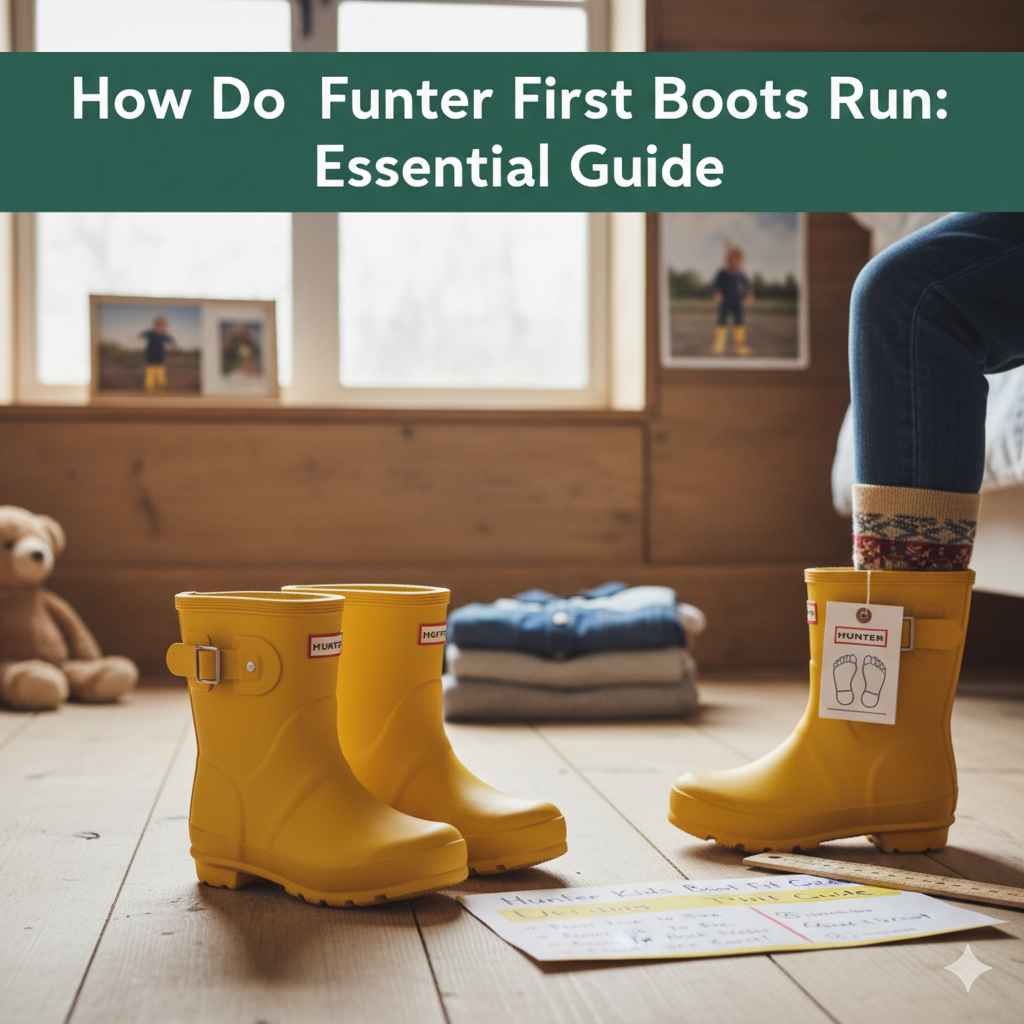
How Do Hunter First Kids Boots Run: Essential Guide
For many kids, Hunter First boots run true to size, with a little room for growth. It’s best to measure your child’s foot and consult size charts, as fit can vary slightly by style and individual foot shape.
Finding the perfect pair of rain boots for your little adventurer can sometimes feel like navigating a maze! Especially when shoes are involved, we all want that just-right fit – not too tight, not too loose. Hunter First boots are a popular choice, and understanding how they run is key to happy feet and fewer returns. Many parents wonder if they should size up, size down, or stick to their child’s current shoe size. This guide is here to demystify the sizing of Hunter First kids’ boots, offering you clear advice so you can pick the best fit with confidence.
We’ll walk through everything you need to know, from how to measure your child’s feet accurately to understanding the nuances of Hunter’s sizing. Our goal is to make this process simple and straightforward, so your child can splash in any puddle without a second thought. Let’s get those little feet into boots that are just right!
Understanding Kids’ Boot Sizing: Why It Matters
Children’s feet are always growing, which can make shoe shopping a constant challenge. For rain boots, the fit is especially important. A boot that’s too big can cause tripping, blisters, and general discomfort. A boot that’s too small won’t just be uncomfortable; it can hinder proper foot development. Hunter First boots are designed with little explorers in mind, but getting the size correct ensures they are both functional and comfortable.
Hunter’s “First” collection is specifically made for toddlers and very young children, often focusing on soft, flexible materials and easy on-and-off designs. This means the fit might feel a bit different than their more robust “Original” or “Play” collections. Understanding these differences and knowing how to measure will help you make the best choice.
How Do Hunter First Kids Boots Run? The General Consensus
When asking “how do Hunter First kids boots run?”, the most common answer from parents and experts alike is that they tend to run true to size, with a little extra room. This is intentional. Hunter designs these boots to accommodate a child’s foot growth and the use of thicker socks during colder or wetter weather.
However, it’s crucial to remember that “true to size” can be subjective, and children’s feet vary in width and shape. Some children have narrower feet, while others have wider ones. Hunter First boots are generally made with a standard width, so if your child has particularly wide feet, you might find they feel a bit snug, even if the length is correct. Conversely, if your child has very narrow feet, they might feel a bit roomy.
Key Factors Influencing Hunter First Boot Fit
Several elements play a role in how any shoe, including Hunter First boots, will fit your child:
- Child’s Foot Size: The most obvious factor! Always measure your child’s foot if possible.
- Foot Width: Hunter First boots are typically standard width.
- Sock Thickness: Thicker socks will make boots feel tighter.
- Growth Room: Hunter designs often include a little extra space.
- Specific Boot Style: While the “First” line aims for consistency, minor variations can occur.
How to Measure Your Child’s Feet for Boots
Accurate measurement is the most reliable way to determine the correct size. Here’s a simple, step-by-step guide:
- Gather Your Supplies: You’ll need a piece of paper, a pen or pencil, and a ruler or measuring tape.
- Mark the Paper: Place the paper on a flat surface (like a hard floor) and have your child stand on it with their heel touching a wall.
- Trace the Foot: Carefully trace around one of your child’s feet. Ensure the pencil is held straight up and down. It’s best to do this at the end of the day when feet are slightly swollen.
- Mark the Heel and Toe: Draw a straight line from the back of the heel to the longest toe on the tracing.
- Measure the Length: Measure the distance in inches or centimeters from the back of the heel line to the longest toe line.
- Repeat for Both Feet: Feet can be different sizes, so measure both and use the larger measurement.
Once you have the measurement, you can compare it to the Hunter size chart. Remember to add about half an inch (or 1-1.5 cm) for growing room and sock allowance. Many parents find that most children can comfortably wear their regular shoe size in Hunter First boots, but always double-check the specific measurements.
Hunter Kids’ Size Chart: A Closer Look
Hunter provides official size charts, and these are your best friend when ordering online. Here’s a typical representation of how their kids’ sizes (which are often UK sizing) translate. Always check the specific product page for the most accurate chart.
Hunter Kids’ Boot Size Conversion (Approximate)
| UK Size | US Toddler Size | US Little Kid Size | EU Size | Centimeters (Foot Length) |
|---|---|---|---|---|
| 4K | 5T | – | 20 | 120-128 mm |
| 5K | 6T | – | 21 | 129-137 mm |
| 6K | 7T | – | 22 | 138-145 mm |
| 7K | 8T | – | 23 | 146-153 mm |
| 8K | 9T | – | 24 | 154-162 mm |
| 9K | 10T | – | 25 | 163-170 mm |
| 10K | 11T | – | 27 | 171-178 mm |
| 11K | 12T | – | 28 | 179-186 mm |
| 12K | 13T | – | 30 | 187-194 mm |
| 13K | 1Y | – | 31 | 195-202 mm |
| 1Y | – | 1.5Y | 32 | 203-210 mm |
| 2Y | – | 2.5Y | 34 | 211-218 mm |
| 3Y | – | 3.5Y | 35 | 219-226 mm |
Please note: This is a representative chart. Always refer to the specific size guide on the Hunter website or retailer’s page for the most accurate sizing. “K” typically refers to Kids’ sizes, and “Y” refers to Youth sizes. Toddler sizes are usually marked with “T”.
For example, if your child’s foot measures 170 mm, they would likely be a UK size 10K, which often corresponds to a US Toddler 11. Given the “true to size with room” feedback, this would likely be the correct choice.
Hunter First Boots vs. Other Hunter Kids’ Styles: Fit Differences
It’s worth noting that Hunter offers different lines for kids, and some may fit slightly differently:
- Hunter First Boots: These are designed for the youngest children, often featuring softer soles, a slightly wider calf opening for easier on/off, and a snugger fit around the footbed to feel more secure. They generally run true to size.
- Hunter Kids Original Boots: These are scaled-down versions of the adult Original Boot. They might have a slightly different feel and might offer a bit more room overall.
- Hunter Kids Play Boots: A shorter, lighter option, the Play boots also generally follow true-to-size expectations but can feel different due to the shorter shaft length.
For the “First” range, the emphasis is on a comfortable, secure fit for little ones who are just getting used to wearing boots. They often have a narrower footbed compared to the Original, designed to prevent “floppiness.”
Tips for Ensuring the Best Fit
Even with size charts, a few practical tips can help ensure you get the perfect fit:
- Measure Both Feet: As mentioned, feet can be different sizes. Always size based on the larger foot.
- Consider Sock Thickness: If your child typically wears thick socks with their rain boots, factor this in. You might want to try the boot on with the intended sock if possible.
- Check for Wiggle Room: With the boot on, your child should be able to wiggle their toes comfortably. There should be about a finger’s width of space between their longest toe and the end of the boot.
- Heel Lift: A small amount of heel lift in a new boot is normal, especially with rubber boots, as the material will soften and mold to the foot over time. However, excessive slipping means the boot is too big.
- Check the Calf: Ensure the boot isn’t too tight around the calf, allowing for easy movement. The “First” boots are designed to be less restrictive here.
- Inspect the Construction: Ensure there are no internal seams or rough spots that could cause irritation.
When to Size Up (and When Not To)
This is a common dilemma for parents. Here are some guidelines:
When to Consider Sizing Up:
- Clearance Needed: If your child’s measured foot length, plus about a finger’s width for growth and socks, just reaches the measurements for the current size, consider sizing up.
- Foot Width Issues: If your child has slightly wider feet and the ‘true to size’ fit feels snug around the width, you might need to size up to get more volume, even if it means a little extra length.
- Rapid Growth Spurts: If your child is known for having sudden growth spurts, sizing up might be a prudent choice to extend the lifespan of the boots.
When to Stick to the Current Size (True to Size):
- Perfect Measurement: If your child’s measured foot length fits comfortably within the size range, with adequate wiggle room, stick with it. “True to size” with a bit of extra room is often the ideal scenario.
- Narrow Feet: If your child has narrow feet, the standard width of Hunter First boots should provide a good fit without needing to size up for width.
- Avoiding Trips: Boots that are too large increase the tripping hazard. If the current size allows for correct toe joint movement and minimal heel slip without socks, it’s likely the right bet.
Troubleshooting Fit Issues
What if the boots still don’t feel quite right?
- Too Big: If there’s excessive heel slippage, or your child is tripping, the boots are likely too big. You can try thicker socks, but if the problem persists, it’s time to size down.
- Too Small: If toes are cramped, or the boot is difficult to get on/off due to tightness, they are too small. This is especially important to avoid as it can affect foot development.
- Tight Calf: While less common with the “First” range, if the calf is uncomfortably tight, it might be a fit issue with that specific model or a need to consider a boot with a wider shaft.
It’s always best to purchase from retailers with good return policies, especially when buying online, just in case the fit isn’t perfect.
Reviews and Real-World Feedback
Many parents share their experiences online, and reading reviews can be incredibly helpful:
“My son wears a size 7 toddler shoe, and the Hunter First boots UK 7 (US 8 Toddler) fit him perfectly. There’s just enough room for a thicker sock and a bit of growth.” – Sarah M.
I found Hunter First boots run true to size. I measured my daughter’s foot, and her regular shoe size was spot on. They feel secure and not overly clunky for her little feet.” – David R.
“I sized up because I wanted her to grow into them, but they were too big, and she kept tripping. Her current shoe size was the right fit with room to spare.” – Emily K.
These real-life testimonials generally reinforce the idea that Hunter First boots run true to size and offer a little extra allowance. The key is always to measure and consult the size chart.
Beyond Boots: Caring for Your Hunter Boots
Once you’ve found the perfect fit, keeping your Hunter boots in good condition will ensure they last. Rubber boots can benefit from proper care:
- Cleaning: Wipe down with a damp cloth after each use to remove dirt and mud.
- Drying: Never dry near a heat source like a radiator or direct sunlight, as this can damage the rubber. Stuff them with newspaper to help absorb moisture and maintain shape, then air dry.
- Protection: Hunter recommends using their Boot Buffer spray for a matte finish and to remove any white residue (known as blooming, which is natural for natural rubber). For a shiny finish, use their Boot Shine. These products can be found on the official Hunter Boots care guide website.
Frequently Asked Questions (FAQ)
Q1: Do Hunter First Kids Boots run small or large?
Generally, Hunter First Kids boots run true to size, with a bit of extra room to accommodate growth and thicker socks.
Q2: Should I size up in Hunter First boots for my child?
It depends. If your child’s measurement is right at the top of a size and you want them to grow into them, sizing up might be an option. However, for most, their regular shoe size, based on accurate measurement, is the right fit.
Q3: How much extra room should there be in a kid’s rain boot?
Ideally, there should be about a finger’s width (approximately 0.5 to 1 cm or 1.5 cm) of space between your child’s longest toe and the end of the boot, allowing for growth and movement.
Q4: Are all Hunter kids boots sized the same?
While the “First” range aims for consistency, different Hunter kids’ lines (like Original or Play) might have slight fit variations. Always check the specific size chart for the model you are purchasing.
Q5: What do I do if my child’s feet are between sizes on the Hunter chart?
If your child is between sizes, and you prefer a snugger fit or they have narrower feet, consider the smaller size with thicker socks. If you anticipate quick growth or they have wider feet, the larger size might last longer and be more comfortable.
Q6: How do I check if Hunter First boots are too big for my child?
If your child’s heel lifts significantly when they walk, or they are frequently tripping, the boots are likely too big. An excessive amount of space in front of their toes can also indicate they are too large.
Q7: Can my child wear regular socks with Hunter First boots?
Yes, they can wear regular socks. However, due to the slightly snugger fit of the “First” range, very thick, bulky socks might make the boots feel tighter than intended. Lighter to medium-weight socks are usually best.
Conclusion
Navigating children’s shoe sizing can certainly be a journey, but understanding how Hunter First Kids boots run brings you much closer to finding that perfect, puddle-ready pair. The consensus points to them running true to size, with a thoughtful allowance for growth and comfort. By accurately measuring your child’s feet and cross-referencing with the official Hunter size charts, you’ll be well-equipped to make a confident purchase.