
How I Kill Huge Elm Trees: Proven Essential
Effectively killing a huge standing elm tree requires proper preparation, the right tools, and safe application of proven methods like chemical treatment or ring barking. Always prioritize safety and follow instructions carefully for successful and responsible tree removal.

Corteva
Tordon Rtu Specialty Herbicide 1 Qt Kills…
- NOT For Sale In: AK, CA, DC, FL, RI, PR
- Effective: Kills cut stumps on fence lines&non-cropland areas. Control unwanted trees by cut surface treatments in forest&non-crop…
- Superior Results: Keeps more than 20 woody species at bay. It translocates into the tree's root system to stop resprouts
As an Amazon Associate I earn from qualifying purchases.
Dealing with a huge elm tree that needs to be removed can feel like a big challenge. Perhaps it’s diseased, overgrown, or simply in the way of your plans. Many homeowners face this situation, wondering about the best, safest, and most effective ways to tackle such a large task. It’s understandable to feel a bit overwhelmed. But don’t worry! With the right knowledge and approach, you can confidently manage this project. This guide will walk you through proven methods, step-by-step, so you can get the job done right.
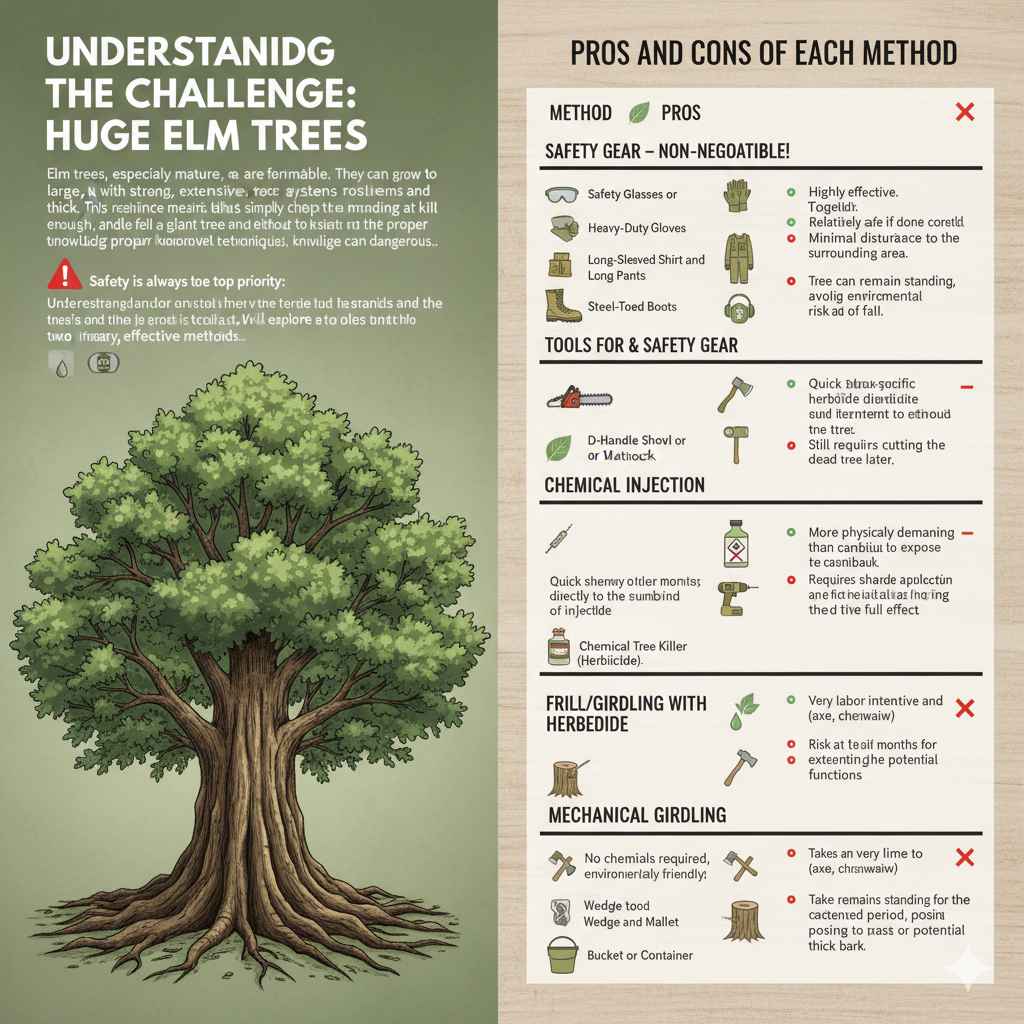
Understanding the Challenge: Huge Elm Trees
Elm trees, especially mature ones, are formidable. They can grow to be quite large, with strong, extensive root systems and thick, resilient bark. This resilience means that simply chopping at them might not be enough, and attempting to fell a giant tree without proper knowledge can be dangerous. Safety is always the top priority, so understanding the tree’s characteristics and the best removal techniques is crucial. We’ll explore two primary, effective methods that homeowners can employ with careful planning and execution.
Essential Tools and Safety Gear for Tree Removal
Before you even think about touching the tree, gather your essential tools and safety gear. This isn’t the place to cut corners; your safety depends on having the right equipment and using it correctly. Think of this as your pre-flight checklist.
Safety Gear – Non-Negotiable!
- Safety Glasses or Goggles: Protect your eyes from flying debris, sap, or chemical splashes.
- Heavy-Duty Gloves: Protect your hands from bark, sap, sharp edges, and chemicals.
- Long-Sleeved Shirt and Long Pants: Made from durable material to prevent scratches and potential chemical contact.
- Steel-Toed Boots: Essential for protecting your feet from falling branches or tools.
- Hearing Protection (if using power tools): Earplugs or earmuffs are vital if you plan to use a chainsaw.
- Dust Mask or Respirator: Important when dealing with chemical treatments or sawdust.
Tools for the Job
- Chainsaw: For felling, limbing, or cutting the trunk into manageable sections. Ensure it’s sharp, fueled, and in good working order. For very large trees, you might need a more powerful, professional-grade saw. Refer to your chainsaw’s manual for safe operation.
- Axe or Hatchet: Useful for notching, chopping through smaller branches, or assisting with bark removal.
- D-Handle Shovel or Mattock: For digging around the base if you choose a root treatment method.
- Drill with Large Drill Bits (e.g., 1/2 inch or larger): For creating holes for chemical application.
- Chemical Tree Killer (Herbicide): Specifically formulated for tree removal. Look for products containing glyphosate or triclopyr. Always read and follow the label instructions precisely.
- Measuring Tape: For planning cuts and assessing the tree.
- Wedge and Mallet: Used with a chainsaw to prevent the saw from binding and to help control the direction of a fall (though for extremely large trees, felling is often best left to professionals due to unpredictability).
- Bucket or Container: For mixing or transporting chemicals.
Method 1: Chemical Treatment for Standing Trees
This method is often preferred for standing trees, especially when felling is too risky due to proximity to structures or power lines, or when you want to avoid the physical exertion of chopping down a massive tree. With chemical treatment, you effectively disrupt the tree’s ability to transport water and nutrients, leading to its death. It’s a slower process than felling but can be very effective when done correctly.
Option A: Targeted Trunk Injection
This is a highly effective method if you want to weaken or kill the tree without immediately felling it. It involves drilling holes into the tree and applying a concentrated herbicide.
Step-by-Step Trunk Injection Guide
- Preparation and Safety: Put on all your safety gear. Ensure you have the correct herbicide, drill, and appropriate drill bits. Read the herbicide’s safety data sheet (SDS) and product label thoroughly. Many herbicides require specific application rates and timing. The U.S. Environmental Protection Agency (EPA) provides valuable resources on pesticide safety and regulations.
- Identify Application Points: Locate the “cambium layer,” which is just under the bark. This is where the herbicide needs to be absorbed to be effective. You can usually find this layer by carefully scraping away a small section of bark. Aim for spots around the base of the tree, just above ground level, or on exposed roots.
- Drill the Holes: Using your drill and a large bit (around 1/2 to 3/4 inch), drill holes into the tree trunk. Drill diagonally downwards, aiming for a depth of about 1 1/2 to 2 inches. Space the holes evenly around the circumference of the trunk, about 3-6 inches apart. For very large trees, you might need even more holes.
- Apply the Herbicide: Carefully apply the recommended amount of herbicide into each hole. Use a syringe or a specialized applicator for precision. Do not overfill the holes. Most herbicides work best when applied immediately after drilling.
- Seal the Holes (Optional but Recommended): Some arborists recommend sealing the holes with putty or caulking to prevent the herbicide from leaking out and to stop disease-causing organisms from entering.
- Observe and Wait: The tree will not die immediately. It can take several weeks to months for the herbicide to fully take effect. You’ll likely see signs of wilting, leaf drop, and eventual browning.
- Post-Treatment: Once the tree is confirmed dead and has begun to dry out, you can then safely cut it down. Removing a dead tree is often easier and safer than a live one, as the wood is less dense and less likely to spring back.
Option B: Frill or Girdling Treatment
This method creates a gap for the herbicide to be directly applied to the cambium layer. It’s similar to mechanical girdling but with the added benefit of a chemical treatment to ensure death.
Step-by-Step Frill/Girdling Guide
- Safety First: Gear up with all safety equipment. Ensure your cutting tool (axe or chainsaw) is sharp and well-maintained.
- Create the Chemical Girdle: Using a sharp axe or a chainsaw, make angled cuts into the bark all the way around the tree trunk. These cuts should overlap and go down to the wood. You’re essentially creating a “frill” or a ring of exposed cambium. The goal is to remove a continuous band of bark about 2-4 inches wide.
- Apply Herbicide: Immediately after making the frill, use a brush or a sprayer to generously coat the exposed cambium layer with a concentrated herbicide solution. The herbicide should be applied to the freshly cut edges of the bark.
- Timing is Key: Like injection, this method works best when the tree’s sap is flowing, typically in spring or early summer. Avoid applying herbicides when the tree is dormant or during periods of extreme drought.
- Follow-Up: Observe the tree for signs of decline over the following weeks and months. Once the tree is completely dead and dry, it can be safely removed or allowed to decay naturally if appropriate.
For both chemical methods, consider seeking advice on the best herbicides for your region and specific tree type from your local agricultural extension office. For example, the University of New Hampshire Extension offers detailed guides on herbicide use for woody plants.
Method 2: Mechanical Girdling (Ring Barking)
This is a more labor-intensive, purely mechanical method of killing a tree. It involves completely removing a ring of bark around the trunk, severing the flow of nutrients and water between the roots and the canopy. While effective, it can take a long time for the tree to die completely and can leave the tree standing for an extended period, posing a risk.
Step-by-Step Mechanical Girdling Guide
- Gear Up: Don your full safety attire. You’ll need a sharp axe and potentially a chainsaw for removing the bark efficiently.
- Mark Your Ring: Decide on the height for your girdle. Typically, this is done a few feet from the ground. Mark a line around the entire trunk.
- Remove the Bark: Using your axe, carefully chop away sections of bark within your marked ring. You need to remove a continuous band of bark at least 2-4 inches wide, exposing the bare wood underneath. Ensure no bark connects the upper and lower portions of the girdle. If using a chainsaw, you can make two parallel cuts around the trunk and then remove the bark section between them. Be extremely careful if using a chainsaw for this.
- Deepen the Cut (if necessary): For very thick-barked trees, you may need to make a second, deeper cut to ensure all cambium and sapwood layers are disrupted.
- Patience is Required: Mechanical girdling does not kill the tree instantly. It can take many months, or even a year or more, for the tree to show significant signs of death and for all its leaves to fall.
- Monitor and Assess: Keep an eye on the tree. You may see suckers sprouting from above or below the girdle, which you can cut off. Once the tree is completely dead and dry, you can proceed with felling it.
Understanding Tree Physiology: Why Girdling Works
Trees are complex living organisms. Their bark plays a vital role, similar to skin on an animal. Beneath the bark is a crucial layer called the cambium. This is where new wood cells (xylem) and bark cells (phloem) are produced. The phloem transports sugars produced during photosynthesis from the leaves down to the roots. The xylem transports water and minerals from the roots up to the leaves. The U.S. Forest Service has excellent resources detailing tree structure and function.
When you girdle a tree (either mechanically or chemically), you are severing this critical transport system. By removing a band of bark or injecting herbicide into the cambium, you interrupt the downward flow of sugars. This starves the roots of energy. Simultaneously, the upward flow of water and nutrients is also compromised. Deprived of energy and water, the tree gradually dies.
When to Call a Professional
While these methods are proven, there are situations where calling a certified arborist or a professional tree removal service is the wisest and safest choice:
- Proximity to Structures: If the tree is close to your house, garage, power lines, or other valuable property, attempting to fell it yourself is extremely dangerous. Professionals have the equipment and expertise to control the fall.
- Tree Health and Stability: A severely diseased or rotted tree can be unpredictable. Its structure may be compromised, making it prone to breaking unexpectedly.
- Size and Height: Very large or tall trees require specialized equipment like bucket trucks and advanced felling techniques that most homeowners don’t possess.
- Lack of Experience: If you’re uncomfortable or inexperienced with chainsaws or the mechanics of tree removal, it’s best to err on the side of caution.
- Difficult Terrain: Steep slopes or uneven ground can make safe felling and cleanup incredibly challenging.
A professional can assess the tree’s condition, recommend the best removal strategy, and execute the job safely and efficiently. The Tree Care Industry Association (TCIA) recommends hiring certified arborists.
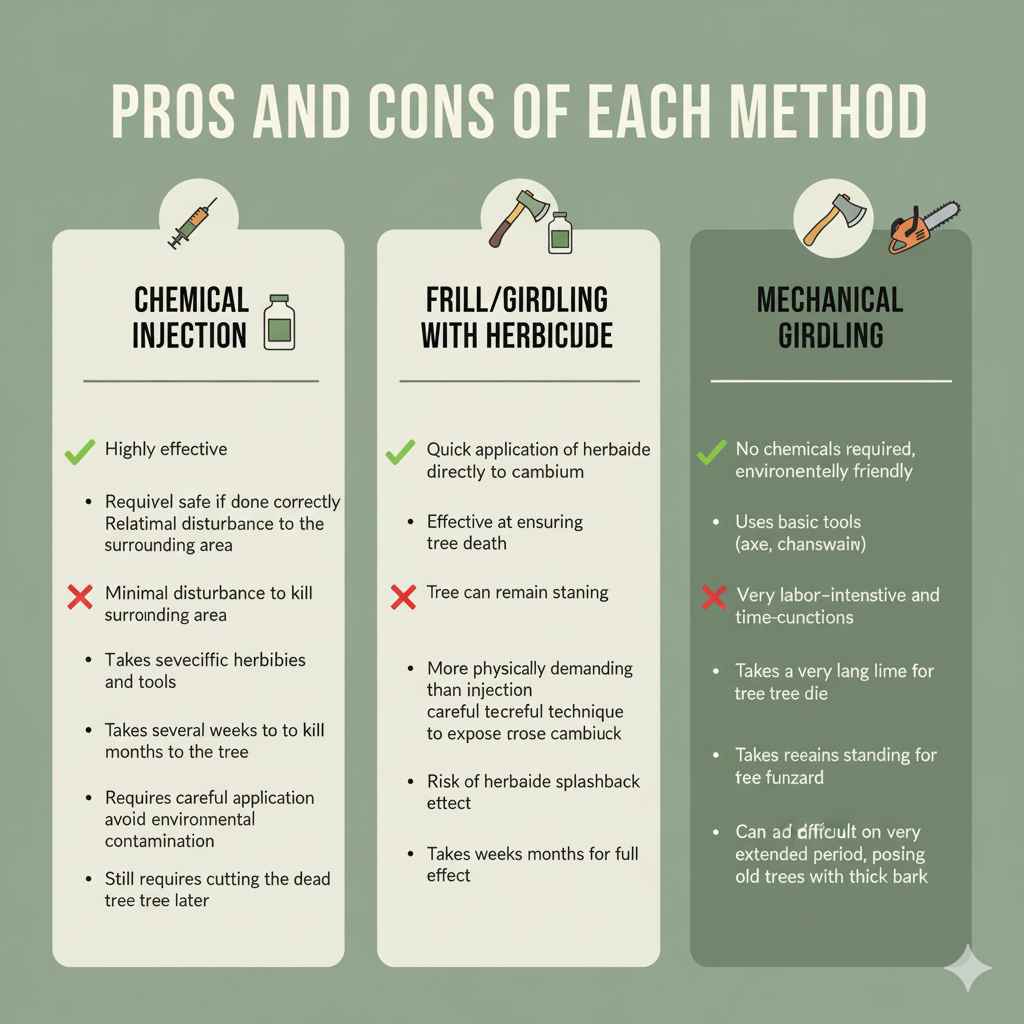
Pros and Cons of Each Method
Choosing the right method depends on your situation, available tools, and comfort level. Here’s a quick comparison:
| Method | Pros | Cons |
|---|---|---|
| Chemical Injection |
|
|
| Frill/Girdling with Herbicide |
|
|
| Mechanical Girdling |
|
|
Frequently Asked Questions (FAQ)
Q1: How long does it take for a chemical treatment to kill an elm tree?
It varies greatly depending on the size of the tree, the type of herbicide used, and the time of year. Usually, you can expect to see signs of wilting and leaf drop within a few weeks, but complete death and seasoning of the wood can take several months, sometimes up to a year.
Q2: Can I just cut down a huge elm tree myself?
For smaller elm trees, it might be possible with the right equipment and knowledge. However, for huge standing elm trees, felling them yourself is extremely dangerous due to their size, weight, and unpredictable nature. It’s strongly recommended to hire a professional for felling large trees, especially if they are near structures or power lines.
Q3: Is mechanical girdling bad for the environment?
Mechanical girdling itself is an eco-friendly method as it doesn’t involve any chemicals. However, leaving a large, dead tree standing for a long period can pose risks and may require eventual removal, which has its own environmental considerations. The main drawback is the extended time it takes for the tree to die.
Q4: What is the best time of year to treat an elm tree to kill it?
The most effective time to treat a tree chemically is during its active growing season, typically spring or early summer. This is when the sap is flowing, and the tree’s systems are actively transporting water and nutrients, allowing the herbicide to be distributed more readily throughout the tree.
Q5: What do I do after the elm tree is dead?
Once the tree is confirmed dead and has begun to dry out (usually after many months or over a year for girdled trees, or several months for chemically treated trees), you’ll need to decide whether to have it felled or to let it decay naturally if it’s in a safe, out-of-the-way location. If felling, always consider hiring professionals for very large trees.
Q6: How do I prevent the herbicide from harming other plants?
When using chemical treatments, it’s crucial to be precise. Use applicators that allow targeted delivery directly into the drilled holes or onto the frill. Avoid spraying in windy conditions and clean up any spills immediately. Always read and follow the herbicide’s label instructions regarding application rates and precautions to protect non-target plants and the environment.
Conclusion
Tackling a huge elm tree removal is a significant undertaking, but with the right knowledge and approach, it’s manageable. Whether you choose chemical treatment for a controlled kill or mechanical girdling as a chemical-free option, safety and preparation are paramount. Remember to wear your protective gear, use the right tools correctly, and always follow the product instructions for any herbicides. For extremely large trees, those posing a direct hazard, or if you have any doubts about your ability to perform the task safely, don’t hesitate to call in a certified arborist. They have the expertise and equipment to handle such challenges efficiently and safely, giving you peace of mind and protecting your property.
Related pick: Check today's price on Amazon