
Many archers, especially those just starting out, wonder about the right thickness for an EVA archery target. It can seem like a small detail, but it really matters for safety and how well your arrows last. Getting this wrong might mean arrows go right through or get stuck too easily.
This guide makes it super simple to figure out. We will walk you through everything you need to know, so you can pick the perfect target thickness for your needs. Let’s find out How Thick Should an EVA Archery Target Be?
(Best Size Guide).
Understanding EVA Archery Target Thickness
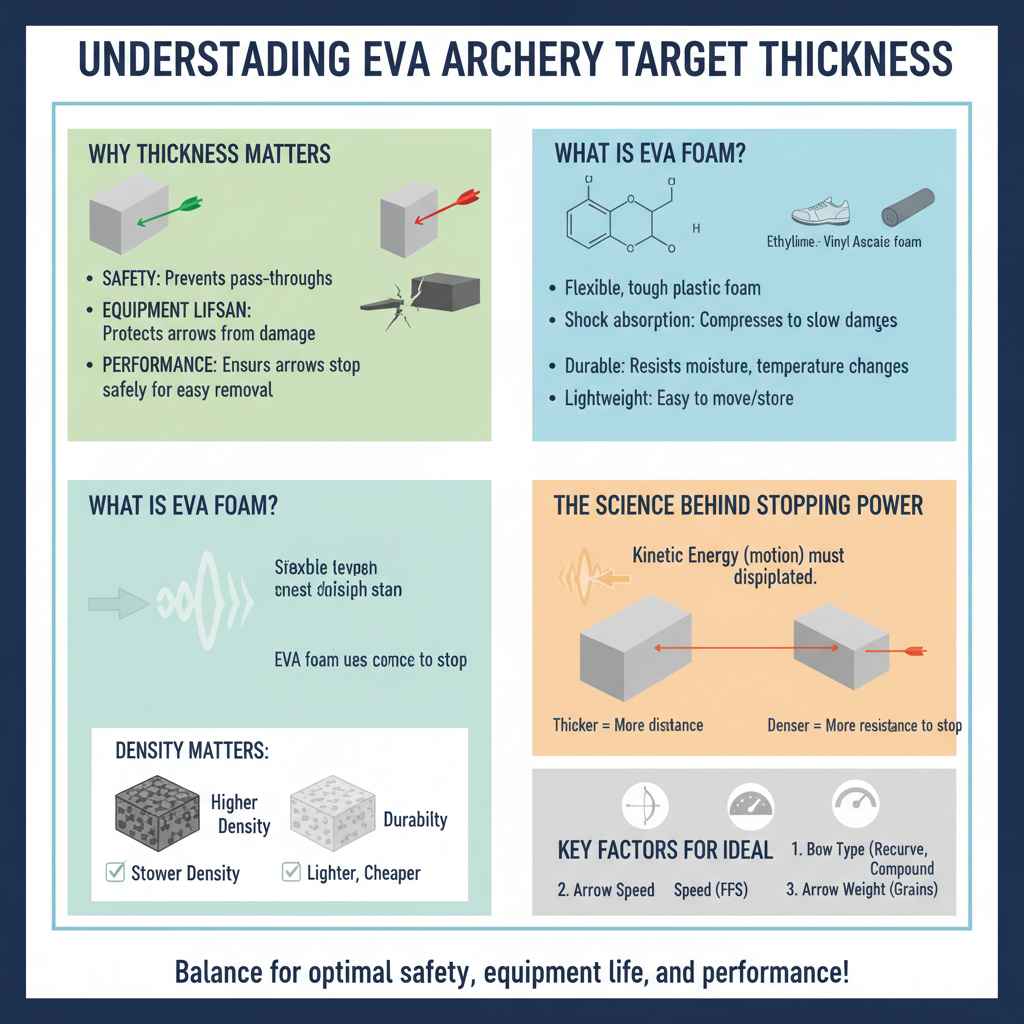
The thickness of an EVA archery target is a really important factor for both safety and the lifespan of your equipment. EVA foam is a popular choice because it’s lightweight, durable, and can absorb arrow impact effectively. However, if a target is too thin, arrows might pass all the way through, posing a risk to anything behind it.
This can also damage your arrows if they hit a hard surface. On the other hand, a target that’s too thick might be unnecessarily heavy and expensive.
Choosing the right thickness ensures that your arrows stop safely within the target material. This absorption process is key to preventing damage to the arrow shaft and vanes. It also makes arrow removal easier.
The ideal thickness varies based on several factors, including the type of bow, arrow speed, and arrow weight. We will explore these elements further to help you make an informed decision.
What is EVA Foam and Why is It Used?
EVA foam stands for ethylene-vinyl acetate. It’s a type of plastic foam that is very flexible and tough. Think of the material in some shoe soles or yoga mats; that’s often EVA foam.
For archery targets, this material is excellent because it can bounce back after being pierced by an arrow. It doesn’t crumble or leave large holes easily.
The key benefits of EVA foam for archery targets are its shock absorption capabilities. When an arrow hits the target, the foam compresses, slowing the arrow down gradually. This gradual stop is much gentler on your arrows compared to harder materials.
EVA is also lightweight, making targets easier to move and store. It’s resistant to moisture and extreme temperatures, which means it holds up well outdoors.
The density of EVA foam also plays a role in its performance. Higher density EVA offers better stopping power and durability, but it can also be heavier and more expensive. Lower density EVA is lighter and cheaper but may not stop faster arrows as effectively.
Manufacturers select specific EVA densities and thicknesses to create targets suited for different archery disciplines and skill levels.
The Science Behind Arrow Stopping Power
When an arrow flies into an archery target, a lot of physics is involved in stopping it. The kinetic energy of the arrow, which is its energy of motion, needs to be dissipated. The target material absorbs this energy.
EVA foam does this through compression and deformation.
The faster an arrow travels and the heavier it is, the more kinetic energy it carries. This means a more powerful bow and arrow combination requires a target that can absorb more energy. A thicker target provides more material for the arrow to travel through, increasing the time and distance over which the energy is dissipated.
This is similar to how a longer braking distance in a car reduces the force of deceleration.
The density of the EVA foam also matters. Denser foam resists penetration more, requiring the arrow to do more work to push through. This work translates into the arrow losing energy.
However, if the foam is too dense, it might not absorb the impact well enough, leading to arrow damage or pass-throughs. It’s a careful balance to achieve optimal arrow stopping without excessive wear on the target or arrows.
Factors Influencing Target Thickness Requirements
Several elements directly influence how thick an EVA archery target should be for optimal performance. The most significant factor is the power of the bow being used. A powerful compound bow shoots arrows much faster than a simple recurve bow.
This speed dictates how much energy the target needs to absorb.
Arrow weight and design also play a part. Heavier arrows, even at lower speeds, carry more momentum and require a robust target. The type of arrow tips, such as field points or broadheads, can also affect how the arrow penetrates and how much stress it puts on the target material.
Broadheads, with their sharp cutting edges, can cause more damage to a target than field points.
Finally, the intended use of the target—whether for casual backyard practice, competitive shooting, or hunting preparation—can influence the required thickness. For intense practice or hunting simulations, you’ll want a more durable and forgiving target. Understanding these factors helps narrow down the best thickness for your specific archery setup.
Bow Type and Arrow Speed
The type of bow you shoot has a major impact on the speed of your arrows. Compound bows, with their mechanical advantage, generally shoot arrows at much higher velocities compared to traditional recurve or longbows. For example, a high-poundage compound bow might launch an arrow at speeds exceeding 300 feet per second (fps), while a recurve bow might shoot arrows around 150-200 fps.
Higher arrow speeds mean more kinetic energy. This energy must be absorbed by the target. A target designed for a compound bow needs to be significantly thicker and often made of a denser foam to safely stop these fast-moving projectiles.
If you use a target that’s too thin or not dense enough for your compound bow, arrows can fly through, leading to potential safety hazards and damage.
For slower arrows from recurve or traditional bows, a slightly thinner target might suffice. However, it’s still important to ensure adequate stopping power to prevent excessive arrow wear and make removal easy. Many manufacturers provide guidelines for target thickness based on bow type and draw weight.
Always check these recommendations to match your target to your equipment.
Here are some general guidelines for arrow speeds and target needs:
- Low Speed (Under 200 fps): Typically from traditional bows. A less thick target might work, but ease of arrow removal and durability are still key.
- Medium Speed (200-275 fps): Common for many modern recurves and some lower-poundage compound bows. A medium thickness target is usually appropriate.
- High Speed (Over 275 fps): From powerful compound bows. A thick, high-density target is essential for safe and effective arrow stopping.
Arrow Weight and Spine
Arrow weight, measured in grains, is another critical component affecting how an arrow interacts with a target. Heavier arrows carry more momentum (mass multiplied by velocity). Even at the same speed, a heavier arrow will penetrate deeper and require more stopping power from the target.
The ‘spine’ of an arrow refers to its stiffness. An arrow with the correct spine for your bow will fly straight. If an arrow is too weak (too flexible) for your bow, it can flex excessively upon release, leading to erratic flight and harder impacts on the target.
An arrow that is too stiff might also behave unpredictably.
When an arrow impacts a target, its spine influences how it penetrates. An improperly spined arrow can exert different forces on the target material. For instance, an arrow that is too stiff might drive deeper and cause more stress on the foam.
Ensuring your arrows are correctly spined for your bow is crucial for consistent shooting and for protecting both your arrows and your target from unnecessary strain.
A heavier arrow typically needs a thicker target because it transfers more energy upon impact. If you shoot arrows that are on the heavier side for your bow, consider opting for a thicker target, even if your bow speed isn’t extremely high. This adds an extra layer of protection and ensures your arrows stop safely.
Arrowhead Type Field Points vs. Broadheads
The type of arrowhead you use significantly impacts target wear and the required target thickness. Field points are the most common type for practice. They have a relatively blunt, rounded tip designed to make a clean hole in the target without causing excessive damage.
This allows for easier arrow removal and longer target life.
Broadheads, on the other hand, are designed for hunting and have sharp blades that cut through targets. When an arrow with a broadhead hits a target, the blades slice through the material, creating larger, often ragged holes. This can reduce the target’s lifespan and make arrow removal more difficult.
Some targets are specifically designed to handle broadheads, often featuring a layered construction or softer foam.
For targets that will primarily be used with field points, a standard EVA target of appropriate thickness will work well. If you plan to practice with broadheads, you need a target specifically rated for them, or one that is significantly thicker and more durable than a typical field-point-only target. This is because the cutting action of broadheads can cause more severe damage to the foam structure.
Here’s a quick comparison:
| Arrowhead Type | Impact on Target | Recommended Target Thickness |
|---|---|---|
| Field Points | Clean hole, minimal damage, easy removal | Standard thickness based on bow power |
| Broadheads | Cutting action, larger holes, harder removal, increased wear | Thicker, more durable target, often specifically rated for broadheads |
Using broadheads on a target not designed for them can quickly destroy the target and make it unsafe to shoot at. Always check the manufacturer’s recommendations for what type of arrowheads a target can withstand.
Determining the Best EVA Target Thickness
Now that we understand the factors involved, let’s get to the heart of How Thick Should an EVA Archery Target Be? (Best Size Guide). The ideal thickness isn’t a single number but rather a range determined by your specific archery equipment and how you plan to use the target.
Generally, thicker is better for stopping power and durability, but you also need to consider portability and cost.
For most backyard archers using moderate-poundage recurve bows and field points, a target thickness of around 12 to 18 inches might be sufficient. This range provides good stopping power without being excessively heavy or large. However, if you’re using a powerful compound bow, especially one shooting arrows at high speeds, you’ll likely need a target that is 24 inches thick or more.
The density of the EVA foam is as important as the thickness. High-density EVA will offer better stopping power in a given thickness compared to low-density foam. Many target manufacturers will specify the recommended target thickness for different bow weights and arrow speeds.
It’s always a good idea to consult these guidelines when making your purchase.
Target Thickness Recommendations by Bow Type
When selecting an EVA archery target, it’s helpful to have a baseline understanding of thickness requirements based on your bow type. These are general guidelines and can vary slightly between different target manufacturers and specific target models.
For traditional archery enthusiasts using recurve or longbows with arrow speeds generally under 200 feet per second (fps), targets with a thickness of 12 to 18 inches are often adequate. This thickness ensures that arrows are stopped effectively and can be removed without too much difficulty. The focus here is often on ease of use and affordability.
Archers using modern recurve bows or entry-level compound bows, with arrow speeds typically between 200 and 275 fps, will benefit from targets in the 18 to 24-inch thickness range. This provides an increased margin of safety and better arrow longevity. The added thickness helps manage the higher energy transfer from these bows.
For serious compound bow shooters with high-poundage bows launching arrows over 275 fps, a target thickness of 24 inches or greater is highly recommended. Some professional-grade targets can be 30 inches or even thicker. This substantial thickness is crucial for safely dissipating the immense kinetic energy of fast-flying arrows and preventing pass-throughs.
These thicker targets are typically constructed from high-density EVA foam.
It is vital to remember that these are approximations. Always check the manufacturer’s specifications for the target and your bow to ensure compatibility. Using a target that is too thin for your bow’s power can be dangerous.
General Thickness Guide for Target Sizes
Beyond bow type, the overall size and intended use of the target can also influence thickness choices. A larger target might offer more shooting surface but doesn’t automatically mean it’s the right thickness for your needs. However, target manufacturers often correlate size with thickness to offer a balanced product.
For smaller, portable targets often used for backyard practice with lighter bows, a thickness of 10 to 14 inches might be common. These are designed for convenience and affordability. While they might stop arrows from lighter bows, they are not suitable for powerful compound bows.
Medium-sized targets, perhaps 24×24 inches or 30×30 inches in face size, commonly come in thicknesses ranging from 16 to 24 inches. These offer a good balance for recreational shooting with a variety of bow types. They are substantial enough for many compound bows but not so large as to be impractical to move.
Large, stationary targets, often used in archery ranges or for serious training, can be 36 inches or larger in face dimensions. These are frequently made with considerable thickness, often 24 inches or more, and are designed to withstand heavy use from high-powered bows. The extra thickness ensures they can handle repeated impacts from fast arrows without compromising safety or durability.
Here is a simplified size and thickness guide:
- Small Portable Targets (e.g., 18″x18″ face): Typically 10-14 inches thick. Best for traditional bows or low-poundage recurves.
- Medium Recreational Targets (e.g., 24″x24″ face): Commonly 16-24 inches thick. Suitable for a wider range of bows, including moderate compound bows.
- Large Training/Range Targets (e.g., 36″+ face): Often 24 inches or thicker. Designed for high-powered bows and heavy use.
The Importance of Density and Layering
Thickness is not the only feature that determines how well an EVA target performs. The density of the EVA foam and how the target is constructed, especially if it uses layers, are equally important. A high-density foam offers more resistance to penetration.
This means a thinner, high-density target can potentially stop an arrow as effectively as a thicker, lower-density one.
Manufacturers often use different densities of EVA foam within a single target. For instance, the outer layers might be a slightly denser foam to provide initial stopping power and durability against repeated impacts, while the inner layers might be optimized for absorbing the arrow’s residual energy and ensuring it stops completely. This layered approach can also make arrow removal easier.
Some targets also feature a “self-healing” construction, where the foam’s ability to compress and return to its original shape helps to seal the arrow hole. This not only maintains the target’s integrity over time but also contributes to a cleaner surface for subsequent shots. The quality of the EVA material itself plays a huge role in its longevity and performance.
When evaluating targets, look for information regarding the foam density and construction method. A target made with high-quality, dense EVA foam, possibly in a layered design, will generally perform better and last longer than a target made with cheaper, less dense foam, even if they have similar overall dimensions.
Best Practices for Archery Target Use
To maximize the life and safety of your EVA archery target, and to ensure your arrows are stopped effectively, it’s important to follow some best practices. Proper care and usage can make a significant difference in performance and durability. Thinking about how you shoot and maintain your target will help you get the most out of your investment.
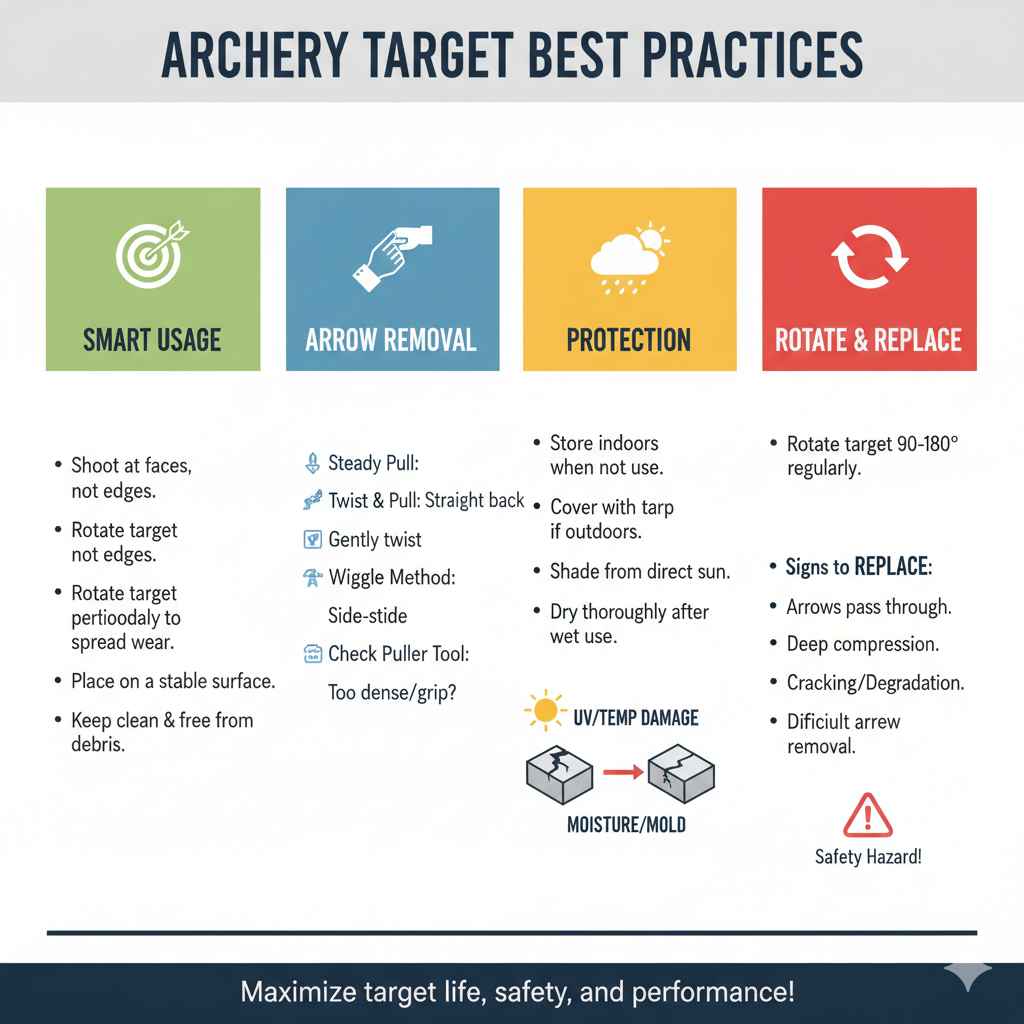
One key practice is to always shoot at the face of the target, not the edges. Hitting the sides can lead to arrows passing through or getting stuck at an angle, which can damage both the arrow and the target. Rotating your target periodically is also a good idea.
This spreads the wear and tear across the entire surface, preventing one area from becoming overly compressed or damaged.
Furthermore, always ensure your target is placed on a stable surface. If it’s wobbly or tilted, arrows might not hit it squarely, leading to unpredictable impacts and potential safety issues. Keeping your target clean and free from debris can also help maintain its integrity and make arrow removal smoother.
Following these simple steps will contribute to a better archery experience.
Arrow Removal Techniques
Removing arrows from an EVA target can sometimes be a challenge, especially if the target is very dense or the arrow is deeply embedded. The best technique depends on the arrow’s shaft material, the target’s density, and how firmly the arrow is lodged.
For most situations, a firm, steady pull straight back along the shaft of the arrow is sufficient. If the arrow is difficult to budge, try slightly twisting the arrow as you pull. This can help break the seal between the arrow shaft and the foam, making it easier to extract.
Be careful not to twist too aggressively, especially with carbon arrows, as this can damage the shaft.
If the arrow is still stuck, you can try gently wiggling the arrow from side to side while pulling. For very stubborn arrows, some archers use arrow pullers, which are specialized tools designed to provide extra grip and leverage. These tools are particularly useful for carbon arrows, which can sometimes grip EVA foam quite tightly.
Never try to yank the arrow out forcefully or at an awkward angle, as this can bend or break the arrow shaft, or even damage the target. If you’re having consistent trouble with arrow removal, it might indicate that your target is too dense for your arrows, or that your target is becoming overly compressed in certain areas.
Here are a few arrow removal tips:
- Steady Pull: Grasp the arrow shaft firmly and pull straight back.
- Twist and Pull: Gently twist the arrow as you pull to help release the grip.
- Wiggle Method: Carefully wiggle the arrow from side to side while pulling.
- Arrow Puller Tool: Use a specialized tool for extra grip and leverage.
- Check Target Condition: If removal is consistently difficult, your target might be too dense or worn.
Protecting Your Target from the Elements
EVA foam targets are generally quite durable, but prolonged exposure to harsh weather conditions can degrade the material and shorten the target’s lifespan. Protecting your target from the elements is an important part of maintaining its performance and ensuring it remains safe to shoot at.
Sunlight, particularly UV radiation, can cause EVA foam to become brittle over time. Extreme temperatures, both hot and cold, can also affect the material. Freezing temperatures can make the foam less flexible, and very high temperatures might cause it to soften or degrade.
Moisture, while EVA is somewhat water-resistant, can lead to mold or mildew if the target is constantly wet and not allowed to dry properly.
The best way to protect your target is to store it indoors when it’s not in use, especially during prolonged periods of inactivity or when harsh weather is expected. A garage, shed, or even a corner of a basement can provide a safe, dry environment. If storing outdoors is unavoidable, consider covering the target with a waterproof tarp or a specially designed target cover.
When the target is in use outdoors, try to position it in a shaded area if possible, to minimize direct sunlight exposure. After shooting in wet conditions, allow the target to dry thoroughly before storing it to prevent any moisture-related damage.
Rotating and Replacing Your Target
Archery targets, like any piece of equipment, have a finite lifespan. Even with the best care, repeated arrow impacts will eventually compress the EVA foam, making it less effective at stopping arrows and potentially leading to pass-throughs. Regularly rotating your target and knowing when to replace it are crucial safety and performance considerations.
Rotating your target means turning it periodically, typically 90 or 180 degrees, with each shooting session or after a set number of shots. This distributes the wear evenly across the entire surface. Instead of shooting in the same spot repeatedly, rotation ensures that different parts of the foam bear the brunt of the impacts.
This significantly extends the usable life of the target.
Signs that your target needs replacement include:
- Arrows consistently passing through, even with moderate-powered bows.
- Deep, permanent compression marks that do not recover.
- Cracking or significant degradation of the foam material.
- Difficulty in removing arrows, indicating the foam is no longer providing adequate stopping power.
A target that is no longer effectively stopping arrows is a safety hazard. It’s better to invest in a new target than to risk injury or damage to your equipment. Most manufacturers will indicate the expected lifespan of their targets under normal use, but this can vary greatly depending on the factors we’ve discussed.
Frequently Asked Questions
Question: How thick should an EVA archery target be for a 40 lb recurve bow?
Answer: For a 40 lb recurve bow, which typically shoots arrows under 200 fps, a target thickness of 16 to 20 inches is usually sufficient. Ensure the target is made of decent density EVA foam for good arrow stopping.
Question: Can I use a thin EVA target for my high-poundage compound bow?
Answer: No, you should not use a thin EVA target for a high-poundage compound bow. These bows shoot arrows at very high speeds, requiring a much thicker and denser target (24 inches or more) to safely stop them and prevent pass-throughs.
Question: Does the color of an EVA archery target affect its performance?
Answer: The color of the EVA foam itself generally does not affect its arrow-stopping performance. Color is usually for visual appeal or to help delineate scoring zones on the target face. The density and thickness of the foam are the key performance factors.
Question: How often should I rotate my EVA archery target?
Answer: It is recommended to rotate your EVA archery target at least every shooting session or after every 50-100 shots, depending on the target’s size and your shooting intensity. This helps distribute wear and prolong the target’s life.
Question: What is the difference between layered EVA and solid EVA targets?
Answer: Layered EVA targets consist of multiple sheets of EVA foam stacked together, often with different densities. This construction can improve arrow stopping and make arrow removal easier. Solid EVA targets are made from a single block or thick sheets of uniform density foam, which can also be very effective if the density is appropriate.
Summary
Choosing the right EVA archery target thickness is vital for safety and arrow longevity. For traditional bows, 12-20 inches often suffices. Powerful compound bows demand thicker targets, 24 inches or more.
Consider bow speed, arrow weight, and arrowhead type when deciding. High-density and layered construction also enhance performance. Proper care, including rotation and protection from elements, extends your target’s life.
Select a target thickness that matches your equipment for a safe and enjoyable archery experience.