How to Access Fields With a Struct Pointer in Golang: Quick Guide
Are you ready to unlock the potential of Golang and take your programming skills to the next level? If you’re looking to master the art of accessing fields with a struct pointer, you’ve come to the right place. For more on this, see our guide on How To Adjust Weight Bow To Maximum Compound.
For a closely related bow or archery topic, How to Access Fields of a Double Pointer: Tips gives readers a useful next step.
Understanding how to efficiently handle struct pointers is crucial for writing clean, efficient, and scalable code in Go. Imagine being able to streamline your coding process and reduce errors, all while enhancing your project’s performance. You’ll discover simple and practical techniques to access and manipulate struct fields using pointers, making your development process smoother and more intuitive.
Dive in and empower yourself with the knowledge that will transform your approach to Go programming.
Credit: www.geeksforgeeks.org
Understanding Structs In Golang
Accessing fields with a struct pointer in Golang involves using the dereference operator. This allows you to modify struct fields directly. Understanding this concept is crucial for efficient data manipulation in your programs.
Basic Concepts Of Structs
Structs are like boxes. They hold different items. Each item has a name. In Golang, structs help organize data. A struct can have many fields. Fields are like labels on items. Structsmake coding neat and tidy. They help group related data. For example, a person can have a name and age. You put these in a struct.
Common Use Cases For Structs
Structs are great for organizing info. They help keep data together. People use them to store user data. A structcan hold a person’s name and age. Developers use structs to create objects. Objects are like mini-programs. Structs make programs easier to read. They help manage complex data. They can also store settings and configurations.

Credit: blog.k3170makan.com
Pointer Basics In Golang
Pointers are special variables. They hold memory addresses. Not actual values. In Golang, a pointer points to a memory location. It stores the address of another variable. This helps in accessing and modifying data efficiently. Understanding pointers is important. It makes programming flexible and fast. They allow direct memory access. This is useful in many cases. Especially in large programs.
Pointers are used for several reasons. They help in saving memory. This is because they work with addresses. Not with actual data. Pointers also help in creating complex data structures. Such as linked lists and trees. They make sharing data between functions easy. You don’t need to copy data. Just pass the pointer. This reduces memory usage. And increases program speed. Pointers are powerful tools. They make coding in Golang efficient.
Creating A Struct Pointer
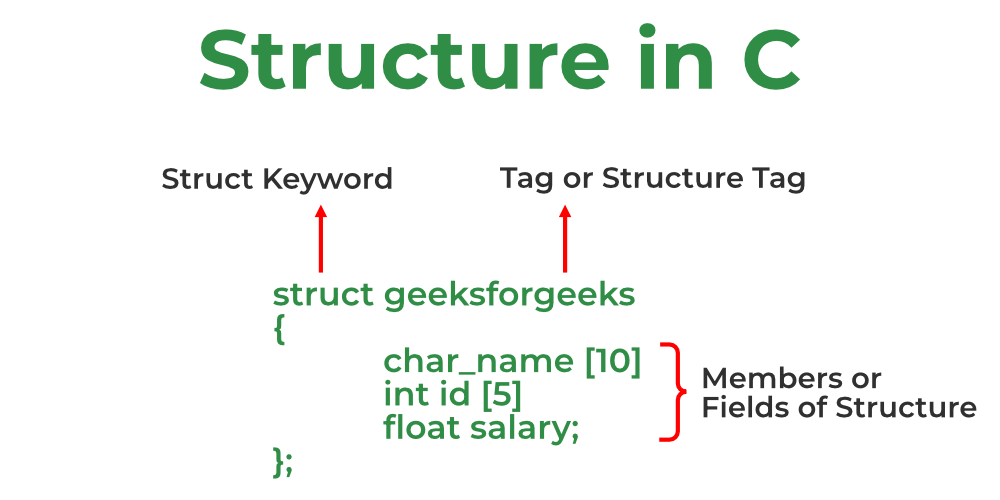
Struct pointers help in accessing fields in Golang. First, define a struct. Use typekeyword for defining. A struct can hold multiple fields. Example: type Person struct { Name string, Age int }.
Next, declare a pointer. Use before struct name. Example: var p Person. This creates a pointer to struct. Pointers allow accessing data efficiently.
Initialize the pointer using newkeyword. This allocates memory for the struct. Example: p = new(Person). The fields are then accessed with dot operator. Example: p.Name = "Alice"and p.Age = 30.
Using pointers avoids copying data. It speeds up operations. Struct pointers are crucial in large programs.
Accessing Fields With A Struct Pointer
The dot operatoris for accessing fields in a struct. You simply use a period (.) between the struct name and field. It’s like saying, “Hey, give me that field!” This is the simplest way to get data from a struct.
The arrow operatoris different. It uses a dash and a greater-than sign (->). This is for when you have a pointer to a struct. It points to the field you want. Think of it as showing the path to the data. This operator is handy for pointers.
Examples Of Struct Pointer Usage
Accessing fields with a struct pointer in Golang simplifies data manipulation. Use the arrow operator “->” to directly reach and modify struct fields through pointers. This approach enhances efficiency by allowing direct field interaction, making coding straightforward and intuitive.
Simple Struct Pointer Example
In Golang, a struct pointerhelps access fields easily. A structis like a box with many things inside. A pointershows where the box is. Using a pointer, you can change things in the box. First, make a struct with fields. Then, create a pointer to the struct. Use the pointer to change the fields. With the pointer, access is faster. It saves time and space.
Complex Struct Pointer Example
A complex struct pointerexample shows more details. Structs can have other structs inside. This is like boxes inside a big box. Use pointers for these boxes too. With pointers, you change things in nested boxes. Golang makes this easy. It helps with big data. It saves computer space. Use pointers with care. They make programs better.
Common Mistakes And Solutions
Accessing fields with a struct pointer in Golang often confuses beginners. Forgetting to use the dereferencing operator (*) leads to errors. Simply apply the operator before accessing fields to solve this issue effortlessly.
Dereferencing Errors
Accessing fields with a struct pointercan be tricky. Sometimes, developers make mistakes. A common error is not dereferencing the pointer. This leads to bugs. You need to use the operator. The operator helps to access the actual struct. Without it, you will face issues. Always remember to check for nil pointers before dereferencing.
Nil Pointer Exceptions
Nil pointer exceptionsoccur often. They are frustrating. A nil pointermeans the pointer is empty. It points to nothing. Before using a pointer, always check if it is nil. This prevents unexpected crashes. Use ifstatements to check for nil. It is a simple way to avoid errors. Proper checks ensure safe code execution.
Best Practices For Struct Pointers
Using struct pointersin Golang can save memory. This is because they store addresses, not actual data. Always free memorywhen it’s not needed. This avoids memory leaks. Use the garbage collectorto help manage memory. It cleans up unused memory automatically. Avoid allocating large chunks of memory at once. This can slow down your program. Test your program for memory usage regularly. This helps identify any issues early.
Clear and simple codeis easier to read. Use meaningful variable namesfor struct pointers. This helps others understand your code. Add comments to explain complex parts. Comments should be short and to the point. Avoid using too many nested structures. They make code hard to follow. Break down big functions into smaller ones. This improves clarity. Keep your code organized. Use consistent formatting throughout. This helps with maintenance.

Credit: x.com
Frequently Asked Questions
What Is A Struct Pointer In Golang?
A struct pointer in Golang is a reference to a struct’s memory address. It allows you to access and modify the struct’s fields directly. Using pointers can help optimize performance by avoiding copying data, especially for large structs.
How Do You Declare A Struct Pointer?
To declare a struct pointer, use the & operator with a struct instance. For example, p := &myStruct creates a pointer p to myStruct. This pointer can be used to access or modify the struct’s fields.
How Do You Access Struct Fields Via A Pointer?
Use the (*pointer). field syntax or the shorthand pointer. field. Both methods access the struct fields via the pointer. The shorthand is more common and preferred for readability and simplicity in code.
Why Use Pointers In Golang Structs?
Pointers in Golang structs improve memory efficiency and performance. They allow modification of the original data without copying. Pointers are especially useful for large structs or when you need to share data across functions.
Conclusion
Accessing fields with struct pointers in Golang is straightforward. Practice helps you understand struct pointers deeply. Use pointers to optimize your code. They enhance efficiency by reducing memory usage. Experiment with pointers in real-life projects. This strengthens your coding skills.
Remember to apply the learned concepts regularly. Golang’s simplicity makes learning enjoyable. Struct pointers are a valuable tool in Golang programming. Keep exploring and coding to improve. Your efforts will pay off with better coding proficiency. Dive into Golang and discover more possibilities.