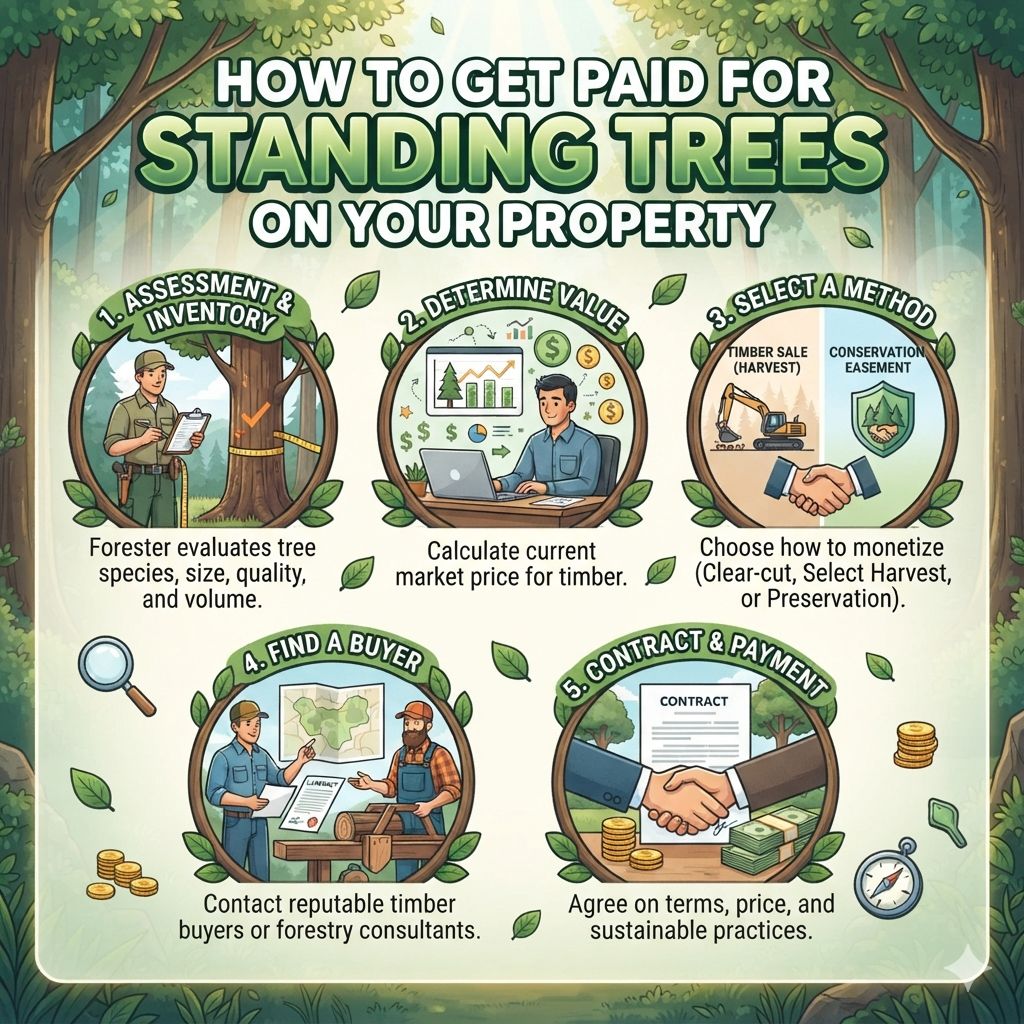
How to Get Paid for Standing Trees on Your Property
Getting paid for standing trees on your property can be a smart way to generate income while managing your land responsibly. Many landowners are unaware of the financial opportunities presented by mature timber. This guide will break down the process, from assessing your trees to navigating contracts and ensuring you get fair compensation.
Simply put, you can earn money from standing trees by selling timber rights to professional logging companies or foresters who will then harvest and sell the wood. The payment structure varies, often based on the volume and type of timber harvested.
Key Takeaways
- Understand the value of your standing trees through professional assessment.
- Explore different selling methods, including direct sale, competitive bids, or working with a forester.
- Carefully review timber sale contracts, paying attention to payment terms, harvest timelines, and responsibilities.
- Ensure you comply with all local regulations and environmental considerations for sustainable harvesting.
- Get paid for standing trees by maximizing your understanding of the market and your timber’s worth.
What is Timber Valuation?
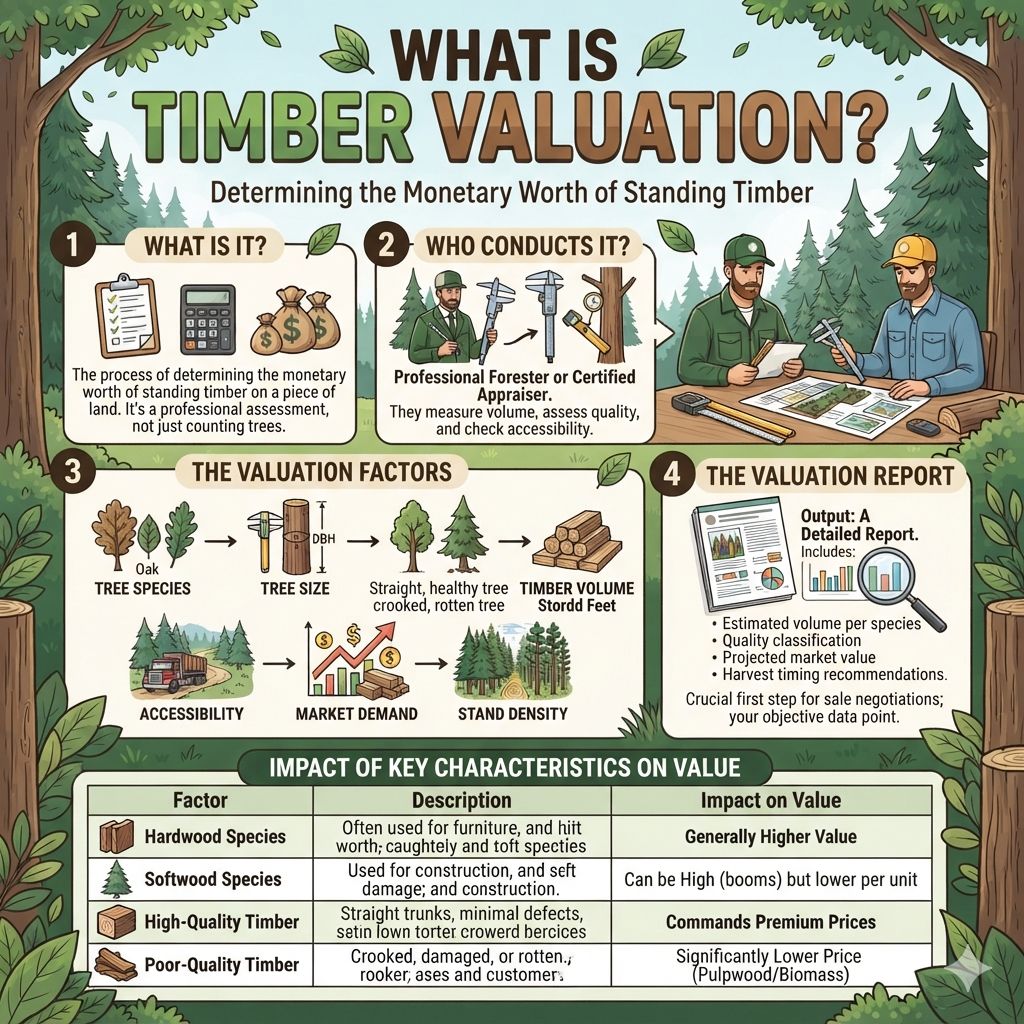
Timber valuation is the process of determining the monetary worth of standing timber on a piece of land. This isn’t as simple as just counting trees; it involves a professional assessment of numerous factors. These factors include the species of trees, their age, size (diameter and height), quality (straightness, absence of rot or damage), and their location.
Different species have varying market demands and prices. For example, oak or walnut might fetch a higher price than pine or poplar, depending on current market trends for lumber, furniture, or other wood products.
A professional forester or certified appraiser conducts this valuation. They measure trees, estimate the volume of usable wood (often in cords or board feet), and consider the accessibility of the timber for logging operations. The surrounding economic conditions, such as the demand for lumber and the proximity of buyers, also play a significant role.
Understanding this valuation is the first crucial step in getting paid for your standing trees because it forms the basis for any sale negotiations.
The output of a timber valuation is typically a detailed report. This report will list the estimated volume of each timber species, their quality classification, and a projected market value. It might also include recommendations for harvest timing to maximize future value.
This report serves as your objective data point when discussing sales with potential buyers.
- Tree Species: Different wood types have different market values.
- Tree Size: Diameter at breast height (DBH) and total height are critical.
- Tree Quality: Straightness, freedom from rot, knots, or defects.
- Timber Volume: Measured in cords, board feet, or other units.
- Accessibility: Ease of access for logging equipment impacts costs and value.
- Market Demand: Current prices for lumber and wood products.
- Stand Density: How closely packed the trees are affects individual tree growth and harvest efficiency.
| Valuation Factor | Description | Impact on Value |
|---|---|---|
| Hardwood Species (e.g., Oak, Maple) | Often used for furniture, flooring, and cabinetry. | Generally higher value than softwoods for specific uses. |
| Softwood Species (e.g., Pine, Fir) | Commonly used for construction lumber, pulpwood, and paper. | Value can be high in construction booms but often lower per unit volume than premium hardwoods. |
| High-Quality Timber | Straight trunks, minimal defects, desirable grain patterns. | Commands premium prices, especially for veneer or specialty lumber. |
| Poor-Quality Timber | Crooked, damaged, or rotten trees. | May have value only for pulpwood or biomass, significantly lower price. |
This table highlights how different tree characteristics directly influence their marketability and, consequently, the price you can expect when you get paid for standing trees.
Methods for Selling Your Standing Timber
Once you have a clear understanding of your timber’s value, you need to decide how to sell it. There are several common methods, each with its own advantages and disadvantages. The best approach depends on your property size, the volume of timber, your familiarity with the logging industry, and your desired level of involvement.
Choosing the right method is key to maximizing your return.
One popular method is selling to a logger or timber buyer directly. This often involves soliciting bids from several reputable companies. You present them with your timber valuation report, and they provide offers.
This method can be straightforward, but it requires you to do your due diligence in vetting buyers. Ensure they are licensed, insured, and have a good reputation for ethical practices and timely payments.
Another approach, often recommended for landowners with extensive timber resources or those unfamiliar with the industry, is to hire a consulting forester. A forester acts as your agent. They will manage the entire sale process for you, from valuation and marketing to contract negotiation and overseeing the harvest.
While this involves paying a percentage of the sale price as a fee, it often results in a higher net return for the landowner due to their expertise in maximizing value and securing favorable terms.
- Direct Sale with Bids: Solicit offers from multiple independent logging companies.
- Sale by Public Auction: Timber is sold to the highest bidder in a competitive auction setting.
- Contract with a Consulting Forester: Hire a professional to manage the entire sale.
- Sale for Pulpwood/Biomass: Selling lower-quality trees for paper production or energy generation.
- Selective Harvest Contract: Selling only specific trees marked by a forester, preserving younger growth.
Selling Directly: Pros and Cons
Selling directly to a logger or timber buyer can seem like the most direct route. You cut out the middleman and potentially save on fees. However, it places the burden of market knowledge and negotiation entirely on you.
You need to be well-informed about timber prices, contract terms, and the reputation of potential buyers to avoid being undervalued or entering into unfavorable agreements.
| Direct Sale | Pros | Cons |
|---|---|---|
| Buyer Bids | – Potentially quicker process. – Direct communication with the buyer. | – Requires significant landowner knowledge. – Risk of undervaluing timber. – Buyer may have more leverage. |
| No Forester Fee | – No commission paid to a third party. | – Can lead to lower overall sale price if not negotiated well. |
This approach requires confidence and thorough preparation to ensure you get paid for standing trees at their fair market value.
Understanding Timber Sale Contracts
A timber sale contract is a legally binding document that outlines the terms and conditions of the sale. It’s crucial to understand every clause before signing. This document protects both you and the buyer.
It defines what is being sold, the price, the payment schedule, the duration of the harvest, and the responsibilities of each party regarding land management, road building, and environmental protection. A poorly written or misunderstood contract can lead to disputes, financial losses, and damage to your property.
Key components of a timber sale contract include the description of the timber to be sold, the sale price and payment terms, the logging operator’s responsibilities, and the landowner’s rights. The contract should clearly define the boundaries of the sale area and specify which trees are included. It should also outline any restrictions on harvesting methods or equipment to minimize environmental impact.
Ensure the contract specifies the payment method and schedule, such as a lump sum payment upfront, payment upon harvest, or installments.
Always have a legal professional specializing in real estate or natural resources review the contract before signing. They can identify potential pitfalls and ensure the contract aligns with your best interests and local regulations. A well-drafted contract is your primary tool for ensuring you are properly compensated and that the harvest is conducted responsibly.
When you get paid for standing trees, the contract is your guarantee.
- Parties Involved: Names and addresses of landowner and buyer.
- Description of Timber: Species, size, quality, and location of trees for sale.
- Sale Area: Defined boundaries of the harvest site.
- Sale Price and Payment Terms: Total amount, payment schedule, and methods.
- Harvest Duration: Start and end dates for logging operations.
- Logging Practices: Rules for road construction, buffer zones, and site cleanup.
- Insurance and Liability: Requirements for buyer’s insurance and responsibility for damages.
- Termination Clause: Conditions under which the contract can be terminated.
- Governing Law: Which state’s laws apply to the contract.
Navigating Payment Structures
The way you get paid for your standing trees can vary significantly. Understanding these payment structures is essential to ensure you receive the agreed-upon amount in a timely manner. The most common structures include lump-sum payments and pay-as-you-go (or pay-per-unit) systems.
Each has implications for risk and cash flow.
A lump-sum sale involves the buyer paying the entire agreed-upon price upfront or in a few predetermined installments before or during the harvest. This is often preferred by landowners as it guarantees the full payment regardless of the actual volume of timber harvested. However, it requires a thorough and accurate timber valuation to ensure the lump sum reflects the true value.
If the buyer underestimates the timber volume, they might still have to pay the agreed lump sum, which can be advantageous for you.
A pay-as-you-go or pay-per-unit sale means you are paid based on the actual volume of timber harvested and sold by the buyer. This is often calculated per cord, per board foot, or per ton. You typically receive payments as the timber is processed and sold.
This method shifts some risk to the landowner, as your final payment depends on the actual harvest yield. However, it can be advantageous if your timber is exceptionally high-volume or high-quality, as you are paid for exactly what is taken.
| Payment Structure | Description | Pros for Landowner | Cons for Landowner |
|---|---|---|---|
| Lump Sum | Total payment for all designated timber is agreed upon and paid. | – Guaranteed payment. – Predictable income. – Less risk from harvest fluctuations. | – Requires accurate initial valuation. – Risk of undervaluing if harvest yields more than expected. |
| Pay-As-You-Go | Payment is based on the actual volume of timber harvested and sold. | – Fair payment for actual volume removed. – Potential for higher earnings if yield is abundant. | – Payment amount is uncertain until harvest. – Requires monitoring of harvested volumes. – Risk of buyer disputes over volume. |
When aiming to get paid for standing trees, clarity on payment terms is paramount.
Legal and Environmental Considerations
Selling timber involves more than just a financial transaction; it also carries legal and environmental responsibilities. Failing to comply with regulations can result in significant fines, legal action, and damage to your reputation and land. It’s crucial to understand and adhere to all applicable laws and best management practices for sustainable forestry.
Key legal considerations include property boundaries, easements, and permits. Ensure you know the exact property lines to avoid disputes with neighbors or legal issues for harvesting on adjacent land. If there are any existing easements for utility lines or access, these must be clearly understood and respected during the harvest.
Depending on your location, you may need to obtain specific permits from local or state agencies before logging can begin. Some areas have regulations concerning water quality protection, erosion control, and the preservation of sensitive habitats.
Environmentally, responsible timber harvesting aims to minimize negative impacts and promote forest health for the future. This includes adhering to Best Management Practices (BMPs) recommended by forestry agencies. BMPs often cover topics like stream-side management zones (SMZs) to protect water quality, minimizing soil compaction, and planning harvest activities to reduce erosion.
Sustainable forestry also considers the long-term health of the forest, which might involve leaving younger, thrifty trees to grow, managing for biodiversity, and planning for reforestation after harvest.
- Boundary Surveys: Confirm property lines before any sale.
- Easements and Rights-of-Way: Identify and respect existing access or utility corridors.
- Permits and Licenses: Check local and state requirements for logging operations.
- Water Quality Protection: Maintain buffer zones along streams and rivers.
- Erosion Control: Implement measures to prevent soil loss during and after harvest.
- Habitat Preservation: Protect endangered species or critical wildlife habitats.
- Reforestation: Plan for replanting or natural regeneration of the forest.
- Compliance with Local Ordinances: Adhere to any specific municipal forestry rules.
Statistics and Market Trends
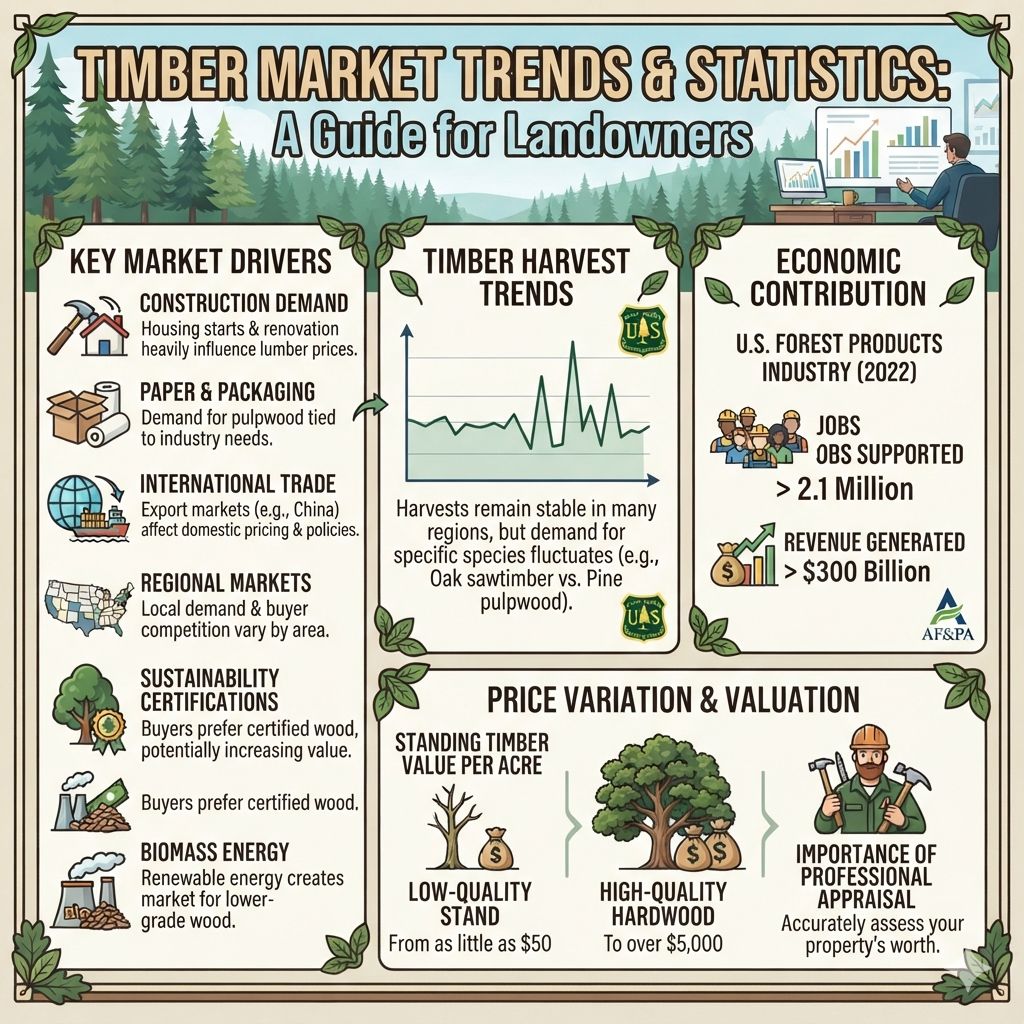
Understanding market trends and relevant statistics can significantly influence how you approach selling your timber and help you negotiate better terms. The demand for wood products is influenced by various factors, including the construction industry, the paper market, and international trade. Being aware of these dynamics can help you time your sale for optimal pricing.
For instance, a booming housing market typically drives up demand for lumber, potentially increasing timber prices.
According to the U.S. Forest Service’s Forest Inventory and Analysis (FIA) program, timber harvests have remained relatively stable in many regions, but demand for specific species can fluctuate wildly. For example, the demand for oak sawtimber for furniture and flooring can differ greatly from the demand for pine pulpwood.
A report by the American Forest & Paper Association (AF&PA) highlights the significant economic contribution of the forest products industry, underscoring the consistent, albeit variable, demand for timber resources. In 2022, the U.S. forest products industry directly and indirectly supported over 2.1 million jobs and generated over $300 billion in revenue, according to AF&PA data.
Furthermore, international markets play a role. China, for example, is a major importer of U.S. timber.
Changes in trade policies or economic conditions in these importing countries can impact domestic prices. The price of standing timber can vary from as little as $50 per acre for low-quality stands to over $5,000 per acre for high-quality, mature hardwood forests in prime locations. These figures underscore the importance of professional appraisal to accurately assess your property’s worth.
- Construction Demand: Housing starts and renovation projects heavily influence lumber prices.
- Paper and Packaging: Demand for pulpwood is tied to the packaging and paper industry.
- International Trade: Export markets, particularly for high-value species, affect domestic pricing.
- Regional Markets: Local demand and competition among buyers vary significantly by geographic area.
- Sustainable Forestry Certifications: Increasingly, buyers prefer timber from certified sustainably managed forests, potentially increasing their value.
- Biomass Energy: Growing interest in renewable energy can create a market for lower-grade wood.
| Market Factor | Description | Impact on Timber Prices |
|---|---|---|
| Housing Market Strength | Number of new homes built and existing home sales. | Increased demand for construction lumber, leading to higher prices for sawtimber. |
| Global Demand (e.g., Asia) | Import needs for timber and wood products in major economies. | High export demand can drive up domestic prices for sawlogs and pulpwood. |
| Pulp and Paper Industry Output | Production levels of paper, cardboard, and packaging materials. | Steady demand for pulpwood, though prices can fluctuate based on recycling rates and global supply. |
| Technological Advancements | New uses for wood products (e.g., cross-laminated timber) or more efficient harvesting. | Can create new markets or increase demand for specific timber types. |
Understanding these market forces is crucial for anyone looking to effectively get paid for standing trees.
Frequently Asked Questions
What is the difference between selling standing timber and selling firewood logs?
Selling standing timber involves selling the trees while they are still rooted in the ground. The buyer is responsible for felling the trees, logging them, and processing them into lumber, pulp, or other wood products. Selling firewood logs typically means you have already felled the trees, cut them into manageable lengths, and are selling the logs directly to consumers for burning.
The value and process are very different.
Do I need a forester to sell my trees?
While not strictly mandatory for all sales, hiring a consulting forester is highly recommended, especially for larger timber volumes or if you lack experience. They provide expertise in valuation, marketing, contract negotiation, and ensuring compliance, which can often lead to a better overall sale price and a smoother process than managing it yourself.
How long does it take to get paid after signing a timber sale contract?
Payment timelines are specified in the contract. For lump-sum sales, payment might be upfront, in installments during the harvest, or upon completion. For pay-as-you-go sales, payments are typically made periodically (e.g., monthly) as timber is harvested and processed.
Always clarify this in the contract to avoid surprises.
Can I sell trees for Christmas trees or landscaping purposes?
Yes, but this is a specialized market distinct from timber sales. It involves cultivating specific species, managing their growth for aesthetic appeal, and harvesting them at a particular size and shape. The valuation and marketing methods are entirely different from those for lumber or pulpwood.
This requires a different business model and expertise.
What happens if the logger damages my property beyond the sale area?
A well-written timber sale contract should clearly outline the buyer’s responsibility for any damages caused to your property outside the designated sale area. The contract should specify penalties or remediation measures for such incidents. It’s advisable to document the condition of your property before logging begins to have a baseline for comparison.
Final Thoughts
Getting paid for standing trees is a viable income stream for landowners, but it requires careful planning and informed decision-making. By understanding timber valuation, exploring different selling methods, meticulously reviewing contracts, and staying aware of market trends and regulations, you can ensure a profitable and responsible timber sale. Professional guidance from foresters and legal counsel is invaluable throughout the process to maximize your returns and protect your land.