Reverse Draw Crossbows vs Front-Draw Crossbows
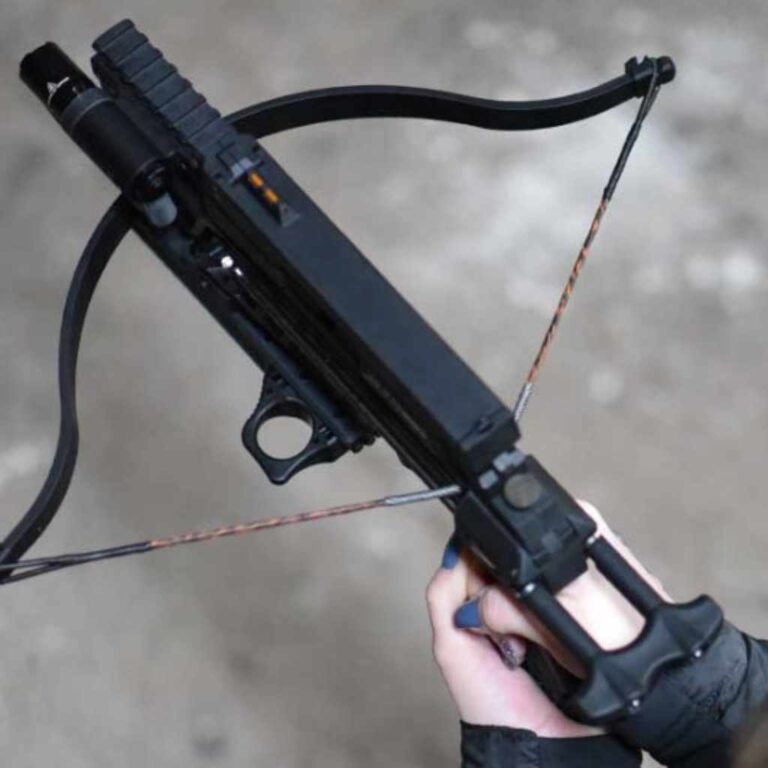
Reverse-draw crossbows usually win on speed, balance, and quieter shot behavior because of their longer power stroke and rearward limb geometry. Front-draw crossbows usually win on simpler setup, lower cost, and easier servicing. Pick the wrong layout and you may carry more front weight, accept more vibration, or pay for features that do not help your hunt. This guide compares speed, balance, noise, compactness, maintenance, and field handling so you can choose the better design for your use.
Crossbow performance matrix
| Decision factor | Draw Crossbows | Front-Draw Crossbows | Winner |
|---|---|---|---|
| Speed | Longer power stroke can produce higher FPS at similar draw weight. | Usually needs more draw weight or a different design to match speed. | Draw Crossbows |
| Noise | Often quieter when tuned well because lower draw weight can reduce shock and vibration. | Can be very quiet, but the platform often sends more vibration forward. | Draw Crossbows |
| Balance | Center of gravity often sits closer to the shooter, which helps hold steadiness. | Front-heavy feel is common, especially with a quiver and optic mounted. | Draw Crossbows |
| Compactness | Can be narrower when cocked, with some models as narrow as 10 inches. | Often wider at the front when cocked. | Draw Crossbows |
| Maintenance | More layout-specific parts and more fit sensitivity can add service friction. | Simpler mechanical path and broader parts support are common advantages. | Front-Draw Crossbows |
| Accessory compatibility | Some setups are less forgiving with quivers, rails, and scope placement. | Usually easier to match with common accessories and service parts. | Front-Draw Crossbows |
| Price | Usually carries a premium for the layout and performance gains. | Often costs less for comparable entry-level features. | Front-Draw Crossbows |
| Beginner-friendliness | Can be easy to shoot, but ownership can be less forgiving. | Usually easier to understand, tune, and maintain. | Front-Draw Crossbows |
Speed
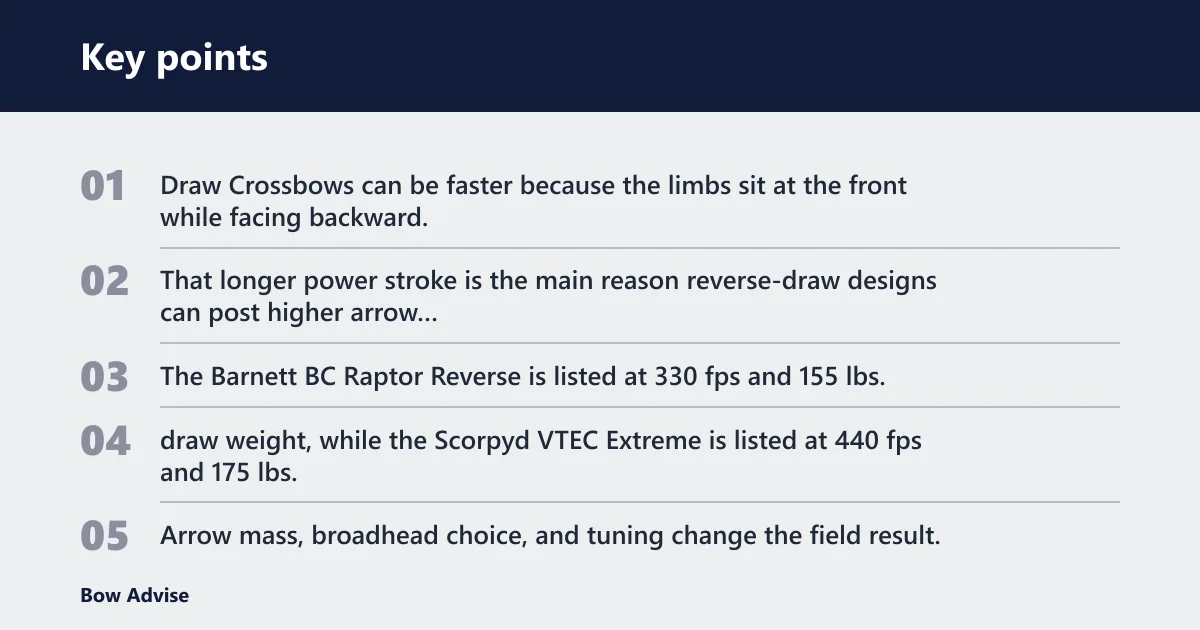
Draw Crossbows can be faster because the limbs sit at the front while facing backward, which lets the string travel farther before release. That longer power stroke is the main reason reverse-draw designs can post higher arrow speed with similar draw weight. The Barnett BC Raptor Reverse is listed at 330 fps and 155 lbs. draw weight, while the Scorpyd VTEC Extreme is listed at 440 fps and 175 lbs. draw weight.
Speed claims need context. Arrow mass, broadhead choice, and tuning change the field result, so the real question is whether the added FPS changes your hunting setup at your normal distance. For many hunters inside normal whitetail ranges, a few extra feet per second matters less than steady aim and a clean trigger.
Noise
Reverse-draw crossbows are often described as quieter when tuned well, since the design can sometimes reach a given speed with less draw weight, which may reduce vibration and shot shock. That is not a blanket rule. A poorly tuned reverse-draw setup can be louder than a well-set front-draw model with good string condition and a matched arrow.
Noise is also about what the shooter feels in follow-through. Less forward kick can make the shot feel calmer, which helps some hunters keep the crosshair on target through the release. That matters more in a blind or tree stand where nearby movement and sound carry fast.
Balance
Draw Crossbows usually feel steadier because the balance point sits closer to the shooter’s hands. That changes how long the bow can be held on target without the front end sagging. Over a full sit, the difference can be more useful than raw speed.
Picture a hunter holding aim on a deer that keeps shifting behind brush. A front-heavy bow asks more of the front arm, and the hold starts to wobble sooner. A better-centered layout can reduce that strain, especially during long waits or repeated practice strings.
Compactness
Draw Crossbows often shine in tight spaces because they can be narrower when cocked, and some reverse-draw models are as narrow as 10 inches wide when cocked. That helps in cramped blinds, narrow tree-stand openings, and shooting lanes with rails or window frames nearby. Barnett’s BC Raptor Reverse is listed at 31.7 inches long, which shows how compact some models can be in the hand.
Front-draw crossbows can still be compact enough for many stands, but the front-heavy layout usually brings more width to manage. In tight quarters, width matters as much as total length. A shorter overall bow that still catches on the blind wall is not truly compact in use.
Maintenance
Front-draw crossbows are often simpler to service. The mechanical path is more familiar to many shops, and replacement strings, cables, and small parts are often easier to source. That reduces downtime when a string needs replacement before season.
Draw Crossbows can create more maintenance friction because fit, cable routing, and replacement-part availability vary more by model. OEM strings and cables are often the safest path when dimensions are tight or the setup is specific to one design. If a hunter depends on a local shop, service lead time matters as much as the part itself.
Accessory compatibility
Front-Draw Crossbows tend to be more forgiving with quivers, scopes, and rail-mounted accessories. The layout has more room for common fitment patterns, and that can reduce trial-and-error at setup. Fewer fit issues mean fewer chances to add noise or create clearance problems.
Draw Crossbows can be more particular. A quiver may sit closer to the stock, a scope mount may need more attention to eye relief and rail position, and some accessory shapes simply fit better on one platform than the other. Buyers should confirm the manufacturer’s listing for their model before adding parts.
Price
Front-draw crossbows are often described as lower cost because the layout is simpler to build and service. That often keeps the entry price lower for comparable entry-level features, without giving up the basic job of launching an arrow cleanly and accurately. For buyers who need dependable performance more than top-end refinement, that matters.
Draw Crossbows cost more often because the platform is more specialized. The extra money can buy better balance, narrower cocked width, and higher speed potential. It does not automatically buy a better hunt if the shooter never uses those advantages.
Beginner-friendliness
Front-Draw Crossbows are usually the easier first buy. The design is simpler to understand, the parts support is often broader, and maintenance is less likely to force a trip back to a specialty shop. That lowers the odds of setup frustration.
Draw Crossbows can still suit a new shooter, but the learning curve is less forgiving when a part needs replacement or accessories need careful fitting. Beginners who want fewer ownership surprises usually do better with the simpler layout first.
Are reverse-draw crossbows actually faster?
Yes, often, but the reason is mechanical rather than magical. Draw Crossbows can use a much longer power stroke for the same draw weight, and that longer stroke can produce more arrow speed and energy transfer. The result is why some reverse-draw models reach over 400 fps with limbs under 200 lbs.
That speed gain is real, but it is only part of the story. A faster bow does not automatically mean a better hunting tool if the arrow setup is too light, the broadhead is mismatched, or the shooter loses hold steadiness. The better question is whether the extra speed changes your hit probability at your usual distance.
Say your normal shot range is about 25 yards from a ground blind. In that setting, a small speed increase may matter less than a steadier hold and a setup that does not force awkward arm position during the shot.
Which design balances better in the hands?
Reverse-draw crossbows are often described as balancing better in the hands because the center of gravity sits closer to the shooter. That reduces muzzle dip and can make the bow easier to hold on a dot or vitals target during a long wait. The difference is most noticeable during steady aim, not just while carrying it in the hand.
Front-draw models can feel nose-heavy once a quiver, optic, and cocked limbs are all in play. That does not make them hard to shoot, but it can add fatigue during a long sit or during repeated practice strings. Hunters who hold on target for several seconds at a time tend to notice the gap first.
Which crossbow is quieter and easier to shoot?
Draw Crossbows often have the edge in shot feel because lower draw weight for similar speed can mean less vibration and less apparent noise. The quietest setup still depends on tuning, string condition, and arrow selection. No design is immune to a sloppy setup.
What shooters feel most is follow-through. A calmer shot cycle keeps the scope on target longer and makes the release feel less abrupt. That can help when broadhead hunting, where consistent shot behavior matters more than a number on a box.
A common first-timer mistake is chasing speed alone and then using an arrow setup that is too light. That can make the shot harsher and erase some of the advantage that attracted the buyer in the first place.
What changes in compactness and setup?
Draw Crossbows usually fit better in tight blinds and tree stands because the cocked profile can be narrower, and some models are listed as narrow as 10 inches wide when cocked. That extra clearance helps when a window frame, stand rail, or blind fabric sits close to the limbs. Narrower width also makes the bow less awkward when moving through brush.
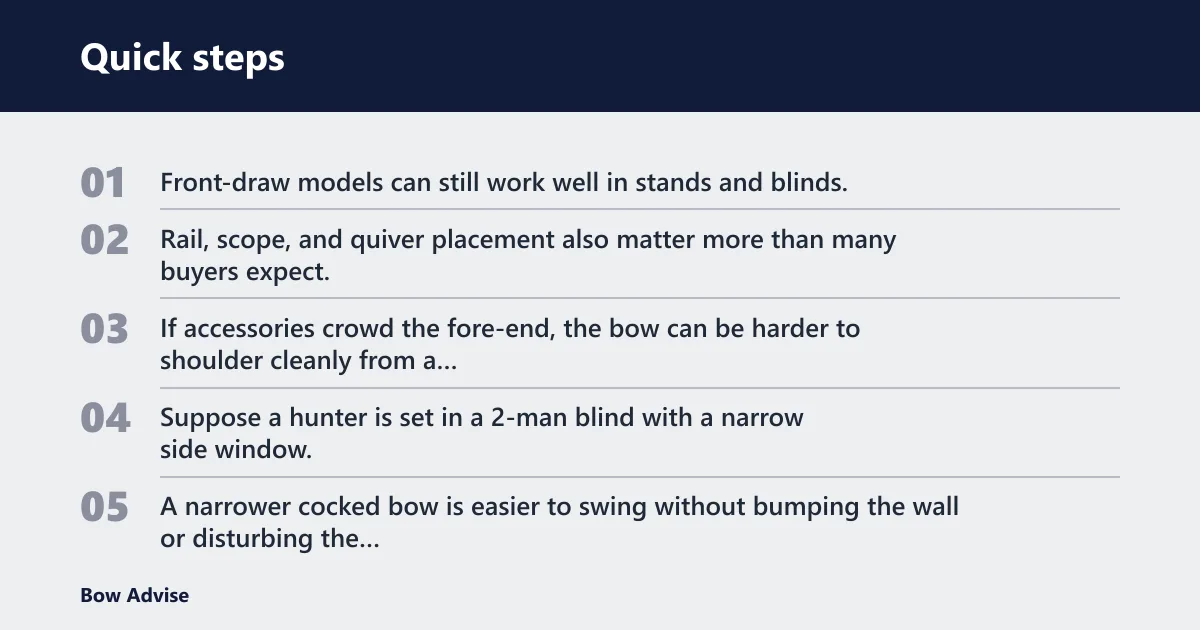
Front-draw models can still work well in stands and blinds, but width and front-heavy handling can create more contact points. Rail, scope, and quiver placement also matter more than many buyers expect. If accessories crowd the fore-end, the bow can be harder to shoulder cleanly from a seated position.
Suppose a hunter is set in a 2-man blind with a narrow side window. A narrower cocked bow is easier to swing without bumping the wall or disturbing the fabric, while a wider front-heavy bow demands more careful movement at the shot window.
Maintenance, strings, and cable support
Front-Draw Crossbows are usually simpler to service. The layout tends to have fewer fit surprises, and many replacement parts are easier to source through common channels. That matters when a hunter needs a quick turnaround before opening day.
Draw Crossbows can be more sensitive to exact string and cable specifications. OEM parts are often the safest choice when the model calls for a specific setup, and aftermarket options vary by design. Service lead time can stretch if the parts are less common or if the shop has to order a model-specific set.
If ownership skill level is low, simplicity matters. A hunter who wants the least friction on string replacement, timing checks, and accessory fit will usually be happier with the front-draw route. Buyers who value performance gains enough to manage the extra service work may prefer the reverse-draw path.
Choose Draw Crossbows if… / Choose Front-Draw Crossbows if…
Choose Draw Crossbows if you hunt from tree stands or tight blinds, want a narrower cocked profile, care about a steadier hold at full aim, or want the best chance at higher speed without pushing draw weight too high. They also fit hunters who accept more model-specific service work in exchange for better field handling.
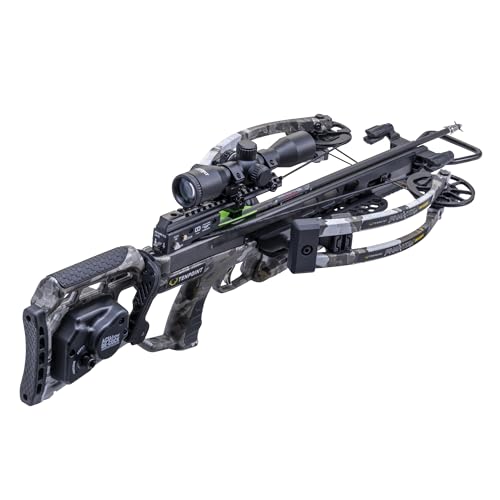
Choose Front-Draw Crossbows if you want lower purchase cost, easier maintenance, simpler parts support, and a setup that is usually more forgiving for a first-time owner. They also make sense if you value broad accessory compatibility more than the last bit of balance refinement or speed potential.
Frequently asked questions
What is the real difference between reverse-draw and front-draw crossbows?
Draw Crossbows place the limbs at the front but angled backward toward the shooter, which lengthens the power stroke and often improves balance and compactness. Front-Draw Crossbows use the traditional forward-facing limb layout, which is usually simpler to service and easier to fit with common accessories.
Are reverse-draw crossbows actually faster than front-draw crossbows?
Often yes. The longer power stroke can produce more arrow speed with similar draw weight, and some reverse-draw models are listed over 400 fps. That said, speed alone does not decide the shot outcome; arrow mass and tuning still shape real performance.
Which crossbow design is quieter: reverse-draw or front-draw?
Draw Crossbows often have the edge in shot feel and vibration control, which can make them seem quieter. But the actual result depends on tuning, string condition, and arrow setup.
Do reverse-draw crossbows balance better in the hands?
Usually yes. The center of gravity often sits closer to the shooter, which reduces front dip and helps with steady aim. That advantage shows up most during longer holds, practice sessions, and hunting sits where fatigue starts to matter.
Are reverse-draw crossbows harder to maintain than front-draw models?
They can be. The mechanical layout is more specific, and string and cable replacement can depend more heavily on the exact model. Front-Draw Crossbows usually have simpler service paths and broader part support, which lowers maintenance friction for most owners.
Is a front-draw crossbow still the better value for most hunters?
Yes, for many buyers. Front-Draw Crossbows usually cost less, are easier to service, and tend to be more forgiving for first-time owners. If the hunting setup does not demand the narrowest cocked width or the best balance, front-draw still makes strong sense.