Budget vs Premium Crossbows: What You Really Gain for the Price
A premium crossbow usually buys tighter shot-to-shot consistency, easier cocking, better stock and trigger fit, and longer-lasting parts. If your budget model already groups well, the extra money often buys speed and nicer accessories more than real accuracy. Skipping those differences can mean harsher handling, more string wear, and a setup that feels fine on paper but shoots worse in practice. This guide breaks down what budget and premium packages actually change, what is mostly packaging, and where the price gap matters most.
| Decision factor | Budget | Premium Crossbows | Winner |
|---|---|---|---|
| Cost to enter | Entry full-size models sit under about $450, and budget compound crossbows run about $425 to $900. | Mid-tier compound starts around $999 to $1,799, premium compound runs about $1,965 to $2,999, and flagship packages can reach $3,495 to $3,515, with top-end packages at $5,000. | Budget |
| Accuracy consistency | Can be accurate enough for deer, but group consistency varies more from trigger feel, stock fit, and cocking quality. | Usually holds tighter shot-to-shot consistency, which matters more than a small speed edge once the arrow leaves the rail. | Premium Crossbows |
| Cocking and loading | Often uses a rope cocking device and simpler manual of arms. | More likely to include an integrated crank and de-cocking capability, which reduces strain and makes unloading safer. | Premium Crossbows |
| Included package value | Usually includes a scope, quiver, bolts or arrows, and sometimes a cocking aid. | Often includes better optics, better arrows, a crank system, and sometimes extras like a sling or broadheads. | Premium Crossbows |
| Long-term ownership | Lower entry cost, but more upgrade and replacement spending may show up later. | Higher upfront cost, but better fit, finish, and warranty support can reduce hassle over time. | Tie |
Budget vs premium crossbows at a glance
The real split is about function, not looks. Budget packages can kill deer cleanly, but premium crossbows usually buy better cocking systems, better fit, and a calmer shooting feel. The speed gap matters less than many buyers expect at normal hunting distances.
Price tiers and what usually sits in each range
Crossbows under about $450 include entry full-size and repeating models. Budget compound crossbows usually fall about $425 to $900. Mid-tier compound models cluster around $999 to $1,799, premium compound around $1,965 to $2,999, and flagship packages around $3,495 to $3,515.
That spread is large enough to change what comes in the box, how the bow feels to cock, and how much confidence it gives after repeated practice. A typical flagship crossbow can cost $2,500, and top-end packages can cost $5,000.
The main trade-off: function versus convenience
Budget crossbows spend more of the price on raw launch speed and a workable package. Premium Crossbows spend more on consistency, smoother loading, better triggers, and better stock geometry. The extra money usually goes into parts you feel every time you cock and shoot the bow.
Why a package price is not the full cost
The sticker price rarely covers every part you will need. Arrows, broadheads, extra optics, replacement strings, and spare parts can add up fast. A ready-to-hunt package is usually better value than buying each piece separately, but only if the included parts are worth keeping.
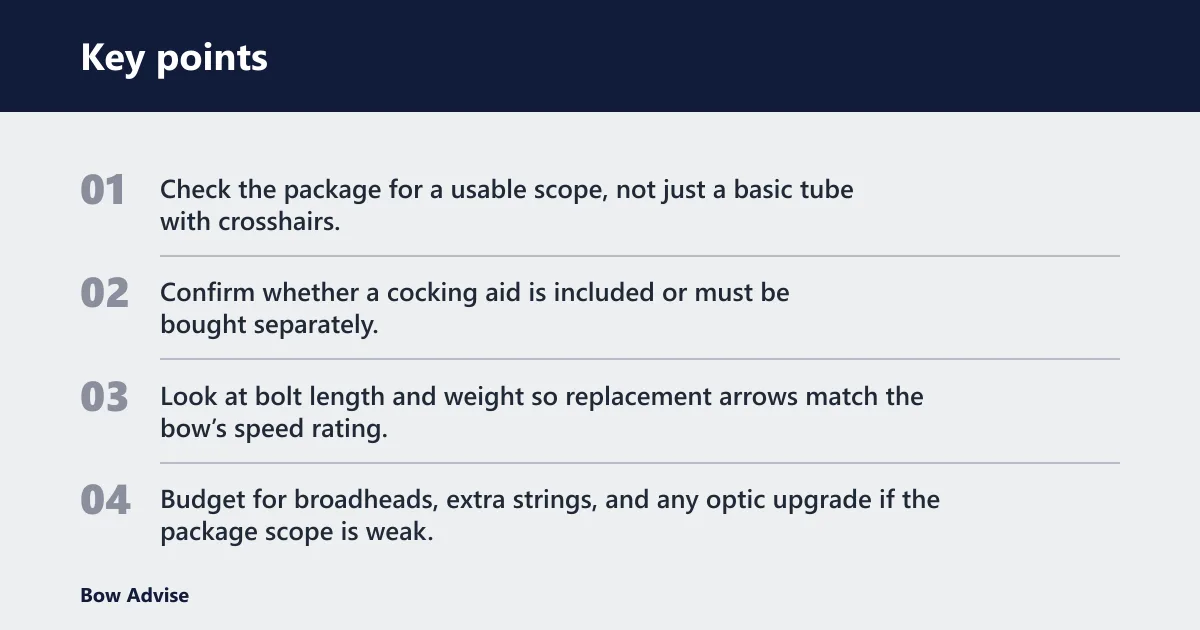
- Check the package for a usable scope, not just a basic tube with crosshairs.
- Confirm whether a cocking aid is included or must be bought separately.
- Look at bolt length and weight so replacement arrows match the bow’s speed rating.
- Budget for broadheads, extra strings, and any optic upgrade if the package scope is weak.
Budget vs Premium Crossbows matrix
| Buying criterion | Budget | Premium Crossbows | Worth it? |
|---|---|---|---|
| Real accuracy gain | Enough for deer inside common hunting ranges if the bow groups well. | More likely to hold tighter groups across more shots and more sessions. | Worth it if you practice a lot; not worth it if your budget bow already groups cleanly. |
| Cocking effort | Rope cocking device, more manual effort, more reliance on technique. | Integrated crank and de-cocking options reduce strain and load stress. | Worth it for smaller shooters, older hunters, and anyone with shoulder limits. |
| Trigger quality | Functional, but often heavier, less crisp, or less natural in reach. | Cleaner break and better trigger reach on many models. | Worth it if you notice trigger creep or finger stretch. |
| Fit and ergonomics | Can feel long in the stock or awkward at the grip. | Better stock shape, shorter or better placed trigger reach, and improved balance. | Worth it for youth hunters and smaller-framed shooters. |
| Included accessories | Basic scope, quiver, bolts or arrows, and sometimes a cocking aid. | Better scope, better bolts, crank, sling, and sometimes broadheads. | Worth it if you would buy those parts anyway. |
| Portability | Light enough in some cases, but often wider or less balanced. | Can be heavier, yet some premium models stay compact and easier to move in blinds or stands. | Tie; size matters more than price alone. |
| Warranty | Usually basic coverage with more limits. | Better manufacturing defect coverage is common, and some brands offer paid no-questions-asked upgrades. | Worth it for buyers who want lower risk and easier support. |
| Maintenance cost | Lower upfront cost, but cheaper finish and parts may wear faster with heavy use. | Higher entry cost, but better fit and finish can mean fewer annoying fixes. | Worth it for high-volume shooters; not worth it for light seasonal use. |
What does the extra money buy?
Mostly consistency, better loading, and better fit. The speed bump is real, but it is only one part of the value story. The best premium gains show up when the bow is handled, cocked, and shot again and again.
Speed gains and where they matter
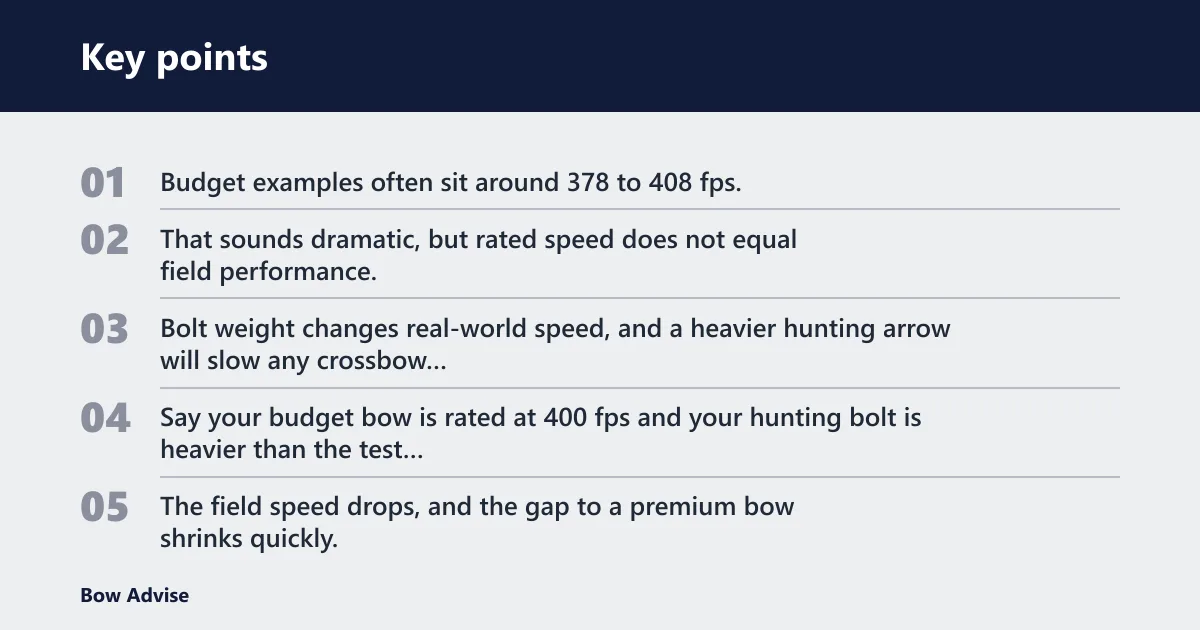
Budget examples often sit around 378 to 408 fps, while premium examples can run roughly 420 to 515 fps. That sounds dramatic, but rated speed does not equal field performance. Bolt weight changes real-world speed, and a heavier hunting arrow will slow any crossbow down.
Say your budget bow is rated at 400 fps and your hunting bolt is heavier than the test setup. The field speed drops, and the gap to a premium bow shrinks quickly. At normal deer distances, a clean hold and good trigger often matter more than another 20 or 30 fps.
Accuracy consistency over time
Better-built crossbows tend to hold their zero and feel the same from shot to shot. That matters when a bow is shot often, packed in and out, and used through a season. More consistent groups usually come from better fit, better trigger feel, and cleaner cocking geometry than from speed alone.
Cocking systems and loading safety
A rope cocking device is simple and cheap. An integrated crank is easier on the body and can make loading more controlled. De-cocking capability is a real practical upgrade because it lets the hunter unload without shooting the bolt.
That is not a packaging perk. It changes the manual of arms, and that can matter as much as fps for a hunter who wants safer unloading after the hunt.
Build refinement and part quality
Premium Crossbows usually feel more settled in the hands because the stock, rail, trigger, and limb system are built with tighter fit and finish. That often means less noise, less vibration, and less roughness in the hardware. Those gains do not always show up on the spec sheet.
Is a budget crossbow accurate enough for deer hunting?
Yes, if it groups well and the shooter can handle it cleanly from the field. Deer hunting does not require a premium price tag. It does require repeatable bolt flight, a trigger that does not disturb aim, and a setup that the shooter can cock and load correctly.
How to read 50-yard group averages
Outdoor Life measured accuracy from a bench at 50 yards. That is a useful benchmark because it separates loose bows from consistent ones. The TenPoint Titan X shot a 1.43-inch group average, which shows how much precision a top setup can hold on paper.
Bench accuracy is a starting point, not the whole answer. A bow that groups well from sandbags still has to be shouldered, cocked, and aimed well from a blind or stand.
Why six three-shot groups matter
One published test used six three-shot groups per bow for speed testing, which helps keep one lucky group from deciding the result. Repeated groups matter because crossbows can hide problems in a single short string. Consistency over several groups is the better sign.
Bench accuracy versus field handling
A common first-timer mistake is buying by paper speed alone and ignoring how the stock fits the hand. A bow that feels awkward or has a long trigger reach can throw shots once the hunter is kneeling, leaning, or shooting from a tree stand.
Picture a smaller hunter trying to hold a wide, front-heavy bow in a blind window. The crossbow may still be mechanically accurate, but the fit makes it harder to steady. That is where Premium Crossbows often pull ahead.
Is the speed gap worth paying for?
Sometimes, but not as often as the headline number suggests. A few extra fps can help with flatter trajectory, yet the practical gain is modest at normal deer ranges. The bigger benefit is often better arrow flight and less effort spent tuning a very fast setup.
Rated fps versus chrono-tested fps
Rated speed is usually measured with a light test bolt. Chrono-tested speed gives a more realistic picture, especially once the hunting arrow is heavier. The Venom X was tested at 388.1 fps, and the TenPoint Titan X tested at 400 fps with a 410-grain arrow.
Those numbers show why buyers should not shop by catalog speed only. Actual setup weight changes the result, and that changes how much the speed gap matters in the field.
How bolt weight changes speed
Heavier bolts reduce speed on every crossbow. That is normal and expected. A package that looks faster on paper may end up closer to a slower bow once both are set up for hunting rather than speed tests.
What extra speed changes at hunting distances
Extra speed can flatten trajectory slightly and reduce holdover at longer ranges. It does not replace good range judgment, a solid rest, or a trigger that breaks cleanly. Past normal whitetail distances, the real difference is often smaller than buyers think.
Where premium models feel better in hand
The best premium gains are felt before the shot. Trigger pull, trigger reach, stock geometry, and balance shape the shooting experience every time the bow is loaded. That is where a higher price can feel justified quickly.
Trigger pull and trigger reach
Some affordable models have a longer trigger reach, which can be fine for larger hands and awkward for smaller ones. Trigger pull in pounds is not the only issue; how the finger lands on the trigger matters too. A poor fit can make the bow harder to shoot well even if it is mechanically accurate.
Weight, width, and balance
The Venom X weighed 8.11 pounds with scope. The CenterPoint Wrath 430 weighed 8.3 pounds. The Wicked Ridge Raider 400 De-Cock was 6.8 pounds. Those numbers show that price does not map perfectly to weight.
Width and overall balance matter just as much. A narrower bow can be easier in a blind or tree stand, while a poorly balanced bow can feel heavy even when the scale says otherwise.
Accessory package quality
Most packages include a scope, quiver, and bolts or arrows. Premium packages are more likely to include a crank, a better optic, and sometimes a sling or broadheads. Those extras may be useful, but they are only valuable if they match the hunter’s needs.
Noise, vibration, and finish
Fit-and-finish differences show up in small ways: less rattle, cleaner edges, smoother controls, and less roughness around moving parts. Those details do not always change the hit point, but they can affect confidence and long-term durability.
Choose Budget if… / Choose Premium Crossbows if…
Choose Budget if you want the lowest entry cost, plan to hunt deer at ordinary ranges, and are comfortable checking fit and accessories before buying extra parts. It also makes sense if you shoot lightly and want a ready-to-hunt package without paying for premium convenience.
Choose Premium Crossbows if you want easier cocking, better trigger feel, better stock fit, and a more refined setup for frequent practice. It is the better pick for smaller shooters, hunters with shoulder limits, and anyone who wants a safer, calmer manual of arms with less upgrade shopping later.
A $2,000 bow can be much better than a $299 model, but only in the ways that matter most when the bow is actually used. For many buyers, the sweet spot sits near the value point Outdoor Life identified at $1,000, or in the lower premium range if cocking ease and fit matter more than raw price.


Frequently asked questions
What do you actually get when you spend more on a crossbow?
You usually get better cocking assistance, a cleaner trigger, better fit, and more refined parts. Speed may rise too, but the practical gain is often smaller than the comfort and consistency gains. That is why some buyers feel the upgrade right away and others do not.
Do premium crossbows shoot noticeably faster than budget models?
Often, yes, but the difference is less important than the numbers suggest. In the field, bolt weight and hunting setup narrow that gap.
What features do expensive crossbows include that cheap ones do not?
Premium packages more often include an integrated crank, de-cocking capability, better optics, and better stock fit. They also tend to have cleaner triggers and better overall finish. Those are functional gains, not just nicer packaging.
How much of the price difference is just the cocking system and accessories?
Quite a bit for some buyers. A crank, better scope, better arrows, sling, and broadheads can add value fast. Still, the biggest premium gains also come from trigger quality, fit, and durability, which are harder to price line by line.
Is there a sweet spot where value is better than flagship pricing?
Yes. Outdoor Life found $1,000 to be the best value point, which fits the middle of the market better than the top shelf. For many hunters, that tier captures enough quality and convenience without paying flagship money for gains they may not use.
Which matters more: speed, accuracy, or ease of cocking?
Ease of cocking usually matters most for many buyers because it affects safety, consistency, and whether the bow gets used correctly. Accuracy comes next. Speed matters, but only after the bow fits the shooter and can be loaded without strain.
Are cheaper crossbows good enough for first-time hunters?
Yes, if the package is complete and the fit is acceptable. A first-time hunter benefits more from simple controls, manageable cocking effort, and a dependable scope than from chasing top speed. The key is buying a setup that can be shot and loaded safely.
Crossbows: Is It Worth It? – Game & Fish — Is a $2,000 bow that much better than a $299 model?
It can be, but the answer depends on what “better” means. A $2,000 bow often feels smoother, fits better, and holds up better under heavy use. A $299 model can still hunt deer well if it groups, fits, and comes with the right accessories.