Wicked Ridge vs TenPoint Crossbows: Which Is Better for Hunters?
Wicked Ridge is the better buy for most hunters who want the lowest true out-the-door cost. TenPoint Crossbows makes more sense if you want a more refined fit, finish, and feature set. Pick Wicked Ridge when budget matters most. Paying for the wrong line can add hundreds for features you will not use, or leave you with a setup that does not fit your blind or treestand. This guide compares Wicked Ridge vs TenPoint by hunting use, package cost, speed, weight, noise, and value.
| Decision factor | Wicked Ridge | TenPoint Crossbows | Winner |
|---|---|---|---|
| Out-the-door cost | Value line under TenPoint; current models in this article are described at $499 to $1,099. | Premium pricing, with more feature-heavy packages and a higher accessory bill. | Wicked Ridge |
| Cocking and de-cocking | ACUdraw options on value packages; easier entry point for hunters watching spend. | ACUslide and ACUslide MAXX on premium models; safer de-cocking focus. | TenPoint Crossbows |
| Treestand and blind fit | Compact hunting models can fit well, especially when width and cost matter together. | More compact premium options, especially reverse-draw models, improve maneuverability. | TenPoint Crossbows |
| Ready-to-hunt value | Packages are built for hunters who want a usable setup without heavy add-on spending. | Packages are complete, but the upgrade path raises total buy-in fast. | Wicked Ridge |
| Peak speed and feature set | Strong deer-hunting speeds, with less emphasis on top-end hardware. | Higher ceiling, including the TRX Ultra at 515 fps. | TenPoint Crossbows |
What really separates the two brands
The short version is simple: Wicked Ridge is the value line under TenPoint, while TenPoint Crossbows is the premium line. That split matters because the real purchase is not only the bow, but also the cocking system, scope, arrows, quiver, and often a case.
Both brands offer ready-to-hunt packages, and both can take deer cleanly. The difference is how much you pay to get to the same field-ready point, and whether the extra money buys a setup that helps in your stand or blind.
Wicked Ridge as the value line
Wicked Ridge is built for hunters who want the hunting focus and brand support of the TenPoint family without premium-line pricing. The current Wicked Ridge models in this article are framed as a $499 to $1,099 lineup, and that range is why many buyers start here.
The value advantage is not only sticker price. A ready-to-hunt Wicked Ridge package can leave more room in the budget for broadheads, extra bolts, a spare string, or a case that fits the setup.
TenPoint Crossbows as the premium line
TenPoint Crossbows is the premium branch, so buyers pay for more refined packages, more advanced cocking systems, and often more compact or faster designs. The Turbo X is listed as the best TenPoint crossbow for most deer hunters, at 415 fps with a 410-grain Pro Elite 400 arrow, 33.25 inches long, and 6.8 pounds.
At the top end, the TRX Ultra shows where the premium cost goes. It is listed at 515 fps, weighs 8.4 pounds, measures 11.75 inches wide uncocked and 6 inches wide cocked, and includes ACUslide MAXX and an EVO-X Marksman Elite scope.
What shared technology means for buyers
Do not assume the gap is about safety alone. Both brands offer cocking-assist technology, and both can be set up for deer hunting, but TenPoint’s premium systems tend to bring more advanced de-cocking and more compact flagship packaging.
That shared family support is also why the comparison matters. A hunter can stay inside the same parent brand family and still choose between a lower buy-in or a higher-feature setup.
Which brand fits your hunting setup?
For treestands, blinds, and mobile hunting, the right brand depends less on prestige and more on room, weight, and how you carry the bow. Wicked Ridge is often the smarter budget choice when the stand is roomy enough and the hunter wants a complete package. TenPoint Crossbows becomes more attractive when the setup is tight or when the hunter wants the most compact premium model available.
Treestand hunters
Treestand hunters should care first about cocked width, then weight, then de-cocking. A compact crossbow is easier to rotate, load, and shoulder quietly in a narrow platform, especially when the rail or foot loop has to clear a tree trunk, rail, or tether.
Say your stand is 20 inches deep and the shooting rail leaves only a small opening on the off side. A narrower cocked width matters more than raw fps, because the bow has to move cleanly before the deer steps into the lane.
Blind hunters
Ground blinds reward shorter overall length and manageable width. TenPoint Crossbows has the edge when the blind is cramped, especially with reverse-draw or very compact premium models, but a value Wicked Ridge can still be the better buy if the blind is roomy and the hunter wants to spend less.
Scope choice matters more in blinds too. A basic package scope is often enough for whitetail ranges, while a rangefinding optic only makes sense if the hunter wants less guesswork and accepts the higher package cost.
Ground hunters and mobile setups
Mobile hunters usually carry the bow farther, which makes weight a real factor. A lighter package is easier to pack into public land, climb with, and reposition through cover, so total carry weight can matter more than a small speed difference.
A common first-timer mistake is paying for top-end fps and then carrying extra pounds in a setup that stays in the field all day. That tradeoff rarely helps if the hunting style involves long walks or frequent repositioning.
Wicked Ridge vs TenPoint Crossbows comparison matrix
| Hunting setup | Budget range | Hidden accessory cost | Preferred cocking system | Width priority | Weight priority | Scope need | Recommended brand choice with rationale |
|---|---|---|---|---|---|---|---|
| First crossbow for a deer hunter | About $500 to $900 | Moderate; arrows, case, and a better quiver can add up fast | ACUdraw | Medium | Medium | Standard scope | Wicked Ridge — lower total buy-in and a ready-to-hunt package fit first-time buyers best. |
| Tight treestand on private land | About $900 to $1,500 | High if the buyer steps into premium optics or extra bolts | ACUslide or ACUslide MAXX | High | High | Low-profile scope | TenPoint Crossbows — compact premium models make stand handling easier, and the de-cocking system helps in the field. |
| Ground blind for whitetail | About $700 to $1,400 | Moderate to high, depending on scope and case | ACUdraw or ACUslide | High | Medium | Standard or lighted scope | TenPoint Crossbows, better when compact handling and premium cocking matter more than lowest price. |
| Budget-minded hunter who wants deer-capable performance | About $499 to $1,099 | Lower, because the package starts closer to hunt-ready | ACUdraw | Medium | Medium | Standard scope | Wicked Ridge, the most useful performance for the money usually lands here. |
| Hunter chasing the most compact premium setup | About $1,300 and up | High, especially if matching accessories are upgraded | ACUslide MAXX | Very high | High | Premium scope | TenPoint Crossbows, the premium premium setup wins when compactness and features justify the bill. |
Speed, width, weight, and scope package
Speed matters, but only after the bow fits the hunt. A faster crossbow can flatten trajectory and add margin on longer shots, yet a heavier or wider model may be slower to aim and harder to move in a stand or blind.
What FPS means in the field
The TenPoint Turbo X at 415 fps already sits in the hunting-performance zone most deer hunters need. The TRX Ultra at 515 fps is faster, but its 8.4-pound weight and premium package show the usual tradeoff: more speed often means more cost or more mass.
For deer inside typical woods ranges, speed is useful, but it is not the first sorting tool. Fit, carry weight, and sight package usually matter more in real hunting conditions.
Cocked width and treestand clearance
Cocked width is one of the most practical numbers on a crossbow spec sheet. The TRX Ultra’s 6-inch cocked width is a strong example of why reverse-draw premium bows are so appealing in cramped setups.
Wicked Ridge also has compact hunting models, and the Invader M1 De-Cock is listed at a 9.5-inch cocked width and 32-inch length. That is a much more manageable footprint than many older hunting crossbows, and it explains why this model class works well in stands and blinds.
Carry weight and all-day handling
Weight becomes more important as the hunt gets longer. The Turbo X at 6.8 pounds is easier to tote than the TRX Ultra at 8.4 pounds, and that difference adds up on long walks or when climbing into a stand with extra gear.
Hunters should also remember that weight is not only the bare bow. A heavy scope, quiver, sling, and case can push the real carry load higher than the catalog number suggests.
Included scope packages and upgrade costs
Scope package choice changes the real price gap. If one bow includes a usable standard optic and the other includes a more advanced lighted or rangefinding scope, the premium model’s apparent price jump may be smaller than it first looks.
That said, the opposite is also true. If the buyer does not need a premium scope, paying for one can be wasted money. Hidden accessory cost is where many buyers overspend.
ACUslide, ACUdraw, and field usability
ACUslide and ACUdraw both reduce cocking effort, but they are not the same buying decision. ACUslide is tied to TenPoint Crossbows and is built around safe cocking and de-cocking, while Wicked Ridge leans on ACUdraw options to give buyers an easier, lower-cost entry point.
Safe cocking and de-cocking
TenPoint’s ACUslide system is a major premium feature because it lets the hunter cock and safely de-cock the crossbow. The Turbo X uses ACUslide cocking and safe de-cocking, and that is a meaningful field advantage for hunters who load at the truck or in a blind and then unload before the hike out.
That safety and convenience can be worth the extra money for hunters who de-cock often. For others, especially those who leave the stand after each hunt and rarely change settings, the premium may be harder to justify.
Quiet use in the field
Integrated cocking systems are generally quieter and more controlled than many loose add-on solutions. That matters when a hunter needs to settle into a blind at dawn or cock the bow after a quiet approach to a treestand.
Wicked Ridge still holds the value edge because it gets hunters into an easier-cocking package without forcing a premium spend. TenPoint Crossbows has the edge when the buyer wants the smoothest premium handling and de-cocking workflow.
Which system belongs on which brand?
Buy Wicked Ridge if the goal is practical, lower-cost cocking help on a hunt-ready package. Buy TenPoint Crossbows if the goal is the highest level of integrated cocking convenience, especially on the top end of the lineup.
That is the cleanest way to sort them. ACUdraw is the value-oriented fit; ACUslide is the premium fit.
Choose Wicked Ridge if… / Choose TenPoint Crossbows if…
Choose Wicked Ridge if you want the lowest true out-the-door cost, already know a standard hunting scope is enough, and care more about getting a complete deer-ready package than paying for premium extras. It is also the smarter pick when the hunt is budget-limited and the setup does not demand the most compact premium chassis.
Choose TenPoint Crossbows if your treestand or blind is tight, you want the most refined cocking and de-cocking system, or you are willing to pay more for compact premium performance. It is worth the extra money when a smaller footprint, higher-end scope package, and better field handling directly fit your hunting setup.
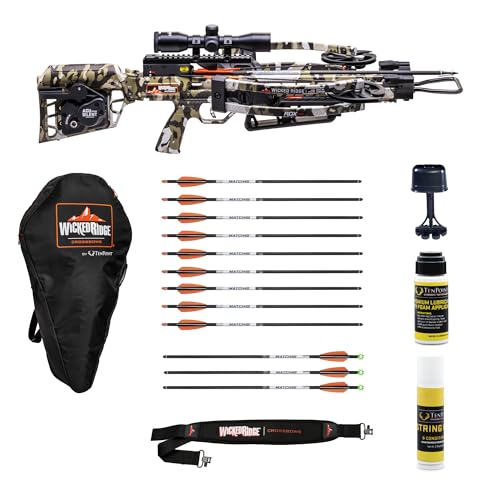
For model matching, the closest Wicked Ridge choice by use case is the Invader M1 De-Cock. It is described as a 2025 Great Buy, shoots 390 fps, and has a 9.5-inch cocked width and 32-inch length, which places it in the same practical conversation as compact TenPoint hunting models rather than top-end speed chasers.
Frequently asked questions
Is Wicked Ridge as good as TenPoint for deer hunting?
Yes, Wicked Ridge is good enough for deer hunting when the package fits the hunter’s needs. TenPoint Crossbows has the premium edge in cocking system, feature depth, and compact high-end options, but Wicked Ridge often gives the better hunting value if the buyer wants dependable deer-ready performance without the premium price.
What is the difference between Wicked Ridge and TenPoint crossbows?
Wicked Ridge is the value line under TenPoint, while TenPoint Crossbows is the premium line. The main difference is how much feature content and compact performance the buyer gets for the money. Wicked Ridge aims at lower buy-in; TenPoint aims at higher-end fit, finish, and system refinement.
Which is better for a treestand, Wicked Ridge or TenPoint?
TenPoint Crossbows is usually better for a tight treestand because its compact premium models and ACUslide systems are built for easier handling in small spaces. Wicked Ridge can still work well in a stand, but it wins more often on price than on the most compact premium fit.
Are TenPoint crossbows worth the extra money?
They are worth it when the hunter will use the premium features. That means compact stand use, frequent de-cocking, or a desire for the most refined package. If the hunter mainly wants a deer-capable setup and does not need the top-end extras, Wicked Ridge is usually the smarter spend.
Does Wicked Ridge have the same warranty and cocking system as TenPoint?
Wicked Ridge and TenPoint Crossbows sit in the same brand family, but the systems are not identical. Wicked Ridge uses ACUdraw options, while TenPoint uses ACUslide and ACUslide MAXX on premium models. Buyers should treat them as related, not interchangeable, when comparing package features.
Which brand has the best value for a hunter on a budget?
Wicked Ridge has the best value for a hunter on a budget. It is the more affordable line, and the ready-to-hunt packaging helps keep the total buy-in down. That matters because accessories can quickly add hundreds of dollars beyond the bow itself.