Are DnD Arrows Wood Or Metal: Essential Guide
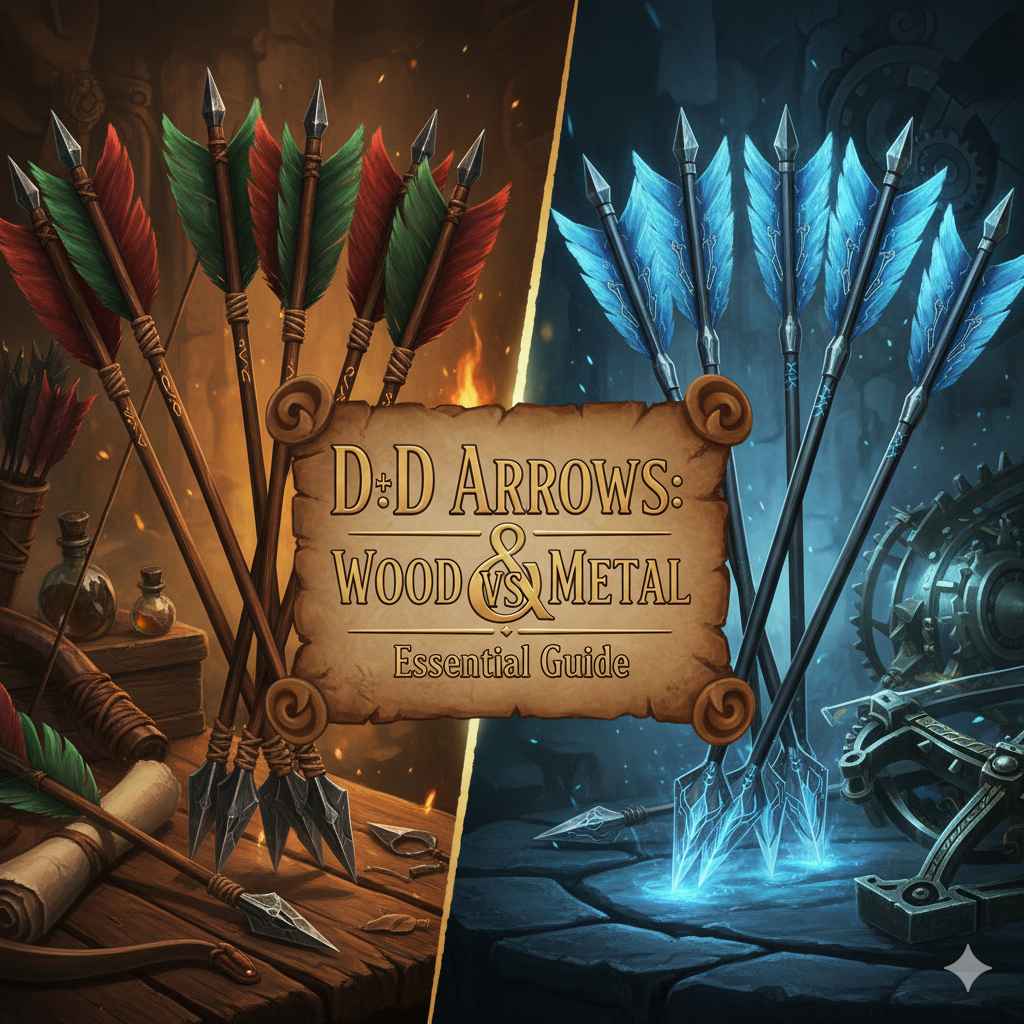
In Dungeons & Dragons, arrows are typically made of wood for the shaft and tipped with metal, though variations exist based on specific rules or lore. This guide will clarify typical arrow construction in D&D and explain why it matters. For more on this, see our guide on Is Bow Fishing Legal in NY? Everything You Need to Know. For more on this, see our guide on Are the Nocks Removable from Tenpoint Arrows? Expert Guide.

Sunianly
Sunianly Rustic Arrow Wooden Sign Arrow Hanging…
- Material: Our arrow wooden signs made of wood, smooth
- Size: Our unfinished wooden board signs :11 inch x 3 inch x 0.2inch / 28cm x 8cm x 0.5cm. Total wooded craft package is including…
- DIY Wood: Our hanging wood sign surface is smooth and blank, you could paint and writte by your imagination with your families, ma…
As an Amazon Associate I earn from qualifying purchases.
Ever found yourself wondering about the nitty-gritty details of your character’s equipment in Dungeons & Dragons? It’s common for new players to pause when an instructor mentions arrows. You might think, “Are they made of wood? Or maybe metal?” This little detail can feel surprisingly important when you’re trying to visualize your archer unleashing a volley. Don’t worry, it’s a simple question with a clear answer that will make your adventures even more immersive. We’ll break down what arrows are usually made of in D&D, why it matters, and what options you might encounter. Get ready to have this common question answered clearly and easily!
Understanding D&D Arrows: The Basics
When we talk about arrows in Dungeons & Dragons, we’re usually referring to the ammunition fired from bows. The rules in D&D 5th Edition, found in the Player’s Handbook, describe arrows as a type of ammunition that companions a bow. While the game mechanics often treat all standard arrows the same in terms of damage and cost, understanding their physical composition helps bring the game world to life. Think of it like knowing whether your sword is a trusty steel blade or something more magical – it adds flavor!
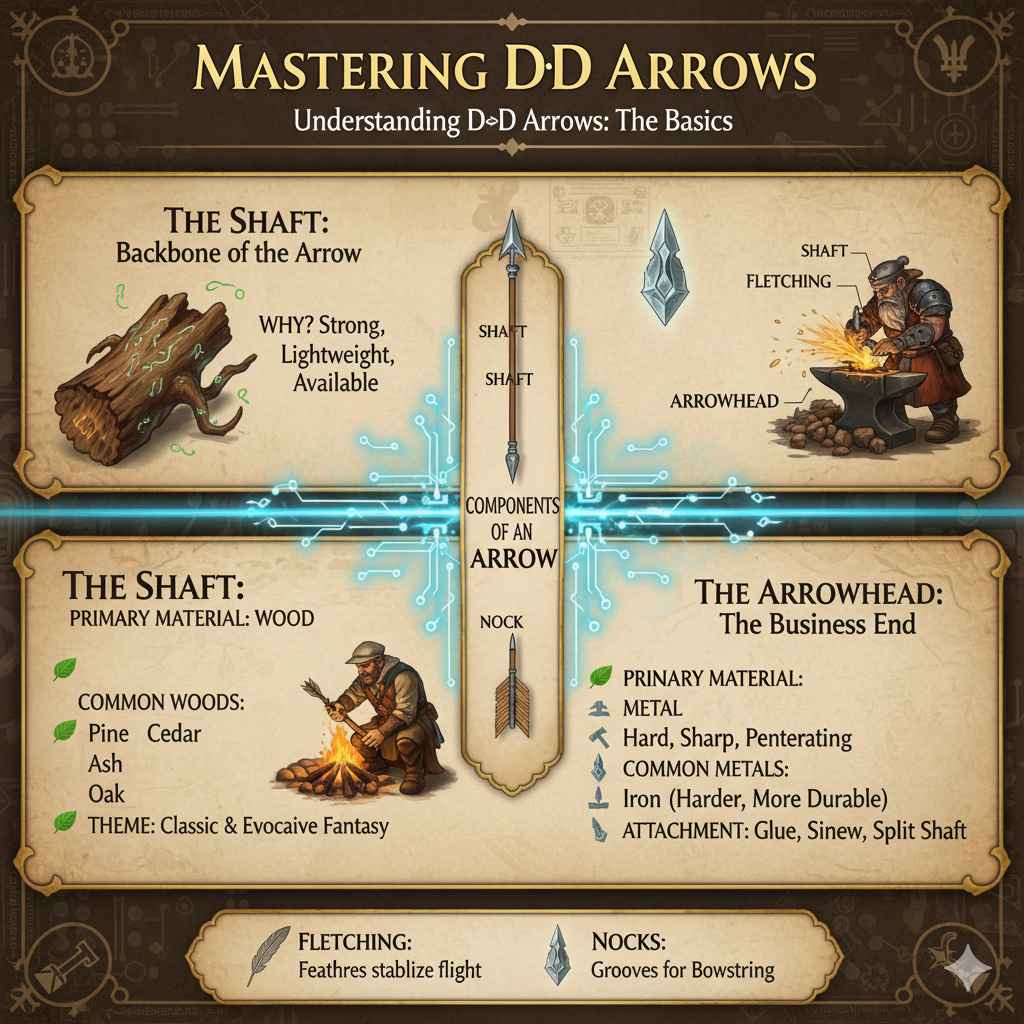
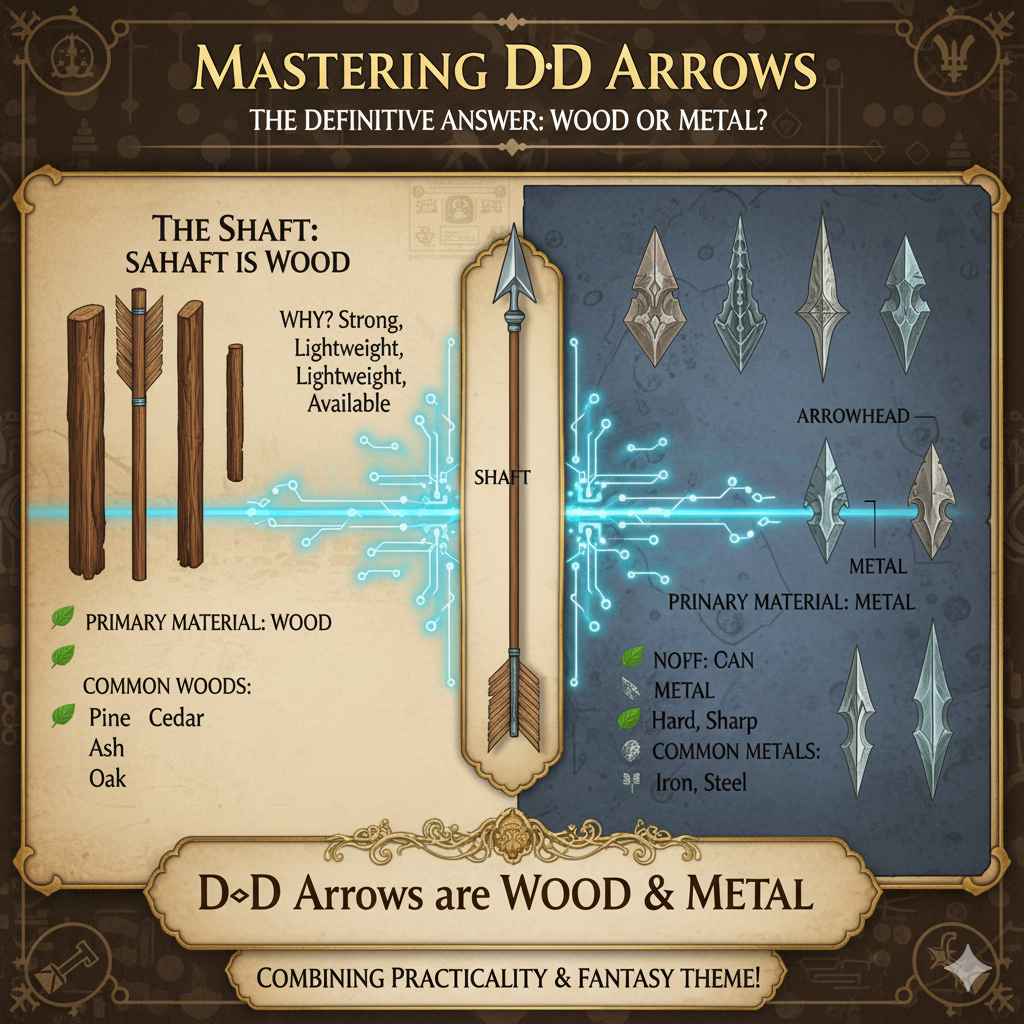
The primary components of an arrow are the shaft, the fletching (feathers or vanes), the nock (where the string fits), and the arrowhead. In most fantasy settings, and thus in D&D, these components are crafted from readily available materials. The most common and practical materials for a standard arrow are wood for the shaft and metal for the arrowhead.
The Shaft: The Backbone of the Arrow
The shaft is the long, slender body of the arrow. This is where the majority of its length comes from, and it needs to be both strong and relatively lightweight. For this reason, wood has historically been, and remains, the ideal material for arrow shafts in both real-world archery and in the world of D&D.
Common woods used historically for arrow shafts include:
- Pine
- Cedar
- Ash
- Oak
These woods offer a good balance of flexibility, strength, and availability. They can be straightened, shaped, and smoothed to create a consistent projectile. Imagine a skilled ranger or a humble hunter gathering shafts from the forest – it fits perfectly with the adventurous setting of D&D. While modern archery has moved towards carbon fiber and aluminum for shafts due to their uniformity and durability, wood remains the classic and most evocative choice for a fantasy world.
The Arrowhead: The Business End
The arrowhead, also known as the point, is what makes contact with the target and is responsible for penetrating or causing damage. This is where metal comes in. For an arrow to be effective, especially against tougher targets like armor or creatures with thick hides, the arrowhead needs to be hard and sharp.
The most common materials for arrowheads in D&D settings are:
- Iron
- Steel
Iron is a robust metal, easily forged into various shapes. Steel, an alloy of iron and carbon, is even harder and more durable, making it a superior choice for effective arrowheads capable of inflicting significant damage. These metal heads are typically attached to the wooden shaft using glue, sinew, or by being inserted into a split end of the shaft which is then bound tightly.
Fletching and Nocks: The Supporting Cast
While not typically made of wood or metal, the fletching and nocks are crucial for an arrow’s flight. Fletching, usually made from bird feathers, helps stabilize the arrow in flight, ensuring it travels true towards its target. The nock is a small groove or insert at the back of the arrow that the bowstring hooks onto, ensuring the arrow is properly drawn and released.
Why Does This Matter in D&D?
You might be thinking, “Salman, this is great, but why should I care if an arrow is wood or metal in a game?” The answer lies in the immersion and the small details that make storytelling richer. Knowing the typical construction of a D&D arrow can:
- Enhance Roleplaying: Describing your character crafting arrows, or finding a stash of them, becomes more vivid. You can picture the rough wood, the glint of the metal point, the feather fletching.
- Inform Minor Decisions: While standard arrows are usually uniform, unique or magical arrows might have different compositions, affecting their properties. Knowing the base helps you understand deviations.
- Aid Worldbuilding: If you’re a Dungeon Master, understanding these details helps you describe the world more realistically. Are the arrows used by goblins crude and crudely made, or are they finely crafted by elven artisans?
Cost and Availability
In D&D 5th Edition, a standard quiver of 20 arrows costs 1 gold piece (gp). This price reflects the commonality and relative ease of production of these weapons. The wood for shafts is abundant in most regions, and basic metalworking for arrowheads is a common craft. If arrows were made of exotic materials, their cost would likely be much higher.
For example, a character might find:
- Crude Goblin Arrows: Likely made from rough branches with sharpened stone or poorly smelted iron heads. These might be less accurate or durable.
- Elven Arrows: Possibly crafted from finely seasoned woods like yew or ash, with expertly forged steel heads and perfect fletching. These might have better accuracy or be more expensive.
Damage Types and Materials
The core game mechanics for a standard arrow assume a piercing damage type. This comes from the sharp metal arrowhead’s ability to pierce defenses. While the wood shaft itself doesn’t deal damage, a blunt impact from a wooden club, for instance, would be bludgeoning damage. For arrows, the impact is focused and sharp.
There are instances where arrowheads can be varied to inflict different damage types. For example:
- Broadhead Arrows: Designed for hunting, these have wider heads that cause more bleeding damage (still piercing, but with a thematic difference).
- Bodkin Point Arrows: Narrow, sturdier heads designed specifically to penetrate armor.
In both these cases, the arrowhead is still implied to be metal, as those properties (sharpness, hardness) are key to their function.
Beyond the Standard: Special Arrows in D&D
While we’ve focused on standard arrows being wood-shafted and metal-tipped, D&D often introduces special ammunition that deviates from the norm. These variations are where creativity truly shines.
Magical Arrows
These arrows might glow, hum with power, or have unique properties. Their shafts could be made of enchanted wood, or even ethereal material, and their heads might be crystalline, bone, or pure energy. The description in the game often provides clues:
- +1 Arrows: Usually appear normal but are magically enhanced. They are still typically described as wood and metal.
- Frost Arrows: Might have icy crystals for heads or shafts that are unnaturally cold, perhaps carved from frozen wood.
- Flame Arrows: Could have arrowheads that burn constantly or are made of fiery material.
These special arrows bypass the standard “wood or metal” question, as their magic is their defining characteristic.
Variant Materials
Occasionally, you might encounter arrows made from less common materials due to specific regions or cultures:
- Bone Arrows: Used by cultures without easy access to metal or wood, or by specific creatures like certain types of undead or monstrous humanoids. The shafts and heads could both be bone.
- Stone-Tipped Arrows: In very primitive societies or areas devoid of metal ore, sharpened stone (like flint or obsidian) might be used for arrowheads. These would still typically have wooden shafts.
These are less common in standard D&D modules but offer great opportunities for flavor, particularly in homebrew adventures.
Building Your Own Arrows: A Practical Touch
For players who enjoy crafting or for characters with the proficiency, understanding arrow construction can be practical. The crafting rules in D&D 5e allow for creating ammunition.
According to the Basic Rules for Equipment, crafting ammunition for bows requires specific tools and time. The typical components for crafting a standard arrow would involve:
- Obtaining Materials: This means procuring suitable wood for shafts, metal for arrowheads (or having them forged), and feathers for fletching.
- Shaping the Shafts: Straightening and smoothing the wooden shafts.
- Forging and Attaching Heads: Creating the metal points and securely fastening them to the shafts.
- Adding Fletching and Nocks: Attaching feathers for stability and carving the nock for the bowstring.
The Tools of the Trade often include:
- Smith’s Tools: Essential for forging metal arrowheads.
- Woodcarver’s Tools: For shaping and smoothing shafts and creating nocks.
- Tanner’s Tools: For preparing leather or sinew used for binding.
The time and cost involved in crafting arrows will vary based on the rarity of materials and the complexity of the arrowhead. A basic arrow is relatively simple to produce, contributing to its low cost in the game.
Real-World Archery vs. D&D: Similarities and Differences
It’s fascinating how D&D often mirrors real-world practices. In historical archery:
- Arrow shafts were almost exclusively made of wood (cedar, pine, ash, etc.) for the reasons we discussed: strength-to-weight ratio and availability.
- Arrowheads were made of various materials depending on the era and purpose, including stone, bone, bronze, iron, and steel. Metal, especially steel, was favored for its sharpness and durability for combat arrows.
- Fletching, typically from bird feathers, was crucial for flight stability.
D&D largely adopts this practical approach. The standard “Arrow” item is a representation of these historical and practical realities. Where D&D diverges is in its allowance for magical enhancements and more fantastical materials that simply didn’t exist in historical Earth-based archery.
For example, the Museum of London’s articles on archery often detail the evolution of arrowheads and their materials, showing a clear progression towards hardened metal for effective weaponry, much like in a fantasy setting.
So, Are D&D Arrows Wood or Metal? The Definitive Answer
For standard, non-magical arrows in Dungeons & Dragons:
- The shaft is primarily made of wood.
- The arrowhead is primarily made of metal (iron or steel).
This combination offers the best balance of practicality, effectiveness, and thematic consistency for the fantasy worlds depicted in D&D. While you might encounter exceptions with magical items or specific creature types, the general rule holds true.
Frequently Asked Questions (FAQ)
What is the most common material for a D&D arrow shaft?
The most common material for a D&D arrow shaft is wood, such as pine, cedar, or ash. This is because wood is strong, lightweight, and readily available in most fantasy settings.
Are D&D arrowheads always metal?
For standard arrows, yes, arrowheads are typically made of metal like iron or steel because they need to be sharp and durable to be effective. However, some special or primitive arrows might use sharpened stone or bone.
Does the material of an arrow affect its damage in D&D 5e?
For standard arrows, the material composition (wood shaft, metal head) generally doesn’t change the base damage dice. This is simplified for game mechanics. However, specific arrow types (like magical arrows or specially crafted ones) can have different damage dice or types associated with them.
Can a character craft their own arrows in D&D?
Yes, characters with Proficiency in the right tools (like Smith’s Tools or Woodcarver’s Tools) and access to materials can craft arrows. The rules for crafting are found in the Player’s Handbook or the Basic Rules.
What about arrows fired by monsters like goblins or orcs?
While the game rules often treat all standard arrows the same, you can flavor monster arrows as being more crudely made. Goblins might use rougher wood shafts with chipped stone or poorly forged iron heads, while skilled hunters might craft finer arrows. This is mostly for roleplaying flavor unless the Dungeon Master specifies otherwise.
Are there ever arrows made entirely of metal?
It’s very uncommon for standard arrows to be made entirely of metal in D&D. A solid metal arrow would be excessively heavy, making it difficult to shoot and reducing its range. The combination of a wooden shaft and a metal head is the practical standard.
What about magical arrows? Can their materials differ?
Absolutely! Magical arrows can be made of anything the Dungeon Master can imagine – shimmering energy, enchanted wood, crystal tips, or even bone. Their materials often reflect their magical properties and are a departure from standard ammunition.
Conclusion
So, to wrap things up, when you’re planning your next D&D adventure and thinking about your trusty bow, remember that the arrows you’re firing are typically a smart combination of natural and forged materials. A sturdy wooden shaft provides the body, while a sharp metal arrowhead ensures your shots count. This classic construction is not only historically accurate but also fits perfectly within the rich tapestry of Dungeons & Dragons settings.
Understanding these small details can significantly deepen your immersion in the game. It helps you visualize your character’s equipment, adds depth to crafting and trading, and makes the world feel more real. Whether you’re a seasoned adventurer or just picking up your first bow in-game, knowing that your arrows are likely wood with metal tips is a foundational piece of D&D lore. Keep these facts in mind, and may your shots always find their mark!
Related pick: Check today's price on Amazon