Are Recurve Bows As Powerful As Longbows? Expert Comparison
When you hear the word “bow,” two classic images might come to mind: the sleek, curved profile of a recurve bow and the long, graceful lines of a traditional longbow. Both have deep roots in history, from ancient warfields to Olympic competitions. But a common question divides archers and history fans: Are recurve bows as powerful as longbows? The answer is not as simple as picking a winner. Each bow type has unique strengths, and what counts as “power” depends on your needs, speed, penetration, accuracy, or ease of use.
Let’s explore the real differences between recurve bows and longbows, using clear language and real examples. Whether you’re a beginner looking for your first bow, a history buff, or just curious about archery, this guide will help you understand what sets these two classics apart.


Understanding Bow Power: What Does ‘power’ Really Mean?
Before comparing options, it is important to define what “power” means in archery. For most people, power refers to:
- Arrow speed (measured in feet per second, or FPS)
- Kinetic energy (the force behind the arrow, useful for penetration)
- Draw weight (the force needed to pull the string to full draw)
But power can also mean how efficiently the bow transfers energy to the arrow, and how well it handles in real situations. A bow that’s powerful on paper might not always feel powerful in your hands.
Example: A heavy longbow may shoot arrows with great force, but if it’s hard to aim or tiring to shoot, its real-world “power” is limited for some users.
The Anatomy: What Makes Recurve Bows And Longbows Different?
Understanding the design differences is key to seeing why these bows perform differently.
Recurve Bow
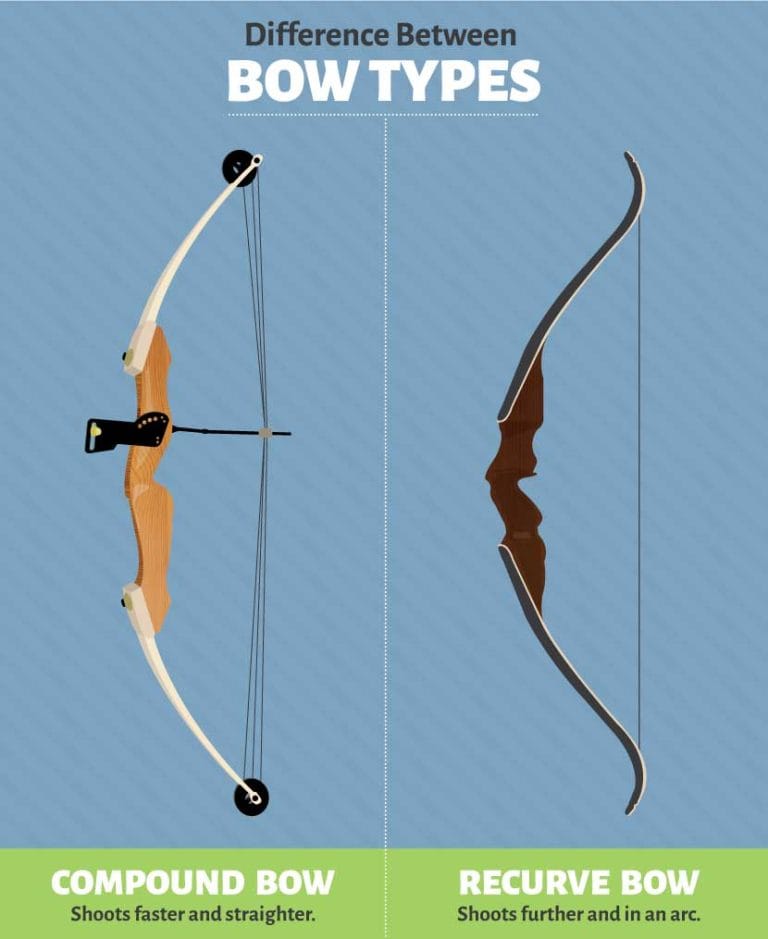
A recurve bow has limbs that curve away from the archer at the tips. This design stores more energy and delivers it more efficiently to the arrow.
- Shorter overall length than a longbow
- Curved limb tips “recurve” away from the user
- More modern versions may include advanced materials and detachable limbs
Longbow
A longbow is tall, often as tall as the archer, and has simple, straight limbs that curve gently when strung.
- Long, straight profile
- Made traditionally from a single piece of wood (self-bow) or laminated wood
- No pronounced limb curves at the tips
These shapes are not just for looks. They directly affect shooting style, comfort, and performance.
Comparing Arrow Speed And Energy
One of the most direct ways to measure bow “power” is by how fast and hard it can shoot an arrow.
| Bow Type | Typical Arrow Speed (FPS) | Energy Efficiency |
|---|---|---|
| Recurve Bow | 150, 200 | High (up to 80%) |
| Longbow | 120, 170 | Moderate (65, 75%) |
Arrow Speed: Recurve bows generally shoot faster arrows than longbows of the same draw weight. For example, a 40-pound recurve can send an arrow at around 180 FPS, while a 40-pound longbow might reach only 150, 160 FPS.
Kinetic Energy: Because recurve bows store and release energy more efficiently, they often deliver more kinetic energy to the arrow, which is important for hunting or long-distance shots.
Pro Tip: Don’t focus only on arrow speed. The arrow’s weight, bow tuning, and your shooting form all affect real-world performance.
Draw Weight And Ease Of Use
The draw weight is the force needed to pull the bowstring to full draw. Both recurve bows and longbows come in a range of draw weights, from 15 pounds for beginners to over 70 pounds for strong adult archers.
However, the feel of the draw is different:
- Longbows have a smooth, steady draw that many users find comfortable, especially for heavier weights.
- Recurve bows can feel “stacked” (harder to pull) near the end of the draw if not well-matched to the archer.
For some, a recurve’s shorter length makes it easier to handle, especially in tight spaces like woods or brush.
Historical Context: Which Bow Ruled The Battlefield?
Both longbows and recurve bows have proven themselves in history, but in very different ways.
The English Longbow
The English longbow was famous in medieval Europe. At the Battle of Agincourt (1415), English archers using longbows helped defeat a much larger French army. Historical records suggest some longbows had draw weights over 100 pounds, able to send heavy arrows through armor.
The Recurve Bow In Asia And The Middle East
Recurve bows were used by horse archers, such as Mongols, Turks, and Persians. Their shorter length made them ideal for shooting from horseback. These bows packed a lot of power into a compact frame, thanks to their recurved limb tips and use of composite materials (wood, horn, sinew).
Example: The Mongol recurve bow was known for both speed and penetration, helping Genghis Khan’s armies conquer vast regions.
Accuracy And Handling: Which Is Easier To Shoot?
Accuracy depends on the archer’s skill, but bow design plays a role.
Recurve Bow
- More compact and lighter
- Easier to carry and maneuver
- Modern recurves often have sights and other accessories
- Shorter bows can be harder to keep steady, especially for beginners
Longbow
- Longer length can help with straight arrow flight
- Generally more forgiving of small mistakes in release
- Traditional shooting style, often without sights
Some archers find the longbow’s simplicity makes it easier to learn good habits. Others prefer the flexibility and upgrades available with recurves.
Bow Materials And Modern Technology
Modern recurve bows often use laminated wood, fiberglass, and carbon for strength and flexibility. Detachable limbs and adjustable risers are common in target archery.
Longbows stick closer to tradition, usually made of wood or simple laminates. Some modern versions include fiberglass for added durability, but they rarely have the tech features of recurves.
Pro Tip: Materials affect not only power, but also weight and comfort. Lighter bows are easier to carry, but heavier bows can help steady your aim.
Hunting: Which Bow Is Better For The Job?
In hunting, you want enough kinetic energy to ensure a clean, ethical shot.
- Recurve bows often deliver higher arrow speed and energy for a given draw weight. This makes them a popular choice for hunting, especially for medium to large game.
- Longbows can also be effective, especially for close-range hunting or small game. Their quiet shot and smooth draw are valued by many traditional hunters.
Some US states require a minimum draw weight for hunting with bows, typically around 40 pounds. Both types can meet these requirements, but recurves may give a bit more margin for error.
Warning: Always check local laws and practice with your chosen bow before hunting. Ethical hunting requires skill, not just power.
Olympic And Target Archery
If you watch Olympic archery, you’ll see only recurve bows in use. That’s because the rules specify recurves, and their design allows for the use of sights, stabilizers, and other performance upgrades.
Longbows are more common in traditional and historical archery events, where the focus is on skill with minimal technology.
| Event | Allowed Bow Type | Typical Accessories |
|---|---|---|
| Olympic Target Archery | Recurve Only | Sights, stabilizers, clickers |
| Traditional Archery | Longbow, Recurve | Minimal or none |
Bow Size And Portability
Recurve bows are usually shorter, making them easier to transport and store. Many modern recurves break down into three pieces for travel.
Longbows are often 5-6 feet long, which can be awkward to carry, especially in a car or through thick brush.
Example: When I tested a 62-inch recurve against a 72-inch longbow, the recurve fit easily in a small trunk, while the longbow needed a special case and careful packing.
Noise And Vibration
Longbows are known for their quiet shot and low vibration. This is useful in hunting, where noise can scare away game.
Recurve bows, especially those with higher draw weights, can be louder and may vibrate more on release. This can be reduced with dampeners and proper tuning.
Maintenance And Durability
- Recurve bows with detachable limbs are easier to repair or upgrade. If a limb breaks, you can replace it.
- Longbows are simple, fewer parts mean fewer things to go wrong, but if the wood cracks, repairs can be tricky.
Both types need regular care: keep them dry, store them unstrung when not in use, and check for cracks or loose fittings.
Cost And Accessibility
Entry-level recurve bows are widely available and often cost less than custom longbows. You can find a good quality recurve for $100, $300, while a handmade longbow may cost more, depending on the materials and craftsmanship.
For beginners, recurves are usually more accessible, with a wider range of sizes and draw weights.
Who Should Choose A Recurve Bow?
- Beginners: Easier to find, set up, and upgrade
- Target shooters: Preferred for competition, especially with accessories
- Hunters: Higher energy and compact size for the field
- Anyone needing portability: Breaks down for easy transport

Credit: www.survivalarcherysystems.com
Who Should Choose A Longbow?
- Traditionalists: Love the feel and challenge of classic archery
- Historical reenactors: Authentic for medieval and ancient events
- Hunters seeking silence: Quieter shot for stalking game
- Those with larger frames: Longer bows may fit tall users better
Real-world Performance: What Matters Most
On paper, recurve bows generally deliver more arrow speed and energy for a given draw weight. However, the “best” bow is the one that fits your body, shooting style, and purpose.
A skilled longbow shooter can match or even outshoot a recurve user at certain ranges. Comfort, confidence, and regular practice often matter more than small differences in speed or power.
Non-obvious Insights Beginners Often Miss
- Arrow Selection Is Critical: The “power” of any bow depends heavily on using the right arrows. Too light, and you risk damage to the bow; too heavy, and you lose speed. Always match arrow spine and weight to your bow type.
- Draw Length Matters: Many beginners focus only on draw weight, ignoring draw length. A longer draw length increases arrow speed and energy. Make sure your chosen bow suits your arm length and shooting style.
- Bow Tuning Improves Power: Properly tuning your bow (brace height, string material, arrow rest) can boost efficiency and make a lower-draw-weight bow perform as well as a heavier but poorly tuned one.
Summary Comparison Table
Here’s a quick overview of how recurve bows and longbows stack up on key points:
| Feature | Recurve Bow | Longbow |
|---|---|---|
| Arrow Speed | Faster (for same draw weight) | Slower |
| Energy Transfer | More efficient | Less efficient |
| Ease of Use | Compact, may require more tuning | Smoother draw, forgiving |
| Noise | Louder | Quieter |
| Accessories | Many options | Minimal |
| Historical Use | Asia, Middle East | Europe |
Frequently Asked Questions
Can A Recurve Bow Shoot Farther Than A Longbow?
Yes, in general, a recurve bow of the same draw weight can shoot an arrow farther than a longbow. The recurve’s curved limb tips store more energy and release it more efficiently, giving the arrow higher speed and a flatter trajectory.
However, the maximum distance also depends on arrow weight, draw length, and the archer’s skill.
Are Recurve Bows Harder To Maintain Than Longbows?
Recurve bows with detachable limbs are often easier to repair or upgrade, as you can replace individual parts. However, they have more moving parts and may need more regular inspection. Longbows are simple, but if the wood warps or cracks, repairs can be more difficult or expensive.
Which Type Of Bow Is Better For Small-framed Or Young Archers?
Recurve bows are usually better for small-framed or young archers. Their shorter length and range of available draw weights make them easier to handle and shoot. Many beginner recurve bows are designed to be light and adjustable as the archer grows.
Do Longbows Have Any Advantages For Modern Target Archery?
While not used in Olympic-level competition, longbows are still popular in traditional target archery events. Their simple design can help shooters focus on form and consistency. Some archers also enjoy the challenge and satisfaction of shooting well with minimal aids.
Where Can I Find Reliable Information About Bow Performance And History?
For trustworthy details on bow physics, historical use, and performance testing, the best sources are books on archery history, websites from national archery organizations, and scientific studies. One recommended resource is the Wikipedia page on bows, which covers both technical and historical aspects.
Final Thoughts
When it comes to pure power, measured by arrow speed and kinetic energy, recurve bows have an edge over longbows of the same draw weight. Their design is more efficient and allows for modern upgrades. But real-world performance is about more than numbers. Longbows