5 Best Archery Gear for Wind and Dust (2026): Based on Specs
A common 5-piece setup for windy, dusty outdoor archery practice includes UV-rated shooting glasses, a buff or gaiter, a snug finger tab or glove, an arm guard, and a thin textured grip aid. Leave one piece out and dust, string slap, or grip slip can break focus and push the shot off line. This guide ranks each item by how well it cuts irritation without blocking anchor, release, or bow feel.
Quick comparison
| Product | Badge | Best for | Price | ||
|---|---|---|---|---|---|
 | Archery Arm Guard Anti-Bowstring Strike Padded ForearmJRONG Tols | Our pick | EVA foam padded · adjustable hook-and-loop · 9"–13" girth | $16.49 Price as of 21 Oct 2026 | View |
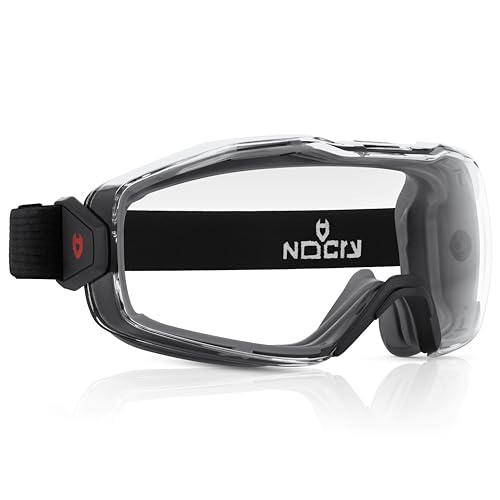 | NoCry Anti-Fog Safety Goggles Over Glasses, Dust EyeNoCry | Also great | ANSI Z87.1 rated · anti-fog · fits over glasses | $25.99 Price as of 21 Oct 2026 | View |
 | Ringsun Leather Archery Finger Tabs,Handmade Archery FingerRingsun | Budget pick | Full-grain leather · 3×2.75 in · right-hand only | $12.99 Price as of 21 Oct 2026 | View |
 | MTM WRF Wind Reader Shooting Range Flag, USA Made, RedMTM | Pair with it | USA made · red flag · reads lightest gusts | $21.68 Price as of 21 Oct 2026 | View |
 | Geyoga 6 Pcs Neck Gaiter Cooling Face Bandana Mask for MenGeyoga | Our pick | $7.99 Price as of 28 Oct 2026 | View |
This quick view is for fast sorting, not guesswork. The right choice changes with bow type, because a recurve anchor tolerates some gear that would bother a compound release hand or a barebow anchor.
How we chose
The main filter was fit around the shot, not just weather resistance. A good item had to stay out of the anchor path, avoid adding torque, and stay in place in gusts.
Wind and dust control mattered next, especially for eye protection, cheek coverage, and grip surfaces that stop grit from making the hand slip.
Durability and cleanability came third. Dusty gear needs smooth exteriors, simple closures, and materials that can be wiped down fast.
Bow type decided the final ranking. Recurve and barebow shooters need different hand and finger protection than compound shooters, and beginners usually need the most forgiving fit.
Archery protective gear decision table
| Protection problem | Best gear option | What it prevents | What can go wrong | Best fit for recurve, compound, and beginner shooters |
|---|---|---|---|---|
| Dust in the eyes and wind in the socket | Safety glasses with wraparound coverage | Dust irritation, blown grit, eye watering, glare | Fogging, pressure points, poor seal at the temples | Best for all three; strongest case for beginners and compound shooters in exposed ranges |
| String slap on the forearm | Arm guard or bracer | Forearm sting, sleeve wear, flinch from impact | Too short, too loose, or so stiff that it shifts the bow arm | Best for all three, especially longer-draw recurve shooters and beginners |
| Dusty fingers on a recurve or barebow string | Finger tab | Skin abrasion, gritty contact, inconsistent release feel | Face too thick, poor under-chin anchor fit, poor tactile feedback | Best for recurve and barebow; limited use for compound shooters |
| Cold, dry fingers on traditional bows | Shooting glove | Finger chill, abrasion, reduced comfort in wind | Too bulky, weak finger separation, poor fit under string loops or tab use | Best for traditional bow use; less precise than a tab for many recurve shooters |
| Palm abrasion and grip slip | Bow hand glove or tape | Palm rubbing, slip from dust, unwanted torque | Too much grip thickness, tacky surface that changes hand position | Useful for recurve and compound shooters who want a thin anti-slip layer |
| Dust around the nose and mouth | Face mask or neck gaiter | Dust inhalation, wind burn, sun exposure | Anchor interference, heat buildup, shifting fabric | Best for beginners and dusty ranges; recurve shooters need a low-profile fit near the anchor |
| Sun on the arm and sleeve abrasion | Arm sleeve | UV exposure, scratchy brush contact, minor grit contact | Heat buildup, snagging, excess compression | Good for all three when the range is open and brush is close |
| String slap plus loose shirt fabric | String-slap prevention layer | Forearm rubbing and sleeve bite on the draw arm | Movement restriction, anchor interference, heat buildup | Best as a clothing choice, not a replacement for a bracer |
| Dust on gear between ends | Dust-resistant gear bag or case | Contaminated accessories, dirty lens cloths, grit in tabs and gloves | Poor seals, loose pockets, hard-to-clean fabric | Useful for all three, especially beginners who carry more spare gear |
Do you need safety glasses for outdoor archery practice?
The short answer is yes, if the range is windy, dusty, or lined with dry ground cover. Safety glasses with wraparound coverage are the best first layer because they stop grit before it reaches the eye and do not interfere with anchor or release the way a bulkier face covering can.
ANSI rating and wrap coverage
Look for ANSI-rated impact resistance, wraparound coverage, and a frame that sits close enough to reduce side entry for dust. The point is not only impact safety; the wrap also keeps wind-driven debris from curling into the eye from the outer edge.
For prescription wearers, over-glasses goggles are the cleanest option. The NoCry goggles are ANSI Z87.1 rated, use an anti-fog coating, fit over glasses, and have a vented design that blocks dust while allowing airflow.
Fog resistance and UV protection
Fog is a wind problem, not only a cold problem. A lens that clouds when you come to full draw is a liability because it can delay the shot and pull attention from the sight picture.
UV protection matters on exposed ranges, especially in bright light with dust bouncing glare back into the face. The NoCry model includes UV380 protection, which is a practical layer for long practice sessions outdoors.
When sealed fit matters most
A sealed fit matters most when dry dust moves sideways across the line, or when a crosswind keeps blowing grit toward the shooting lane. If the glasses lift at the temples, the gap becomes the entry point.
Suppose the range is on packed dirt and a 12 mph crosswind keeps lifting grit from the berm. In that case, the better choice is a wraparound lens with a snug strap, not a loose pair of casual sunglasses that leaves a gap at the cheekbone.
Arm guard or bracer: best for string slap
An arm guard is the first real defense against string slap, especially for beginners, long-draw archers, and anyone shooting in bulky layers. It works best when the length matches the forearm and the straps sit where they do not twist during the draw.
Length and strap placement
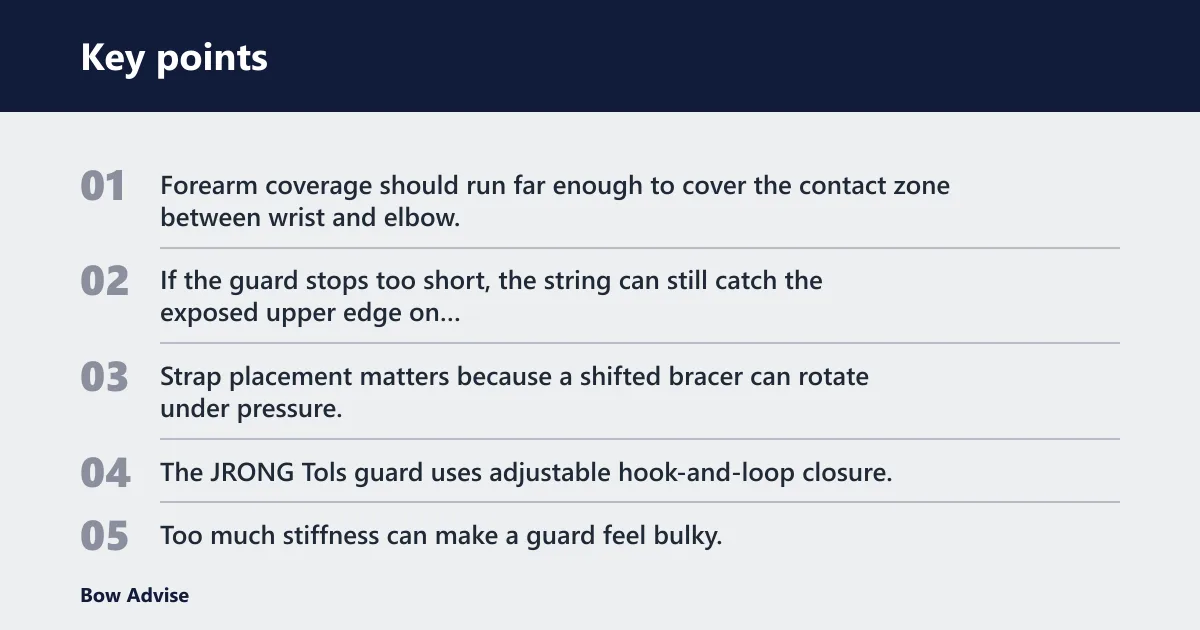
Forearm coverage should run far enough to cover the contact zone between wrist and elbow, not just the wrist alone. If the guard stops too short, the string can still catch the exposed upper edge on release.
Strap placement matters because a shifted bracer can rotate under pressure. The JRONG Tols guard uses adjustable hook-and-loop closure, and its silicone non-slip strip is meant to keep it from moving while the EVA foam absorbs impact.
Stiffness versus comfort
Too much stiffness can make a guard feel bulky, while too little stiffness lets the string push through. The useful middle ground is firm enough to stop a slap, but flexible enough to sit flat on the arm.
The JRONG Tols model is padded and breathable, so it fits the role of a slap barrier without turning into a heat trap. That matters on dusty ranges where sweat and grit build up fast.
Beginners versus longer draw lengths
Beginners often need a more forgiving bracer because their forearm rotation is still inconsistent. Longer draw lengths also raise the chance of contact, so full forearm coverage becomes more valuable as draw length increases.
A common first-timer mistake is wearing a guard that looks right at rest but rides too high when the bow arm extends. The fix is simple: set the guard in the draw position, not only while standing relaxed.
JRONG Tols arm guard: best for string slap
This arm guard suits shooters who want forearm protection without a heavy shell. The EVA foam padding helps absorb bowstring impact, and the breathable fabric is a good match for warm, dusty sessions where sweat would otherwise loosen the fit.
Its best feature is the silicone non-slip strip, because a guard that slides is almost worse than no guard. The adjustable hook-and-loop strap is also useful for fitting different forearm girths within the listed 9"–13" range.
The main drawback is that padded guards can still feel warm in still air, and very thin sleeves underneath can shift if the strap is not tightened evenly.
What should beginners wear for dusty practice?
Beginners should start with the pieces that protect the hands and face without changing the shot. For dusty practice, that usually means a finger tab or glove for the string hand, a thin anti-slip layer on the bow hand, and a low-profile face covering if the lane is visibly dusty.
Finger tab versus shooting glove
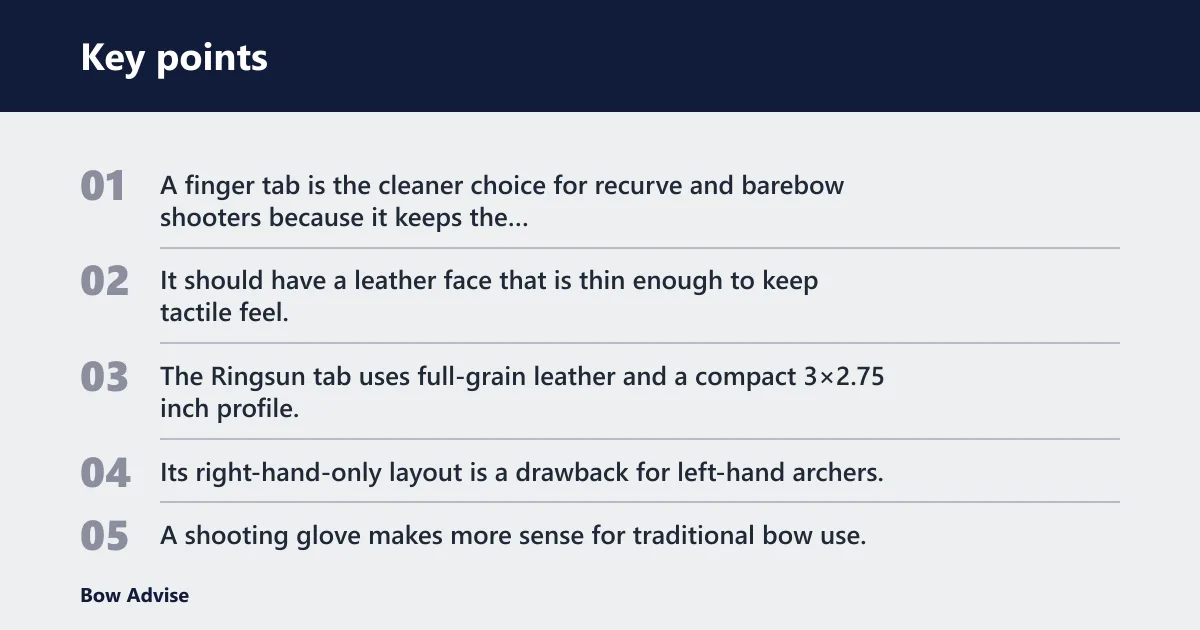
A finger tab is the cleaner choice for recurve and barebow shooters because it keeps the string contact surface more consistent. It should have a leather face that is thin enough to keep tactile feel, while still protecting the fingers from grit and string pressure.
The Ringsun tab uses full-grain leather and a compact 3×2.75 inch profile, which fits the role of a recurve finger tab better than a bulky glove. Its right-hand-only layout is a drawback for left-hand archers, and the single-face design is less flexible if the leather wears out.
A shooting glove makes more sense for traditional bow use, especially when cold air cuts finger dexterity. Gloves separate the fingers, but they usually add more bulk than a tab, which can soften the feel at anchor.
Bow hand glove or tape
Bow hand protection is about abrasion and torque, not padding. A thin glove or a strip of tape can stop the grip from chewing up the palm and can also reduce slip when dust settles on the riser or grip shelf.
Use the thinnest surface that still gives traction. If the layer is too soft, the bow hand can settle differently on each shot, which invites torque and changes left-right impact.
Face mask or neck gaiter
A face mask or neck gaiter helps with dust filtration, wind blocking, and UV coverage as long as it stays low-profile near the anchor. The key is fit: it should cover the nose and neck without lifting into the string path or catching on the release hand.
The Geyoga gaiter is a practical example because it lists UPF 50, quick-dry fabric, and a stretch size that can be pulled high for wind or dropped lower when the lane clears. Its drawback is the usual one for gaiters: if it is pulled too high, it can interfere with a close facial anchor.
How do you protect your bow hand and forearm in windy weather?
Use a thin anti-slip layer on the bow hand, then add an arm sleeve or bracer on the forearm if the wind is carrying dust or if the sleeve fabric flutters. The goal is to protect skin and grip without adding bulk that changes the bow hold or catches on the string.
Arm sleeve and abrasion control
An arm sleeve gives UV and abrasion protection across more of the arm than a bracer does, from wrist to biceps when sized correctly. It works best as a light outer layer, not a substitute for string impact protection.
Choose a sleeve with enough compression to stay put, but not so much that it feels like a tourniquet or overheats the arm. Snag resistance matters too, because brush and rough range furniture can catch loose fabric.
String-slap prevention layer
String-slap prevention starts with shirt choice. A close-fitting sleeve or thin synthetic layer around the anchor arm usually works better than a loose cotton shirt that billows in the wind and then folds into the string path.
The layer has to fit around the anchor arm without restricting the draw. If it is too thick, it can change the way the arm sits at full draw and interfere with the bracer rather than help it.
Dust-resistant gear bag or case
A dust-resistant gear bag keeps the rest of the system usable. The useful features are a zippered closure, sealed storage, and an easy-clean exterior so grit does not end up inside the tab, lens cloth, or gaiter pocket.
For bow storage, the case choice matters too. A great bow case should protect against moisture, dust, and dirt. Hard-shell construction is described as maximum protection for a compound bow case, while the SKB case is described as weather-resistant and uses foam padding with customizable compartments. The Plano AW case has Dri-Lok seals and a pressure-release valve, and it is intended to resist dust and moisture. The Wild Cedar case is a soft compound bow case with arrow pockets, adjustable straps, a durable fabric exterior, and a lightweight build.
Which one should you buy?
If the budget is tight, start with safety glasses and an arm guard. Those two solve the most common failure modes: dust in the eye and string slap on the forearm.
For recurve and barebow, add a finger tab next. A tab protects the string hand without dulling anchor feel, and it is usually a better fit than a glove for repeatable release work.
For compound, prioritize wraparound eye protection, a thin grip aid, and a dust-resistant case for transport. Finger protection is less central unless the shooter uses a traditional style or practices with a hybrid setup.
For beginners, the safest starting kit is goggles, an arm guard, and one clean hand-contact solution: tab for recurve, glove for traditional bow, or tape on the bow hand if grip slip is the main issue.
Say your range is dry, open, and gusty, with powder drifting across the line after every end. In that case, the order should be glasses first, then a gaiter, then grip control, because the dust problem starts at the eyes and hands before it reaches the case or bag.
Frequently asked questions
What archery gear protects me best from wind and dust?
The best system is wraparound safety glasses, a low-profile gaiter, and a hand-and-forearm setup matched to your bow type. Glasses stop eye irritation, the gaiter blocks blown grit around the face, and a tab, glove, or bracer handles the contact points that wind and dust affect most.
What should I wear to keep dust out of my eyes at the range?
Wear wraparound glasses first, then add a gaiter if the dust is coming from the side or from dry footing. A tight-fitting frame does more than a loose face covering, because the eye itself needs direct shielding, not just general cloth around the lower face.
How do I protect my bow hand and forearm in windy weather?
Use a thin anti-slip layer on the bow hand and an arm guard on the forearm. If the wind is strong enough to move loose sleeves, switch to a closer-fitting shirt or an arm sleeve that stays flat. The goal is stable contact, not extra padding.
Are arm guards enough for outdoor practice in rough conditions?
No. Arm guards solve string slap, but they do not handle eye dust, hand slip, or facial grit. For rough conditions, treat the guard as one part of the setup and pair it with eye protection and a hand-contact solution that matches the bow style.
What protective gear should beginners use for outdoor archery?
Beginners should start with safety glasses, an arm guard, and either a finger tab or a glove depending on bow type. That combination covers the most common beginner errors: string slap, eye irritation, and hand discomfort. It also leaves the anchor and release easier to learn.