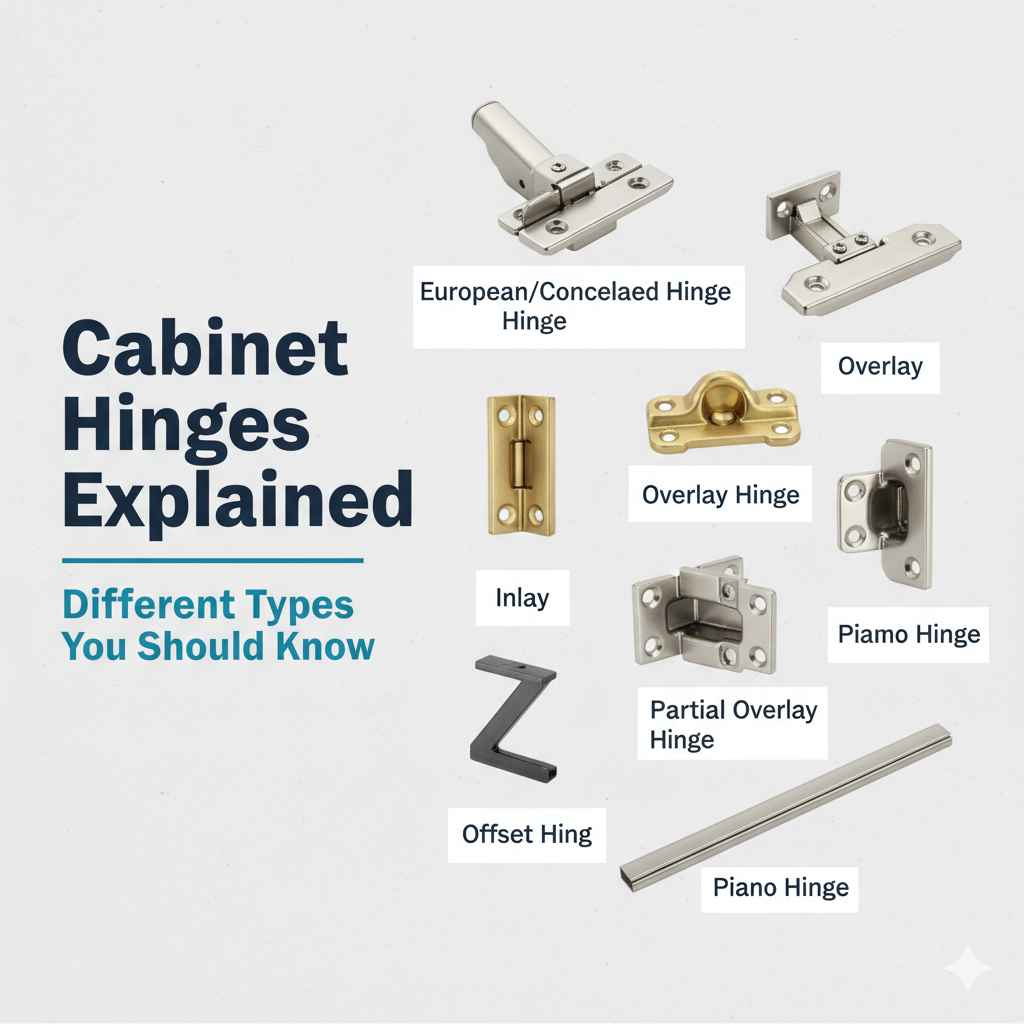
Cabinet Hinges Explained: Different Types You Should Know
The main types of cabinet hinges are concealed (or European) hinges and exposed (or traditional) hinges. Concealed hinges hide behind the cabinet door for a clean look. Exposed hinges are visible and add a decorative touch. The best choice depends on your cabinet style and desired appearance.
Understanding Cabinet Hinges
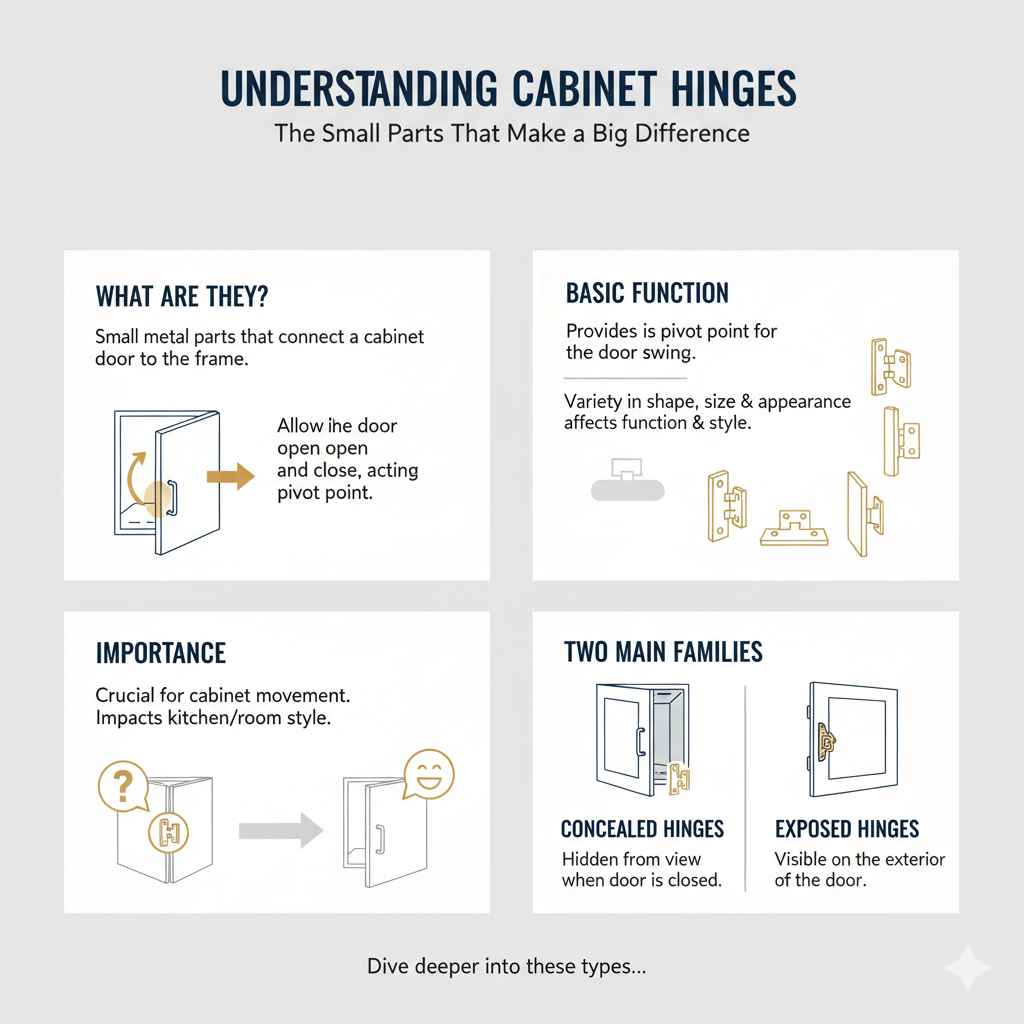
Cabinet hinges are small metal parts. They connect a cabinet door to the cabinet frame. They also allow the door to open and close.
Think of them as the joint that lets the door move. Without hinges, doors would just sit there. Hinges come in many shapes and sizes.
They are made for different needs and looks.
The job of a hinge is simple. It provides a pivot point. This lets the door swing away from the cabinet.
But how they do this and how they look can vary a lot. This affects how your cabinets function. It also changes the overall style of your kitchen or room.
There are two main families of cabinet hinges. These are concealed hinges and exposed hinges. This is a big split.
It guides most of the choices people make. We will dive into these families and their many members soon.
The Two Big Families: Concealed vs. Exposed Hinges
Let’s start with the biggest difference. This is how much of the hinge you see when the cabinet door is closed. This difference is key to cabinet design.
It shapes the entire feel of a space.
Concealed hinges are also called Euro hinges or European hinges. Their main goal is a clean, modern look. They are hidden.
You usually can’t see them from the outside. This gives cabinets a smooth, sleek finish. This is great for modern kitchens.
It’s also good for minimalist designs.
Exposed hinges are the opposite. You can see them. They are part of the cabinet’s style.
They can be simple and functional. Or they can be very decorative. Think of old-fashioned farmhouses.
They often use exposed hinges. These can add a lot of character.
The choice between these two families is often the first step. It sets the tone for your cabinet hardware. It’s about matching the hinge to your home’s style.
Delving into Concealed Hinges (Euro Hinges)
Concealed hinges are super popular today. They offer a very clean look. Most of the hinge parts are inside the cabinet.
They connect to a special plate on the cabinet frame. This keeps the outside of the door looking smooth. There are no visible screws or bulky metal parts on the door front.
These hinges often have built-in adjustments. This makes it easy to fine-tune the door’s position. You can move it up, down, left, or right.
This is very helpful. It means doors can hang perfectly straight. They can also close with a nice, even gap.
Many concealed hinges also have soft-close features. This stops doors from slamming shut.
There are different types of concealed hinges. They are mostly defined by how the door sits on the cabinet frame. This is called the overlay.
Overlay tells you how much the door covers the cabinet frame. This is a crucial detail. It affects which hinge you need.
Overlay Types for Concealed Hinges
The overlay is about how the door sits against the cabinet face. For concealed hinges, there are three main overlay types.
Understanding Overlay
What it is: Overlay is how much your cabinet door covers the cabinet frame. This matters for hinge choice. Different hinges support different overlays.
Types:
- Full Overlay: The door covers almost the entire frame. You see very little of the frame. This is common in modern kitchens.
- Half Overlay: Two doors meet in the middle. Each door covers half of the frame between them. This is common for face-frame cabinets with two doors.
- Inward or Inset: The door sits inside the cabinet frame. It’s flush with the frame’s edge. This gives a very traditional look.
So, when picking a concealed hinge, you must know your overlay. The hinge itself is designed to work with a specific overlay. You can’t just grab any Euro hinge.
It needs to match how your doors are built.
Common Concealed Hinge Styles
Within concealed hinges, there are a few common styles. These are based on how the hinge arm attaches and functions.
Clip-On Hinges
These are very common for DIY projects. They are easy to install. The hinge arm clips onto a mounting plate.
This plate is attached to the cabinet frame. You don’t need screws to attach the hinge arm. Just push it on until it clicks.
Removing the door is also easy. You just press a release button or lever.
I remember installing these in my first apartment. It was a game-changer. Before, I was fumbling with screws.
The clip-on system made it so much faster. I could take doors off to paint them. Then, I could clip them right back on.
It was much less frustrating.
Slide-On Hinges
These are similar to clip-on. But instead of clipping, the hinge arm slides onto the mounting plate. You screw the plate to the frame.
Then you slide the hinge arm onto it. They offer a secure fit. Some people find them even more stable than clip-on.
Standard Concealed Hinges
These are the most basic Euro hinges. They usually require screws for both the hinge arm and the mounting plate. While they don’t have the “clip” or “slide” feature, they are still hidden.
They offer excellent adjustability. They are a solid choice for many cabinet types.
Specialty Concealed Hinges
There are also hinges for specific situations. For example, hinges for corner cabinets. Or hinges for very thin doors.
Some have special arms for different depths. Always check the hinge’s specs. It needs to fit your cabinet door thickness.
It also needs to fit your cabinet opening.
Exploring Exposed Hinges (Traditional Hinges)
Exposed hinges are the classic choice. They have been around for a long time. You can see them on the outside of the cabinet doors.
They often become a design element themselves. Think of rustic kitchens, vintage furniture, or barns. These are places where exposed hinges shine.
They don’t hide. Instead, they add character and style. They come in a wide range of shapes and finishes.
This lets you match them to your home’s decor. You can find them in black, brass, iron, and more. This is a big difference from the hidden look of Euro hinges.
The installation is usually simpler. They often screw directly onto the door and the frame. There aren’t usually separate mounting plates involved for the hinge itself.
However, they might not offer the fine-tuning adjustments of concealed hinges.
Common Exposed Hinge Styles
Exposed hinges have their own unique styles. These are often named for their shape or historical inspiration.
Butt Hinges
These are the most basic type of exposed hinge. They are very common. A butt hinge has two leaves.
Each leaf screws to a different surface. In cabinets, one leaf goes on the door. The other goes on the cabinet frame.
They are simple and effective.
They can be surface-mounted. This means they attach directly to the outside. Or they can be mortised.
This means a small recess is cut into the wood. This makes the hinge sit flush with the surface. Mortised hinges look a bit cleaner.
They still stay visible.
Strap Hinges
Strap hinges are very decorative. They have a long strap that runs down the door. This strap is attached to the door with screws.
Another part attaches to the frame. They add a strong visual element. They are often used for a rustic or old-world look.
Think of barn doors or antique chests.
I saw these on an old farmhouse table once. They were made of black iron. They looked amazing.
They weren’t just holding the leaf up. They were a key part of the table’s design. They really gave it character.
T-Hinges
These look like the letter ‘T’. One part attaches to the door. The other part is the strap that goes onto the frame.
They are similar to strap hinges. They offer a bold look. They are often used on larger doors.
They provide good support.
The T-shape gives them extra strength. This is why they work well on heavier doors. They distribute the weight nicely.
Hinges with Decorative Tips
Many exposed hinges have decorative elements. This can include finials, scrolls, or other shapes on the ends. These add a touch of elegance or charm.
They are chosen to match the overall style of the room. These are less about function and more about form.
Think of a fancy jewelry box. It might have small, ornate hinges. These are meant to be seen.
They add to the item’s beauty.
Surface-Mount Hinges
These are often simple in design. They attach directly to the surface of the door and frame. There’s no cutting needed into the wood.
This makes them easier to install. They are often found on utility cabinets or sheds. They can also be used for a modern, industrial look.
The look is more utilitarian. But they are very strong and reliable. They are a practical choice for many projects.
Surface Mount vs. Mortised Hinges
Surface Mount:
- Hinge sits on top of the wood.
- Easier to install. No cutting needed.
- Can look more “added on.”
- Good for quick projects or a modern look.
Mortised:
- Small recess is cut into the wood.
- Hinge sits flush or nearly flush.
- Looks cleaner and more integrated.
- Requires more skill and tools to install.
Specialty Hinges for Specific Needs
Beyond the main families, there are hinges designed for unique situations. These solve problems that standard hinges can’t.
Offset Hinges
Offset hinges are used when the door edge doesn’t line up perfectly. They create a slight offset. This helps the door swing clear.
They are often used on doors that open wider than 90 degrees. Or on doors that need to clear a frame.
I’ve used these on custom built-ins. Sometimes the cabinet frame has a small lip. A standard hinge might bind.
An offset hinge lets the door open fully without hitting anything.
Quadrant Hinges
These are for corner cabinets. They often have two parts. One part attaches to the door.
The other attaches to the side of the cabinet. They are designed to allow a curved or angled door to open smoothly. They are essential for making corner cabinet doors work well.
Quadrant hinges are important for accessing corner cabinets.
Continuous Hinges (Piano Hinges)
A continuous hinge runs the entire length of the door. It’s like a long piano hinge. This distributes weight evenly.
It provides very strong support. They are often used on long, narrow doors. Think of a toy chest lid or a long cabinet opening.
They offer a very clean look too. Since they are one long piece, they don’t have the gaps you see with multiple smaller hinges. This can be great for a sleek design.
Quadrant Hinges
These are for corner cabinets. They often have two parts. One part attaches to the door.
The other attaches to the side of the cabinet. They are designed to allow a curved or angled door to open smoothly. They are essential for making corner cabinet doors work well.
Barrel Hinges
Barrel hinges are hidden when the door is closed. They are made of two or three cylindrical parts. These parts fit into holes drilled in the door and frame.
They offer a very clean, minimalist look. They are often used on high-end furniture or modern cabinets.
They can be tricky to install. They require precise drilling. But the result is a very seamless look.
You really don’t see them at all.
Infographic: Hinge Spotlight – Soft Close
What is it? A mechanism that slows down the door as it closes.
- Benefit 1: Stops doors from slamming.
- Benefit 2: Reduces wear and tear on cabinets.
- Benefit 3: Quieter home environment.
- Where found: Most often in concealed (Euro) hinges. Can also be added to some exposed hinges.
- How it works: A small piston or damper absorbs the closing force.
Factors to Consider When Choosing Hinges
Picking the right hinge isn’t just about looks. Several factors play a role. Getting these right ensures your cabinets function well.
And they look good for years to come.
Cabinet Construction Type
This is a big one. Are your cabinets made with a face frame? Or are they frameless?
This matters a lot.
Face Frame Cabinets: These have a solid wood frame around the opening. The doors attach to this frame. Many exposed hinges work well here.
Some concealed hinges are also designed for them.
Frameless Cabinets: These don’t have a face frame. The doors attach directly to the cabinet box. Concealed hinges are almost always used here.
They are built to fit this style.
I once tried to put a Euro hinge on a face-frame cabinet without the right mounting plate. It just didn’t work right. The door hung crooked.
It took me a while to realize the cabinet type was the issue. You need the right hinge system for the cabinet style.
Door Type and Weight
How big and heavy are your cabinet doors? Small, light doors might be fine with basic hinges. Larger, heavier doors need stronger hinges.
They need hinges that can support the weight. Strap hinges and T-hinges are good for heavy doors.
Also, consider the door material. Solid wood doors are heavier than MDF or particleboard. This affects hinge choice.
Always check the weight rating of a hinge if you have heavy doors.
Desired Aesthetic
This is where your personal style comes in. Do you want a modern, clean look? Go with concealed hinges.
Do you love a vintage, rustic, or decorative feel? Exposed hinges are your friend.
Think about the other hardware in your kitchen or room. Do you have stainless steel appliances? You might want stainless steel hinges.
Or maybe black hardware for a contrast. The hinge is a small detail that ties it all together.
I once helped a friend pick hinges for her farmhouse kitchen. She wanted that classic look. We looked at lots of black iron strap hinges.
They really made the wooden cabinets pop. It felt like the right choice for her style.
Ease of Installation
Are you a seasoned DIYer? Or are you new to home projects? Some hinges are much easier to install than others.
Clip-on concealed hinges are generally simple. Mortised exposed hinges require more skill and tools.
If you’re hiring someone, installation ease might matter less to you. But if you’re doing it yourself, choose hinges you feel comfortable with. Reading reviews can help.
People often share their installation experiences.
Budget
Hinges vary in price. Basic exposed hinges can be very affordable. High-end concealed hinges with soft-close features can be more expensive.
Decide how much you want to spend. Then look for the best option within that budget.
Sometimes, spending a little more on quality hinges pays off. They can last longer. They can also perform better.
This is especially true for concealed hinges with many adjustment points or soft-close tech.
Quick Scan: Hinge Finish Match
Match to Appliances/Fixtures:
- Stainless Steel: Good with stainless appliances.
- Brushed Nickel: Works with many faucets and knobs.
- Matte Black: Trendy and bold. Great with white or wood cabinets.
- Polished Brass: Classic, can add warmth.
- Oil-Rubbed Bronze: Earthy and warm.
Installation Basics: What to Expect
Installing cabinet hinges is usually a straightforward process. But it’s good to know what’s involved. This can help you choose the right hinge for your skills.
Concealed Hinges: These typically involve two main parts. First, you install a mounting plate on the cabinet frame. This plate has holes for screws.
Then, you attach the hinge arm to the cabinet door. The hinge arm often has a cup that fits into a large hole on the door. Finally, you slide or clip the hinge arm onto the mounting plate.
Most concealed hinges come with instructions. They also often have adjustment screws. These let you tweak the door’s position after installation.
This is a huge advantage. You can get that perfect alignment. It might take a few tries.
But the result is worth it.
Exposed Hinges: Installation is usually simpler. You often just screw the hinge directly to the door and the frame. For surface-mount hinges, it’s very direct.
You align the hinge, mark the screw holes, and screw them in. For mortised hinges, you need to cut a recess first.
It’s vital to pre-drill pilot holes for screws. This prevents the wood from splitting. Especially in hardwood.
Using the right size drill bit is key. Check the hinge manufacturer’s recommendations.
I learned this the hard way. I was installing some exposed hinges. I skipped pre-drilling on a solid oak door.
A big crack appeared. It was frustrating. Now, I always pre-drill.
It saves so much hassle.
What This Means for Your Cabinets
Understanding cabinet hinges helps you make informed choices. It’s not just about picking pretty hardware. It’s about functionality and longevity.
For a Modern Look: If you want clean lines and a minimalist feel, concealed hinges are the way to go. They disappear, letting your cabinet doors and finishes take center stage. The adjustability also means your doors will always hang perfectly.
For Character and Style: If you want to add personality, exposed hinges are fantastic. They can echo a rustic, vintage, or traditional design. They become part of the decor.
They can make a simple cabinet look special.
For Smooth Operation: Many modern hinges, especially concealed ones, offer features like soft-close. This makes a huge difference in daily use. No more slamming doors.
This is great for families with kids or in quiet homes.
For Durability: The right hinge will support your doors properly. This prevents sagging and wear. For heavy doors, choosing a hinge with a good weight capacity is crucial.
A weak hinge can lead to doors that don’t close right or even fall off.
It’s also worth noting that hinges are replaceable. If your current hinges are worn out or don’t work well, you can often swap them out. This can give your cabinets a new lease on life.
It’s a more affordable update than replacing the whole cabinets.
Contrast Matrix: Concealed vs. Exposed Hinges
| Feature | Concealed Hinges (Euro) | Exposed Hinges (Traditional) |
|---|---|---|
| Visibility | Hidden behind door | Visible on outside |
| Aesthetic | Modern, clean, minimalist | Traditional, rustic, decorative, character |
| Installation | Often requires mounting plate, more steps | Simpler, often screws directly to door/frame |
| Adjustability | High (up, down, left, right) | Limited or none |
| Common Use | Frameless cabinets, modern kitchens | Face-frame cabinets, furniture, vintage styles |
When to Worry About Your Hinges
Most of the time, cabinet hinges just work. But sometimes, they give you trouble. Knowing when something is wrong is important.
Doors Sagging: If a cabinet door is hanging lower than it should. Or if the gap between doors isn’t even. This could mean the hinges are loose.
Or they might be weak and unable to support the door’s weight anymore. Check the screws first. If they’re tight, you might need new hinges.
Doors Not Closing Properly: If a door scrapes against the frame. Or if it doesn’t close all the way. This is often a sign of misaligned hinges.
Or the hinge might be bent. With concealed hinges, try adjusting them. For exposed hinges, check if they are bent or loose.
Stiff or Noisy Hinges: If hinges squeak or are hard to open. They might need lubrication. A little WD-40 or silicone spray can help.
If lubrication doesn’t work, the hinge might be worn out or corroded. This is especially common with older metal hinges.
Visible Damage: If you see cracks in the wood around the hinge. Or if the hinge itself is bent or broken. This means it’s time for a replacement.
Continuing to use a damaged hinge can cause more problems. It could damage the cabinet door or frame.
It’s always better to fix hinge issues early. A small problem can become a big one if ignored. For example, a sagging door can put stress on the cabinet box itself.
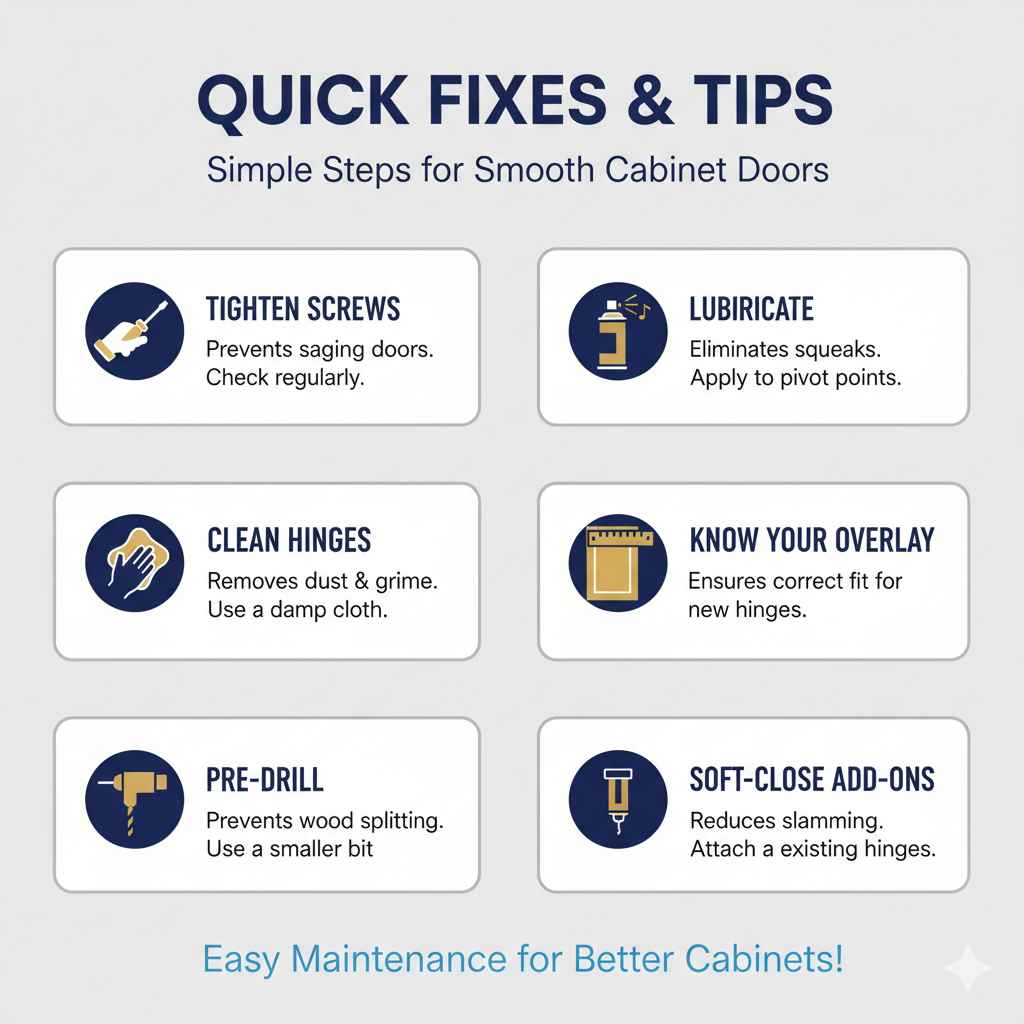
Quick Fixes and Tips
Here are some simple things you can do. They can help keep your hinges working well.
- Tighten Screws: Regularly check and tighten screws on all hinges. Loose screws are a common cause of sagging doors.
- Lubricate: If hinges squeak, spray them with a lubricant. Aim for the pivot points. Do this every so often, especially in humid areas.
- Clean Hinges: Dust and grime can build up. Gently wipe down hinges with a damp cloth. Dry them afterward.
- Know Your Overlay: When buying new hinges, always measure your overlay. This ensures the new hinges will fit correctly.
- Pre-drill: When installing any screws into wood, especially for new hinge holes, always pre-drill. Use a bit slightly smaller than the screw diameter.
- Soft-Close Add-ons: For existing cabinets with standard hinges, you can sometimes add soft-close mechanisms. These are small devices that attach separately.
These tips are simple. But they can make a big difference. They help your cabinet doors work smoothly.
They also look great.
Frequently Asked Questions About Cabinet Hinges
What is the most common type of cabinet hinge?
The most common type of cabinet hinge used in modern kitchens is the concealed (or European) hinge. They offer a clean, sleek look and are highly adjustable. However, exposed hinges like butt hinges are still very common, especially on older cabinets or furniture.
How do I know which overlay my cabinet door needs?
Overlay refers to how much the door covers the cabinet frame. For frameless cabinets, doors usually have a full overlay. For face-frame cabinets, you might have full overlay (door covers most of the frame), half overlay (two doors meet in the middle, each covering half the frame), or inset (door sits flush inside the frame).
Can I mix different types of hinges on one cabinet?
It’s generally not recommended to mix different types of hinges on the same door or even adjacent doors if they are part of the same run. This can lead to uneven gaps, doors that don’t align properly, and an inconsistent look. It’s best to use the same type and brand of hinge for a cohesive appearance and function.
Do I need special tools to install cabinet hinges?
For concealed hinges, you’ll typically need a screwdriver (often a Phillips head) and possibly a drill for the mounting plate. For exposed hinges, you’ll need a screwdriver and a drill for pilot holes. If you are mortising exposed hinges, you’ll need a chisel and possibly a router.
What does “soft close” mean for cabinet hinges?
“Soft close” refers to a mechanism within the hinge that gently slows the door down as it approaches the closed position. This prevents doors from slamming shut, reduces noise, and lessens wear and tear on the cabinet and the hinge itself.
How much weight can a cabinet hinge hold?
Weight capacity varies greatly by hinge type and quality. Standard concealed hinges might support 10-20 lbs per door, while heavy-duty versions can handle much more. Exposed hinges like strap or T-hinges are often designed for heavier doors.
Always check the manufacturer’s specifications for the weight rating.
Final Thoughts on Cabinet Hinges
Cabinet hinges are small but mighty. They are essential for how your cabinets look and work. Whether you choose sleek concealed hinges or charming exposed ones, understanding your options makes a difference.
It helps you get the look and function you want. Don’t underestimate their importance. The right hinges truly complete the cabinet.