DIY Target Stand for Crossbow Practice: Safe Spacing
For a DIY target stand for crossbow practice, set the frame about 30 to 36 inches wide, keep the target center at about 38 to 42 inches high, and lower the feet or add ballast if the stack sits above the frame line. Bad spacing makes the stand tip, shifts the impact zone, and can send bolts into the ground or side supports. This guide gives safe frame-spacing and height adjustments, plus the setup details that keep the target centered and stable.
What you’ll need
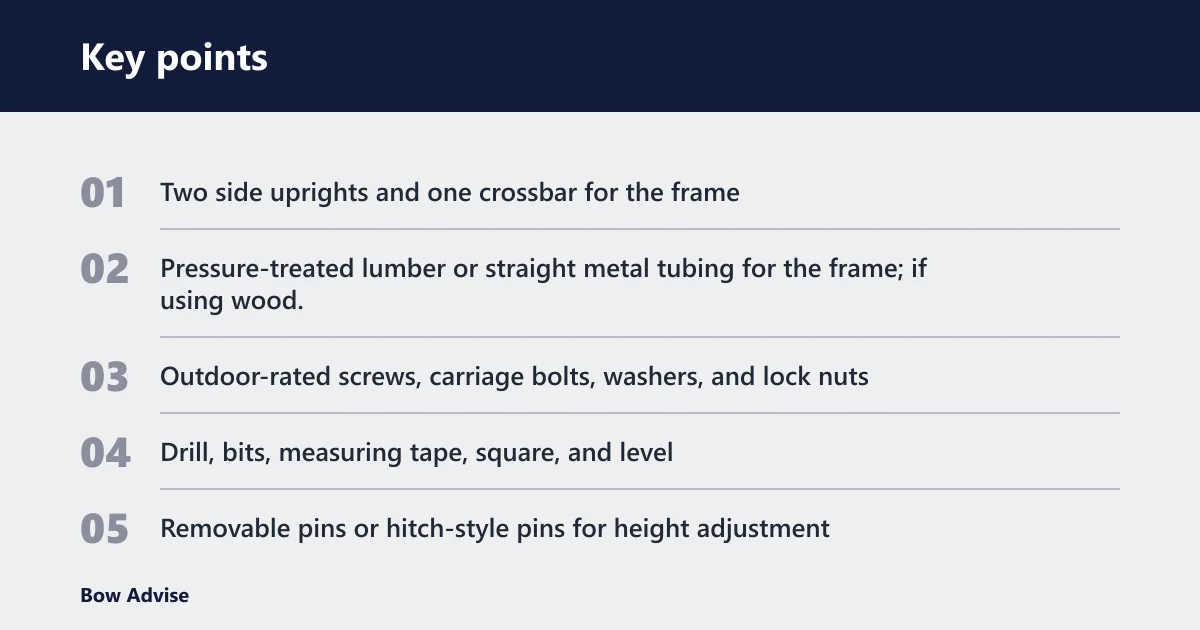


- Two side uprights and one crossbar for the frame
- Pressure-treated lumber or straight metal tubing for the frame; if using wood, 2x4s are the practical minimum for light to medium setups
- Outdoor-rated screws, carriage bolts, washers, and lock nuts
- Drill, bits, measuring tape, square, and level
- Removable pins or hitch-style pins for height adjustment
- Sandbags, ground stakes, or rear braces for anchoring
- Bag, block, foam, or 3D target that matches the bolt type
- Heavy backstop material such as layered netting, a bale stack, or a purpose-made backstop rated for crossbow use
Materials and hardware
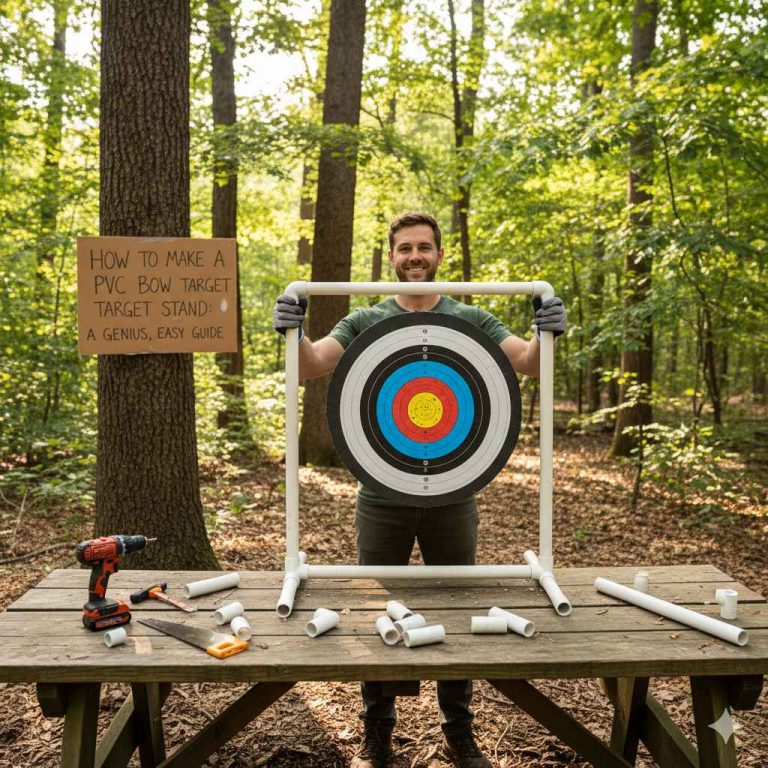
Wood, PVC, and metal can all work, but the build has to match the load. Crossbow bolts hit harder than many recurve or compound arrows, so light pipe and thin fasteners can flex, loosen, or tip under repeated hits. Use corrosion-resistant fasteners outdoors, and clamp each joint with washers on both sides of the material.
If a target or crossbow is part of the setup, check the manufacturer’s listing for your model. Do not exceed the target’s rated use, and compare bolt energy against that rating before shooting. A target that is fine for field-point arrows may not be suitable for crossbow bolts or broadheads.
Target and backstop items
Bag targets need open space behind them because some bolts will pass through more easily than with a dense block. Block targets stop field points better, while foam blocks can handle varied aiming points if the foam is thick enough. Broadhead use changes the setup again; only use a target rated for broadheads if the maker says it is.
Target stand sizing table
The table below gives a practical starting point for common target types. It is a sizing guide, not a universal safety rating. If the target is heavier, softer, or thinner than expected, widen the base and add anchors before shooting.
| Target type | Recommended frame inside width | Minimum base footprint | Target center height range | When to add anchors or a wider stance |
|---|---|---|---|---|
| Small bag target, about 18 to 20 inches wide | 22 to 26 inches | 24 inches wide by 24 inches deep | 38 to 42 inches | Always add rear anchors if the target weighs less than the frame or the surface is uneven |
| Standard bag target, about 20 to 24 inches wide | 26 to 30 inches | 30 inches wide by 30 inches deep | 38 to 42 inches | Add a wider stance if the target sits on a slick pad, gravel, or sloped ground |
| Block target, about 16 to 18 inches thick | 20 to 24 inches | 30 inches wide by 30 inches deep | 38 to 42 inches | Add anchors if the block creeps forward after repeated hits |
| Foam target, 18 to 24 inches thick | 24 to 30 inches | 30 inches wide by 36 inches deep | 38 to 42 inches | Use the wider depth when the foam is tall, soft, or stacked in layers |
| 3D target, deer-sized or similar | 24 to 30 inches | 30 inches wide by 36 to 42 inches deep | Target center at chest height, usually 38 to 42 inches | Add anchors whenever the target sits above the frame line or the head-heavy shape rocks |
How far apart should the frame legs be on a crossbow target stand?
Set the legs wide enough that the target cannot roll or slide the stand forward on impact. For many bag and block targets, an inside frame width of about 24 to 30 inches works, with about 30 to 36 inches used when the target is wider or when the stand needs more side support. Leave 2 to 4 inches of margin on each side.
The leg spread matters as much as width. A front-to-back footprint of about 30 to 36 inches is a better starting point than a narrow square frame, since crossbow bolts can push a target backward enough to shift the whole stand. On soft soil or slick concrete, the rear feet need even more resistance.
Suppose a 24-inch bag target sits in a 24-inch-wide frame with almost no side clearance. One hard hit can tilt the bag into a side post and start a wobble. Expanding the inside width to 28 inches and moving the rear feet farther back gives the target room and reduces contact with the frame.
Set inside width from target size
Match the opening to the actual target, not the box size or label name. A bag target that measures 22 inches across usually fits best in a 26- to 28-inch opening. A block target that is 17 inches thick often needs a 20- to 24-inch opening so the frame does not crush the outer edges.
Leave room for pass-through and side clearance
Crossbow bolts can pass through a softer target or strike near the edge and exit at an angle. Leave at least about 2 inches of side clearance beyond the target body on both sides, and place a backstop far enough behind the target to catch pass-through bolts. For broadheads, use only a broadhead-rated target and a larger catch area.
How tall should a crossbow target stand be for safe practice?
Set the target center at 38 to 42 inches high for most standing practice. That puts the aiming point near chest height for many shooters and keeps the bolt path away from the ground, the lower frame, and low ricochet angles. Keep the stand low enough that the base still controls the load.
The overall stand height usually ends up around about 48 to 56 inches, depending on target size and how much of the target sits above the support line. If the target is raised much higher than that on a light frame, the center of gravity rises and tipping risk grows fast.
Adjust height with drilled hole positions, removable pins, or slotted brackets. Avoid stacking blocks or bricks under the target. That raises the aim point without adding a stable footprint, and it makes the stand more likely to twist on impact.
Set overall stand height
The target should rest on or just above the support rail, not perched far above it. For bag and block targets, the bottom edge can sit on a lower ledge or shelf so the center lands in the 38 to 42 inch zone. For 3D targets, support the body low and broad to keep weight centered.
Adjust for taller or shorter shooters without losing stability
Move the shooting line, not the target, when possible. If the target height must change, shift it in 2-inch steps and recheck the stance after each change. A practical rule is simple: every time the centerline rises, widen the base or add rear ballast before the next shot.
A common first-timer mistake is raising a 3D deer target to eye level on a narrow frame because it looks easier to aim at. That often turns a stable setup into a top-heavy one. A lower target with a safe backstop is the better choice.
How do you keep the stand from tipping?
Use a wider footprint, secure ground contact, and add rear weight before you add height. Crossbow bolts deliver more energy than many arrow setups, so a stand that stays put with a bow may still creep, rock, or flip when hit repeatedly by bolts. Stability should come from the base first.
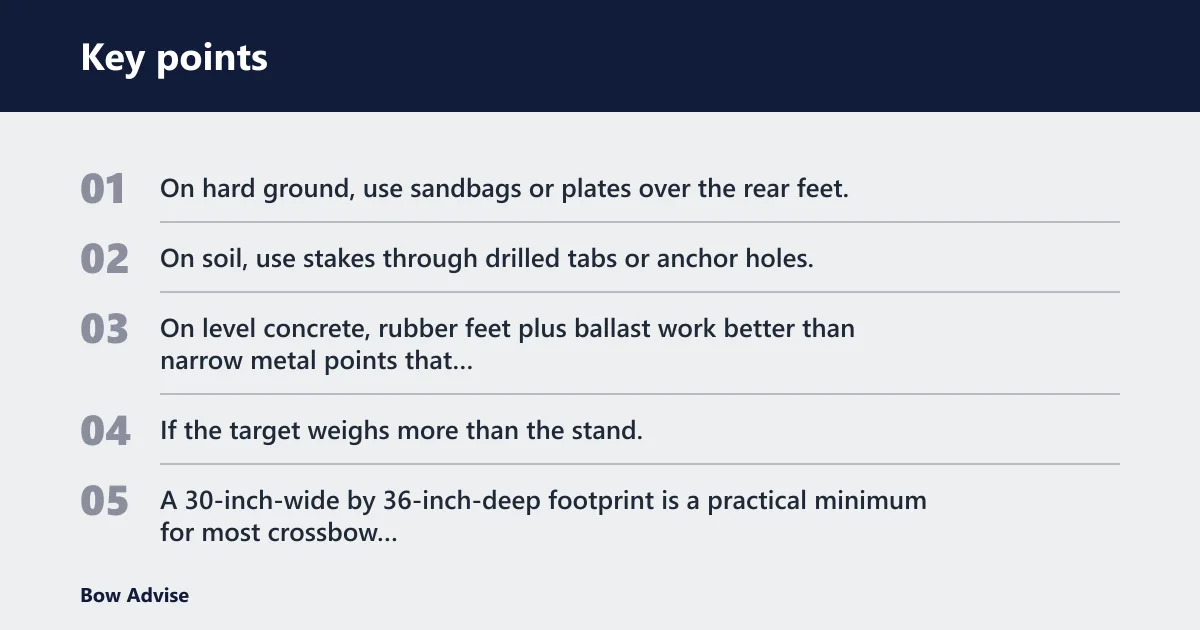
On hard ground, use sandbags or plates over the rear feet. On soil, use stakes through drilled tabs or anchor holes. On level concrete, rubber feet plus ballast work better than narrow metal points that can skate under impact. Check that all feet touch the ground evenly.
Use a wider footprint on hard hits
If the target weighs more than the stand, widen the base before adding more material to the frame. A 30-inch-wide by 36-inch-deep footprint is a practical minimum for most crossbow practice stands. Increase depth if the target is tall, heavy, or set above the crossbar.
Add stakes, sandbags, or rear bracing
Rear bracing stops the stand from walking backward after repeated hits. For portable setups, a pair of sandbags on the rear feet can help. For outdoor practice, two ground stakes through the rear feet are better, provided the soil is firm enough to hold them. Loose ground needs a wider stance plus anchors.
Check ground level and joint tightness before shooting
Set the stand on flat ground whenever possible. Even a slight slope can shift the target center off line and make one leg carry more load than the others. Tighten every bolt, pin, and screw before each session, then recheck after the first few shots.
If a target creeps forward after a hit, stop and reset it. Do not keep shooting with a stand that has moved. That is usually a sign that the base is too narrow, the target is too light for the frame, or the surface is too slick.
What materials make a target stand stable for crossbow bolts?
Wood, PVC, and metal can all work, but only if the geometry and hardware suit the target. Wood is easier to brace and repair. Metal is better for thin sections that need stiffness. PVC is the least forgiving under repeated load unless the design is very light and the target is small.
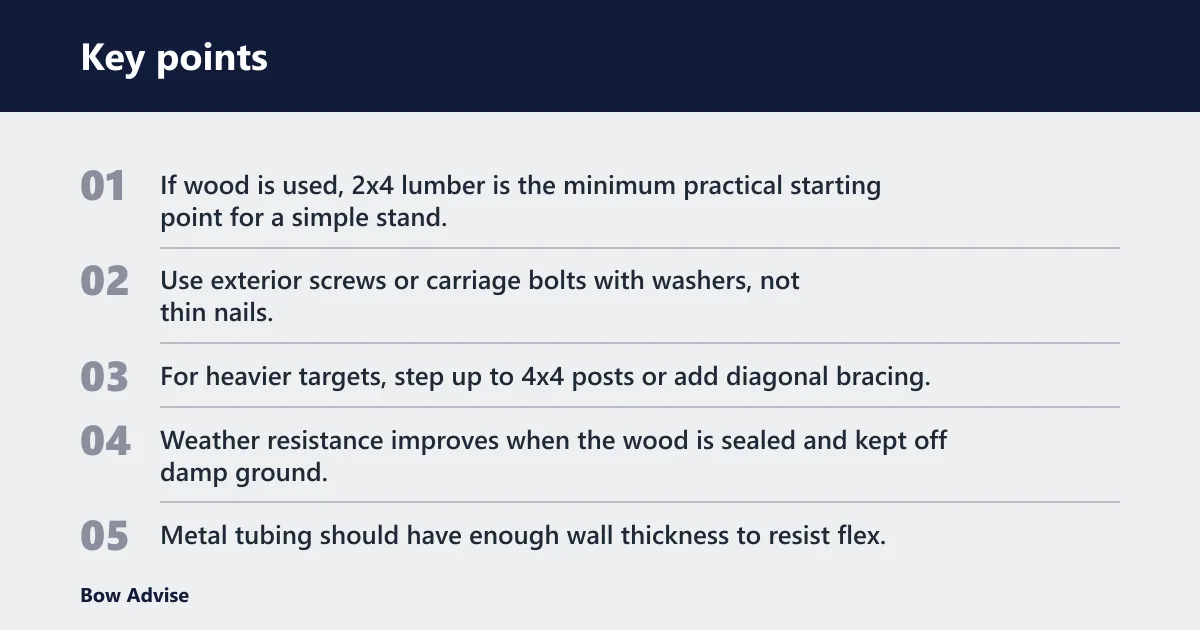
If wood is used, 2×4 lumber is the minimum practical starting point for a simple stand. Use exterior screws or carriage bolts with washers, not thin nails. For heavier targets, step up to 4×4 posts or add diagonal bracing. Weather resistance improves when the wood is sealed and kept off damp ground.
Metal tubing should have enough wall thickness to resist flex, and the joints need positive locking hardware. PVC can work for small, light targets in mild use, but it should not be treated as the default choice for repeated crossbow hits. The build matters more than the material label.
What size stand works for a block or bag target?
A block target usually needs the smaller inside width but a firmer base because it is dense and can shift in steps. A bag target needs a wider opening because its shape changes as the fill settles. For most home practice, a 24- to 30-inch frame width covers these two target types well.
For foam targets, thickness matters. If the foam is 18 to 24 inches thick, build for the full depth and avoid squeezing the sides. A 3D target needs the widest stance of the group because its shape can rock and the mass is not evenly distributed.
Can I use the same stand for arrows and crossbow bolts?
Sometimes, yes, but only if the stand, target, and backstop are rated for the more demanding use. A stand that works for light arrow practice may not resist the higher impact and deeper penetration of crossbow bolts. If the setup is safe for bolts, it will usually be fine for arrows.
Do not assume field-point performance carries over to broadheads. Broadheads cut more material and can ruin a target that would otherwise hold arrows well. Check the target’s listing for crossbow and broadhead use, and use the right face or side if the maker specifies one.
Common mistakes
- Undersizing the frame for the target body. Leave 2 to 4 inches of side clearance and enough depth for the target to sit centered.
- Raising the target too high. Keep the centerline at 38 to 42 inches unless the full base is widened and anchored.
- Using a light target for crossbow bolts. Match the target to the bolt type and confirm field-point or broadhead compatibility first.
- Skipping backstop and side clearance. Add a catch area behind the target and keep the shooting lane clear.
- Ignoring creep or wobble. If the target moves after impact, widen the stance or add anchors before the next shot.
Suppose a 20-inch bag target sits on a 22-inch frame and the first bolt drives it backward an inch. That is not a minor issue. Move to a 28-inch frame, add rear ballast, and place a backstop behind it before continuing.
Reset the target after every session, then check for loose fasteners, crushed foam, or torn fabric before the next one.
Frequently asked questions
How much clearance do I need around a crossbow target stand?
Leave at least 2 inches of side clearance beyond the target on each side and enough rear space for a backstop to catch pass-through bolts. For broadheads, use a broader catch zone and a target rated for that use. Keep people and pets well out of the lane.
Should the target sit on the ground or be raised off the frame?
It is usually better for the target to sit low on the frame, with its centerline at 38 to 42 inches, rather than being raised high above the support. A low mount keeps the center of gravity down and makes the stand easier to brace against impact.
How do I stop a target stand from tipping when a crossbow hits hard?
Widen the base first, then add rear ballast or stakes. A 30-inch-wide by 36-inch-deep footprint is a practical starting point for many setups. If the stand still moves, lower the target and recheck all fasteners before the next shot.