How to Choose the Right Target Stand Size for Your Bow Setup
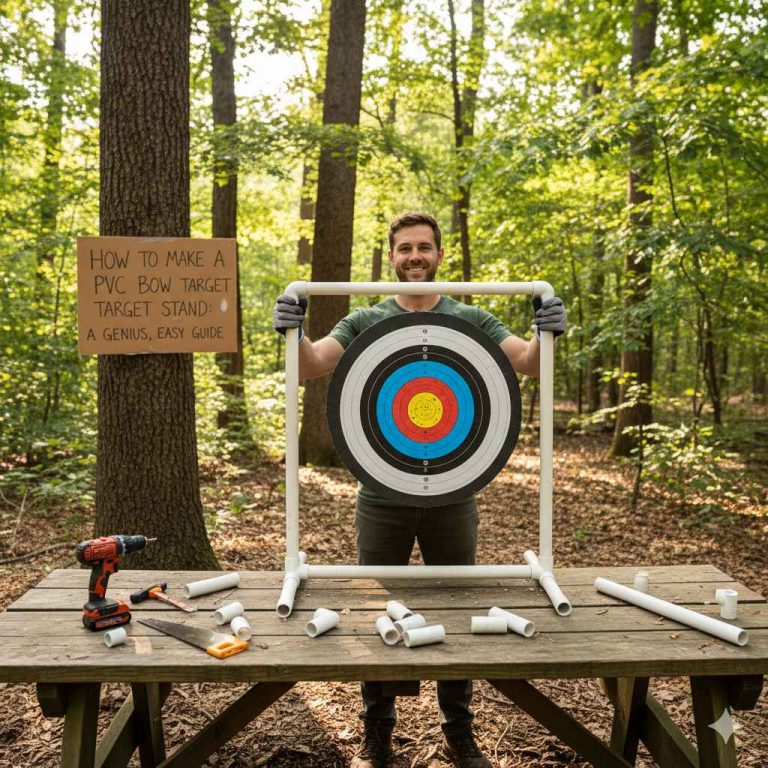
Choose a target stand with usable width and height that leaves at least 2-4 inches of clearance around the target on all sides; for fast compound bows, large foam blocks, or windy backyard setups, use 6 inches or more. Too-small stands tip, flex, or let arrows strike the frame. This guide shows how to size the stand from the target, arrow speed, and shooting space, then pick the right width, height, and base style.
Choose the stand from the target outward
Start with the target footprint, then add clearance for misses, the shooting angle, and the backstop zone. That order avoids the most common sizing error, buying a stand by product name and finding the frame is too narrow, too short, or too light for the target it has to carry.
The three dimensions matter for different reasons. Width blocks edge strikes. Height keeps the center of the target at a comfortable aiming point. Base depth helps resist tipping, especially on grass, uneven ground, or after repeated hits.
Measure target width, height, and depth first
Write down the target’s widest point, its tallest point, and how far it projects toward the shooter. Bag targets usually have a clean rectangular footprint. Foam blocks often need more side clearance because their edges can take hits. 3D targets can be awkward because the widest point is not always the easiest point to support.
As a simple rule, build the stand around the target’s maximum footprint, not the face size. A target face may be 24 inches wide, while the body, straps, or mounting points need more room. If the stand is sized only to the face, the frame ends up too tight.
Match the stand to the target type
Bag targets want a broad, stable support that keeps the bag centered and easy to replace. Foam blocks need edge protection and enough width that the stand does not intrude into the block’s stopping area. 3D targets need a support point that does not interfere with the body or vital zone.
Say your bag target measures 20 inches across and you shoot a compound at a backyard range. A stand with about 24 to 26 inches of usable width gives room for the bag and for slight off-center shots. Tightening that to the exact target width leaves no margin for frame strikes.
Set the safety buffer for the shooting space
The stand is only one part of the setup. The backstop and overshoot zone should be sized beyond the target itself, especially at home ranges where misses can leave the target area. Netting, rubber mulch, or an earthen backstop should cover the stray-arrow zone, not just the face.
For backyard practice, leave extra room behind and beside the target if the stand sits near fences, sheds, or hard objects. A larger stand does not replace a backstop. It only helps keep the target upright and centered so the backstop can do its job.
How tall should a target stand be?
Match stand height to the target center height and the angle of your shot. The goal is a target that sits comfortably in the sight picture at full draw, without forcing an awkward head tilt or a low crouch. Indoor, backyard, and 3D practice each call for a different height range.
Indoor height targets for seated or close shooting
Indoor practice usually uses a shorter shooting distance and a cleaner line of sight, so the stand can be lower. A lower stand keeps the target center near a natural aiming line when the shooter is standing close or working on form at short range. The target should still clear the ground enough to stay visible.
For indoor use, set the stand so the target center sits roughly at chest to lower-shoulder height for the shooter. That keeps the impact zone easy to see and reduces the need to bend at the waist. If the floor surface is slick, a wider foot or added weight helps more than extra height.
Backyard height targets with a clear center mark
Backyard ranges usually need a taller, easier-to-see setup because the shooting line is farther away and the target often sits in a more open space. The center of the target should be easy to read from full draw, and the stand should not force a downward aim that adds strain to the shot.
For mixed family use, a taller stand can make the target usable for different shooter heights. If a stand is so low that the arrow line points toward the ground, visibility suffers and the backstop has to work harder. If it is so tall that the center rises above a comfortable draw line, aiming becomes inconsistent.
3D height targets for uphill or downhill practice
3D practice often includes uneven terrain and angled shots. In that setting, height matters because the target must stay stable while still matching the shooter’s line of aim. A stand that is too short can disappear into tall grass; one that is too tall can feel tippy on a sloped base.
Use enough height to keep the vital area visible from the shooting lane, then add stability through base depth and anchoring. On uneven ground, it is better to correct height with target placement than to rely on a tall, narrow frame.
Target stand sizing table
The table below turns the main sizing rule into a practical decision guide. Use the target’s footprint first, then adjust for bow speed, target type, and the surface the stand sits on.
| Bow and setup | Target type | Recommended usable width | Recommended height | Recommended base depth | Anchoring method |
|---|---|---|---|---|---|
| Recurve, indoor practice | Bag or medium foam block | Target width + 2-4 inches per side | Center at chest to lower-shoulder height | Shallow to moderate, with broad feet | Feet on flat floor or sandbags |
| Recurve, backyard practice | Bag or foam block | Target width + 4 inches per side | Center visible from full draw | Moderate depth for tip resistance | Stakes in grass or sandbags on hard ground |
| Compound, field-point setup | Bag target | Target width + 4-6 inches per side | Center at a natural aiming line | Deeper base than a recurve setup | Wide base plus stakes or rebar |
| Compound, heavy backyard use | Foam block | Target width + 6 inches per side | Center easy to read from distance | Deep base with added mass | Sandbags, stakes, or both |
| Crossbow or high-speed setup | High-durability bag or dense foam | Target width + 6 inches or more per side | Keep the impact zone visible without lowering the frame | Deepest base in the table | Wide base, stakes, and extra weight |
| 3D practice, outdoor terrain | 3D target | Widest body point + 4-6 inches per side | Match the kill zone to the shooter’s lane | Moderate to deep, depending on slope | Stakes plus side weight if wind is present |
Recurve setup recommendations
Recurve bows usually place more value on clean form and a stable aiming point than on extreme stopping power. For that reason, the stand should match the target footprint closely but still leave room for edge misses. A lightweight setup is fine if the target is not tall or heavy.
If the recurve setup is indoors, the stand can stay compact. If it is outdoors, add more base depth before adding more height. Height alone does not stop tipping.
Compound setup recommendations
Compound bows send arrows with more speed than most beginner recurve setups, so the stand should be more stable and the target should be sized with more side clearance. A small frame that works for a soft recurve bag can flex under repeated compound impacts.
For compound practice, favor a wider stance, deeper feet, and a target that is easy to remove and replace. That matters because high-volume practice often wears the top support points first.
Crossbow or high-speed setup recommendations
High-speed setups need the most conservative sizing. The Morrell Double Duty 450 FPS is designed for high-speed crossbows, youth compound bows, and arrows, and it is described as a square-type bag target with a smart tote handler and weather-resistant build. That kind of target still needs a stand with extra width and a deeper base.
When arrow speed rises, the stand should not be the lightest option available. Use more base depth, more anchoring, and a target that stops arrows safely without transferring too much force into the frame.
Indoor, backyard, and 3D setup rows
Indoor setups can prioritize compact height and easy handling. Backyard setups need more visibility, more base depth, and more room for an overshoot zone. 3D setups need the most care around ground angle, body clearance, and the support point under the target.
A common first-timer mistake is choosing one stand size for all three settings. That usually creates one of two problems: a too-short stand indoors or a too-light stand outside.
How wide should the stand be?
The stand should be wider than the target itself, not equal to it. Side clearance protects the frame from edge hits and gives room for mounting straps, hooks, or a target that shifts after repeated impacts. The exact width depends on whether the target is a bag, a block, or a 3D form.
Bag target width and side clearance
For a bag target, use at least 2-4 inches of clearance on each side. For compound or high-speed setups, move that to 6 inches or more. The target bag should sit centered, with no strap or frame piece intruding into the arrow path.
The Hurricane Bag Archery Target comes in three sizes: 20, 25, and 28 inches, and it is visible from 20-75 yard distance. Those size options make it easier to match the bag to the stand, but the stand still has to exceed the bag footprint, not just match it.
Foam block width and edge protection
Foam blocks need the most careful side clearance because their corners and edges are common miss points. The Block Classic archery target is described as a solid block of foam, available in various sizes, and lightweight and easy to carry. That makes it simple to move, but the stand still needs enough width to prevent frame strikes.
For foam blocks, a wider stand is often safer than a taller one. If the block sits too close to the uprights, arrows that drift left or right can hit wood or steel instead of foam.
3D target width and stance room
3D targets do not always need the widest frame, but they do need enough room around the body shape so the stand does not touch the scoring area or hide the animal outline. Use the widest body point as the measuring point, then add side clearance for mounting hardware and movement in wind.
With 3D practice, the stand should keep the target readable from the shooting lane. If the frame is too close, it can block the outline of the target and make shot placement harder to judge.
How deep should the base be?
Base depth controls tip resistance. The deeper the base, the harder it is for repeated hits, wind, or uneven ground to push the stand over. Add depth when the target is heavy, the bow is fast, or the setup is outdoors and exposed.
Light portable base depth
Portable stands should stay compact enough to move, but they still need enough footprint to keep the target upright. A lighter stand works best with smaller bags or foam blocks and with indoor or calm backyard use. The tradeoff is simple: less weight means less resistance to tipping.
If portability is the main goal, use a design with a wide stance, feet that sit flat, and a target that is not oversized for the frame. Lightweight handling matters, but not at the cost of repeated tip-overs.
Heavy target and windy setup depth
Heavy targets and windy setups need the deepest base in the group. Wind pushes the target like a sail, and repeated arrow hits can walk a stand across grass or dirt. Add depth before adding extra height.
For these setups, anchoring becomes part of the base design. Sandbags, stakes, or a wide foot can keep the stand from moving after shot strings. On hard ground, use weight; on soft ground, use penetration and weight together.
Anchoring choices for grass, dirt, and hard ground
Stakes and rebar work best in grass or dirt. Sandbags work well on concrete, packed gravel, and indoor floors. A wide base helps on any surface, especially when the stand will see many shots in one session.
Suppose a 30-inch foam block sits on a backyard range with uneven turf and a light crosswind. A narrow foot may hold for one round and tip after the next. A deeper base with stakes gives much better control.
Our picks by need
Best for indoor practice: HME Bag Target Stand

Based on the manufacturer’s published details, this HME stand is built for indoor and outdoor bag use, with adjustable sizing, a stabilizer pin, and a raised leg design. That makes it a practical fit for smaller bag targets where stable placement matters more than maximum frame size.
One drawback is that it is aimed at bag targets rather than foam blocks or 3D forms, so it is not the best match if the target footprint is irregular. The adjustable design helps, but buyers still need to confirm the target’s width before choosing it.
Best for backyard practice: JY PERFORMANCE Adjustable Stand

This JY PERFORMANCE stand is described as an adjustable stand for 30” bag and foam targets, with heavy-duty steel construction and indoor or outdoor use. That makes it a sensible backyard option when the target footprint is close to the stand’s intended size range.
The drawback is that a 30-inch target range is still a ceiling, not a guarantee for every block or bag shape. For windier yards or high-speed bows, the buyer may still need added anchoring beyond the frame itself.
Best for 3D practice: Highwild Archery target stand
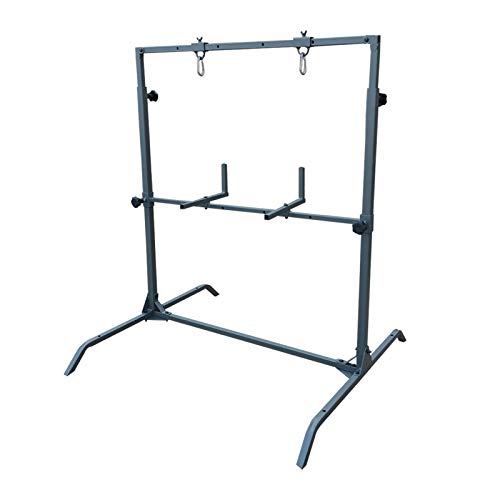
Highwild describes this stand as a larger-range, multi-function option for bag targets, block targets, and cube foam. Adjustable top and bottom bars plus carabiner hooks give it more flexibility when the target footprint changes from one practice session to the next.
The drawback is that more adjustability can mean more setup decisions. If the support bars are not placed carefully, the frame can still end up too close to the target body or too open for a heavy setup.
Mistakes to avoid
Do not buy by product name first. A stand named for a target style can still be too narrow, too shallow, or too light for the actual target footprint.
Do not ignore arrow speed and target mass. A recurve bag setup and a high-speed compound or crossbow setup do not ask the stand to do the same job.
Do not skip anchoring and overshoot planning. A stable stand still needs help on grass, dirt, or concrete if the setup is exposed to wind or repeated impacts.
Do not leave no room for replaceable support points. If arrows ever strike the frame, sacrificial top bars or uprights can protect the main structure and make repairs easier.
Frequently asked questions
How tall should a target stand be for a recurve bow?
For a recurve bow, the stand height should place the target center at a comfortable aiming line without forcing the shooter to crouch or aim downhill. Indoor setups can sit lower. Backyard setups usually need more height so the target remains visible from full draw.
How wide should a target stand be for my target bag?
Use the bag’s width as the starting point, then add 2-4 inches of clearance per side. For faster bows or windy setups, use 6 inches or more per side. That extra room reduces frame strikes and gives the bag a safer seating area.
What size target stand do I need for a compound bow setup?
A compound bow setup usually needs a wider, deeper, and better-anchored stand than a light recurve setup. Start with the target’s footprint, then add extra width and base depth for the higher energy of the shot. Foam blocks and bag targets both need more margin as speed rises.
How do I choose a target stand for 3D archery targets?
Choose a stand that matches the widest part of the 3D body, not just the kill zone. Add clearance for straps, mounting points, and uneven ground. Height should keep the animal readable from the lane, while the base should resist tipping on slopes or in wind.
What target stand size is safest for broadhead practice?
Broadhead practice calls for a stand and target combination with more stability than field-point practice, plus a target rated for that use. The stand should be wide, deep, and well anchored so the target does not move after impact. If the target is not broadhead-rated, do not size the stand around it.