Best Woods for a DIY Target Stand (2026): we compared
For many DIY archery target stands, pressure-treated 2x4s are a solid all-around choice if the stand will stay outdoors; dry kiln-fired pine or fir 2x4s can work for a lighter, more portable setup, and 2x6s may be worth using if the frame needs to support heavier bag targets. Bad lumber choice means bowed uprights, screw holes that open up, and a stand that tips or sags fast. I compare the woods by stiffness, rot resistance, cost, weight, and failure mode.
Quick comparison: which wood holds up best?
| Product | Badge | Best for | Price | ||
|---|---|---|---|---|---|
 | VENTRAL Lumber 2 in. x 4 in. (1 1/2" x 3 1/2") ConstructionVENTRAL | Upgrade pick | 2×4 · 6FT · Douglas Fir | $31.85 Price as of 6 Oct 2026 | View |
 | AXWHYS 4×4 Post Base 8 Pcs, (Inner Size 3.6×3.6) PostAXWHYS | Pair with it | 4×4 Base · Solid Steel · 8 Pcs | $69.99 Price as of 6 Oct 2026 | View |
 | Archery Target Stand, Adjustable Stand for 30” Bag andJY PERFORMANCE | Also great | Adjustable · Fits 30" Targets · Steel | $42.99 Price as of 6 Oct 2026 | View |
 | LIONMAX Deck Screws 3 Inch, Wood Screws #10 x 3, 300 PCS,LIONMAX | Budget pick | #10 x 3" · 300 PCS · Tan | $18.99 Price as of 6 Oct 2026 | View |
Douglas fir is my direct pick for most backyard builders because it gives you the best stiffness-to-cost balance in a simple frame. If the stand lives outside year-round, pressure-treated lumber wins on rot resistance. Cedar works when you want lighter weight and better weather resistance than pine.
How I chose the winners
I judged each wood the same way I judge a new bow setup: by what fails first in real use. Rot matters. So does warp, split-out around screws, fastener rust, and whether the base stays planted when a target gets hit hard or the wind picks up.
I also weighed stiffness against portability. A stand that survives a season is useless if one person cannot move it. That tradeoff changes fast once you move from field points to broadheads, or from a garage-kept stand to one that sits under open sky.
For frame parts, dimensional lumber like 2x4s and 2x6s is the normal starting point. 2x4s are easier to handle, while 2x6s add stiffness and base width. I reach for thicker stock when the target gets heavy or the stand sees rough weather.
VENTRAL Douglas fir 2×4: best for most backyard target stands
Douglas fir is the wood I’d put at the top of a simple backyard frame. Based on the spec sheet and owner feedback, this pre-cut 2×4 makes sense for uprights and crossmembers because fir gives you a strong stiffness-to-weight ratio without pushing cost into the same range as heavier material.
It fits the kind of stand most archers actually build: a fixed practice frame that sees regular use, but not constant rain. I like fir more than bargain pine because it resists flex better, so the stand feels planted when you strap a bag target to it or hang a foam block.
The drawback is plain. Fir is still wood. Leave it wet, and it can move. If the frame sits outside full-time, I would not call fir the best long-term choice unless you protect it well and expect to replace parts eventually.
Pressure-treated lumber: best for leaving outside
Pressure-treated lumber is the best choice when the stand lives outdoors. It resists rot and moisture far better than plain pine or fir, which matters when a target stand sits on damp ground, catches rain, or gets stored under a tarp that traps condensation.
The tradeoff is drying movement. Treated boards can warp while they lose moisture, especially if you buy them and build immediately. I have seen more than one stand twist after assembly because the builder skipped a drying window and never sealed the cut ends.
If you use it, seal the end grain and every fresh cut. That is where water moves fastest. I would use pressure-treated 2x4s for the frame and 2x6s for feet or braces when the stand needs year-round outdoor storage and a longer service life.
Cedar: best for lighter outdoor builds
Cedar is the clean middle ground when you want better weather resistance than pine without the extra heft of treated stock. It is naturally rot-resistant, and it is lighter than many softwoods, which helps if you move the stand between a garage and the yard.
I like cedar for portable stands that still spend time outside. It handles rain and sun better than pine, and it is less likely to turn ugly fast when you forget to roll the stand back under cover after practice. That said, cedar is not magic. It still checks, dents, and splits under bad joinery.
Use it when portability matters more than brute stiffness. If you expect a lot of broadhead use or want the frame to carry a heavy target bag all season, fir or treated lumber is the safer bet.
Pine: best for the lowest entry cost
Pine is the cheapest easy-to-find option, and that is why so many first builds use it. It works for a light stand, especially if the setup stays dry and gets stored indoors between sessions. For a beginner on a tight budget, that matters.
The weak point shows up quickly outdoors. Pine dents faster, splits around screws more easily, and loses its shape sooner when moisture gets in and out of the fibers. I have seen pine uprights chew through screw holes after repeated movement and a few rough target changes.
Choose pine only if the stand will stay dry, carry a light load, and see field-point practice. If you want a frame that can live outside, pine is usually the first wood I would move away from.
How I build and set up a wooden target stand
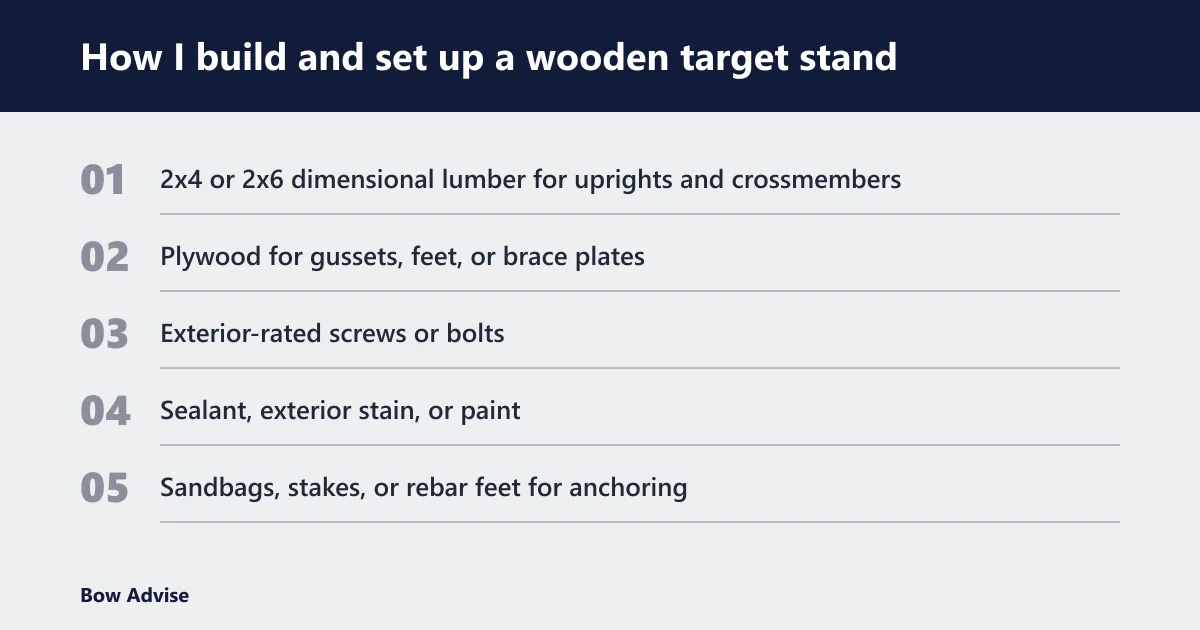
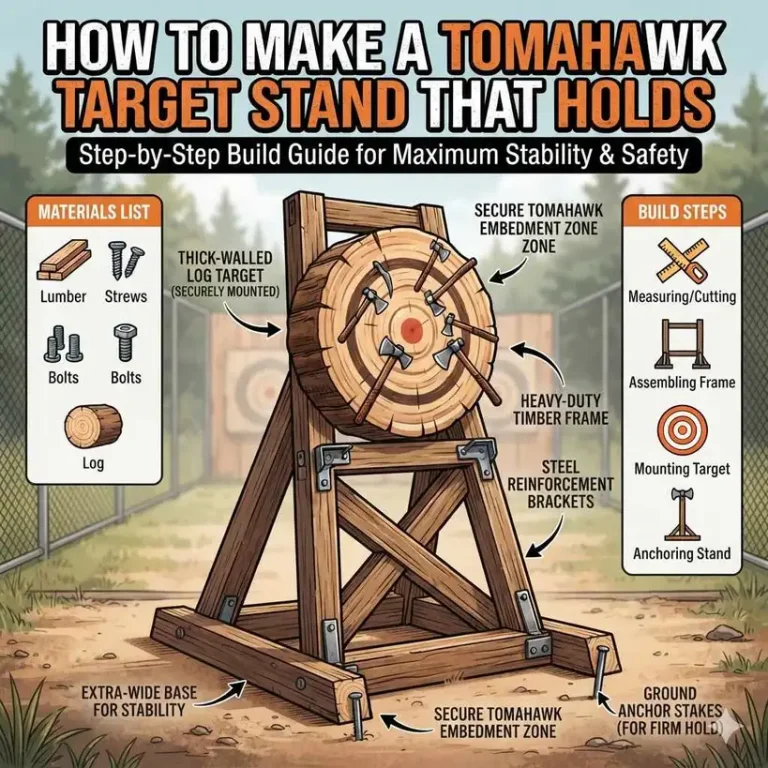
What you need depends on the target, but the build should start with a stable base and exterior-rated hardware. Use 2x4s or 2x6s for the frame, plywood for gussets or feet, and screws or bolts that will not corrode after a few wet weeks.
What you’ll need
- 2×4 or 2×6 dimensional lumber for uprights and crossmembers
- Plywood for gussets, feet, or brace plates
- Exterior-rated screws or bolts
- Sealant, exterior stain, or paint
- Sandbags, stakes, or rebar feet for anchoring
- Saw, drill/driver, tape measure, square, and sandpaper
- Cut the base wider than the target, because tip-over risk is a base problem before it is a joinery problem.
- Use 2x4s for a light frame or 2x6s when the target is heavy or the stand will face wind.
- Attach gussets with exterior-rated screws or bolts; longer fasteners and enough shear strength matter when arrows thump the frame.
- Keep plywood off bare soil and cover the edges, since plywood absorbs moisture through the end grain first.
- Seal every cut end before assembly if the stand will live outdoors.
- Add sandbags, stakes, or rebar feet, then test the stand empty before you hang a target.
If that did not work, go one step heavier on the base. Move from 2×4 feet to 2×6 feet, or add wider outriggers. If the stand still rocks, shorten the upright or add rear support before you add more wood to the front.
Common mistakes
The most common failure is untreated end grain left exposed. That pulls in water, then the board swells, twists, and opens screw holes. Another mistake is using interior fasteners. They rust, stain the wood, and weaken the joint after repeated rain.
People also overbuild the frame and ignore the base. A tall stand with a narrow footprint will move before a simple one with a wide, weighted base. Broadhead practice makes every one of these problems worse because it chews up supports faster than field points.
Prevention: store the stand under cover when you can, and brush sealant onto every cut edge before the first outdoor use.
What wood should I avoid for broadhead practice?
For broadhead practice, I would avoid soft pine frames and any stand with thin, non-replaceable supports. Broadheads tear into the target more aggressively, but they also punish the structure behind it when an arrow misses or blows through. That shortens service life fast.
If you want repeated broadhead work, build in sacrificial parts. Use replaceable face boards, bolt-on braces, or feet you can swap when they get chopped up. Pressure-treated or fir can work better than pine here, but the real win is designing the stand so damaged pieces come off quickly.
Which one should you buy?
For beginners, I would buy Douglas fir 2x4s and keep the frame simple. You get enough stiffness to learn on, and the material is forgiving if you have to rebuild one part after a bad cut or a split screw hole.
For backyard users who leave the stand outside, pressure-treated lumber is the safer buy. Use it with sealed cut ends, exterior fasteners, and a wide base. For broadhead practice, choose fir or treated lumber and plan on sacrificial parts, because the supports will wear out faster than they do with field points.
If you want the lightest practical setup, cedar is worth a look. If the goal is the lowest entry cost and the stand stays dry, pine is fine. I would still start with 2x4s, then move to 2x6s if the target gets heavy or the stand feels lively in wind.
Best board sizes and hardware to start with
For a simple frame, start with 2×4 uprights and crossmembers. Move to 2x6s for feet, base rails, or any span that flexes under a heavier bag target. Plywood gussets help stiffen joints, but only if the edges are sealed and the grade is decent.
Use exterior-rated screws or bolts, not interior hardware. Corrosion resistance matters more than people think on a stand that lives through dew and rain. Length matters too, because a short fastener can hold today and tear out after a few hard hits.
How do I keep a wood target stand from tipping over?
Use a wide base, add weight low, and anchor it before you blame the joints. A stand tips when the center of gravity gets too high or the footprint is too narrow. Sandbags, stakes, and rebar feet solve different ground conditions, but all three beat a bare frame.
For windy yards, I prefer a broader stance over extra height. If the target sits above the base line, the stand needs more mass down low. That matters even more with 2×4 frames, because lighter stands move sooner than 2×6 builds.
How do I weatherproof a wooden target stand?
Seal, paint, or stain every exposed surface, and pay special attention to cut ends. Weatherproofing slows moisture entry, which slows warp, split-out, and fastener rust. It will not make pine equal to treated lumber, but it buys time and keeps the frame straighter.
One coat on the faces is not enough if the ends stay open. I coat the end grain first, then the rest of the board. If the stand stays outside all season, inspect the finish and recoat the places that get hit with water first.
Frequently asked questions
What wood lasts longest for a DIY target stand?
Pressure-treated lumber usually lasts the longest when the stand stays outside, because it resists rot and moisture better than pine, cedar, or plain fir. Even then, seal the cut ends and use exterior fasteners. If the stand lives under cover, cedar or fir can still give good service.
Is pine strong enough for an archery target stand?
Pine is strong enough for a light stand, especially for field points and indoor storage. It is not my first choice for wet weather or heavy targets because it dents, splits, and loosens faster. If you use it, keep the frame simple and the base wide.
Should I use pressure-treated wood outdoors for a target stand?
Yes, if the stand will stay outside. Pressure-treated wood handles rain and ground moisture better than standard softwood, but it can warp while drying. Build with dry stock if possible, and seal every cut end before the frame goes together.
What board size is best for a target stand frame?
Most builders should start with 2x4s for the uprights and crossmembers. Move to 2x6s when the target is heavy, the span is long, or the stand needs more stability in wind. The extra weight hurts portability, but it helps keep the frame from flexing.
Why do DIY target stands warp or split so fast?
Moisture changes board shape, and fasteners can force cracks if the holes are too close to the edge. End grain pulls in water quickly, so unsealed cuts fail first. Cheap pine makes the problem show up sooner because it dents and splits more easily than fir or cedar.