How to Make a Paper Target Stand: A Simple DIY Plan
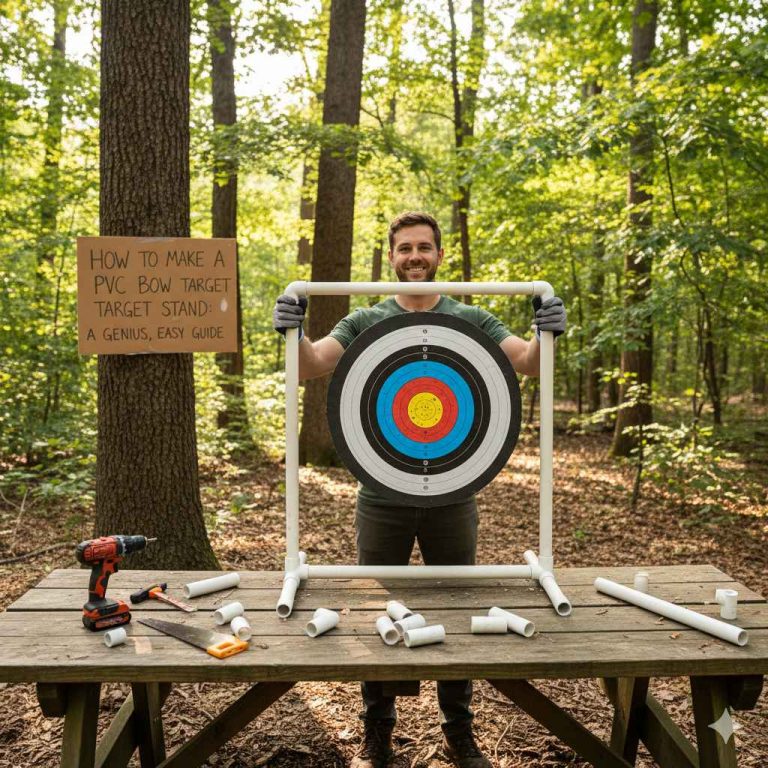
To make a paper target stand, you will need PVC pipe and fittings. Cut the pipe into sections to create two H-shaped bases and two upright poles. Assemble the pieces without glue for easy takedown. Finally, attach a large piece of cardboard as a backer for your paper targets using clips. This simple, affordable stand is perfect for backyard practice.
Hello, fellow archers! Salman here. If you’re just starting out, you’ve probably discovered a common problem. You have your bow, your arrows, and your paper targets, but nowhere to hang them! Propping a target against a fence or a tree is unsafe and can damage your arrows. It’s a frustrating little hurdle that can get in the way of consistent practice.
But don’t worry, there’s an incredibly simple and affordable solution. You can build your own paper target stand. In this guide, I’ll walk you through a proven, effortless plan to build a sturdy and portable stand. It requires no special skills, and you can get it done in less than an hour. Let’s get you set up for success!
Why Build Your Own Target Stand?
You might see target stands for sale online or in archery shops and wonder, why bother making one? The truth is, a DIY stand offers some amazing benefits, especially for beginners and hobbyists. It’s not just about saving money; it’s about creating something that perfectly fits your needs.
The Top 3 Benefits of a DIY Stand
- It’s Incredibly Affordable: A commercial target stand can cost a fair bit of money. By building your own with simple materials like PVC pipe, you can create a fully functional stand for a fraction of the price. You’ll have more money left over for what really matters—arrows and other fun gear!
- It’s Perfectly Portable: This design is lightweight and comes apart in seconds. You can easily pack it in your car for a trip to the park or an open field. You are no longer tied to a specific shooting range. Practice can happen wherever it’s safe and legal to do so.
- It’s a Fun and Easy Project: You don’t need to be a master craftsman. This project is as simple as cutting pipe and fitting the pieces together, like building with LEGOs. It’s a satisfying project that gives you a useful piece of equipment you made yourself.

Safety First: A Quick Word Before We Begin
Before we grab our tools, let’s talk about safety. At the range and at home, safety is our number one priority. Building the stand is a safe activity, but it’s always smart to be prepared. When you use your new stand, remember the core rules of archery safety. Always know what is behind your target. Ensure you have a safe backstop and a clear shooting lane.
When working with tools, even simple ones, follow basic precautions. If you are using a saw to cut the PVC, wear safety glasses to protect your eyes from any small plastic bits that might fly off. It’s a small step that makes a big difference. For more detailed guidance on tool safety, resources like The Canadian Centre for Occupational Health and Safety offer excellent tips for using hand tools safely.
Materials and Tools You’ll Need
One of the best parts of this project is the simple shopping list. You can find everything you need at any major hardware store like Home Depot or Lowe’s. I recommend using 1-inch Schedule 40 PVC pipe. It’s strong enough to be stable but light enough to carry easily.
The Shopping List
Here’s a clear breakdown of every part you’ll need. I’ve also included estimated costs, which can vary slightly by location and store.
| Item | Quantity | Size | Estimated Cost |
|---|---|---|---|
| PVC Pipe | Two 10-foot lengths | 1-inch Schedule 40 | $10 – $15 |
| PVC “T” Fittings | 6 | 1-inch | $5 – $7 |
| PVC 90-Degree Elbow Fittings | 4 | 1-inch | $3 – $5 |
| Large Cardboard Sheet | 1 | At least 24″ x 24″ | Free (recycle a box!) |
| Binder Clips or Clamps | 4 | Medium or large | $3 – $5 |
Tools for the Job
You won’t need a massive toolbox for this. Here are the simple tools that will get the job done quickly and easily.
- Measuring Tape: For measuring your PVC cuts accurately.
- Marker: A permanent marker works best for marking your cut lines on the white PVC.
- PVC Cutter or Handsaw: A PVC cutter is the easiest and cleanest way to cut. However, a simple hacksaw or any fine-toothed handsaw will also work perfectly.
- Optional: Sandpaper or a File: Useful for smoothing the edges of the PVC after you cut it, but not strictly necessary.
How To Make a Paper Target Stand: Step-by-Step Instructions
Alright, let’s build this stand! I’ve broken the process down into three simple stages: cutting the pieces, building the base, and assembling the uprights. Follow along, and you’ll have a finished stand in no time.
Step 1: Cut Your PVC Pipe
The first step is to cut your two 10-foot lengths of PVC pipe into all the smaller pieces you’ll need. Measure twice and cut once! Use your measuring tape and marker to mark each length before you cut.
Here are the cuts you need to make:
- Four (4) pieces @ 18 inches each: These will form the “feet” of your stand’s base, providing stability.
- Two (2) pieces @ 6 inches each: These will be the short connectors for the base.
- Two (2) pieces @ 48 inches each: These will be the tall uprights that hold your target backer. You can adjust this height based on your preference, but 4 feet is a great starting point.
- One (1) piece @ 26 inches: This will be the horizontal crossbar that connects your two uprights and holds the target backer.
Pro Tip: After cutting, you can use a piece of sandpaper to quickly smooth the edges. This helps the pieces slide into the fittings more easily and removes any sharp burrs.
Step 2: Assemble the Base
The base of the stand consists of two identical H-shaped “feet.” This design is very stable and prevents the stand from tipping over, even on slightly uneven ground. We will assemble these without any glue, so you can take it apart for storage or transport.
Here’s how to build one of the feet (repeat these steps for the second one):
- Take one of your 6-inch PVC pieces.
- Push a “T” fitting onto each end of the 6-inch piece. Make sure the third opening on both “T” fittings is facing the same direction (upwards).
- Now, take two of your 18-inch pieces. Push one into the open side of each “T” fitting.
- Finally, push a 90-degree elbow fitting onto the end of each 18-inch piece. Make sure the elbows are pointing down toward the ground. This gives the feet a solid, flat connection to the surface.
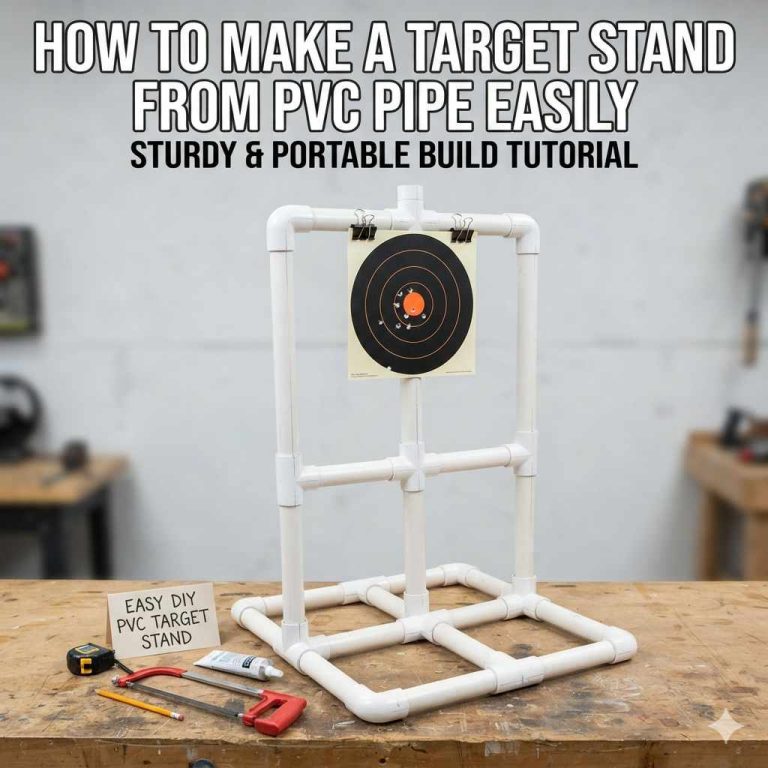
When you’re done, you should have two identical H-shaped sections with elbows as feet and an upward-facing “T” fitting in the middle. These are the sturdy legs of your stand.
Step 3: Assemble the Uprights and Final Stand
Now that the base is ready, the rest comes together in a flash. This final assembly creates the tall frame that will hold your paper targets.
- Take your two 48-inch upright poles. Insert one into the upward-facing “T” fitting on each of your H-shaped bases. Press down firmly to make sure they are secure. Your stand should now be standing on its own.
- Take your remaining two “T” fittings. Slide one onto the top of each 48-inch upright. Make sure the open, middle part of each “T” fitting is facing inwards, toward the other upright pole.
- Take your 26-inch crossbar piece. Insert it into the open “T” fittings to connect the two uprights. This crossbar adds a lot of rigidity to the frame.
- Your PVC frame is now complete! It should look like a large, stable rectangle sitting on two H-shaped feet.
Step 4: Attach the Target Backer
The final step is to add a surface to hang your paper targets on. A large, flat piece of cardboard is the perfect solution. It’s free, lightweight, and easily replaceable. It’s also soft enough that it won’t damage arrows that miss the paper target.
- Place your large cardboard sheet against the front of the PVC frame, centered on the crossbar and uprights.
- Use your binder clips or clamps to secure the cardboard to the top crossbar and the side uprights. Four clips—one in each corner—are usually enough to hold it tight.
- That’s it! Your stand is ready. You can now pin or tape your paper targets to the center of the cardboard and start practicing.
Choosing the Right Backing Material
While cardboard is a fantastic and free option, you might want to explore other materials for your target backer depending on your needs. Different materials offer different levels of durability and arrow-stopping power.
Here’s a comparison of some popular choices:
| Material | Pros | Cons | Best For |
|---|---|---|---|
| Cardboard | Free, lightweight, easy to find and replace. Gentle on arrows. | Not waterproof, wears out quickly with many shots. | Beginners, casual backyard shooting, and those on a tight budget. |
| Foam Insulation Board | Lightweight, waterproof, self-healing to some degree, stops arrows well. | Costs more than cardboard, can be brittle in cold weather. | Shooters who want a longer-lasting, weather-resistant backer. |
| Corrugated Plastic | Very durable, waterproof, lightweight, and long-lasting. | More expensive, arrows can be harder to remove. | Archers who practice frequently outdoors and want a permanent solution. |
| Old Rug or Carpet Square | Durable, stops arrows effectively, often free. | Heavy, can hold moisture and get moldy if left outside. | A powerful and free option if you have an old piece lying around. |
Customizing and Upgrading Your Stand
Your basic PVC target stand is fantastic as is, but you can also customize it to better suit your practice style. Here are a few simple ideas to take your stand to the next level.
Add a Gear Hook
Use an extra PVC “T” fitting and a short piece of pipe to create a hook on the side of your stand. It’s a perfect spot to hang your quiver, bow, or a small bag. Simply attach it to one of the uprights.
Make It Adjustable
If you want to practice at different heights, you can make your stand adjustable. Instead of one set of 48-inch uprights, create two sets: a tall set and a shorter set (e.g., 36 inches). You can swap them out depending on whether you’re standing or sitting while you practice.
Paint Your Stand
While it doesn’t change the function, painting your PVC stand can make it look more professional and protect it from long-term sun exposure. Use a spray paint that is specifically designed for plastic. A bright color can also make it more visible from a distance.
Maintenance and Storage Tips
This stand is built to last, but a little care goes a long way. Since the pieces are not glued, the best way to store it is by taking it apart. The disassembled pieces can be bundled together with a strap or stored in a long, narrow bag, taking up very little space in a garage or closet.
If you leave your stand outside, be aware that PVC can become brittle over time with prolonged exposure to direct sunlight and extreme temperatures. Storing it indoors or in a shady spot when not in use will greatly extend its life. Regularly check the fittings to ensure they are not cracked. Since the parts are so cheap and easy to find, replacing a cracked fitting is a quick and simple fix.

Frequently Asked Questions (FAQ)
1. Can I glue the PVC pieces together?
You can, but I strongly recommend not gluing them. The main benefit of this design is its portability. A press-fit is tight enough to hold the stand together securely during use. Not gluing the pieces allows you to break it down for easy transport and storage.
2. What is the best height for a target stand?
A good rule of thumb is to have the center of your target at about shoulder height. For most adults, this means having uprights that are around 4 to 5 feet tall. Our 48-inch (4-foot) uprights are a great starting point, but you can easily make them taller or shorter to match your preference.
3. Will this stand work for broadheads?
This stand is designed for paper targets and field points. Broadheads are designed for hunting and will tear through cardboard and foam backers very quickly, potentially damaging the PVC frame behind them. If you need to practice with broadheads, you should use a target specifically designed for them, such as a dense foam block target.
4. How do I stop the stand from blowing over in the wind?
The H-shaped base is quite stable, but in strong winds, you may need extra support. You can place sandbags, weights, or even a couple of bricks on the feet of the base to hold it down securely. Another option is to use tent stakes to pin the feet to the ground if you are shooting on grass.
5. What if I can’t find 1-inch PVC pipe?
That’s okay! You can easily adapt this plan to other sizes. A ¾-inch pipe will work, though it will be slightly less rigid. A 1.5-inch pipe will be extremely sturdy but also heavier and more expensive. Just make sure that you buy fittings that match the diameter of the pipe you choose (e.g., use 1.5-inch fittings with 1.5-inch pipe).
6. How far away should I place my target stand?
For absolute beginners, starting close is best. A distance of 10 yards is a great way to focus on your form without worrying too much about accuracy. As you become more comfortable and consistent, you can gradually move the stand further back to 15, 20, or even 30 yards to challenge yourself.
Your Practice Sessions, Upgraded
There you have it—a simple, sturdy, and incredibly useful paper target stand that you built yourself. No more searching for the “perfect” spot to hang a target or risking damaged arrows. With this stand, you have the freedom to practice consistently and safely, which is the true key to improving your archery skills.
Building your own gear is one of the most rewarding parts of any hobby. It connects you more deeply to the sport and gives you a sense of pride every time you use it. So go ahead, gather your materials, and enjoy this quick and easy project. Your future self, with a tighter arrow group and more confidence, will thank you.
Happy shooting!