Best Plywood For Cabinets: What Pros Recommend
Finding the right plywood for cabinets can feel like a puzzle. You want something strong. It should also look good.
And of course, it needs to last a long time. Many options exist. This can make choosing tricky.
Let’s break down what makes plywood great for cabinets. We will look at what pros use and why.
The best plywood for cabinets balances strength, appearance, and cost. Typically, hardwood plywood like birch, oak, or maple is favored for its durability and smooth finish. For the cabinet box (carcass), cabinet-grade sanded plywood (like birch or poplar) with a stable core is ideal. For visible parts, veneer-faced plywood offers a premium look.
Understanding Plywood for Cabinets
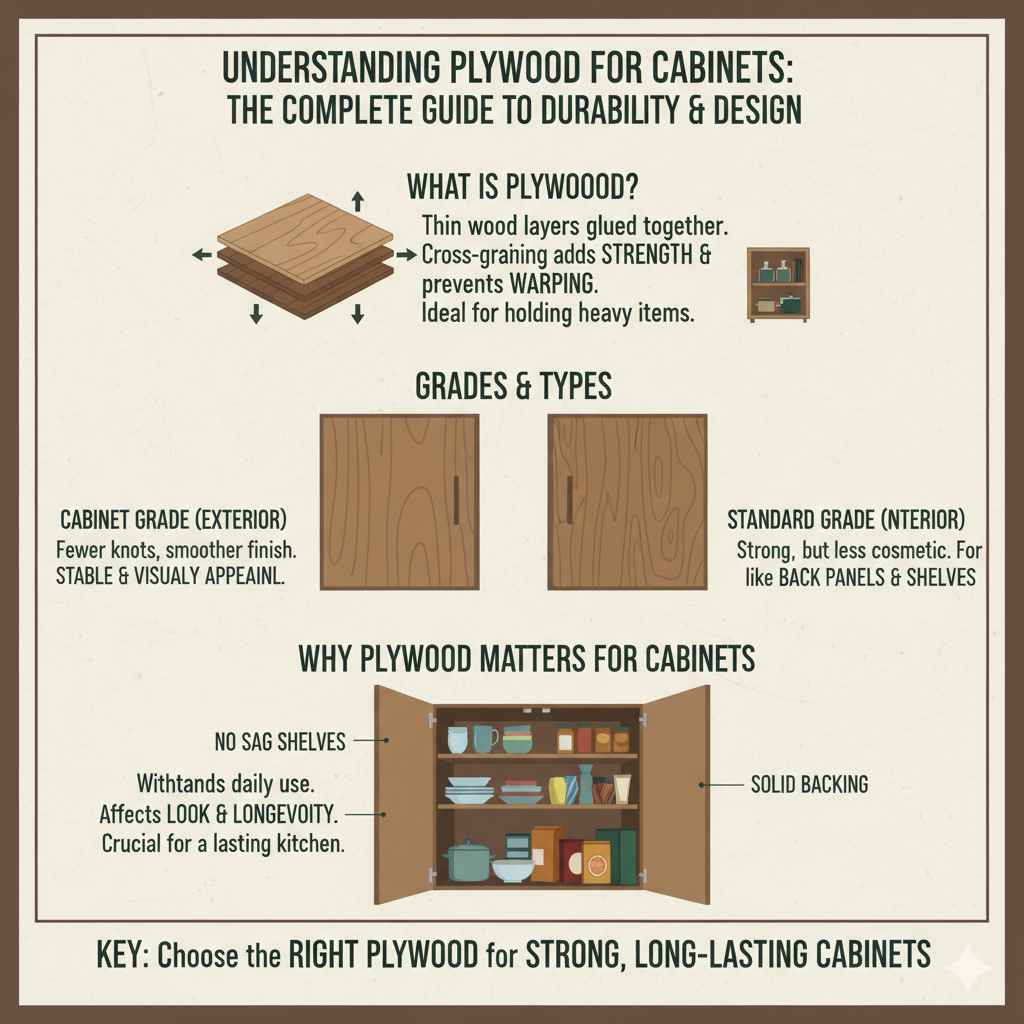
Plywood is made of thin wood layers. These layers are glued together. They are stacked with the grain running in different directions.
This cross-graining makes plywood very strong. It stops the wood from warping or shrinking too much. For cabinets, this strength is key.
Cabinets hold heavy items. They need to withstand daily use.
Not all plywood is the same. There are different grades. There are also different wood types.
Some are better for the inside of cabinets. Others are best for the outside. The ‘cabinet grade’ is important.
This means the plywood meets certain standards. It has fewer knots and a smoother surface. It is also made to be more stable.
Think about your kitchen cabinets. They see a lot of action. You open and close them daily.
You might bump into them. They need to hold dishes, food, and pots. The back panels need to be solid.
The shelves must not sag. This is why choosing the right plywood matters a lot. It affects how your cabinets look and how long they last.
Personal Experience with Plywood Choices
I remember building my first set of kitchen cabinets. I was so excited. I went to the lumber yard.
I saw stacks and stacks of plywood. It all looked pretty similar to me at first. I picked what seemed cheapest.
It was some sort of construction-grade pine plywood. I thought, “It’s just the inside, who will see it?”
Well, I saw it every day. Within a year, the shelves started to droop a little. The edges of the cabinet boxes began to fray.
I noticed small dents easily. It just didn’t feel solid. It was a constant reminder that I had cut corners.
It made the whole kitchen feel less well-made. That mistake taught me a big lesson about using the right materials, even where they aren’t seen.
The Core of Cabinet Strength: Plywood Grades
When we talk about plywood for cabinets, the grade matters most. This tells us about the quality of the wood’s surface. It also tells us about the quality of the core.
For cabinets, we usually look at NEMA grades. These are for hardwood plywood. But the ideas apply to all cabinet plywood.
Common grades include:
- A-Grade: This is the best. It’s smooth and painted or finished. It has very few defects.
- B-Grade: Still good. It might have small knots or patches. It’s often used for visible parts.
- C-Grade: Has more defects. Knots and patches are common. Not ideal for visible cabinet fronts.
- D-Grade: The lowest grade. Has many defects. Best for hidden parts where appearance doesn’t matter.
For cabinet boxes and shelves, you want something sturdy. You need a smooth, stable core. Look for plywood labeled “cabinet grade.” This means it’s made for this job.
It should have fewer voids inside. Voids are empty spaces in the core. They make the plywood weaker.
Cabinet Plywood Core Types
What’s inside matters for strength.
- Multi-ply Core: Many thin layers. Very stable and strong. No large voids.
- Combi Core: Mix of hardwood strips and plies. Good strength and stability.
- Particleboard Core: Made from wood particles. Less stable. Can sag over time. Not usually recommended for cabinet boxes.
- MDF Core: Medium-density fiberboard. Smooth surface. But heavy and can swell if wet.
Recommendation: For the best cabinet performance, choose multi-ply or combi core hardwood plywood.
Choosing the Right Wood Species for Your Cabinets
The type of wood used for the face veneer of your plywood greatly impacts the look. Different wood species offer unique grains and colors. This is especially important for the visible parts of your cabinets, like doors and drawer fronts.
Here are some popular choices:
Popular Wood Species for Cabinet Plywood
Birch Plywood
Look: Smooth, light color, fine grain. Very uniform. Takes stain well.
Pros: Affordable, strong, versatile.
Maple Plywood
Look: Creamy white to light brown. Fine, even grain. Can have subtle patterns.
Pros: Very hard, smooth finish, durable. Looks great painted or stained.
Oak Plywood
Look: Distinct, open grain pattern. Available in red or white oak. Warm tones.
Pros: Strong, classic look, takes stain well.
Cherry Plywood
Look: Rich reddish-brown. Smooth grain that darkens with age.
Pros: Elegant, beautiful natural color changes.
Walnut Plywood
Look: Dark brown, often with beautiful, wavy grain patterns.
Pros: Luxurious, rich color, distinctive look.
For the internal parts of cabinets, like the cabinet box (carcass) and shelves, the wood species of the veneer is less critical than the core and grade. Poplar or even utility-grade birch plywood are often used here. They are more budget-friendly.
They still offer good strength for the internal structure.
The face veneer is the part you see. It needs to be smooth and attractive. High-quality veneer is important.
This is where grades like A-1 or N-3 come into play. The first letter is the face grade, the second is the back grade. So, A-1 means an A-grade face and a 1-grade back.
Cabinet Box Construction: What Plywood to Use
The cabinet box is the main structure. It holds everything together. This includes the sides, top, bottom, and back.
For this part, stability and strength are top priorities. Appearance is secondary, as these parts are often hidden by doors and drawers.
The most common and recommended plywood for cabinet boxes is 3/4-inch hardwood plywood. This thickness provides excellent rigidity. It stops shelves from sagging.
It also supports the weight of drawers and doors. Poplar plywood is a great choice for this. It’s sturdy, relatively inexpensive, and takes paint well if you plan to paint the cabinet box.
Birch plywood is another excellent option. It offers a slightly nicer finish. It is a bit more expensive than poplar.
Many cabinet makers prefer birch for its smooth surface. It can be stained or painted. Even if you paint the box, a smooth birch surface gives a better base.
The back panel of the cabinet box is also important. It helps square up the cabinet. It also adds rigidity.
For most cabinets, 1/2-inch hardwood plywood is sufficient for the back. Some builders use 1/4-inch plywood for very large or heavy-duty cabinets. Or if the back will be visible, a nicer veneer might be chosen.
Avoid using construction-grade plywood for cabinet boxes. This includes plywood with lots of knots or voids. It won’t hold screws well.
It might warp. It won’t provide the lasting support your cabinets need. Always opt for “cabinet grade” or “furniture grade” plywood.
Quick Scan: Cabinet Box Plywood
| Component | Recommended Plywood Thickness | Best Wood Species (for Carcass) | Key Features |
|---|---|---|---|
| Sides, Top, Bottom | 3/4 inch | Poplar or Birch | Strength, Stability, Few Voids |
| Back Panel | 1/2 inch (or 1/4 inch for light duty) | Poplar, Birch, or Utility Grade | Squaring, Rigidity |
Drawer Construction: Durability is Key
Drawers face even more wear and tear than cabinet boxes. They slide in and out constantly. They hold a lot of weight.
The material needs to be tough. It needs to resist moisture from food or spills.
For drawer sides and bottoms, many pros use 1/2-inch or 3/4-inch hardwood plywood. The choice depends on the expected load. For standard kitchen drawers, 1/2-inch is usually fine.
For deep drawers that hold heavy pots or pans, 3/4-inch is a better choice.
Poplar is a popular wood for drawer construction. It’s strong and economical. Birch is also a good option.
It offers a smoother finish. Some high-end drawers might use solid wood for the sides. But plywood offers more stability.
It is less likely to warp with changes in humidity.
The drawer bottom is often made from a thinner plywood. 1/4-inch hardwood plywood is common. This gets slotted into grooves on the drawer sides.
This creates a very strong and secure drawer box. It prevents the bottom from bowing out.
When selecting plywood for drawers, pay attention to the core. A solid core with no voids is essential. Voids can cause the drawer bottom to break.
They can also make the sides weak. Look for plywood that is smooth and stable.
Drawer Plywood Considerations
- Sides: 1/2″ or 3/4″ hardwood plywood (Poplar, Birch) for strength.
- Bottoms: 1/4″ hardwood plywood, slotted into grooves for a strong joint.
- Core Quality: Crucial to avoid voids for maximum durability.
- Moisture Resistance: Consider how well the wood species handles humidity.
Visible Parts: Doors, Drawer Fronts, and Face Frames
This is where appearance really shines. The plywood used for visible parts needs to be beautiful. It should have a smooth, defect-free surface.
The grain pattern should be appealing.
For cabinet doors and drawer fronts, many builders use high-quality hardwood plywood. This is often called “veneered plywood.” The top layer is a thin slice of beautiful hardwood. Think birch, maple, oak, cherry, or walnut.
This veneer provides the finished look.
The quality of the veneer is graded. Look for A-grade or N-grade veneer. This means it has a smooth, uniform surface.
It may have very minor natural characteristics like small, tight knots. These can add character.
Face frames are the strips of wood that surround the cabinet opening. They give the cabinets a finished look. They also provide a surface for the doors and drawers to close against.
While many face frames are made from solid wood, hardwood plywood can also be used. It offers great stability and can match the door veneer perfectly.
When selecting plywood for these parts, look at the grain. Does it run straight? Is it pleasing to the eye?
Does the color match your overall design? Consider how the wood will take stain or paint. Some woods, like maple, are excellent for painted finishes.
Others, like oak, show off their grain beautifully with a clear or stained finish.
It’s also important to match the veneer species. If you’re using birch doors, use birch veneer plywood for other visible components. This ensures a consistent look.
The type of core is less important for the visible parts than the face veneer. However, a stable, void-free core will prevent the veneer from cracking or bubbling.
Contrast Matrix: Veneered Plywood Choices
Myth: Any hardwood plywood looks good for doors.
Reality: The face veneer grade and species are critical. A-grade or N-grade veneer with a beautiful grain pattern is needed for visible parts.
Reality: Matching veneer species ensures a cohesive look.
Myth: You can mix different wood species for doors and drawer fronts; it will still look good.
Plywood Thickness for Different Cabinet Parts
The thickness of the plywood you choose makes a big difference in durability. It affects how much weight the cabinet can hold. It also impacts how well it resists warping.
- Cabinet Boxes (Sides, Top, Bottom): 3/4 inch is standard. This provides maximum strength and stability. It ensures shelves won’t sag.
- Cabinet Back Panels: 1/2 inch is common. It adds rigidity and helps square the cabinet. 1/4 inch can be used for lighter applications or where space is tight.
- Shelves: 3/4 inch is best. Especially for deeper shelves or those holding heavy items. 1/2 inch might work for shorter, lighter-duty shelves.
- Drawer Sides: 1/2 inch is usually sufficient. For very heavy loads, 3/4 inch is better.
- Drawer Bottoms: 1/4 inch hardwood plywood is typical. This is slotted into grooves.
- Doors and Drawer Fronts: 1/4 inch or 1/2 inch hardwood plywood is common. This thickness allows for routing edges and attaching hardware.
Using the correct thickness prevents common problems. Sagging shelves are a headache. Doors that don’t hang straight are frustrating.
Drawers that stick or wobble are annoying. Choosing the right thickness from the start saves trouble later.
Consider the span. A shelf that spans 30 inches will need to be thicker than one that spans 18 inches. This is because the longer span has more room to sag.
The weight of the items on the shelf will also influence the required thickness.
Thickness Quick Guide
Sides, Tops, Bottoms: 3/4″
Shelves: 3/4″ (longer spans or heavy loads)
Back Panels: 1/2″
Drawer Sides: 1/2″ – 3/4″
Drawer Bottoms: 1/4″
Doors/Drawer Fronts: 1/4″ – 1/2″
What Pros Recommend: Expert Insights
Professional cabinet makers have tried and tested many materials. Their choices are based on experience. They value durability, workability, and customer satisfaction.
So, what do they recommend?
Many pros lean towards birch plywood. It’s a workhorse for a reason. It offers a good balance of cost and quality.
The grain is fine and consistent. It takes finishes beautifully. For cabinet boxes, they often use a good quality birch plywood with a solid core.
This is known as furniture grade or cabinet grade plywood.
For the visible parts, like doors and drawer fronts, they demand high-quality veneer. They might choose oak for a traditional look. Maple is popular for painted cabinets.
Cherry provides a warm, elegant feel. Walnut is used for a more luxurious appearance.
Another material frequently used by pros is poplar plywood. It’s a bit softer than birch or maple. But it’s very affordable.
It’s excellent for cabinet boxes and interior parts. It also takes paint exceptionally well. This makes it a top choice for painted cabinets.
Some custom cabinet makers might use formaldehyde-free plywood. This is a growing concern for indoor air quality. Manufacturers offer these options.
They are a bit more expensive. But they offer peace of mind.
For the cabinet back, using 1/2-inch plywood is standard practice. It adds crucial structural integrity. Some builders even add cleats or supports.
This ensures the back stays square and strong over time.
One thing pros always emphasize is the quality of the core. They avoid plywood with many voids. Voids weaken the panel.
They can cause screws to pull out. They can lead to warping or breaking.
Here’s a simple rule of thumb from experts:
- For cabinet boxes and shelves: Use good quality, 3/4-inch hardwood plywood (poplar or birch). Focus on a solid core and few voids.
- For visible parts (doors, drawer fronts): Use high-grade veneered plywood with a beautiful face veneer (birch, maple, oak).
- For drawer bottoms: Use 1/4-inch hardwood plywood slotted into grooves.
They also stress the importance of proper construction techniques. This includes using the right screws. It involves making strong joinery.
Even the best plywood will fail if not assembled correctly.
Expert Tip: Look for the Label
Many high-quality plywood sheets will have labels indicating their grade and intended use. Look for terms like “Cabinet Grade,” “Furniture Grade,” or specific NEMA grades.
Key things to check on the label:
- Wood Species: What type of wood veneer is on the face?
- Grade: (e.g., A-A, A-B, N-3) Higher grades mean fewer defects.
- Core: Look for terms like “multi-ply” or “solid core” to avoid voids.
- Formaldehyde Content: If this is a concern, look for “NAF” (No Added Formaldehyde) or “ULEF” (Ultra-Low Emitting Formaldehyde).
Real-World Scenarios and Considerations
When choosing plywood for cabinets, think about your specific situation. What are your needs? What is your budget?
What is the environment like?
Humidity: If you live in a very humid climate, or your kitchen has high moisture, consider plywood with good moisture resistance. Maple and birch are relatively stable. However, any plywood can be damaged by prolonged exposure to water.
Proper sealing and finishes are crucial.
Budget: Plywood prices vary greatly by wood species and grade. Birch and maple are mid-range. Walnut and cherry are premium.
Poplar is often the most budget-friendly hardwood option. MDF and particleboard are cheapest but less durable for cabinets.
DIY vs. Professional Installation: If you are a DIYer, consider how easy the plywood is to work with. Poplar and birch are generally easy to cut and sand.
Walnut and cherry can be more challenging. Professionals have the tools and experience to work with any material.
Style: The wood species you choose will heavily influence the style. A light, modern kitchen might use maple or birch. A rustic kitchen might feature oak.
A more traditional or high-end look could be achieved with cherry or walnut.
Painted vs. Stained Cabinets: If you plan to paint your cabinets, the wood grain is less important for the visible parts. Poplar or a smooth birch plywood is a great choice.
The paint will cover the wood. If you plan to stain, choose a wood with a grain and color you love.
The “Cabinet Grade” Label: Always look for plywood that is specifically labeled “cabinet grade” or “furniture grade.” This ensures it meets certain quality standards for your project. This label signifies that the plywood has been manufactured with fewer internal voids and a smoother, more consistent surface compared to utility or construction grade plywood.
U.S. Standards: In the U.S., the hardwood plywood industry follows certain standards. Look for adherence to these standards for quality assurance.
Organizations like the Hardwood Plywood & Veneer Association (HPVA) set these guidelines. Choosing plywood that meets these standards gives you confidence in its performance.
Scenario Breakdown: Choosing Your Plywood
High Budget, Modern Style
Recommendation: Maple or Birch plywood with a premium veneer for doors. High-quality birch or poplar plywood for the cabinet boxes.
Mid Budget, Classic Style
Recommendation: Oak plywood with a good veneer for visible parts. Birch or Poplar plywood for the cabinet box.
Budget-Friendly, Painted Finish
Recommendation: Poplar plywood for everything. Ensure good quality and thickness for durability.
High-Traffic Kitchen
Recommendation: Focus on thickness (3/4″ for boxes/shelves) and a dense hardwood like Maple for doors. Ensure excellent joinery.
What This Means for Your Cabinets
Choosing the right plywood is foundational to cabinet success. It affects strength, beauty, and longevity. Using the wrong type can lead to frustration down the road.
When it’s normal: It’s normal for cabinets to feel solid and sturdy when built with the right plywood. It’s normal for shelves to hold weight without sagging. It’s normal for doors to open and close smoothly for years.
When to worry: You should worry if your cabinet shelves start to visibly bend. If doors don’t hang straight. If drawers feel loose or wobbly.
If you see edges fraying or wood splitting. These are signs the plywood might not be strong enough or of good enough quality.
Simple checks: Before buying, inspect the plywood sheet. Look for a smooth, consistent surface. Check the edges for delamination (layers peeling apart).
Gently flex the sheet; it should feel rigid and not easily bend. Ask about the core quality – avoid sheets with visible large voids.
The plywood is the backbone of your cabinets. Investing in the right kind pays off. It leads to cabinets that look great and function well for many years.
Don’t underestimate its importance. It’s worth the effort to choose wisely.
Quick Fixes and Tips for Plywood Cabinets
While this article focuses on choosing the best plywood, a few tips can help with existing plywood cabinets or during installation.
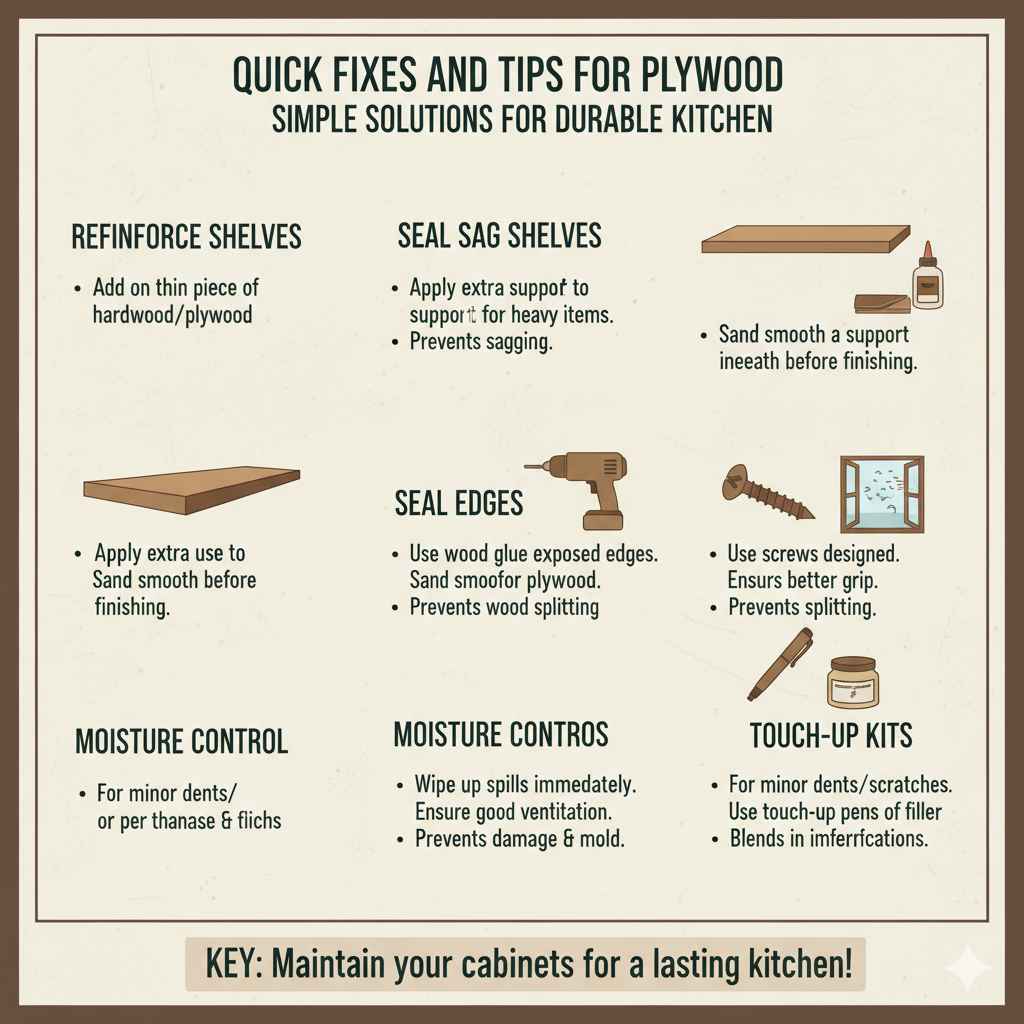
- Reinforce Shelves: If shelves are starting to sag, you can add a thin piece of hardwood or plywood along the front edge. This adds extra support.
- Seal Edges: For plywood edges that are exposed, sealing them with wood glue and sanding them smooth before finishing can prevent fraying.
- Use the Right Screws: When attaching hardware or assembling, use screws designed for plywood. This helps them grip better and prevents splitting.
- Moisture Control: Keep cabinets dry. Wipe up spills immediately. Ensure good ventilation in kitchens and bathrooms to prevent moisture damage to the plywood.
- Touch-Up Kits: For minor dents or scratches on veneered plywood, touch-up pens or wood filler can often blend them in.
Frequently Asked Questions About Plywood for Cabinets
What is the best plywood for kitchen cabinet boxes?
The best plywood for kitchen cabinet boxes is usually 3/4-inch thick hardwood plywood with a solid core. Poplar or birch are excellent choices. They offer great strength and stability to hold up the shelves and drawers. Look for “cabinet grade” or “furniture grade” for the best quality.
Can I use MDF instead of plywood for cabinets?
MDF (Medium-Density Fiberboard) can be used for cabinet doors or drawer fronts, as it offers a very smooth surface for painting. However, it is generally not recommended for cabinet boxes or shelves. MDF is heavier than plywood and can sag under weight over time. It also swells badly if it gets wet.
What is the difference between cabinet-grade plywood and construction-grade plywood?
Cabinet-grade plywood is made with a higher quality veneer on the face and back. It has fewer knots and defects. The core is also more solid, with fewer voids. Construction-grade plywood has more knots and voids. It is cheaper but less stable and attractive.
How thick should plywood cabinet shelves be?
For most standard cabinets, 3/4-inch thick plywood is recommended for shelves. This thickness provides enough rigidity to prevent sagging, especially for longer shelves or when holding heavy items like dishes or pantry goods. For very deep shelves or extremely heavy loads, 3/4-inch is a must.
Is birch plywood good for painted cabinets?
Yes, birch plywood is an excellent choice for painted cabinets. It has a fine, consistent grain that sands smooth, providing a great surface for paint. It is also durable and stable. Poplar plywood is another popular and more budget-friendly option for painted cabinets.
What does A-1 mean for plywood grade?
In hardwood plywood grading, the first letter refers to the face veneer, and the second letter refers to the back veneer. A-1 means the face side is an A-grade (smooth, paintable, few defects) and the back side is a 1-grade (a utility grade, usually smooth but may have more patches or knots than an A-grade).
Conclusion
Choosing the best plywood for your cabinets is a smart investment. It impacts their look, feel, and how long they last. By understanding plywood grades, wood types, and thickness, you can make informed decisions.
Aim for stability, strength, and the appearance you desire. Your cabinets will thank you for it.