Do Easton Tribute Arrows Have Nock Tapers
For archers, the details of arrow construction aren’t just technicalities, they’re critical to performance, safety, and consistency on the range or in the field. One often-overlooked element is the nock taper, a subtle but important feature that directly affects arrow and nock compatibility. The Easton Tribute, a popular shaft among beginners and clubs, has generated ongoing debate: Do Easton Tribute arrows have nock tapers? How does this impact their use, and what does it mean for those choosing or customizing their arrows?
This comprehensive guide examines the design specifics of Easton Tribute arrows, the concept of nock tapers, and their practical implications. We’ll explore manufacturer documentation, real-world user experiences, compatibility with nocks and accessories, and how Easton Tribute compares to other aluminum arrows.
By the end, you’ll have not only a clear answer but also actionable guidance for choosing, maintaining, and optimizing your arrows.
Key Takeaways
- Easton Tribute arrows do not have factory nock tapers; they use a swaged (reduced) end for nock installation.
- The Tribute’s swaged end is compatible with standard push-in nocks, not glue-on nocks designed for tapered ends.
- Understanding the difference between swaged and tapered is essential for safe and proper nock installation.
- The Tribute is engineered for affordability and reliability, making it suitable for clubs, youth programs, and recreational archers.
- For archers seeking advanced customization, arrows with genuine nock tapers or parallel shafts may be more suitable.
- Always consult official manufacturer resources or a qualified archery professional before modifying arrows.
Understanding Arrow Nock Tapers
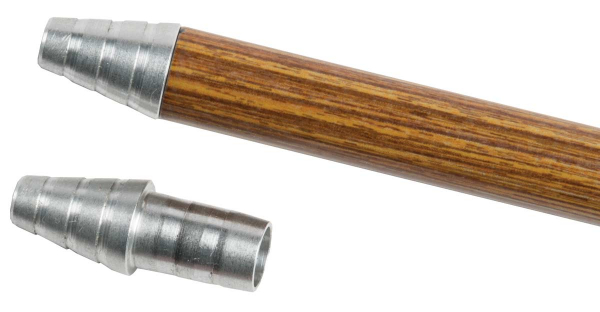
The term “nock taper” refers to a gradual narrowing at the rear (nock) end of an arrow shaft. This design is a legacy from wooden arrows, where the end was shaved to a conical taper to fit glue-on nocks. In modern aluminum and carbon arrows, nock tapers are less common, replaced by alternative end designs like swaging or maintaining a parallel profile.
The Difference Between Swaged Ends And Nock Tapers
A swaged end is a manufacturing process where the arrow’s diameter is mechanically reduced at the rear, creating a smaller, straight section. This is distinct from a true taper, which is a smooth, angled reduction resembling a cone. Swaged ends accept specific nocks that push or snap onto the reduced shaft, while tapered ends require glue-on nocks designed for a conical fit.
Why Tapers Matter
The presence or absence of a nock taper dictates:
- Nock compatibility: Only certain nocks fit on tapered vs. swaged vs. parallel shafts.
- Arrow maintenance: Tapered wooden shafts require careful hand-tooling; swaged or parallel shafts are factory-precise.
- Consistency and performance: The fit and alignment of the nock influence arrow flight and safety.
Common Arrow End Types
| End Type | Description | Typical Nock Type | Common Materials |
|---|---|---|---|
| Nock Taper | Conical, hand-tapered or machined | Glue-on nocks | Wood |
| Swaged End | Straight, reduced-diameter, factory-made | Push-in nocks (e.g., Easton G-Nock) | Aluminum, some carbon |
| Parallel End | Uniform diameter to the rear | Bushing-inserted nocks or pin nocks | Carbon, high-end aluminum |
Understanding these distinctions is crucial before altering or upgrading your arrows.
Credit: www.ebay.com
The Design Of Easton Tribute Arrows
Easton Tribute arrows are among the most widely used entry-level aluminum shafts. Their design is optimized for affordability, durability, and ease of use, making them a common choice for clubs and beginners.
Construction And Specifications
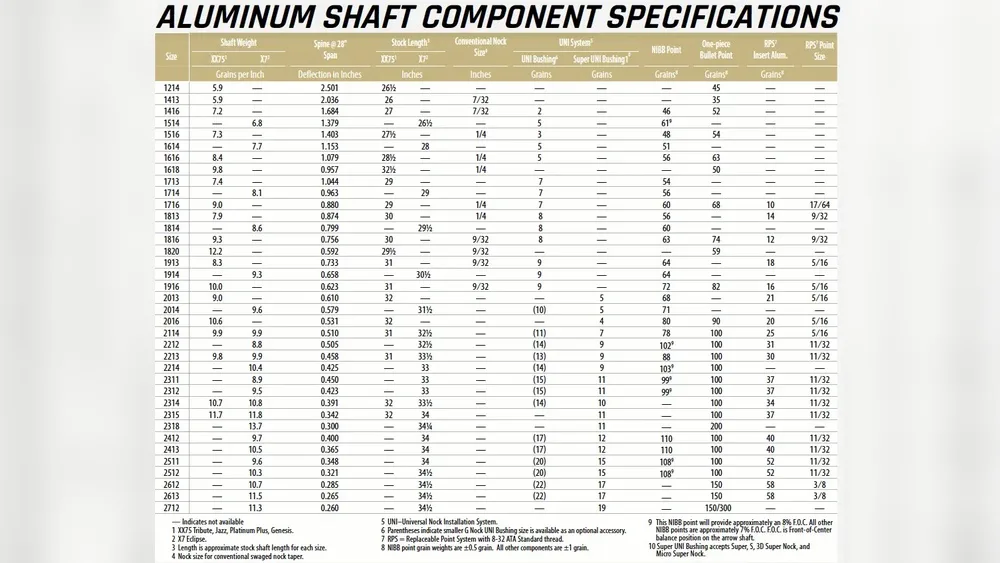
The Easton Tribute is constructed from 7075 aerospace-grade aluminum, known for its balance of strength and lightness. Its wall thickness and spine options support a range of draw weights typically encountered in beginner to intermediate archery.
- Available spine sizes: 1214, 1413, 1416, 1516, 1616, 1716, 1816, 1916, 2016, 2117
- Typical use cases: Target archery, beginner programs, club rentals
End Design: Swaged, Not Tapered
Easton Tribute shafts feature a swaged rear end. This is a factory-reduced straight section that precisely fits Easton’s proprietary push-in nocks, such as the Easton 3D Super Nock or Easton Classic Nock. There is no gradual, cone-shaped taper at the end; the swage is abrupt, uniform, and made to exacting tolerances.
Example: When I first started coaching youth archery, we bulk-ordered Easton Tribute arrows. The swaged ends made nock replacement fast and foolproof, no specialized tapering tools required.
Nock Compatibility
The Tribute’s swaged end is compatible with:
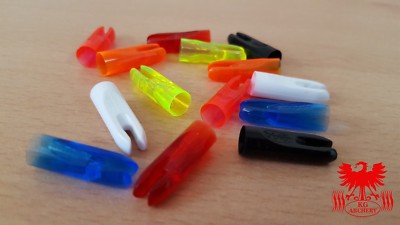
- Easton Super Nocks
- Easton Classic Nocks
- Other push-in nocks sized for Easton’s aluminum swaged shafts
It is not compatible with:
- Glue-on nocks for wooden/tapered arrows
- Pin nocks or bushings used with parallel-end carbon shafts
Pro Tip: Always double-check nock packaging for compatibility with swaged aluminum shafts before purchasing.
Easton’s Official Documentation
Per Easton’s product catalogs and technical guides, the Tribute is described as having a “swaged nock end,” and all recommended nocks are push-in types designed for this swaged profile. There is no mention of a true nock taper in any official Easton documentation or technical drawing.
For further confirmation, refer to the official Easton Archery Tribute Product Page.

Credit: www.amazon.co.uk
How Nock Tapers Affect Arrow Performance And Maintenance
While the absence of a true nock taper in Easton Tribute arrows simplifies some aspects of use, it also imposes certain limitations and considerations. Understanding how end design affects your arrow setup can help you avoid common mistakes and improve longevity.
Installation And Replacement Of Nocks
Swaged-end shafts allow for:
- Quick push-in nock installation: No glue or special tools required.
- Easy replacement: Damaged nocks can be pulled off and replaced in seconds.
- Consistent alignment: Factory swaging ensures the nock sits perfectly straight.
By contrast, arrows with true nock tapers (usually wooden) require:
- Hand-shaving or using a tapering tool
- Precise glue application
- Careful alignment to avoid nock misfit
Impact On Arrow Customization
Swaged aluminum arrows like the Tribute limit customization options:
- Only accept nocks made for the swaged profile
- Not compatible with advanced nock systems (e.g., pin bushings)
- Less flexibility for those who want to experiment with different nock types
Arrows with parallel ends (often carbon or higher-end aluminum) accept various bushing and nock systems, enabling high-level customization for elite competitors.
Durability And Field Repairs
Push-in nocks for swaged ends are generally robust and easy to replace, but:
- Swaged ends can become misshapen if arrows are mishandled or struck from the rear, making nock replacement difficult.
- The lack of a taper means there’s no option to re-taper or repair the shaft if the end is damaged.
For clubs or programs with high arrow turnover, the ease of replacement is a practical advantage. In my experience with club-level archery, the Tribute’s end design has reduced downtime due to damaged nocks.
Performance Consistency
Factory swaging ensures nocks are aligned and secure, promoting consistent arrow flight. However, if a swaged end is bent or out-of-round, performance suffers. Regular inspection is important.
Credit: www.3riversarchery.com
Comparing Easton Tribute To Other Aluminum Arrow Models
To understand the Tribute’s place in Easton’s lineup, it’s helpful to compare its design and features with other popular aluminum arrows. This section highlights similarities, differences, and ideal use cases.
Comparison Table: Easton Tribute Vs. Other Aluminum Shafts
| Model | End Design | Nock Type | Typical Use | Price Range |
|---|---|---|---|---|
| Easton Tribute | Swaged | Push-in (Super/Classic Nock) | Beginner, Club, Youth | Low |
| Easton Jazz | Swaged | Push-in (Super/Classic Nock) | Beginner, Recreational | Low |
| Easton XX75 Platinum Plus | Swaged | Push-in (Super/Classic Nock) | Intermediate, Target | Moderate |
| Easton X7 Eclipse | Parallel (with bushing) | Pin/Insert Nock | Advanced, Competition | High |
| Wooden Shafts (Generic) | Tapered | Glue-on Nock | Traditional, Historical | Varies |
Key Takeaways From The Table
- Tribute, Jazz, and Platinum Plus all feature swaged ends and use push-in nocks, making them straightforward choices for beginners.
- High-performance arrows like the X7 Eclipse use parallel ends with bushings, allowing for more advanced nock systems.
- Only wooden arrows commonly use true nock tapers for glue-on nocks.
Use Case Example: Club Arrow Choices
A local archery club compared Easton Tribute with Jazz and Platinum Plus for their beginner classes. The key deciding factors were cost, ease of nock replacement, and durability. Tribute arrows, with their swaged ends and affordable price, proved ideal for frequent use and rapid repairs.
Consideration For Upgrading
If you desire more nock or fletching customization, or if you compete at higher levels, consider arrows with parallel ends and bushing systems. However, for most entry-level and club use, the Tribute’s system is more than adequate.
Real-world Experiences And Case Studies
Understanding how the Easton Tribute’s end design performs in the field helps contextualize its strengths and limitations. Here, we present several real-world examples based on user feedback and club experiences.
Case Study 1: Youth Program Implementation
A youth archery program equipped its participants with Easton Tribute shafts, prioritizing safety and ease of maintenance. The swaged ends allowed instructors to quickly check and replace nocks before each session, reducing the risk of misaligned or loose nocks, a common safety concern with glue-on nocks on tapered wood arrows.
Case Study 2: Club-level Field Repairs
During a regional event, several Tribute arrows suffered rear-end impacts, slightly deforming their swaged ends. The club’s equipment officer was able to salvage most arrows by carefully reshaping the swaged section with a mandrel, then fitting new push-in nocks. Had these been traditional tapered arrows, field repairs would have required specialized tapering tools and more time.
Case Study 3: Transitioning To Advanced Arrows
An intermediate archer, after a year with Tribute arrows, sought tighter grouping and more customization. Moving to a parallel-end aluminum shaft with pin bushings, he found the new setup allowed for experimenting with various nock and fletching options, something not possible with the fixed swaged end of the Tribute.
Example: My Experience With Tribute Arrows
When coaching at a summer camp, I found the Tribute’s swaged end system invaluable. With dozens of arrows in use daily, nock replacements were swift and required no adhesives or drying time. However, I also noted that if a swaged end became significantly dented, salvaging the arrow was more challenging compared to wooden shafts, where re-tapering is possible.
Nock Selection And Installation For Easton Tribute Arrows
Correct nock selection and installation are essential for safety and consistent performance. With the Easton Tribute’s swaged end, the process is straightforward but requires attention to detail.
Compatible Nock Types
- Easton 3D Super Nock: Designed specifically for swaged aluminum ends. Available in multiple colors for easy arrow identification.
- Easton Classic Nock: Another push-in option, often preferred for its secure fit.
- Aftermarket push-in nocks: Some third-party brands manufacture nocks for Easton-style swaged ends, but always verify compatibility.
Installation Process
- Inspect the swaged end for dents or deformation.
- Align the nock index (the groove) with the arrow’s fletching, typically the odd-colored vane.
- Push the nock straight onto the swaged end until it seats firmly. Avoid twisting excessively, as this can loosen the fit.
- Test for security: The nock should not rotate or pull off easily by hand.
Nock Replacement Tips
- Remove damaged nocks by pulling them straight off; avoid using pliers, which may damage the swaged end.
- Clean any debris from the swaged section before installing a new nock.
- If the fit feels loose, discard the arrow or consult a professional, as a loose nock can cause dangerous misfires.
Warning: Never attempt to glue a push-in nock onto a swaged aluminum shaft. This can compromise safety and make future replacements difficult.
Troubleshooting Common Issues
- Nock too tight: Gently sand the inside of the nock socket with fine-grit sandpaper.
- Nock too loose: The shaft may be damaged; do not attempt to use the arrow.
- Nock misalignment: Remove and reinstall, ensuring proper orientation with the fletching.
Arrow Customization And Upgrading Options
While Easton Tribute arrows are not designed for extensive customization, some modifications are possible within the constraints of their swaged ends. For archers seeking to upgrade, knowing your options is crucial.
Fletching Customization
- Vaned fletching: Most Tribute arrows come pre-fletched with plastic vanes, but these can be replaced or upgraded.
- Feather fletching: Some archers prefer feathers for traditional shooting styles; compatible adhesives are required.
Point And Insert Options
- Tribute arrows use glue-in points sized to match the shaft’s inner diameter.
- Upgrading to heavier or lighter points can affect arrow tuning and trajectory.
Limitations On Nock Customization
- Only push-in nocks for swaged ends are compatible; no pin, bushing, or glue-on nock upgrades are possible.
- For advanced tuning, such as micro-adjustable nocks or special nock materials, a parallel-end shaft with bushing is required.
When To Consider Upgrading
- If you require more advanced nock systems for competition
- When seeking to optimize arrow flight with specialty components
- If frequent nock end damage becomes a problem
Pro Tip: For most archers, especially those in the beginner or club stage, the Tribute’s standard configuration is adequate. Upgrading becomes important as your technique and needs evolve.
Safety, Best Practices, And Manufacturer Guidance
Safety is paramount in archery. Using the correct nock and installing it properly can prevent dangerous accidents. The following best practices are recommended for all users of Easton Tribute arrows.
Inspecting Arrows Regularly
- Check swaged ends for dents, cracks, or ovalization before each session.
- Test nock fit and replace any that are loose or cracked.
Following Manufacturer Recommendations
- Use only nocks specified by Easton for the Tribute shaft.
- Never attempt to modify the swaged end to fit other nock types.
Consulting Professionals
If you are uncertain about arrow maintenance or encounter persistent issues:
- Bring your arrows to a certified archery pro shop
- Consult Easton’s official technical resources or customer support
Example: A club member once attempted to force a glue-on nock onto a swaged Tribute shaft, resulting in a split arrow and a misfire. This underscores the importance of adhering to compatibility guidelines.
Field Storage And Handling
- Store arrows in a quiver or tube to prevent rear-end damage.
- Avoid dropping arrows nock-end down onto hard surfaces.
Warning: Never shoot an arrow with a damaged or improperly installed nock. Doing so can result in catastrophic failure and serious injury.
Frequently Asked Questions
Are Easton Tribute Arrows Suitable For Hunting?
Easton Tribute arrows are primarily designed for target archery and club use, not for hunting. Their construction prioritizes affordability and durability over the high kinetic energy and penetration required for ethical hunting. For hunting, consult your local regulations and consider using arrows specifically rated for game, such as Easton XX75 Gamegetter or carbon hunting shafts.
Can I Use Hot Glue To Install Nocks On Easton Tribute Arrows?
No, hot glue is not recommended for installing nocks on swaged-end aluminum arrows like the Tribute. These shafts are designed for push-in nocks, which seat securely without adhesives. Using glue can cause fitment issues, make replacement difficult, and compromise safety.
How Can I Tell If My Easton Tribute Arrow’s Swaged End Is Damaged?
Inspect the swaged end for:
- Visible dents or flattening
- Difficulty in fitting or removing nocks
- Wobbling nock fit
If any of these issues are present, the arrow may be unsafe to use. Consult a professional or replace the shaft to prevent accidents.
What Should I Do If My Nock Keeps Falling Off During Shooting?
If the nock on your Tribute arrow repeatedly falls off:
- Check for deformation or wear on the swaged end.
- Ensure you are using the correct size and type of nock for the shaft.
- If the swaged end is out-of-round or undersized, the arrow should be retired from use.
Are There Any Alternatives To Easton Tribute Arrows With Genuine Nock Tapers?
Yes, wooden arrows commonly feature true nock tapers for glue-on nocks, favored by traditional archers. Some specialty carbon shafts also offer tapered ends, but these are rare. For most aluminum and carbon shafts, swaged or parallel ends with push-in or bushing nocks are standard.
References
- Easton Archery Tribute Product Page
- Wikipedia: Arrow
Easton Tribute arrows, with their swaged rear ends, offer a practical, reliable solution for beginner and club archery programs. They do not feature true nock tapers, but their design supports straightforward, consistent nock installation and maintenance. Understanding the differences between swaged, tapered, and parallel arrow ends allows archers to make informed decisions about equipment selection, customization, and safety.
For most users, the Tribute strikes an ideal balance between ease of use and performance, though those seeking advanced customization may eventually transition to other shaft types. Always prioritize proper fit and regular inspection to ensure safety and consistency in your archery journey.