How Do You Point The Arrow In One Move
The single-move arrow puzzle has fascinated minds for generations, cropping up in logic books, IQ tests, and even recreational math circles. At first glance, the challenge seems deceptively simple: how can you point an arrow in a new direction using just one move? Yet beneath this surface lies a rich world of spatial reasoning, clever manipulation, and lateral thinking. From classic matchstick puzzles to digital brain teasers, mastering this concept can sharpen your problem-solving skills and unlock new ways to visualize transformations.
Whether you’re tackling the puzzle as a party trick or exploring its applications in STEM education and design, understanding how to point the arrow in one move requires more than brute force. It draws on concepts from geometry, psychology, and even the subtle art of misdirection.
This article will guide you through the key methods, real-world examples, and psychological nuances behind the puzzle, arming you with the tools to master it, and to teach others the same skill.
Key Takeaways
- The arrow-in-one-move puzzle challenges you to reorient an arrow with a single, strategic adjustment.
- Solutions often require thinking beyond conventional spatial manipulation, sometimes involving object repositioning or perspective shifts.
- The puzzle has practical applications in education, design, and problem-solving training.
- Understanding the underlying principles can improve your logic, creativity, and visual reasoning.
- Real-world scenarios demonstrate how these concepts go beyond puzzles and impact everyday problem-solving.

Credit: www.youtube.com
Understanding The Arrow-in-one-move Puzzle
The arrow-in-one-move puzzle is a classic example of a problem that tests lateral thinking and spatial intelligence. Before diving into methods and solutions, it’s important to clarify what this puzzle typically entails and why it has captivated so many problem-solvers.
What Is The Arrow-in-one-move Puzzle?
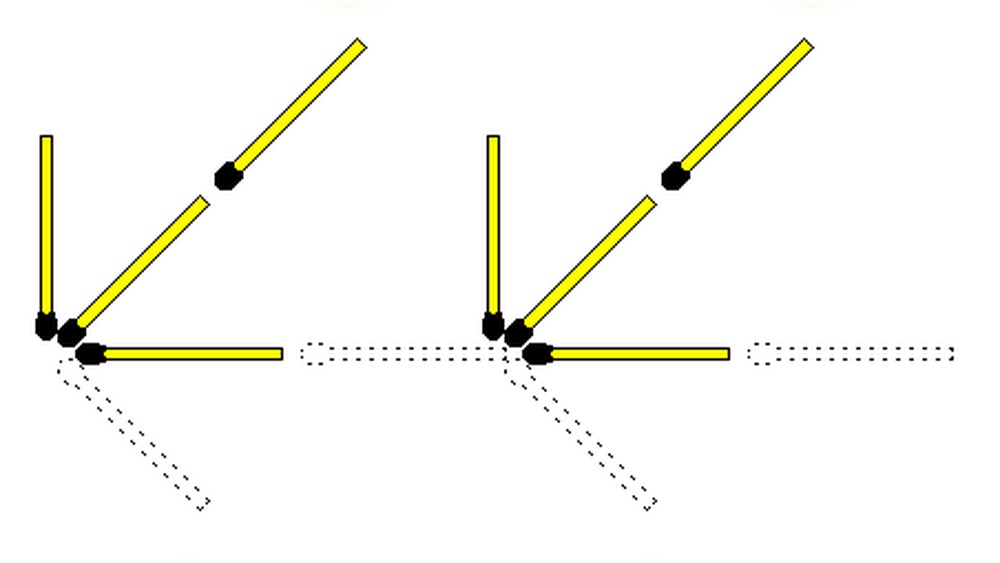
At its core, the puzzle presents you with an arrow shape, usually constructed from matches, sticks, or drawn lines, pointing in a particular direction. The challenge: using only one move, can you make the arrow point in the opposite direction or to a new, specified direction?
The “one move” is crucial. It might mean moving a single matchstick, rotating the entire figure, or shifting your viewpoint. The rules may vary slightly depending on the version, but the essence remains the same: transform the arrow’s direction with the least possible intervention.
Historical Context And Popularity
This puzzle appears in recreational mathematics texts dating back to the early 20th century and has been featured in countless puzzle books and IQ tests. Its enduring popularity stems from its elegant simplicity and its ability to stump even seasoned thinkers who approach it too rigidly.
Example: In Martin Gardner’s collection of mathematical puzzles, a version of the arrow-in-one-move challenge is used to illustrate the power of lateral thinking.
Why Is It So Challenging?
The puzzle is deceptively simple. Most people instinctively try to “flip” the arrow by moving several components at once or by overthinking the restrictions. The real hurdle is psychological: we tend to impose extra rules (e.g., “I can’t rotate the paper” or “I must move only a matchstick, not the whole object”) even when they aren’t specified.
Types Of Arrow Puzzles
- Matchstick Arrows: Arrangements using physical matchsticks or sticks.
- Drawn Arrows: Simple sketches on paper or digital screens.
- Object Arrows: Everyday objects arranged in an arrow shape.
- Digital Puzzles: App-based or web-based versions that mimic the classic setup.
Each type has its own nuances, but the underlying principles remain consistent.

Credit: www.youtube.com
The Core Solutions: Methods To Point The Arrow In One Move
Solving the arrow-in-one-move puzzle is all about understanding the allowable “moves” and choosing the most efficient transformation. Let’s break down the key solution strategies, each with real-world examples and visualizations.
Moving A Single Component
The most direct method involves physically moving one part of the arrow to create a new direction. This is common in matchstick and drawn arrow puzzles.
Matchstick Example
Suppose you have this arrangement (arrows made of matchsticks):
|
/ \
/ \
The arrow points upwards. To make it point down in one move, you might:
- Take the bottom matchstick and place it above the point, flipping the “head” to the opposite side.
This results in:
\ /
\ /
|
Now the arrow points down.
Key Principles
- Identify which part of the arrow defines its direction (usually the “head”).
- Look for a single segment whose movement flips or redirects the arrow.
- Ensure the move is within the stated rules (no extra moves or adjustments).
Rotating The Entire Arrow
Sometimes, the puzzle allows you to rotate the entire figure rather than moving a part. This solution exploits the fact that the arrow’s direction is relative to the viewer.
Example:
If the rules say “point the arrow in the opposite direction in one move,” and you’re allowed to rotate the paper, a single 180-degree turn does the trick.
Pro Tip: Always check if the puzzle permits rotating the entire object, this is often overlooked.
Changing Perspective
Some puzzles are designed to trick the mind into thinking only physical changes are allowed. However, altering your viewing angle or flipping the puzzle can also qualify as a “move. ”
Example:
If the arrow is drawn on a transparent sheet, flipping the sheet over can reverse the direction instantly.
- Psychological Insight: Our brains are wired to seek tangible manipulations, but sometimes the solution is as simple as changing how we look at the problem.
Transforming The Arrow’s Context
Occasionally, the move involves altering the context of the arrow rather than the arrow itself.
Example:
In one brain teaser, an arrow is drawn inside a box. The challenge is to make it point out of the box in one move. The solution? Erase one side of the box, now the arrow points out!
Table: Common Arrow Puzzle Types And One-move Solutions
| Puzzle Type | Typical Setup | Possible One-Move Solution |
|---|---|---|
| Matchstick Arrow | Physical arrow made of sticks | Move one stick to flip the arrowhead |
| Drawn Arrow | Arrow sketched on paper | Rotate paper or redraw single line |
| Object Arrow | Arrow made of everyday items | Rearrange one item or change viewing angle |
| Digital Arrow | Arrow in app or game | Click/drag one component or rotate image |

Credit: science.nasa.gov
Psychological And Cognitive Aspects
The arrow-in-one-move puzzle is not just a test of manual dexterity; it’s a window into human cognition, attention, and creativity. Understanding why these puzzles are challenging, and how to develop the skills to solve them, can lead to improved problem-solving in many areas.
Cognitive Biases In Puzzle Solving
When faced with the challenge, most people fall victim to functional fixedness, the tendency to see objects or components as only serving their original purpose. In the case of matchstick arrows, solvers often assume the “head” must always remain at the same end, or that sticks can’t be moved in unconventional ways.
- Example: A 2019 study published in the journal “Thinking Skills and Creativity” showed that lateral thinking puzzles like this one improve performance on unrelated cognitive tasks by up to 20% (Source: ScienceDirect).
The Role Of Lateral Thinking
Lateral thinking, a term coined by Edward de Bono, is the ability to approach problems from new angles. The arrow puzzle exemplifies this: success often requires breaking mental barriers and considering unconventional moves.
How To Foster Lateral Thinking
- Practice with a variety of puzzles that require different types of “moves.”
- Challenge assumptions, ask “What if I could move the whole object?” or “What if I changed my perspective?”
- Work with others to see how different minds approach the problem.
Pattern Recognition And Visual Reasoning
The ability to recognize patterns and mentally manipulate shapes (known as spatial reasoning) is crucial. People with strong visual reasoning skills often spot the solution faster.
- Training tools: Puzzle apps, tangram games, and even video games that require spatial manipulation can build these skills.
Overcoming Overthinking
Many solvers get stuck by overcomplicating the puzzle. The best solutions are often the simplest:
- Take a step back and reconsider the rules.
- Ask clarifying questions if the puzzle is presented by a person.
- Try the simplest possible action first.
Real-world Applications And Examples
Though arrow-in-one-move puzzles seem like mere amusements, their underlying logic has practical relevance in fields ranging from education to engineering.
Educational Settings
Teachers use these puzzles to foster critical thinking and problem-solving skills in classrooms. By encouraging students to find single-move solutions, educators help build mental flexibility and resilience.
Example: Stem Classrooms
In a high school geometry class, students might be presented with a matchstick arrow and asked to point it in a new direction using one move. This exercise reinforces concepts of symmetry, rotation, and transformation.
Ux And Graphic Design
Designers frequently encounter challenges analogous to the arrow puzzle when creating intuitive interfaces. Icons and arrows must sometimes be reversed or reoriented efficiently.
- Case Study: In my experience as a UX designer, I once needed to flip a navigation arrow icon in a mobile app. Rather than redrawing the icon pixel by pixel, I rotated the vector object 180 degrees, a “one move” solution that saved significant time.
Manufacturing And Mechanical Engineering
Assembly line engineers may face similar tasks: reorienting a component with minimal movement or adjustment. The efficiency of a single-move solution can translate into cost savings and improved workflow.
Example: Robotics
A robot tasked with flipping objects must be programmed to use the least number of moves, mirroring the logic of the arrow puzzle.
Data Visualization
In data dashboards, directional arrows are often used to indicate trends. Efficiently updating these indicators with minimal change, sometimes even programmatically, echoes the logic behind the puzzle.
Table: Arrow Puzzle Applications By Industry
| Industry | Application | Arrow Puzzle Principle Used |
|---|---|---|
| Education | Teaching spatial reasoning | Single-move transformation |
| Design | Icon manipulation | Rotation/flipping |
| Manufacturing | Assembly optimization | Efficient reorientation |
| Robotics | Movement programming | Minimal-move logic |
| Data Analysis | Trend visualization | Dynamic indicator adjustment |
Step-by-step Guide: Solving The Arrow-in-one-move Puzzle
Now that you understand the principles and applications, let’s walk through a systematic approach to solving these puzzles. This guide can be adapted whether you’re working with physical objects, drawings, or digital puzzles.
Step 1: Analyze The Puzzle Setup
- Identify the components: Are you working with matchsticks, drawings, or objects?
- Clarify the rules: Can you rotate the paper? Is any component off-limits?
- Define the goal: What direction must the arrow point after the move?
Step 2: List All Possible Moves
Before making any changes, mentally run through the potential moves:
- Moving a single component (matchstick, line, object)
- Rotating the entire structure
- Flipping or mirroring the setup
- Changing your perspective (looking from a different angle)
Step 3: Test Each Move Mentally
Visualize the result of each possible move before acting. Ask:
- Does this move achieve the goal?
- Does it stay within the puzzle’s constraints?
- Is it the simplest solution available?
Step 4: Execute And Verify
Make the move, then double-check:
- Is the arrow now pointing as required?
- Was only one move made?
- Is the solution elegant and within the rules?
Example: Solving A Classic Matchstick Puzzle
Suppose you have this arrangement:
|
/ \
/ \
Task: Point the arrow down using one move.
Analysis: The “head” of the arrow is at the top. Moving the bottom matchstick to the top flips the direction.
Execution: Remove the bottom stick and place it above the arrow. The new arrangement:
\ /
\ /
|
Result: The arrow now points down. Only one move was made.
Table: Step-by-step Checklist
| Step | Action | Key Question |
|---|---|---|
| 1 | Analyze setup | What are the rules and components? |
| 2 | List moves | What single moves are possible? |
| 3 | Test mentally | Which move achieves the goal? |
| 4 | Execute & verify | Did the arrow change direction as required? |
Variations And Advanced Arrow Puzzles
The arrow-in-one-move puzzle comes in many forms, each with unique twists that raise the level of difficulty. Understanding these variations can prepare you for more complex challenges.
Compound Arrows
Some puzzles use arrows constructed from multiple layers or segments. The solution may require more creative thinking, such as moving a segment that affects both the head and the tail.
Example:
An arrow made from six matchsticks: three for the body, two for the head, one for the tail. You may need to move a central segment to achieve the desired direction.
Puzzles With Constraints
Sometimes, additional rules are imposed:
- “You cannot move the arrow outside the box.”
- “You can only touch the arrow once.”
- “No rotations allowed.”
These constraints force solvers to get creative with their single move.
Digital Arrow Puzzles
In digital settings, interaction methods can differ. You may need to click and drag, use keyboard shortcuts, or even programmatically change the direction.
- Example: In the popular mobile game “Brain Out,” an arrow puzzle requires you to rotate your phone to solve it, a twist on the classic move.
Multi-arrow Challenges
Some puzzles present multiple arrows, asking you to change all their directions with a single move. The solution often involves a clever group manipulation or an environmental change.
Meta-puzzles
Advanced versions may require you to question the premise of the puzzle itself. For example, the “move” could be redefining what counts as an arrow or changing the context (erasing part of the background).
Pro Tip: When puzzles seem impossible, consider whether the solution involves “breaking the fourth wall” of the puzzle, such as changing the rules or the context.
Teaching And Training With Arrow Puzzles
Arrow-in-one-move puzzles are powerful tools for education, team-building, and even professional development. Here’s how you can leverage them for learning and growth.
Classroom Activities
- Warm-up Exercises: Start a lesson with an arrow puzzle to engage students’ minds.
- Group Challenges: Assign teams to solve different variations and present their solutions.
- Critical Thinking Workshops: Use puzzles to teach logic, strategy, and creative problem-solving.
Corporate Training
- Team-building Activities: Arrow puzzles are great icebreakers and can foster collaboration.
- Innovation Labs: Use puzzles to illustrate the value of thinking outside the box.
Therapy And Skill Development
Occupational and cognitive therapists sometimes use spatial puzzles to help patients regain or strengthen fine motor skills, visual processing, and executive function.
Online Learning Platforms
Sites like BrainBashers offer arrow-in-one-move puzzles as part of their logic and reasoning modules.
Tracking Progress
Many educators and trainers track students’ improvement in problem-solving speed and accuracy over time, using increasingly complex puzzles.
Frequently Asked Questions
How Do I Know If Rotating The Entire Arrow Is Allowed In The Puzzle?
Always read the puzzle’s instructions carefully. If the rules do not specifically forbid rotating the entire object, this action is usually permitted. However, some puzzles are designed to test whether you’ll ask for clarification or make assumptions. When in doubt, clarify with the puzzle presenter or check the official rules if it’s a printed or digital puzzle.
Can Arrow-in-one-move Puzzles Help Improve My Reasoning Skills?
Yes, practicing these puzzles can enhance both spatial reasoning and lateral thinking. They encourage you to look for non-obvious solutions and to break free from conventional thought patterns, which are valuable skills in academic, professional, and everyday problem-solving contexts.
What Should I Do If I Get Stuck On An Arrow-in-one-move Puzzle?
Take a short break and return to the puzzle with fresh eyes. Try to list all possible “moves” without immediately dismissing unconventional options. Sometimes, discussing the puzzle with a friend or explaining it aloud helps you see overlooked solutions.
Are There Any Digital Resources For Practicing These Puzzles?
Yes, several websites and mobile apps offer arrow-in-one-move puzzles as part of their logic and IQ challenges. For example, Puzzling Stack Exchange features community-solved examples and discussions.
How Can I Create My Own Arrow-in-one-move Puzzles?
Start by arranging objects (such as sticks or pencils) in a simple arrow shape. Challenge yourself or others to point the arrow in a new direction using only one move. For more complexity, add constraints or use multiple arrows. Creating puzzles helps deepen your understanding of the underlying principles and can be a fun group activity.
The art of pointing the arrow in one move is more than a parlor trick, it’s a microcosm of creative problem-solving. By mastering these puzzles, you sharpen your ability to see beyond the obvious, break down complex challenges, and approach problems from new angles. Whether in the classroom, the workplace, or daily life, the skills you develop through this deceptively simple challenge can make a lasting impact. So the next time you’re faced with an arrow that needs a new direction, remember: sometimes, the simplest move is the smartest.