Why Did Native Americans Use Flint for Arrowheads?
In many cases, arrowheads were made by striking flint or chert into rough blanks, then pressure-flaking the edges with bone, antler, or wood; arrows generally carried smaller, lighter points than atlatl darts or spear points. Bad point-making meant poor flight, weak penetration, and wasted game. I explain the materials, tools, steps, and shape differences students need to know.
What arrowheads are and why they matter

An arrowhead is a small projectile point attached to an arrow shaft. Native American arrowheads were part of a broader family of projectile points that also includes dart points and spear points, and each form matched a different weapon system and task. Arrowheads served hunting, warfare, and defense against predators. (en.wikipedia.org)
Students often treat every point as the same object. That is where the first mistake starts. A point’s size, thickness, and base shape tell you more than its label does, because the point had to fit a specific shaft, carry enough weight to fly well, and survive impact.
Projectile points: arrowheads, dart points, and spear points
Projectile points is the umbrella term. Arrowheads are often the smallest of the three, dart points are generally larger than many arrowheads and were used on atlatl-thrown darts, and spear points were made for a different shaft and use. Dart points were a separate category from arrowheads.
I tell students to look past the museum tag and ask what the point was built to do. A long, heavy point on a narrow shaft is not trying to behave like a light arrow point.
Why shape and size matter for use
Some arrowheads were triangular in shape. Some were leaf-shaped. These forms were not random decoration. Shape changed flight, penetration, and how the point would cut through hide, bone, or plant fiber. The article says some tribes made long, slender points for long-range hunting, which makes sense when you study how mass and drag affect the shot.
I learned that lesson on my own range. When I switched to a left-hand bow after realizing I am left-eye dominant, my groups tightened within two weeks because the setup matched the shot better. A point works the same way: the form has to match the system.
How Native Americans chose flint, bone, and obsidian
Native American tribes chose materials based on local stone, tradition, and the job at hand. Flint was common because it can hold a sharp edge and knaps well. Obsidian could make a very sharp edge when it was available. Bone fit some uses, but it was less common than stone in many places.
Material selection mattered because the point needed a keen edge. That edge had to survive shaping, hafting, flight, and impact. A material that looks good in a display case may still fail in use if it fractures badly.
Why flint was a common choice
Flint is a hard stone used for sharp cutting edges, and it works well for knapping. It breaks in a controlled way, so a maker can remove flakes and shape the point instead of fighting the stone. That control is why flint shows up so often in archaeological collections.
Flint also holds up well once the point is finished. The edge is sharp, but the body of the point is tough enough for normal handling and use if the maker has done the work correctly.
Where bone points fit in
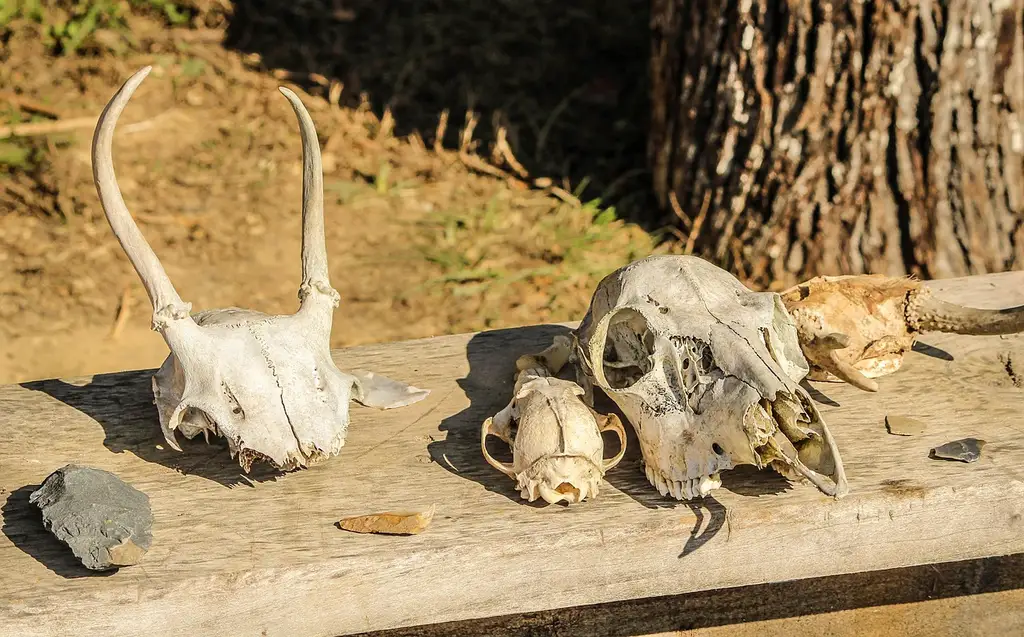
Bone was used as an arrow point material, but it was less common than stone in many contexts. It can be cut, scraped, and shaped, and it was useful where stone was scarce or where a different working property was preferred. Bone points are part of the story, not the whole story.
Bone is more limited than flint in how it fractures. It can wear, split, or mushroom at the edge, so it often needed more care and a narrower set of uses than a well-made stone point.
Why obsidian could be used when available
Obsidian is a volcanic glass. It can take an extremely sharp edge, sometimes sharper than flint at the moment of fresh breakage. That is why it appears in the same conversation as flint, even though its fracture behavior can make it more brittle and easier to damage.
When a point maker had access to obsidian, the stone could be worked into fine edges with skill. When they did not, flint and other knappable stones filled the role.
How did Native Americans make arrowheads from flint?
In many traditions, flint arrowheads were made by selecting a workable stone, roughing it into shape with percussion flaking, and then refining the edges with pressure flaking. Flint knapping uses striking to remove flakes and shape stone, and the process moves from big removals to small corrections. Poor strikes waste material fast.
Step 1: find or prepare a stone blank
The maker started with a nodule, spall, or preform blank that already had promising fracture lines. The first job was to find a piece that would break predictably. If the stone had hidden flaws, the blank could split in the wrong direction and ruin the work.
Step 2: rough shape it with percussion flaking
Percussion flaking is the initial shaping method using a harder striker. The maker removes larger flakes to create the rough outline of the point. This stage establishes the main form and removes bulky sections that do not belong in the finished piece.
If the fracture runs badly, the piece can snap or send off a hinge fracture that leaves a lump where a clean edge should be. I have broken enough practice pieces on my range and in my shop to know that one bad angle can end the work in a second.
Step 3: refine the edges with pressure flaking
Pressure flaking is a fine-detail shaping method used after rough shaping. The maker presses with a point of bone, antler, or similar tool to remove small flakes and sharpen the outline. This stage creates cleaner edges and a more symmetrical point.
This is the stage students often imagine as easy. It is not. Pressure flaking rewards patience, hand strength, and a good eye for the next flake line. One poor push can snap the tip or leave a jagged edge.
Step 4: finish the point for hafting
The final work prepared the point for hafting, meaning attachment to the shaft. Makers shaped the base and sides so the point would sit securely with bindings and adhesive. A finished point had to be strong enough to survive impact and balanced enough to fly true.
- Choose a workable blank.
- Remove large flakes with percussion flaking.
- Refine the edge with pressure flaking.
- Shape the base for hafting.
- Inspect for cracks, weak spots, and asymmetry.
How were bone arrow points made by Native Americans?
Bone arrow points were made by cutting, scraping, and shaping animal bone into a usable point, then smoothing and sharpening the surface before hafting. Bone was less common than stone in many places, but it still had a place where people had the right material and the right need.
Cutting, scraping, and shaping bone
A bone blank had to be selected with care. Makers cut the bone to length, removed rough edges, and scraped the form into a point. The work depended on abrasion and controlled trimming rather than the flaking pattern used for stone.
Smoothing and sharpening the point
Once the basic shape was there, the maker smoothed the surface and sharpened the tip. That final edge mattered because the point needed to enter the target cleanly and stay secure on the shaft. A rough bone point could splinter or wear too quickly.
Limits of bone compared with stone
Bone does not behave like flint. It can be shaped, but it does not usually give the same crisp flake removal or the same lasting edge. That is why bone points were less common than stone points in many settings, even though they were useful in specific traditions and environments.
What tools were used to shape arrowheads?
Point makers used a small tool kit: a hammerstone, an antler tine or billet, a pressure flaker, and an abrasive stone. Each tool served a different part of the process, from rough breakup to final edge control. The tools mattered as much as the stone.
Hammerstones and hard strike tools
A hammerstone is a hard stone used for the first percussion blows. It removes larger flakes and starts the blank’s shape. Hard strike tools are useful when the stone still needs major reduction and the maker wants force, not finesse. (en.wikipedia.org)
Antler billets and softer percussion tools
Antler billets are softer than a hammerstone and can give the maker more control. They can remove flakes more cleanly during later rough shaping.
Pressure flakers and abrasives
Pressure flakers, often made from bone, antler, or wood, push off small flakes for detailed shaping. An abrasive stone roughens edges or platforms so the next flake starts where the maker wants it. That prep work reduces bad breaks and makes the next removal more predictable.
How can students tell an arrowhead from a dart point or spear point?
Students can tell them apart by looking at size, thickness, base shape, and context. Arrowheads are usually smaller and lighter than dart points, while spear points are tied to a different shaft and use. Archaeological context matters because a point only makes sense when you know what it was attached to.
Size, thickness, and base shape
A smaller, thinner point is more likely to be an arrowhead, especially if the base is built for light hafting. Larger, thicker points often belong to dart or spear systems. Thickness matters because a heavier point changes the flight of the weapon and the stress on the shaft.
What the point was attached to
An arrowhead sat on an arrow shaft. A dart point sat on a dart, often thrown with an atlatl. A spear point fit yet another setup. The point’s task is tied to the weapon system, so size alone never tells the full story.
Why context matters in archaeology
Findspot, associated tools, and local style all help identify a point. The Northeast and Midwest are named as regions where arrowheads were found, but that does not mean every point from those areas is the same type or date. Regional variation was real, and tradition shaped the final form.
Comparison table: flint, obsidian, and bone points
This table gives students a simple comparison. It is a practical way to separate the materials before asking what the point was used for and how it was made.
| Material | Hardness | Flaking behavior | Edge sharpness | Durability | Typical historical use |
|---|---|---|---|---|---|
| Flint | High | Predictable flakes with good control | Very sharp | Good | Common for arrowheads and other projectile points |
| Obsidian | High, but more brittle than flint | Very clean flakes, but can break abruptly | Extremely sharp | Lower than flint | Used where available for fine-edged points |
| Bone | Lower than stone | Does not flake like stone; it is cut and scraped | Sharp when fresh, but wears faster | Lower than flint | Used as arrow point material in some settings, less common than stone |
Common mistakes students make when studying arrowheads
The biggest mistake is calling every point an arrowhead. Many were dart points or spear points. Another mistake is assuming one material was used everywhere. Native American tribes used local materials and styles, so methods and shapes varied by region and tradition.
Students also ignore failed pieces. That is a loss. Broken blanks, snapped tips, and bad fracture lines reveal as much about technique as perfect points do. A wasted piece tells you the maker was working with real limits, not making a decorative object.
Failure cases matter too
When stone fractures incorrectly, the maker may lose the blank or end up with a point that is too uneven to use. A bad snap can happen during percussion flaking or pressure flaking. Those failures help explain why skilled knapping took practice and why good points were valued.
Why do arrowheads matter in Native American history?
Arrowheads matter because they are artifacts that reveal cultural heritage. They show how people hunted, fought, defended themselves, and adapted to local materials. They also record regional traditions in a form that survives long after wood, fiber, and sinew disappear.
For history students, that makes arrowheads evidence, not trivia. They connect technology to environment and show that Native American communities solved practical problems in different ways. That is the real lesson hidden in a small point of stone or bone.
Frequently asked questions
How did Native Americans make arrowheads from flint?
They selected a workable flint blank, removed larger flakes with percussion flaking, and then refined the edge with pressure flaking. The final step shaped the base for hafting to an arrow shaft. If the stone fractured badly, the piece could break before it became a usable point.
How were bone arrow points made by Native Americans?
Bone points were made by cutting, scraping, and shaping bone into a point, then smoothing and sharpening it. Makers used abrasion more than flaking. Bone was useful in some settings, but it was less common than stone in many places because it wore and split more easily.
What tools were used to shape arrowheads?
Common tools included a hammerstone, an antler billet or tine, a pressure flaker, and an abrasive stone. The hammerstone handled rough removal, antler tools gave finer control, and pressure flakers finished the edge. Each tool answered a different stage of the work.
What is flint knapping and how does it work?
Flint knapping is the stone-shaping technique used to make projectile points and other tools. It works by striking stone to remove flakes, then using pressure to trim and sharpen the edges. The method depends on the stone breaking in a controlled way, not randomly.
Why did Native Americans choose flint or obsidian for arrowheads?
They chose them because both materials can produce very sharp edges. Flint is durable and knaps predictably. Obsidian can be even sharper at the edge, but it is more brittle. The best choice depended on what the maker could find and what the point had to do.
How can students tell an arrowhead from a dart point or spear point?
Look at size, thickness, base shape, and archaeological context. Arrowheads are usually smaller and lighter, dart points are larger and used with atlatl-thrown darts, and spear points fit another weapon system. A label alone is not enough to identify the point correctly.