How to Fit Archery Handwear When You Use Finger Tape or Bandages
Fit archery handwear over tape or bandages by matching the added thickness; size up only if string feel or finger bend suffers, and treat a 1/16-inch increase in finger diameter as the point to recheck size, tab, or wrap. Bad fit can pinch, weaken release control, and move the string off line. This guide shows how to check fit, choose between glove and tab, and keep string feel with taped fingers.
What you’ll need


- The glove or tab you plan to shoot
- Finger tape, athletic tape, or archery-specific tape already applied the way you shoot
- Bandage or wrap dressing if you use one for support
- A mirror or a close visual check from the side
- Your normal shooting setup, including the string and anchor point you use for recurve or longbow
- The maker’s listing or size chart for your exact glove or tab model
How do you fit handwear over tape or bandages?
Put the tape or wrap on first, then fit the glove or tab in the same shooting position you use on the string. Bare-hand comfort does not matter here. Repeatable anchor, clean string contact, and no pressure point at the taped area or joint do.
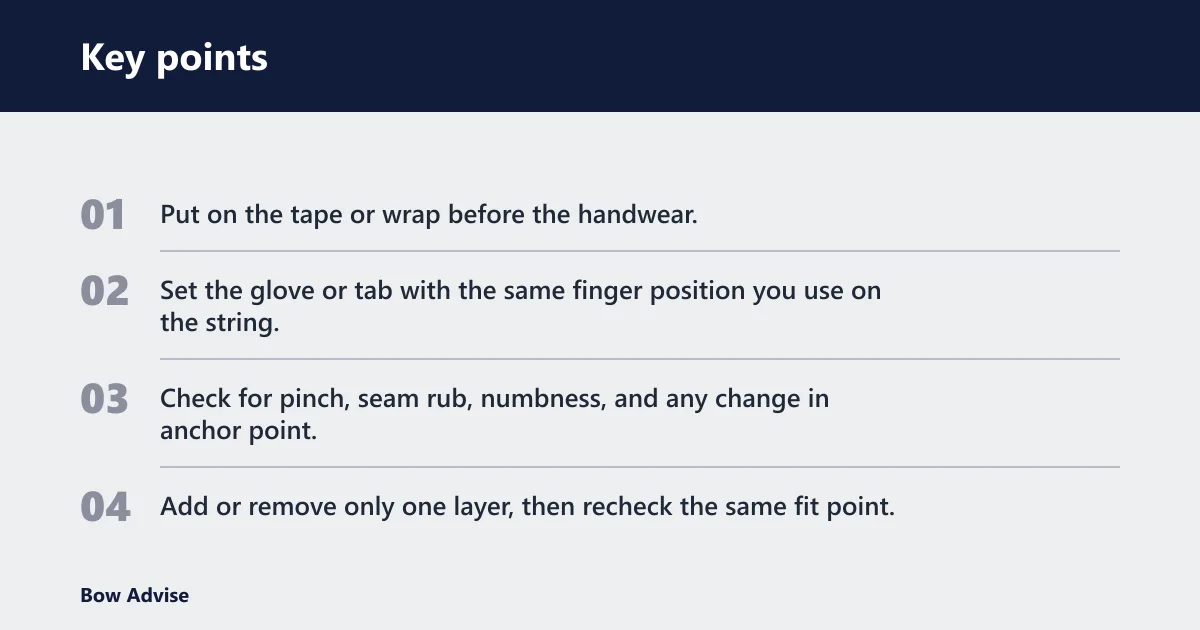
- Put on the tape or wrap before the handwear.
- Set the glove or tab with the same finger position you use on the string.
- Check for pinch, seam rub, numbness, and any change in anchor point.
- Add or remove only one layer, then recheck the same fit point.
Light tape often changes feel more than size. Bandages and wrap dressings change both. A 1/16-inch gain in finger diameter can be enough to move a tab face, tighten a glove seam, or shift how the string contacts the finger pad.
If a recurve archer uses thin tape on the index and middle fingers and the tab still seats flat, keep the size. If the same setup causes fingertip pinch or the tab shifts off the finger pad, size up or adjust the tab face position if the model allows it.
Finger protection fit matrix
This table gives a practical decision rule. Match the thickness level first, then check the handwear type, then choose the action that preserves string feel and anchor repeatability.
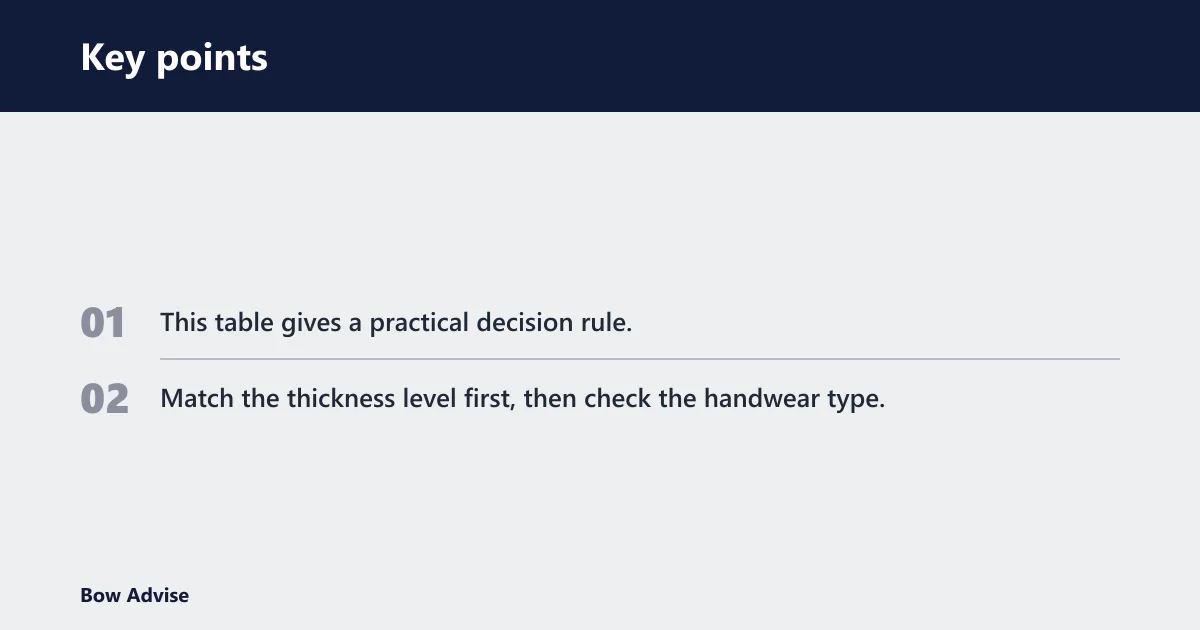
| Thickness level | Handwear type | Main symptom trigger | Best action |
|---|---|---|---|
| Light tape, 1 thin layer | Glove | Minor seam rub or fingertip pressure | Keep size if fingers bend freely; modify only if a seam lands on the tape |
| Light tape, 1 thin layer | Tab | String feel changes slightly, anchor still repeatable | Keep size unless the tab face crowds the taped finger pad |
| Medium wrap, 2 to 3 layers or a padded joint wrap | Glove | Knuckle pinch, fingertip tightness, reduced bend | Size up if the closure still closes without slack; otherwise replace with a roomier glove model |
| Medium wrap, 2 to 3 layers or a padded joint wrap | Tab | Face leather feels crowded, anchor drifts | Modify if the tab has an adjustable plate, cord, or strap; replace if the tab cannot clear the wrap |
| Bulky bandage, heavy wrap, or thick dressing | Glove | Finger ends hit seams, numbness, or wrist closure strain | Replace the style if the glove still pinches after strap adjustment |
| Bulky bandage, heavy wrap, or thick dressing | Tab | String contact feels unstable or anchor shifts | Replace with a larger or more adjustable tab, or stop and use a thinner wrap if support allows |
Should you size up or switch styles?
Size up when the handwear is close, the fingers still bend cleanly, and the anchor stays in the same place. Switch styles when pressure points keep returning, the string feel changes too much, or the tape bulk makes the current glove or tab sit crooked.
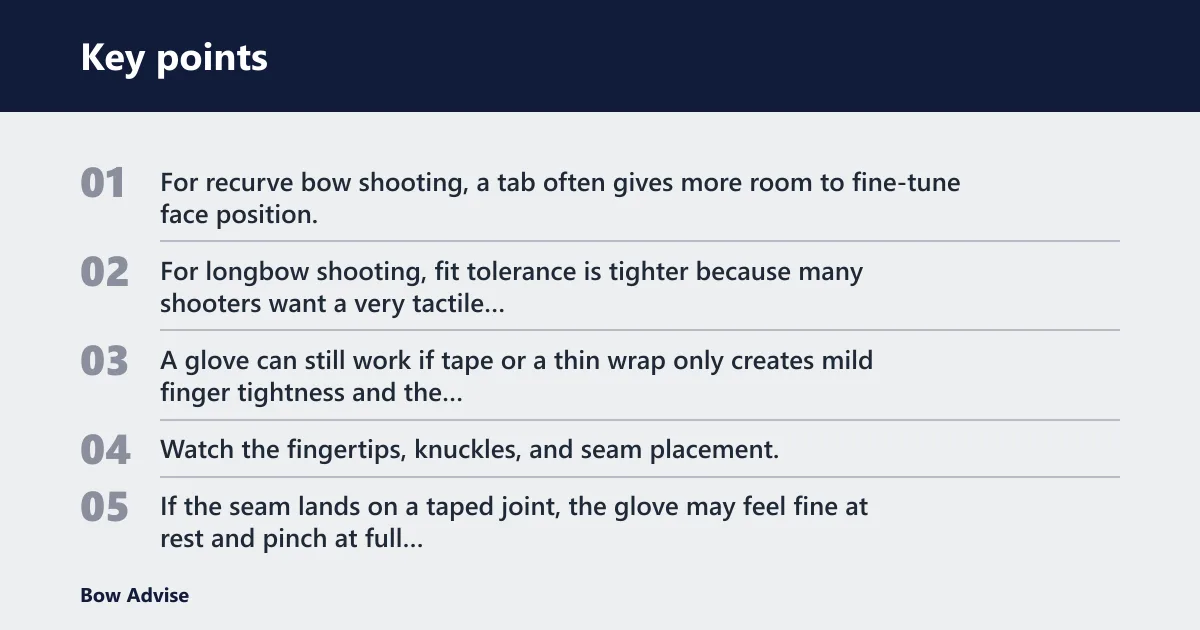
For recurve bow shooting, a tab often gives more room to fine-tune face position, finger spacer use, and cord or strap tension. That helps when tape is light to medium. For longbow shooting, fit tolerance is tighter because many shooters want a very tactile setup, so bulky wraps often force a style change sooner.
When a glove can still work
A glove can still work if tape or a thin wrap only creates mild finger tightness and the closure can be set without wrinkling the palm. Watch the fingertips, knuckles, and seam placement. If the seam lands on a taped joint, the glove may feel fine at rest and pinch at full draw.
When a tab is the better choice
A tab is usually the better choice when tape changes finger diameter but the string feel still needs to stay precise. Tabs let the archer judge face pressure, plate position, and finger placement more easily than a glove. That matters for split-finger or three-under shooting on a recurve or longbow.
When to modify and when to replace
Modify only if the model allows it and the fix keeps anchor repeatable. A tab with an adjustable plate, cord, or strap may be shaped to clear light tape. A glove can sometimes be helped by a different closure setting. Replace the handwear when the seam still rubs, the fingertip still pinches, or the anchor drifts after adjustment.
Can bandages work with a tab or glove?
Yes, but bandages are bulkier than tape and need extra clearance. They can change finger diameter enough to move the string contact point, which matters for release cleanliness. If the bandage adds enough padding to blur feel, the handwear has to be roomy enough to keep the string contact predictable.
Bandages are often temporary support, not a permanent fit target. If the wrap is there for recovery or protection, the better choice may be a more forgiving tab or a glove with more finger length and a less crowded seam layout. Thin tape is easier to fit than a padded dressing.
Picture a longbow shooter with a padded wrap on the middle finger and a glove that already fits close. If the glove now pinches at the fingertip seam and the anchor point shifts toward the corner of the mouth, that is a replace case, not a break-in case.
Common mistakes
- Ignoring seam rub at taped joints. A glove can feel acceptable until the first full-draw cycle. Check seam placement over the taped area before judging size.
- Chasing size alone. Bigger is not always better. If the anchor drifts, the fit is wrong even if the fingers feel less compressed.
- Treating all wraps the same. Light tape and bulky bandages do different things to string feel and pressure points. Use different fit decisions for each.
- Overlooking recurve versus longbow needs. Recurve shooters can often work with more adjustability. Longbow shooters usually need a tighter tactile fit and less extra material.
- Letting the closure do all the work. A wrist strap or cord cannot fix a finger section that is too short, too narrow, or badly placed.
How much extra room should you leave for taped fingers in a tab or glove?
Leave only enough room for the tape or wrap to sit without compressing the finger pad or forcing the seam into the hot spot. A practical check is simple: if the taped finger no longer bends cleanly, or the string feel gets dull enough to change anchor point, the fit is too tight.
For light tape, many archers can keep the same size and make only minor adjustments. For medium wraps, size up or change the tab setup if the face leather crowds the finger. For bulky bandages, start with the assumption that the current handwear may not fit well enough without a style change.
If that did not work, try this next: recheck with the same draw weight and the same anchor point, then move to the next larger size only if the pressure point remains after closure adjustment. If the model has no room left to adjust, replace the handwear instead of forcing the fit.
Does finger tape change anchor consistency or release feel?
Yes. Finger tape can change thickness, friction, and pressure points, and that can alter where the string sits on the finger. The change is usually small with light tape and more obvious with wraps or bandages. Anchor consistency matters most when the added bulk nudges the finger position.
Higher draw weight can make the change more obvious because pressure rises at full draw. That is why a fit that feels fine at brace height can still fail when the bow is drawn. If the anchor point moves, the handwear is not doing its job, even if the size label looks right.
Recurve shooters should check whether the tab still lands at the same reference point on the face. Longbow shooters should check whether the contact feels repeatable without forcing extra finger bend. In both cases, the question is the same: does the taped setup still give a clean, familiar release?
How do I stop a glove from rubbing or pinching taped fingers?
Start with closure adjustment, then check seam position, then change size if the rub stays in the same place. A glove that fits bare hands can pinch as soon as tape changes finger diameter. The fix is to remove contact from the pressure point, not to mask it with more tension.
- Loosen and reset the wrist strap or closure.
- Shift the glove so the seam does not sit on the taped joint or fingertip.
- Add 1 adjustment increment on the closure, then recheck fit at anchor.
- If pinch remains, move up one size or replace the glove model.
Suppose a glove fits without tape but the middle-finger seam starts rubbing once a wrap is added. If the seam still lands on that wrap after the strap is reset, size up or switch to a model with different finger lengths. Do not keep shooting through numbness.
Frequently asked questions
How do I fit an archery glove if I already have finger tape on?
Fit the glove over the taped fingers and check the fingertip seam, knuckle bend, and wrist closure in shooting position. If the glove closes without wrinkling and the anchor stays repeatable, keep the size. If the taped finger pinches or goes numb, move up one size or change models.
Can I use a finger tab over bandages or wrap?
Yes, if the tab still clears the added bulk and the string feel stays clean. The tab face should sit flat, not ride up on the wrap edge. If the bandage makes the tab feel crowded or shifts the anchor point, a roomier or more adjustable tab is the better choice.
Should I size up my glove if I wear tape on my fingertips?
Only if the tape changes the fit enough to cause pinch, seam rub, or reduced finger bend. Light tape often fits the original size. If the glove feels tight only at the taped fingertips, size up one step and recheck the anchor point before deciding again.
What if my glove fits bare hands but feels too tight with tape?
That usually means the added thickness has moved the pressure point. Reset the closure first, then check whether the seam is landing on the taped area. If the glove still binds at the same spot, move to a larger size or a different glove with longer fingers.
When should I choose a different tab or glove instead of modifying fit?
Choose a different model when the handwear still pinches, rubs, or moves the anchor after normal adjustment. If a tab cannot clear the tape or a glove still crowds the fingertips, changing the style is better than forcing a fit that disturbs release feel.