How to Hunt Rutting Bucks on Field Edges at Last Light
Set up on a field edge at last light only when the wind carries your scent away from the feeding area and your exit stays clean. If rising or falling thermals push scent into the field, do not sit. A bad wind or sloppy exit can warn a mature buck before he steps out, and that spot may be burned for days. This guide covers wind checks, thermal timing, setup choice, confirmation, and a bail plan for pressured rut bucks.
What you’ll need


- Wind indicator powder or lightweight milkweed
- Binoculars for glassing the field edge before entry
- Rangefinder
- Quiet boots and scent-free outerwear
- Tree saddle, platform, or climbing stand if the tree allows it
- Safety strap and tether
- Headlamp with a red or dim mode
- Access map or aerial photo with bedding, cover, and exit routes marked
- Small pack with spare gloves, release aid, and tag
What wind works on field edges?
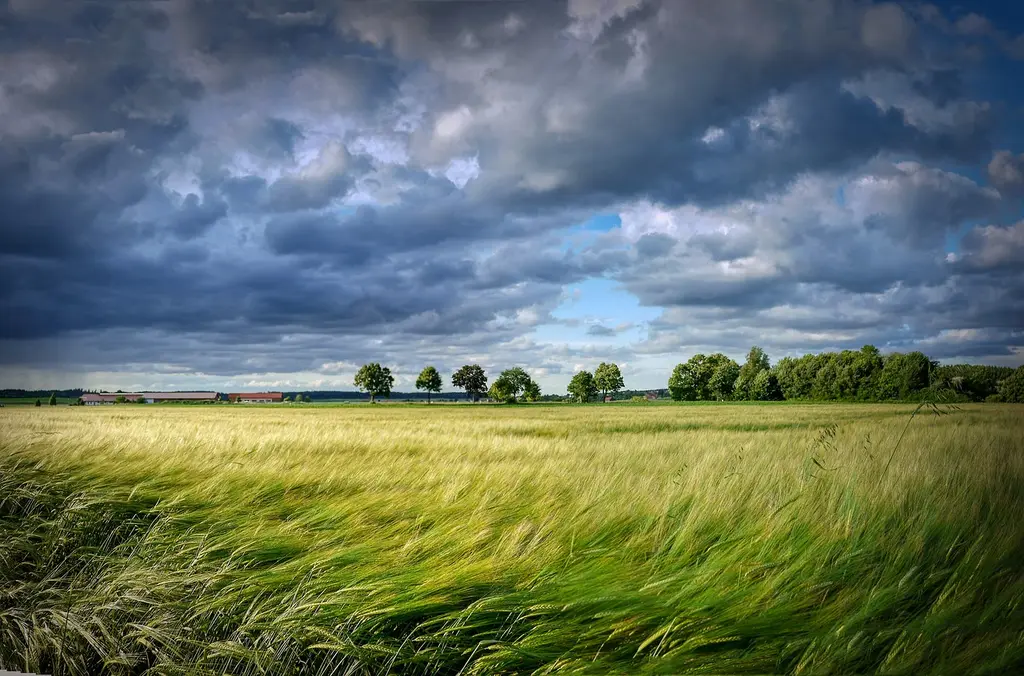
Crosswind is the safest starting point for most field-edge rut setups. The best wind keeps your odor off the field, keeps your entry away from the deer’s likely travel lane, and gives you enough room from the edge that a buck can step out without catching scent before legal shooting light fades.
Crosswind setups
- Map the wind angle. Mark the bedding side, food side, and your stand tree. A workable field-edge sit usually wants a wind that moves across the edge, not straight from bedding to food or from food to bedding.
- Favor stand access compatibility. Choose a tree that lets your entry route stay downwind of the likely deer approach. A crosswind matters less if your route drags odor across the same strip of cover deer use.
- Confirm the odor lane. Use wind indicator at the tree and at the edge itself. If scent drifts toward the food source at any height, pass the sit.
On a flat field, a steady crosswind is often enough. On a ditch edge, creek bottom, or ridge lip, the same wind can behave differently once thermals start shifting near sunset.
Borderline wind and shift risk
Borderline wind means the setup only works for part of the evening, or a small turn would push odor into the field. That is a weak bet on pressured deer. A rut buck can tolerate some human pressure, but not a scent line that lands in the travel corridor at dusk.
A common first-timer mistake is calling a wind “close enough” because it looks fine on a map. If the wind swirls at the tree or the access trail forces a bad angle, the sit is already compromised. Hunt another edge, or wait for a cleaner direction.
Wind angle to bedding and food
Use wind angle, not just wind direction. A buck moving from bedding to food can enter from the bedding side, pause in the inside edge, and catch a faint scent cone long before he reaches the opening. The best edge setups keep the buck’s likely line of travel outside the main odor stream.
How do thermals change at last light?
Thermals matter most when daylight fades and air cools. On many evenings, sinking air begins to pull scent downhill or into low spots after sunset, and that layer can override a flat-ground wind. If that drift points toward the field, the sit goes from good to bad fast.
Evening sink on flat ground
As temperature drops at sunset, cooler air settles. On level ground that change can be subtle, but it still matters when a buck is close to the field. If the wind is light, odor may pool and drift in uneven pockets instead of holding a clean line away from the food source.
- Watch the edge before climbing. Check wind at ground level, then again at stand height. If the indicator changes direction as daylight fades, the edge is becoming thermally unstable.
- Bail on swirl. If you see air moving both toward and away from the field within a few minutes, do not rely on the sit. That is the kind of condition mature bucks punish.
Creek-bottom and valley effects
Creek bottoms and small valleys usually pull scent downhill later in the evening. That can help if your stand is above the drain and your odor stays out of the crossing route, but it can hurt badly if the low area is the bedding side. The lower the terrain, the more likely thermals will pull scent away from the line you expected.
Say your field edge borders a creek on the downwind side. A west wind may look right on paper, but the evening sink drags odor into the drain and then into the deer’s path. In that case, the sit should be treated as no-hunt even if the wind itself seemed acceptable.
Ridge influence after sunset
Ridges often create a more predictable thermal pull after sunset, but the pull can still change direction near saddles, benches, and draw mouths. On ridge edges, the biggest mistake is assuming one wind check at arrival will hold through dark. If the temperature drops quickly, recheck the air before committing to the final half hour.
Field-edge go/no-go sheet
This checklist uses a 0-to-3 scoring scale for each factor. Score each factor from 0 to 3. A total of 13 or more is a hunt. Any single score of 0 means no-hunt unless a different edge has a cleaner setup. If the total lands at 10 to 12, treat it as borderline and only hunt if the wind and thermals stay stable for the next 30 minutes.
| Factor | 3 points | 2 points | 1 point | 0 points |
|---|---|---|---|---|
| Wind direction | Clean crosswind | Slightly quartering but stable | Borderline and fading | Blowing toward field or bedding route |
| Thermal direction | Holding away from deer | Neutral with minor drift | Starting to sink or swirl | Pulling scent into the field |
| Entry route | Creek, ditch, or terrain masked | Mostly hidden with short open section | Some skyline exposure | Open approach across visible ground |
| Exit route | Low-impact and downwind of deer | Exit is workable with caution | Exit risks noise or scent drift | Exit crosses the field or primary trail |
| Bedding side | Wind does not blow into bedding cover | Small risk if deer shift early | Marginal if buck circles | Wind hits bedding cover directly |
| Food side | Food edge stays scent-free | Food edge is mostly safe | Food edge may catch scent late | Odor cone lands in the food source |
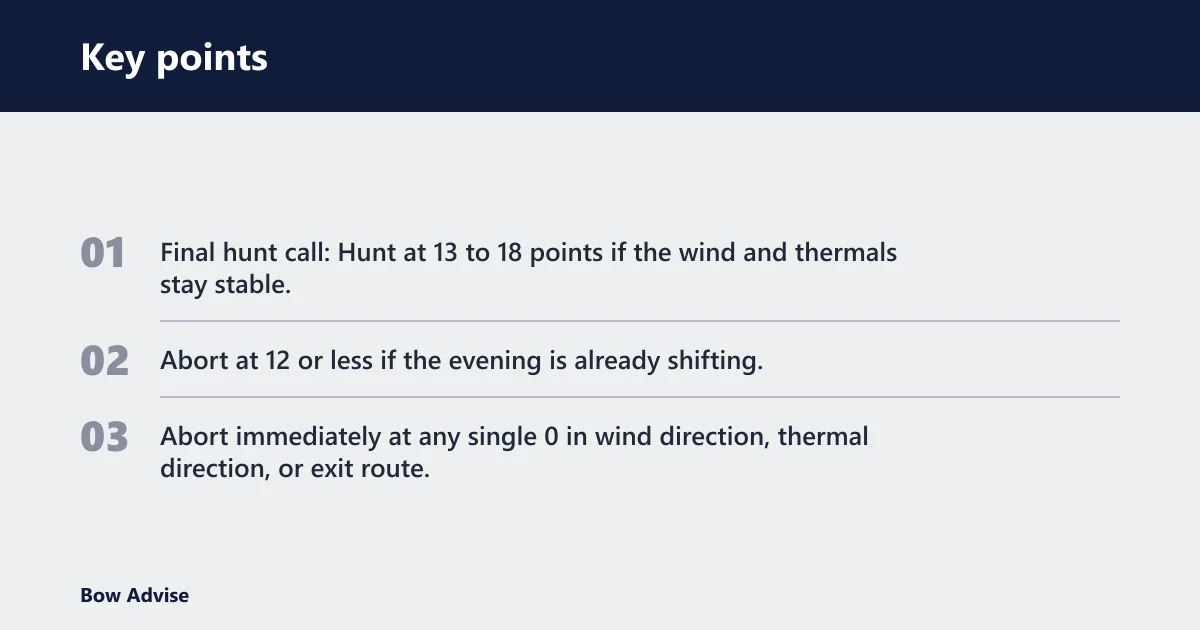
Final hunt call: Hunt at 13 to 18 points if the wind and thermals stay stable. Abort at 12 or less if the evening is already shifting. Abort immediately at any single 0 in wind direction, thermal direction, or exit route.
How should you enter and exit a field edge?
Clean access often matters as much as stand choice. A good edge can be ruined by a noisy climb or a bad exit that leaves odor and disturbance in the travel lane. Use terrain masking, keep your body off the skyline, and leave without crossing the same line deer will use after dark.
Creek or ditch approach
Creeks, ditches, and low swales are the best entry routes when they keep you below the sightline of the field. They also help mask sound. Move slowly enough that dry grass, leaves, and dead limbs do not advertise the approach. If the route forces you into open ground near the field, pick a different setup.
- Enter below the skyline. Stay in cover until the last possible climb point. A deer that catches movement on the edge often leaves before the shot window opens.
- Pause and recheck wind. Check the wind at the tree and again at the likely shot lane. If the air changed during the walk-in, the setup has changed too.
Terrain masking and skyline avoidance
Use the terrain to hide your outline. A buck feeding in the field usually notices a head and shoulders against open sky long before it notices the tree itself. Keep your route tucked to brush lines, fence rows, or low ground. For a pressured edge, that extra concealment can matter more than being 20 yards closer.
Low-impact exit
Plan the exit before the climb. If a shot does not happen, leave in a way that avoids the field edge the deer is likely to use after dark. If you do shoot, stay mindful that a wounded deer may run through the same corridor. A low-impact exit reduces pressure on the whole edge for the next sit.
Suppose a stand is 180 yards from the nearest cover strip and the wind is perfect at 6:00 p.m., but by 6:35 p.m. the thermal starts sinking into the ditch below the tree. The correct move is to stop trusting the original plan and leave clean, rather than hope the wind resets before a buck crosses.
Common mistakes
Most missed opportunities on field edges come from a few repeat errors. The first is treating bedding-edge and destination-food-edge setups as the same thing. The second is relying on scent control to save a bad wind. The third is staying after the evening turns unstable.
- Hunting the wrong edge type. Bedding-edge sits demand earlier caution and tighter scent control. Food-edge sits demand a clean last-light exit and a wind that does not drift into the field.
- Ignoring pressure shifts. On pressured ground, rut bucks often change their route when human activity rises. They may cut inside cover, move later, or circle downwind before entering the field.
- Setting too tight. A stand that is too close to the opening gives a buck less time to commit and more chance to catch odor or movement.
- Trusting one wind reading. Wind and thermals can change within the same sit. Recheck at the tree before the last-light window.
Frequently asked questions
How do I hunt field edges for rut bucks without being winded?
Pick a setup where the wind moves scent away from the field and the access stays hidden. A clean entry route, a crosswind, and a conservative exit matter more than squeezing into the closest tree. If the odor cone reaches the food source at any point, skip the sit.
What wind is best for field-edge setups at last light?
A steady crosswind is commonly treated as the safest choice for field-edge setups at last light. It gives you a better chance of keeping scent off the field while still covering a travel lane. Quartering winds can work only when the angle stays stable and your tree, route, and shot lane all support that angle.
Should I hunt the upwind side or downwind side of a food source?
For most rut field edges, the upwind or crosswind side is safer than the true downwind side. The goal is to keep your odor away from the food source and the approach trail. The downwind side can work only when terrain and thermals keep scent out of the deer’s path.
How close can I get to a field edge without being busted?
There is no fixed yardage that works everywhere. A common edge-access range is about 100 to 250 yards from the actual feeding opening, with terrain and cover deciding the practical distance. If the setup forces a visible entry or a scent line into the field, the distance is too short.
What time do rutting bucks usually hit field edges at dusk?
They often show in the final shooting-light window, but the exact timing shifts with hunting pressure, weather, and the rut phase. Bucks may cruise does near the field before the first deer step out, or they may wait until after most deer are feeding. Plan to be in place before that window opens.
How do thermals change at last light on field edges?
As the sun drops, cooler air usually sinks and can pull scent into low spots, creek bottoms, or down ridge faces. That drift can override a good flat-ground wind. Recheck air movement near sunset, and leave if the thermal starts moving toward the field or bedding side.
Should I still hunt a field edge if the wind is borderline?
Only if the setup still scores safely on the go/no-go sheet and the wind is steady enough to hold through the last-light window. If the wind is already turning, or if any part of the approach or exit is exposed, the better call is to wait for a cleaner day.
What stand setup works best for a field-edge ambush in the rut?
A tree or platform that puts you just off the main edge, with a clean shot lane to the pinch point, usually works best. Height should match the cover: high enough to clear brush and low enough to keep movement hidden. The stand should also support a quiet exit route.
How can I enter and exit a field-edge setup without blowing deer out?
Use a creek, ditch, or brush-hidden route that stays below the skyline. Enter early enough to avoid rushing, and leave only on a route that keeps scent and noise away from the field. If the exit crosses the same lane deer use at dusk, the setup is too risky.