Creek Crossings, Ditches and Gaps for Rut Bucks
Start with creek crossings, then ditch crossings, then open gaps. The best rut setup links bedding to doe travel and still lets you reach the stand on a safe wind. Pick the wrong micro funnel and you waste access, alert bucks, and turn rut sign into dead ground. This guide ranks each funnel type, explains when bucks use them, and shows how wind, cover, and access shape the choice.
Micro funnel scoring table
This table gives a quick way to rank small terrain funnels before a hunt. Higher scores fit better when cover stays connected, bedding sits close, and access stays quiet.
| Crossing type | Cover continuity | Bank/edge steepness | Bedding proximity | Daylight odds | Wind suitability | Access risk | Priority score |
|---|---|---|---|---|---|---|---|
| Creek crossing | High when timber or brush runs both sides | Steep, narrow banks help | High within about 100 to 300 yards | High with close bedding and low pressure | Best with crosswind or quartering wind | Medium to high if banks force noisy entry | 5 |
| Ditch crossing | Medium to high when cover lines match across it | Moderate edges often work best | Medium, often between bedding and feed | Medium to high on pressured ground | Good when the wind keeps scent off the line | Low to medium if approach stays hidden | 4 |
| Gap in cover | High when it ties bedding to staging cover | Edge shape matters more than height | High when it sits near doe travel | Medium, but often short-lived in daylight | Very wind sensitive because visibility is open | High if the setup exposes movement | 3 |
Decision rule: hunt a creek crossing when it has steep banks, connected cover, and bedding close enough to push daylight movement. Hunt a ditch crossing when cover lines connect both sides and pressure is shaping travel. Hunt a gap only when it links bedding or staging cover and your access stays hidden.
What makes a crossing worth hunting?
A crossing is worth hunting when it compresses travel without making deer feel exposed. Creek crossings, ditch crossings, and gaps all do that, but each one depends on a different mix of cover continuity, edge shape, bedding distance, and access route.
Creek crossings
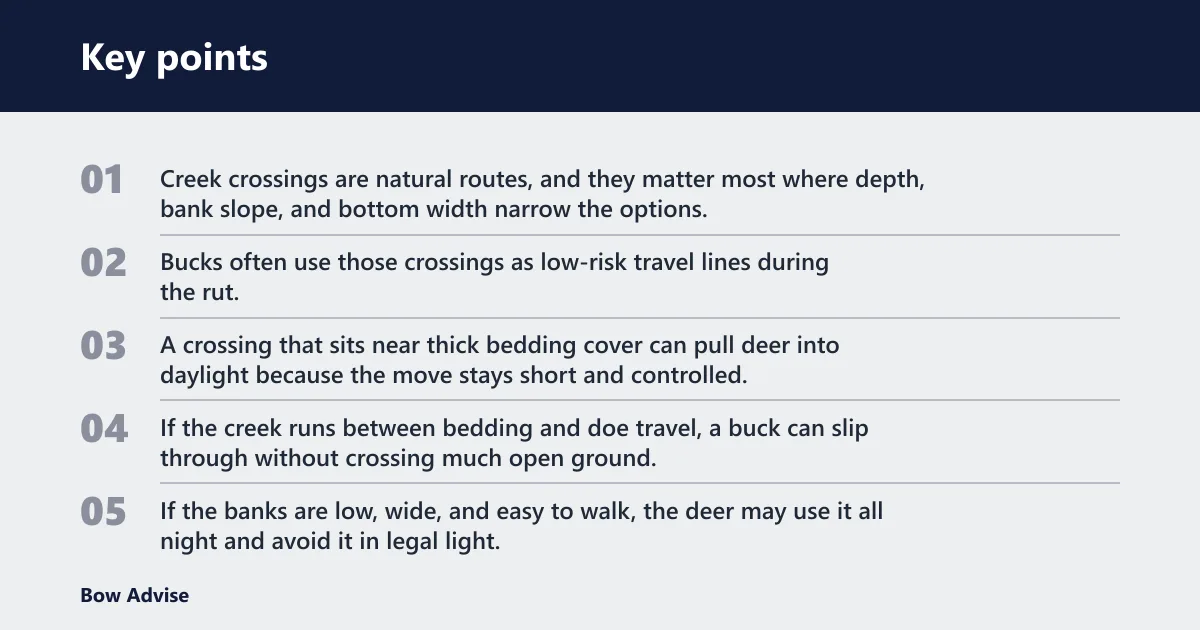
Creek crossings are natural routes, and they matter most where depth, bank slope, and bottom width narrow the options. A steep bank with a short, quiet landing on both sides is better than a wide, shallow spot that lets deer drift anywhere. Bucks often use those crossings as low-risk travel lines during the rut.
A crossing that sits near thick bedding cover can pull deer into daylight because the move stays short and controlled. If the creek runs between bedding and doe travel, a buck can slip through without crossing much open ground. If the banks are low, wide, and easy to walk, the deer may use it all night and avoid it in legal light.
Ditch crossings
Ditch crossings are man-made or drainage-driven funnels, and they are often overlooked because they look small on a map. They work best where cover lines continue across both sides, such as brush, crop edge, fence line, or timber fingers. On pressured ground, that hidden continuity matters more than the ditch itself.
Many ditch crossings work better than they look because deer follow the easiest line through a flat area. A narrow drainage with thick grass or brush can hold track after track if it connects bedding to staging cover. The key is not the ditch alone, but the way it forces a straight path.
Gaps in cover
Gaps are often subtle openings in timber, CRP, hedgerows, or fence lines that can connect bedding to staging or doe travel. They may be only 10 to 30 yards wide, yet that opening can be the only clean route between two secure areas. A visible gap is not always a good gap.
The best gaps usually sit on the edge of thicker cover, where deer can slip through without being exposed for long. A gap that opens into a big field edge often gets used after dark. A gap that trims movement between two security blocks can be a real rut setup.
How do bucks use them during the rut?
Bucks use micro funnels differently during the rut depending on what the funnel connects. The best crossings and gaps sit between bedding cover and doe travel, because that gives a buck a reason to move in daylight while keeping his route close to security. Random movement usually lacks that link.
Bedding-to-doe travel
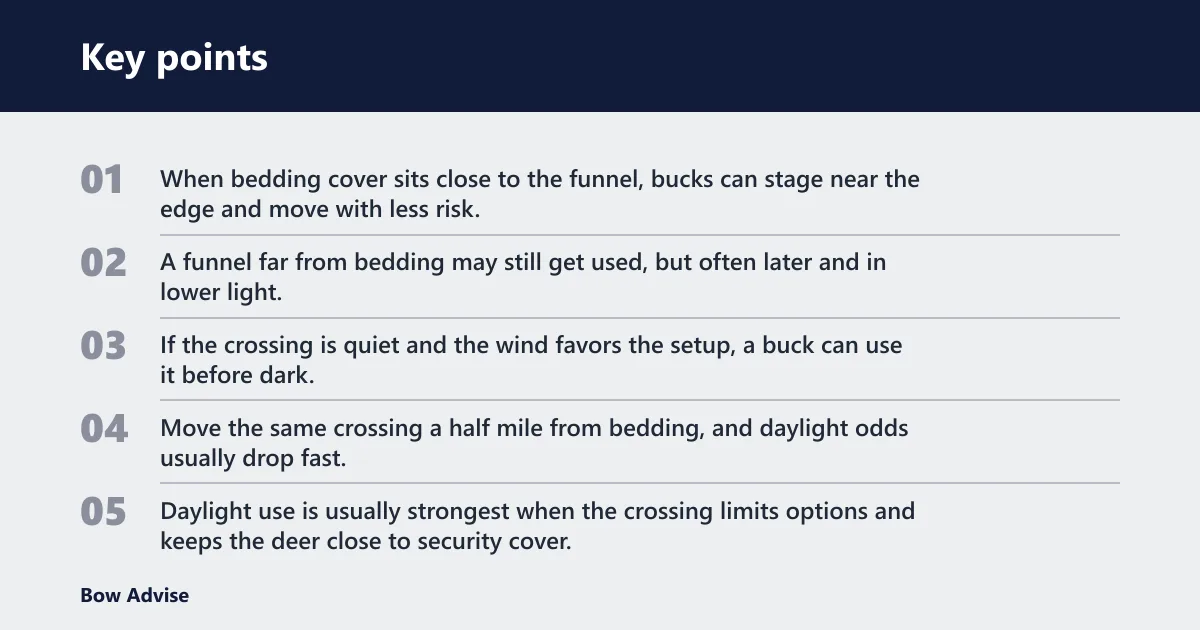
When bedding cover sits close to the funnel, bucks can stage near the edge and move with less risk. That matters most on private land with known doe movement and on public land where thick cover compresses travel. A funnel far from bedding may still get used, but often later and in lower light.
Picture a creek crossing about 140 yards from a thicketed bedding point and about 180 yards from a food-source staging edge. If the crossing is quiet and the wind favors the setup, a buck can use it before dark. Move the same crossing a half mile from bedding, and daylight odds usually drop fast.
Daylight movement versus night-only use
Daylight use is usually strongest when the crossing limits options and keeps the deer close to security cover. Night-only use shows up when the route is too open, too easy, or too pressured. A visible crossing with fresh tracks may still be a poor daylight hunt if the sign points to after-dark use only.
Trail camera timestamps help sort that out. If the same crossing shows movement only between about 10 p.m. and 4 a.m., that is usually a warning rather than a green light. If a camera on the downwind side records late-afternoon movement on multiple days, the setup has real value.
Rut sign that matters
Rub lines matter most when they run along the approach or exit trail, not just beside the water or ditch. A fresh rub line often means a buck is using the route, while an isolated rub may be noise. Scrape lines help too, but they often mark staging edges rather than the exact crossing.
Use both signs together. A rub line near a crossing, plus tracks of different ages and a scrape line within a short staging pocket, is stronger than a single scrape beside open ground. Sign without bedding or camera support can still be false confidence.
What wind puts you in range?
Crosswind and quartering winds matter more than comfort because they protect the access route and the exit. The best wind is the one that keeps your entry off the travel line and leaves the deer with the least reason to detect you before legal light. Bad wind makes a good funnel worse.
Crosswind and quartering setups
A crosswind often works best on creek crossings and ditch crossings because it lets a hunter stay off the line while the scent stream carries away from the expected approach. Quartering winds can work well on gaps when cover is tight, because the angle can hide the hunter while still keeping scent out of the travel lane.
The trick is matching wind to the side of the feature, not just to the map direction. If the wind blows from the buck’s likely approach toward open ground, the setup may be poor even if it feels comfortable. If it carries scent away from bedding and away from the crossing, it can be a strong choice.
Access and exit on the dead side
The dead side is the side deer should not need to cross to smell or see the hunter. That side should hold the easiest entry and exit, ideally with cover, ditch edges, or terrain that hides movement. Small funnels are easy to burn out when deer catch entry trails, even once.
- Map the travel side. Mark the bedding side, the likely doe side, and the most likely buck approach. This shows which side needs scent protection and which side can carry the access route.
- Choose the hidden route. Enter from the dead side using the darkest line of cover, not the shortest line on the map. A longer approach that stays hidden usually beats a direct walk across open ground.
- Plan the exit first. Leave by a route that avoids the funnel and avoids the downwind edge if deer can circle it. A clean exit matters because pressure after dark can ruin the next hunt.
When to pass on a bad wind
Pass when the wind blows scent into the bedding side, across the crossing, or into the only quiet entry trail. A small funnel can be valuable and still not worth hunting if the wind gives deer an easy warning. Waiting is often the better move on pressured public land.
How do you find the best micro funnels on pressured ground?
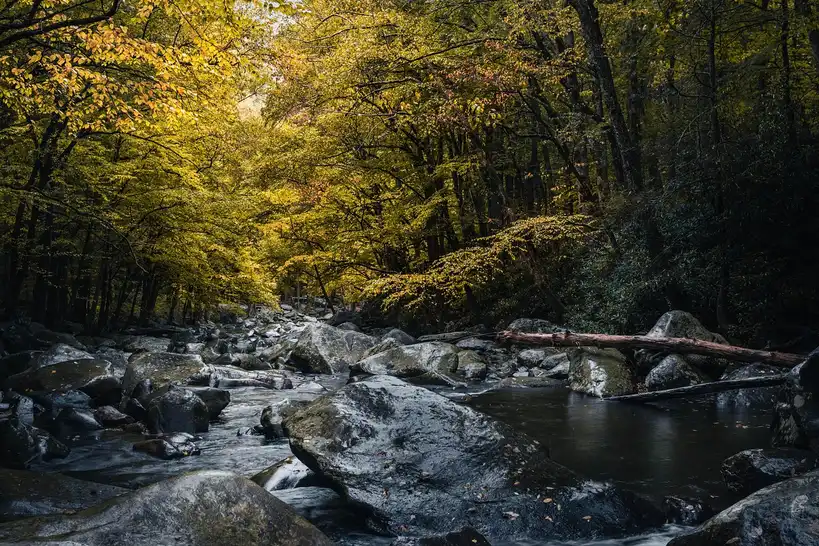
On pressured ground, the best micro funnels are the ones that still look ordinary to most hunters. Read the map for tight cover links, then confirm with sign and timestamps. The most useful spot is often the one that keeps deer hidden, not the one that looks dramatic from the road.
Reading maps for pinch points
Look for narrow cover connectors between bedding blocks, between timber and crop edges, or between a ditch and a brushy corner. Small bends, drainages, fence corners, cutovers, and timber points often create the kind of pinch that concentrates rut travel. The smaller the hidden route, the better the odds of daylight use if it links the right habitat.
A common first-timer mistake is hunting the widest, easiest crossing on the map. That spot may show plenty of deer, but if the approach is open or the route is too easy, it often becomes night-only. Tighten the search to where cover continuity and bedding proximity both improve.
Using rubs, scrapes, and trail camera timestamps
Fresh rubs on the approach, not just at the crossing, point to active buck travel. Scrapes near the edge can show staging, but they should not override track direction or camera timing. Timestamps help confirm whether deer are using the funnel in daylight or just after dark.
Suppose a ditch crossing has heavy tracks, two rubs within about 40 yards, and a camera hit at about 4:35 p.m. on two days in a row. That is a huntable pattern. If the same spot shows scrapes but every photo comes after 10 p.m., the sign is real but the daylight odds are poor.
Private land versus public land
Private land often gives more predictable bedding and doe travel, so a micro funnel can be hunted with tighter confidence. Public land usually needs more caution because pressure changes where deer move and when they cross. On public ground, the best funnels are often the ones with the cleanest access and the least visible pressure trail.
That difference matters. A creek crossing near an undisturbed bedding block can be a strong private-land hunt. On public land, the same crossing may get burned out if every hunter walks the same bank or sets up on the easiest side.
How close should you set up?
Setup distance depends on cover type, opening size, and how much the deer can see or smell around the feature. Close is not always better. The right distance is close enough to catch movement, but far enough to keep the deer from noticing your entry and setup.
Stand distance by cover type
On tight creek crossings with steep banks and thick cover, a setup inside bow range of the crossing can work if access stays hidden. On open gaps, a farther setup often makes more sense because the deer may see too much movement if the stand sits too close. Ditch crossings usually fall in the middle.
A practical rule is to place the stand where the deer’s approach line narrows, not where the hunter can see the most ground. That may mean hunting about 15 to 30 yards off the actual crossing if the cover is thick. It may also mean backing off 40 to 60 yards when the opening is open and bright.
When the downwind edge works
The downwind edge works when the deer must pass close enough to check the route, but the hunter can still stay hidden from the main travel lane. This is often true on ditch crossings and narrow gaps. It is less forgiving on open creek bottoms where deer can drift away from the line.
When a farther setup is safer
Set farther back when the crossing is open, the banks are low, or the approach route forces noise. A distant setup can still produce a shot if the deer commits to the line. It also lowers the chance of blowing the whole funnel out before the rut pattern matures.
When should you hunt or skip one?
Hunt a micro funnel when fresh sign, cover continuity, bedding proximity, and a good wind all line up. Skip it when the sign looks stale, the wind is poor, or pressure has already made deer shift to night travel. The right choice is often patience, not a forced sit.
Fresh sign versus stale sign
Fresh sign includes wet tracks, clean rubs with pale wood exposed, and active camera timestamps in legal light. Stale sign means the route still looks good but the evidence has not changed for days. Freshness matters because a rut corridor can cool off quickly after a few bad setups.
Rub lines and scrape lines should be read together. A scrape line on the edge with no fresh rubs, no daylight photos, and no clear bedding link may be secondary activity. A rub line that points toward bedding or a staging pocket is stronger evidence of active travel.
Overhunting and blowout risk
Small funnels have low margin for error. One noisy entry, one wrong wind, or one visible exit can shift deer to another route. Overhunting a creek crossing or ditch crossing can turn a daylight spot into a night route very fast.
Decision rule by crossing type
Use this simple rule: hunt creek crossings when they are tight, dark, and close to bedding; hunt ditch crossings when cover lines connect both sides and pressure is shaping movement; hunt gaps only when they tie bedding to staging or doe travel and your access is invisible. If two of those three conditions fail, pass and save the spot.
Frequently asked questions
Where do bucks cross creeks during the rut?
Bucks usually cross where the banks are steep enough to narrow travel, the bottom is shallow enough to keep movement easy, and cover continues on both sides. The best crossings often sit between bedding cover and doe travel, not in the most obvious open bend. Daylight use rises when the route feels secure.
Why do deer use ditches and gaps as funnels?
They use them because these features compress movement and connect cover. A ditch or gap that links bedding, staging, or doe travel gives a buck a hidden route with less risk than open ground. On pressured land, that hidden connection can matter more than the size of the feature itself.
What wind is best for hunting a gap or crossing?
Crosswind and quartering winds are usually best because they protect access and keep scent out of the travel lane. The best wind is the one that fits the side of the feature you can hide on. If the wind pushes scent into bedding or across the route, pass.
How do I tell fresh rut travel from random deer movement?
Fresh rut travel shows up as new rubs on the approach, tracks that point through the funnel, and camera timestamps in daylight. Random movement often lacks that pattern and may only appear at night. One sign alone is weak; two or three matching clues make the route credible.
How close should I set up to a ditch crossing without blowing deer out?
Close enough to cover the line, but not so close that deer catch movement or hear the entry. On tight cover, that can mean near bow range; on open edges, it often means backing off 40 to 60 yards. The right distance depends on visibility and noise, not just map shape.
How do I avoid overhunting a small rut funnel?
Limit pressure by hunting only on the best wind, keeping entry and exit hidden, and passing when sign turns stale. Use trail camera timestamps to confirm daylight use before each sit. If the spot gets noisy, open, or unpredictable, leave it alone until conditions improve.