Post-Rut Second Chances: Secondary Rut Bowhunting Bucks
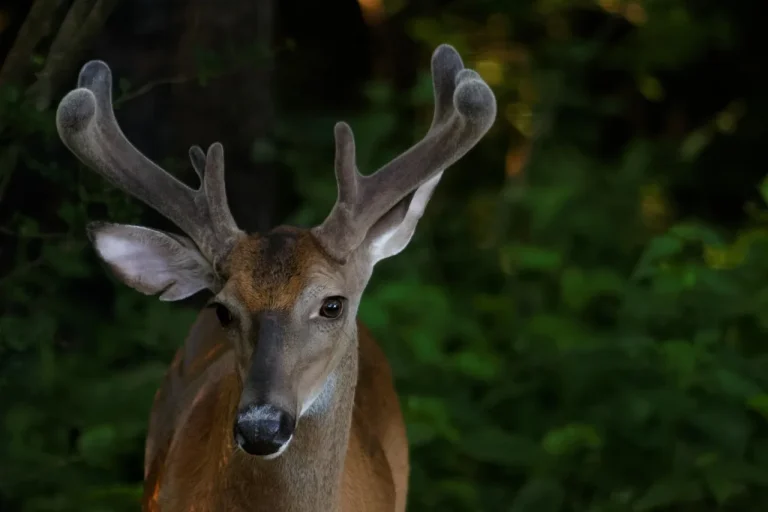
Secondary rut hunting is often most useful for about 1 to 3 weeks after peak rut if you shift to fresh doe groups on bedding edges, clover or cut-corn food sources, and low-pressure transition cover instead of recycling old scrapes and rub lines. Ignore that window and you usually burn sits on dead sign while bucks feed and breed elsewhere. This guide shows how to judge the secondary rut, where pressured bucks move, and how to place a bow setup for late-season chances.
What the secondary rut actually


The secondary rut is a late breeding window that follows peak rut. It is commonly reported to happen when does that missed the main wave or came into estrus later trigger a smaller second round of buck movement. The action is real, but it is thinner, shorter, and more localized than the primary rut.
How it follows the primary rut
During the primary rut, most bucks focus on chasing does in estrus, and scrape checking drops in priority. After that, a whitetail buck often shifts toward recovery. Body condition matters now. Daylight movement usually becomes more limited, but the animal still responds to current sign, active does, and safe travel routes.
Why the window is smaller
The secondary rut is not a second peak on the same scale. It is a recovery window with a fresh breeding trigger. That means fewer bucks on their feet at once, less random cruising, and more dependence on where late-cycling does are moving right now.
A common first-timer mistake is assuming every scrape on the property stays hot once the main rut ends. Picture a ridge with ten old scrapes that look untouched for a week. If no fresh tracks, fresh droppings, or new scent marks appear after a rain, those scrapes are just old noise.
What bucks do after peak rut
After peak rut, chasing drops and recovery rises. Many mature bucks stop burning daylight on long searches and start conserving energy. They still move, but the movement is narrower, more careful, and more tied to does, security cover, and short routes between bedding and food.
Why daylight movement gets thinner
Post-rut fatigue changes the whole pattern. A buck that was covering ground during peak breeding may now travel less, bed longer, and show up later. That does not mean the hunt is dead. It means the best setups now depend on fresh sign and a safe approach, not broad coverage.
Where fatigue changes cover use
Security cover matters more now because pressured bucks want concealment while they recover. Thick cover, creek bottoms, brushy edges, standing crop corners, and isolated bedding pockets can all get more attention than open ground. If a route exposes a buck to too much pressure, it often stops getting used in daylight.
Fresh sign beats stale sign
Fresh sign matters more than old sign after the rut peaks. That includes fresh doe tracks, new droppings, newly opened rubs, and scrape activity that has been refreshed recently. A post-rut setup is only as good as the sign that still matches current deer movement.
How to read active scrape lines
Scrape lines are travel-corridor sign, not magic. The useful ones sit near bedding-to-food routes, edge cover, pinch points, and funnels. F1 and F3 matter here: bucks visit scrapes after a major rain event during the rut, and breaks in the rain can trigger freshening activity. The fresh scrape is the clue, not the old dirt circle.
F2 also matters because scrape activity is part of deer communication during the whitetail rut. That communication fades when the sign goes stale. F9 is the warning: once the rut starts, bucks may be less attentive to their scrapes. A line with no fresh tracks, no reopened soil, and no recent scent marks is weak post-rut evidence.
What fresh doe sign looks like
Late-cycling does drive the second wave. Look for tracks cutting into bedding edges, tracks leaving secure cover near last light, clustered droppings around a likely staging area, and short-lived feeding sign that keeps getting renewed. A single new cluster of tracks near cover can matter more than a month-old scrape chain.
How to spot leftover rut noise
Leftover rut noise usually looks active to people, not deer. You may see old scrapes with leaf litter, rubbed sap that has dried, and no trail convergence. If the sign is far from bedding, far from food, and far from a secure route, it is usually not the place to spend a bow sit.
- Check the freshest tracks first. Start with bedding edges, not the middle of the property. Fresh tracks that point from cover to food, or food back to cover, tell you more than old scrape charts.
- Confirm current scent sites. Look for reopened scrapes, damp soil, fresh pawing, and fresh overhanging branch activity. If rain hit recently, a common rule of thumb is to revisit active corridors within about 24 to 48 hours.
- Filter out stale sign. Ignore scrapes with old leaves, blown-in debris, or no new entry trails. Stale sign wastes sits because it reflects past movement, not current movement.
Where to hunt late-rut bucks
The best late-rut setups sit on travel corridors between bedding and food, not in open guesses. Security cover, edges, pinches, and funnels force deer movement into narrower lanes. That is where a tired buck can move while still avoiding pressure, and where a bow shot becomes realistic.
Travel corridors between bedding and food
When the rut is past its peak, bucks often choose shorter routes with more cover. Corridors that link bedding to a food source are prime because they hold both doe movement and buck travel. The narrower the route, the more predictable the shot window becomes.
Security cover near scrape sites
Primary scrapes are often near travel corridors and doe bedding areas, and F8 supports that. Secondary scrapes tend to show up around a property’s edges, per F12. That edge setting matters because pressured deer use cover to stay hidden while still checking nearby movement.
Edges, pinches, and funnels
Open-country guesswork fails after peak rut because movement compresses. Fence gaps, inside corners, creek crossings, and brush pinches create better odds. If a scrape line sits beside one of those features and fresh sign keeps appearing, it has late-rut value. If it sits in exposed country with no cover, it usually does not.
Secondary rut opportunity checklist
Use this checklist as a quick screen before committing to a post-rut setup. It is meant to rank current potential, not prove long-term history. Score each item yes or no, then total the yes answers to decide whether the site deserves a bow sit now.
| Checklist item | Yes/No | Why it matters |
|---|---|---|
| Fresh doe tracks are often reported within the last 24 to 48 hours. | Late-cycling does are the trigger, not old buck sign. | |
| At least one scrape was refreshed recently | Fresh scrape activity is more useful than stale openings. | |
| Tracks connect bedding cover to food or staging cover | Travel corridors matter more than random open ground. | |
| Security cover protects the route | Pressured bucks favor cover when moving in daylight. | |
| The setup avoids old, overhunted scrape lines | Overused spots lose value fast after peak rut. | |
| Wind allows a clean entry and exit | Bad access can ruin a good location. | |
| The location sits near an edge, pinch, or funnel | Forced movement improves bowhunting odds. | |
| Pressure on the property is moderate or low | High pressure pushes mature bucks deeper into cover. | |
| Recent trail-camera or track evidence matches current use | Current activity matters more than old history. | |
| Weather lines up with fresh sign, not stale sign | Rain or a cold front only helps if deer are still using the route. |
Scoring rule: 8-10 yes answers = High potential. 5-7 yes answers = Medium potential. 0-4 yes answers = Low potential. If the spot scores Low, move to a better corridor instead of forcing another sit.
How pressure and weather change the play
Pressure changes post-rut hunting more than most people admit. Public land often pushes deer deeper and later, while private land with lighter pressure can keep daylight movement in more predictable places. Weather helps only when it intersects with fresh sign, safe access, and current deer use.
Public land versus private land
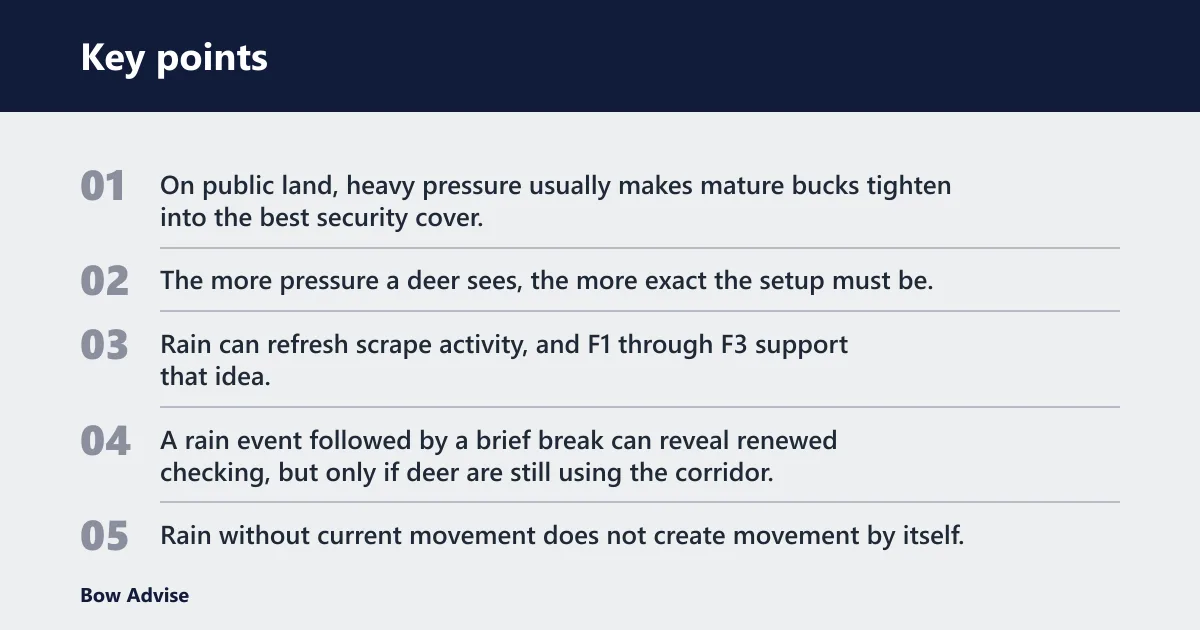
On public land, heavy pressure usually makes mature bucks tighten into the best security cover. On private land, a lower-pressure property can still hold a usable scrape line or bedding edge, especially if hunters stay off the same route. The more pressure a deer sees, the more exact the setup must be.
When rain refreshes sign
Rain can refresh scrape activity, and F1 through F3 support that idea. The important part is timing. A rain event followed by a brief break can reveal renewed checking, but only if deer are still using the corridor. Rain without current movement does not create movement by itself.
Why cold fronts matter most with current sign
Cold fronts matter when they line up with fresh doe sign and a clean access route. A sudden temperature drop can improve movement, but it will not rescue a dead setup. Cold weather works best on edges near bedding or food where deer are already traveling safely.
Suppose a parcel has two choices: an old scrape line beside a field edge and a brushy creek crossing 150 yards away. If fresh tracks hit the creek crossing after a rain and the wind favors a quiet entry, the crossing is the better bow setup even if the scrape line looks more impressive.
Should you still call or rattle?
Grunts and rattling can still work after the primary rut, but only when current sign supports them. Use them as a short-range addition to a live setup, not as a replacement for fresh evidence. Once movement fades, blind calling usually just adds noise.
When grunts fit current sign
Short, light grunts can make sense if a scrape line is fresh, a doe group is nearby, or a buck track cuts a corridor with recent activity. Keep it sparse. A few soft vocalizations can pair with a setup on active sign, especially where visual cover limits a buck’s view.
When rattling wastes a setup
Rattling is more likely to waste a sit when the area is pressured, the sign is stale, or the buck movement is already thin. Older bucks that are focused on recovery may slide away from commotion. If there is no fresh doe sign nearby, skip the rack sequence.
Keep calling tied to movement
Use calling only after you have confirmed current movement. A fresh track line, a recent scrape refresh, or a doe group entering cover gives the call context. Without that context, calling can pull attention to the wrong side of the property and alert deer that would otherwise pass quietly.
Frequently asked questions
What is the secondary rut in whitetail deer?
The secondary rut is a smaller late breeding window that follows the main rut. It happens when does that did not come into estrus during the primary wave cycle later. That late timing can pull bucks back into daylight, but the movement is usually shorter and less widespread than peak rut.
When does the secondary rut happen?
It usually shows up after peak breeding, once the main chasing phase starts to ease. The exact timing varies by region and deer density, but it is best treated as a short recovery window rather than a long season phase. Fresh doe activity tells you more than the calendar does.
Do bucks still check scrapes after the peak rut?
Yes, but freshness matters far more than old sign. Bucks may check scrapes after a major rain event, especially along active corridors near bedding and food. Once the rut starts, they can be less attentive to those scrapes, so stale sites lose value quickly.
Where do bucks go after the rut ends?
After the rut, many bucks slip back toward recovery cover, security cover, and short routes between bedding and food. They often move less in daylight and avoid exposed ground. The best locations are usually near the cover they already trust, not out in the open where they were chased earlier.
What signs show the secondary rut is happening?
Look for fresh doe tracks, newly opened scrapes, renewed pawing, and movement that connects bedding edges to food or staging cover. Trail-camera hits can help confirm it, but the key is current sign. Old rubs and old scrapes alone do not prove active late breeding.
Should I hunt scrape lines during the post-rut?
Yes, if the scrape line is still active and tied to current travel. Hunt the freshest lines near bedding-to-food routes, edges, pinches, or funnels. Do not keep recycling dead scrape lines just because they worked earlier in the season.