How to Recover From a Spooked Buck During the Rut
After spooking a rutting buck, stay out for at least 24 hours. Then pick the least-educating next move based on wind, buck mood, and rut phase. Push in again too soon, and a killable deer often turns into a night mover. This guide shows how to spot the bust, read the rut stage, and choose the safest recovery plan.
What a spooked buck means
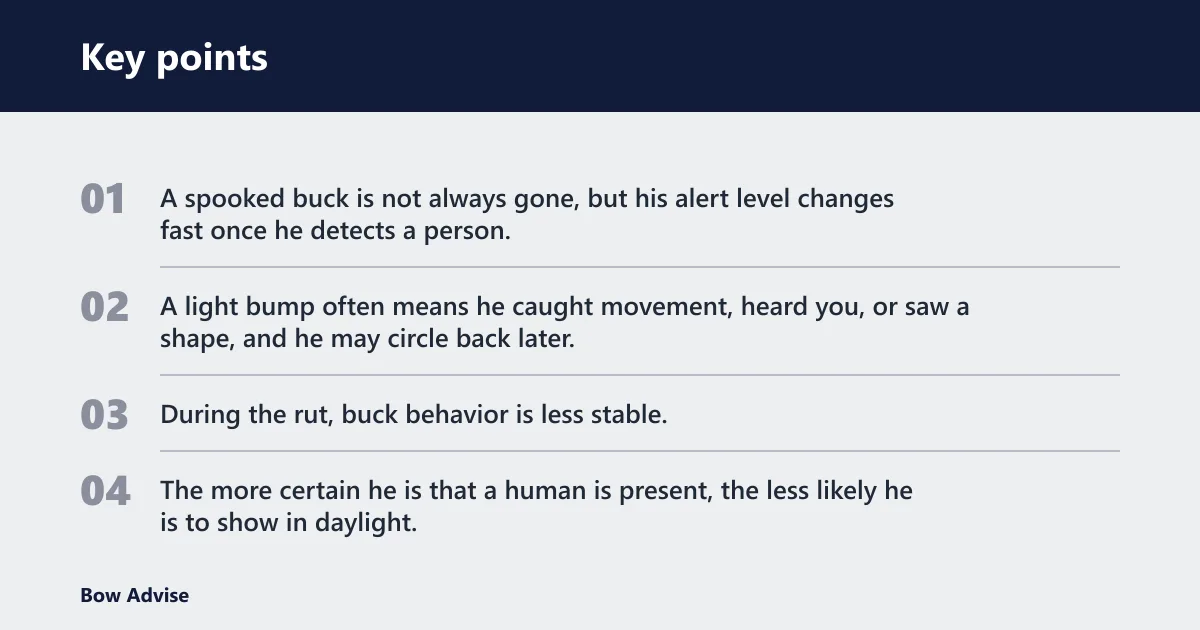


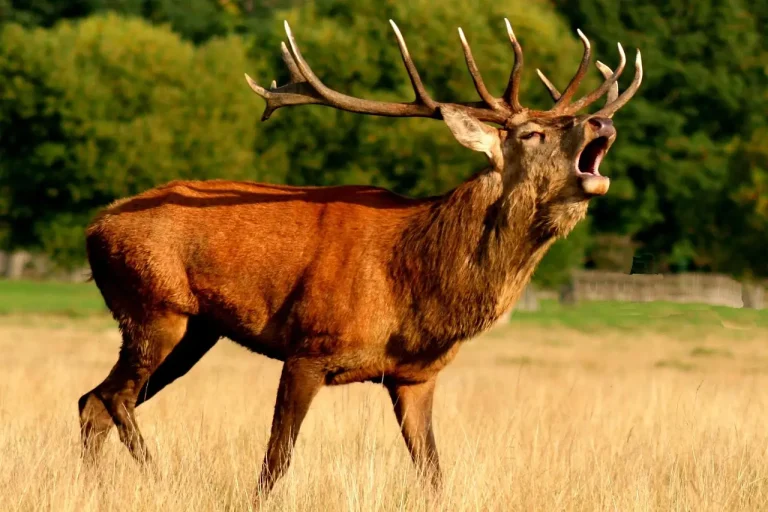
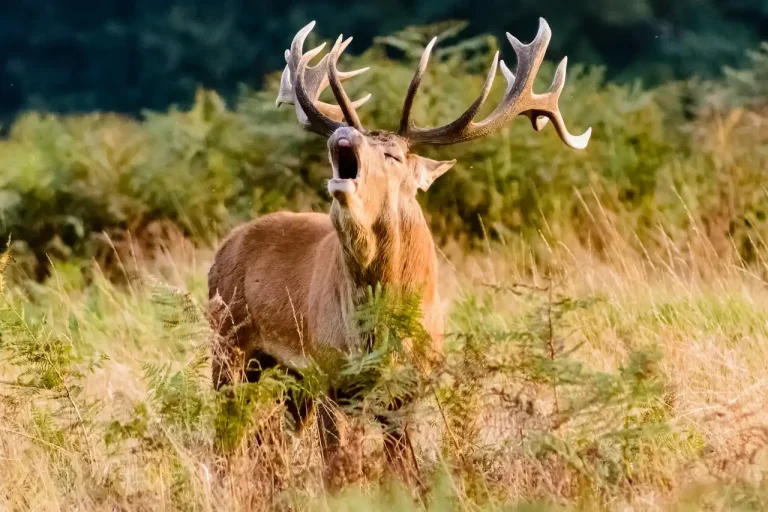
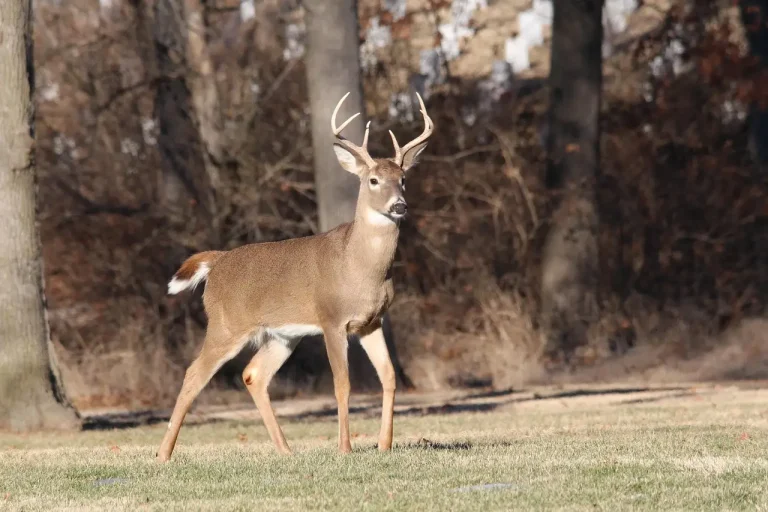
A spooked buck is not always gone, but his alert level changes fast once he detects a person. A light bump often means he caught movement, heard you, or saw a shape, and he may circle back later. A full wind bust means he may link human scent to the intrusion, and that often raises the odds of him avoiding the setup for hours or days.
During the rut, buck behavior is less stable. A pressured buck may still return to the area, but he is more likely to shift movement, use thicker cover, or wait for darkness. The more certain he is that a human is present, the less likely he is to show in daylight.
What you’ll need
- Wind check app or wind indicator powder
- Binoculars for low-risk observation from a distance
- Map or marked aerial photo of access routes, funnels, and escape cover
- Quiet boots and pack for a cleaner exit
- Extra layer or gloves if you need to change clothing before re-entering
- Notebook or phone notes for wind, time, and deer behavior
Does the rut phase change the recovery plan?
Yes. Pre-rut bucks still tend to move on a more predictable pattern, peak-rut bucks are more willing to travel after does, lockdown bucks can vanish for short windows, and late-rut bucks often tighten to food and the last receptive does. That changes how long you sit out and how hard you press the same location again.
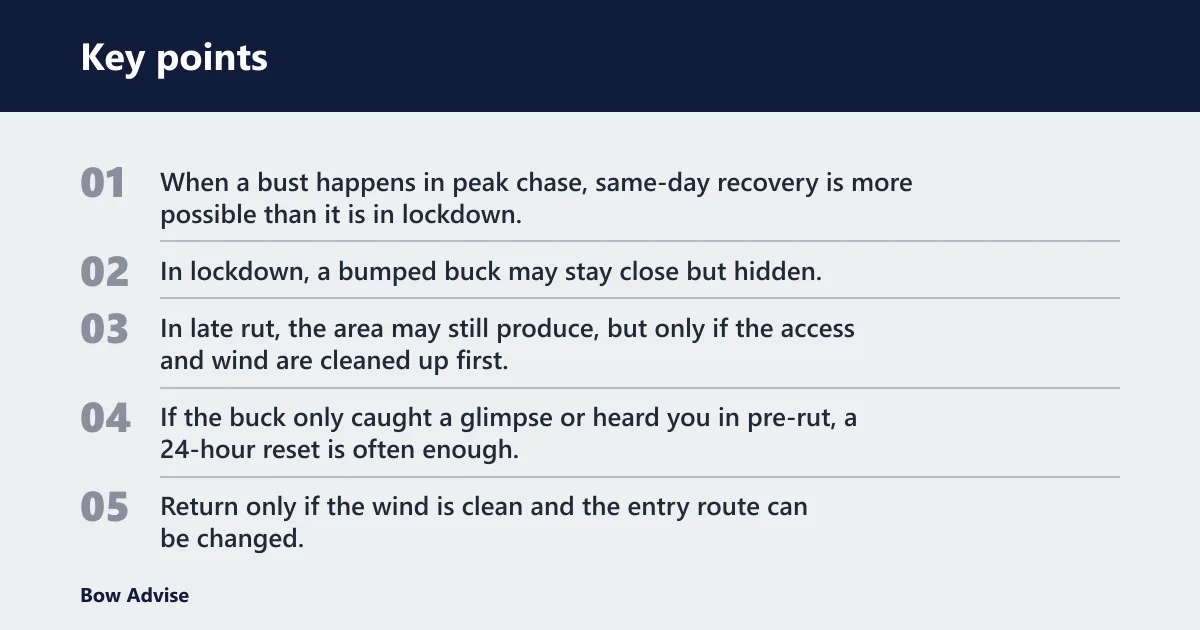
When a bust happens in peak chase, same-day recovery is more possible than it is in lockdown. In lockdown, a bumped buck may stay close but hidden. In late rut, the area may still produce, but only if the access and wind are cleaned up first.
Pre-rut response
If the buck only caught a glimpse or heard you in pre-rut, a 24-hour reset is often enough. Return only if the wind is clean and the entry route can be changed. Keep calling to a minimum; a cautious deer here can learn the pattern fast.
Peak rut response
Peak rut gives the best chance of a same-day return, especially after a movement bust rather than a wind bust. If the deer was only bumped by noise or motion, a low-impact re-entry at a different hour can work. If scent was involved, wait longer and avoid stacking more calling on top of the mistake.
Lockdown response
Lockdown usually means the buck is glued to cover and less willing to show himself. If you spook him here, do not keep pressing the exact bedding or staging pocket. Shift the stand, reduce noise, and give the area a longer reset because the buck may still be nearby but very hard to see.
Late rut response
Late rut can still pay off because bucks often search for the last receptive does and food. A wind bust in late rut should still trigger a reset, but the next move can be to a food edge, trail junction, or travel funnel instead of the same exact tree. Keep the setup quiet and simple.
Recover the hunt after the bust
- Stop and mark the bust. Note the time, wind direction, and what gave you away. A wind bust and a movement bust do not recover the same way, so identify which one happened before you choose the next move.
- Back out quietly. Leave the area without extra glassing, trimming, or retracing the same track. More disturbance only teaches the buck that the intrusion continued after the alert.
- Wait out the first 24 hours. A same-day return is only worth considering after a light bump in peak rut, and even then the second entry needs to be cleaner than the first. For a wind bust, a full day out is the minimum starting point.
- Rebuild the approach. Change the entry and exit route, or move to a different side of the cover. If the original trail crossed open ground or a swirl line, do not use it again.
- Reset the setup. If you return, shift the stand about 100 to 300 yards to a new ambush point, or abandon it for the day. Use funnels, downwind edges, or a terrain pinch that gives the buck a different line of travel.
Say your stand sits on a creek bend and a doe blows at 4:30 p.m. while the buck vanishes into cattails. That is a movement bust, not a clean wind bust. A return at last light from a different access may still work if the thermals are falling and the original route is avoided.
Rut buck recovery checklist
| bust type | rut phase | next action |
|---|---|---|
| wind bust | pre-rut | leave |
| wind bust | peak rut | move 100-300 yards |
| wind bust | lockdown | leave |
| wind bust | late rut | change access |
| movement bust | pre-rut | sit out |
| movement bust | peak rut | move 100-300 yards |
| movement bust | lockdown | sit out |
| movement bust | late rut | stop calling |
| sound bust | pre-rut | sit out |
| sound bust | peak rut | stop calling |
| sound bust | lockdown | leave |
| sound bust | late rut | change access |
Yes/no decision path:
- If the buck caught your wind, leave and do not return the same day.
- If the buck only saw or heard you, ask whether the cover still hides your access. If yes, a later return may work.
- If you have had two busts on the same deer, stop hunting the exact setup and shift to a different funnel or travel line.
Do not do this:
- Do not keep grunting after a wind bust.
- Do not take the same entrance trail back in.
- Do not force a marginal shot at an alert deer.
- Do not leave fresh scent on the same trail, gate, or tree base.
Should you stay, move, or leave?
Choose the least-educating option. A clean wind bust usually means leave. A light movement bust can sometimes be salvaged with a move of about 100 to 300 yards, especially if the new setup catches a better funnel or downwind edge. A sound bust often calls for stopping all noise and giving the area time to settle.
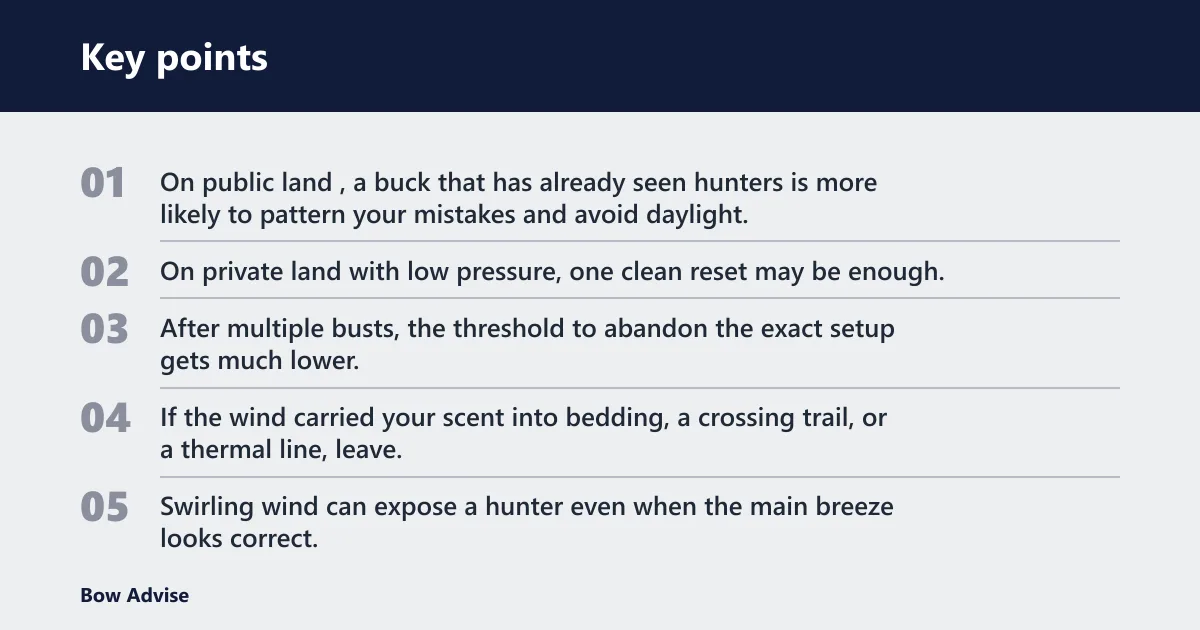
Pressure matters. On public land, a buck that has already seen hunters is more likely to pattern your mistakes and avoid daylight. On private land with low pressure, one clean reset may be enough. After multiple busts, the threshold to abandon the exact setup gets much lower.
Wind bust decision
If the wind carried your scent into bedding, a crossing trail, or a thermal line, leave. Swirling wind can expose a hunter even when the main breeze looks correct. Thermals that rise in the morning and fall in the evening can also pull scent into cover at the worst time.
Movement bust decision
If the buck only caught you moving, shifting the stand can still save the hunt. Move far enough that the deer sees a different angle, but not so far that you abandon the travel corridor. A 100- to 300-yard shift is a practical range when cover, terrain, or crop edges still connect the area.
Sound bust decision
If noise gave you away, stop calling and cut every extra sound. Metal clanks, bow noise, dropped gear, and loud stepping can make a buck hang up without fully leaving. Return only if the next entry is silent and the setup no longer depends on calling to pull him close.
Picture a buck that jumps at a snapped twig at 5:10 p.m. but never wind-checks the stand. That is a sound bust. The best recovery is often silence, a new access route, and a later return window when the deer is moving naturally again.
How do you reset access and scent?
Change the entry and exit route first. If the same trail, ditch, or fence line carried your scent before, the buck may already link it with danger. Clean up ground scent by avoiding the original path, and keep clothing and gear from dragging through the same intrusion lane.
After a wind bust, return only on a different wind or thermal condition. If the air still swirls in the same pocket, the setup is still burned. A better access is often more valuable than a better tree.
- Pick a new approach. Use a downwind access or terrain route that keeps you out of the buck’s core area. If no silent route exists, do not force the return.
- Change clothing outside the area. Keep outer layers sealed until you are well away from the entry zone. This limits residual scent on the trail and at the setup edge.
- Shift the setup 100 to 300 yards. Move to a funnel, pinch, field edge, or alternate bedding exit. Recheck wind before settling in, because the new tree still has to play clean.
Common mistakes
The biggest error is treating every spook the same. A light bump can be recoverable the same day during peak rut, while a wind bust usually demands a longer reset. Another mistake is returning on the same access trail, which teaches the buck where the human intrusion came from.
Hunters also overcall after pressure. Grunts, rattles, and doe bleats can still work, but after a bust they should be reduced or stopped until the deer settles. A forced shot at an alert buck is another bad trade, because a low-percentage shot can educate him and waste the setup.
A common first-timer mistake is assuming a buck that blew out of a clover plot will never circle back once the woods quiet down. More often, he shifts to thicker cover, changes timing, or moves a short distance and waits. That is why pressure level and rut phase matter so much.
Frequently asked questions
What should I do right after I spook a buck during the rut?
Freeze, note the wind, and back out quietly. Do not keep moving toward the deer or try to recover the stand immediately. A clean exit matters more than salvaging the current sit, because more noise and scent can turn a recoverable bust into a full burn.
How long should I stay out after spooking a deer?
At least 24 hours is a sound starting point, and longer is better after a wind bust or repeated pressure. Same-day return only makes sense after a light movement or sound bust in peak rut, and even then the access route must change.
Will a spooked buck come back the same day during the rut?
Sometimes, but mainly after a light bump and mainly during peak rut or late rut. A full wind bust lowers the odds sharply. If the buck returns, it is usually later and on his terms, so the setup must be quiet and the wind clean.
Should I keep hunting the same stand after blowing out a buck?
Only if the bust was light and the access can be fixed immediately. After a wind bust, repeated use of the same tree is a bad bet. A better move is to shift 100 to 300 yards, change the route, and hunt a different angle.
Do rattling and calling still work after a buck has been spooked?
Sometimes, but pressure changes the mix. After a bust, cut calling back, and stop it entirely if the deer tied the sound to danger. Short grunts may still work later in the rut, but aggressive rattling and repeated doe bleats can make a pressured buck hang up or leave.
Does bucked up rut work?
There is no reliable basis to treat that as a fix for a spooked buck. Recovery still depends on wind, access, rut phase, and pressure, not on a product claim. The useful next move is a cleaner entry, less calling, and a better setup angle.