
How to Store Arrows and Broadheads Safely in Winter
Store arrows and broadheads dry, separate, and at room temperature. If they come in from freezing weather, keep them sealed for about 30 to 60 minutes before opening so condensation is more likely to form on the bag than on the metal. Poor storage can cause rust, loose inserts, dull edges, and loose screw-in parts that fail at dawn. This guide covers freeze-thaw risk, drying, inspection, and the safest way to pack arrows and broadheads for winter.
What you’ll need before storing gear


- A hard bow case or arrow case with padding
- Silica gel desiccant packets, preferably rechargeable
- Blade covers or quiver caps sized for your broadheads
- A clean, dry cloth for wiping shafts and steel parts
- A small bottle of rust inhibitor or light oil for steel broadheads
- Spare field points or broadhead wrench if points need snugging
- A bright light for checking crack lines, nicks, and corrosion
How should I store arrows and broadheads in freezing weather?
Keep them dry, capped, and away from quick temperature swings. The main risk is condensation when cold gear moves into warm air, because moisture can form on blades, inserts, and inside cases before it dries. That moisture can loosen parts, leave rust on steel, and hide shaft damage until you draw the bow.
- Dry every surface. Wipe carbon shafts, inserts, and broadhead ferrules before storage. Pay extra attention to the transition points where the shaft meets the insert and where the blade assembly meets the ferrule, because those spots trap water first.
- Separate damp gear. Do not pack wet arrows and broadheads straight into a sealed case. If they were in snow, rain, or frost, let them air dry indoors before closing the case, or keep them in a vented setup until the metal is dry.
- Buffer the temperature change. If gear comes from a truck or garage into a warm house, leave it sealed for 30 to 60 minutes before opening the case. That delay helps condensation land on the outside of the bag or case instead of on metal edges and glued joints.
- Check the assembly. Before the next hunt, twist each field point or broadhead by hand, then confirm the insert and point stay tight. A loose part may not look obvious in cold air, but vibration and freeze-thaw cycling can open that bond.
These items make moisture control and inspection easier. A hard case with a good seal helps most when gear stays in storage for days or weeks, while quiver caps and blade covers matter more for short transport and blind carry. Silica gel is the main add-on that keeps trapped humidity from lingering inside closed storage.
Silica gel and case care
- Use at least one silica gel packet inside a hard case or arrow case.
- Rechargeable packets work well if you store gear all winter.
- Replace or recharge packets when they no longer feel dry or when the case opens with a damp smell.
- Keep packets away from loose broadhead blades so they do not interfere with storage layout.
| Storage location | Condensation risk | Broadhead protection | Inspection step | Safe-to-shoot trigger |
|---|---|---|---|---|
| Truck | High during cabin heat, low in steady cold | Use blade covers or keep in a quiver hood | Open only after 30 to 60 minutes indoors; check for fog, rust, and loose points | No moisture on metal, no rattling, no visible cracks |
| Garage | Moderate to high if the garage cycles above and below freezing | Store capped or in a case, never loose | Look for condensation on shafts and inspect insert bonds after warm-up | Dry shaft, tight insert, clean edge, and stable nock fit |
| Hard case | Low if sealed with silica gel, higher if opened often | Best for fixed-blade and mechanical heads with guards | Check packet dryness and inspect for trapped water after cold transport | Case is dry inside and parts are snug |
| Quiver | Moderate, especially after snow or sleet | Use hooded quivers, blade guards, or quiver caps | Confirm arrow retention, quiet fit, and no blade contact points | Arrows stay seated, blades are covered, and nothing shifts on a draw |
How should you store arrows in a truck, garage, or case?
Use the driest, most stable place you have, and avoid repeated warm-cold cycling. A truck is fine for short transport, but not for wet gear left overnight. A garage can work if it stays near one temperature. A hard case is the best long-term winter option because it limits impact and moisture.
Truck storage
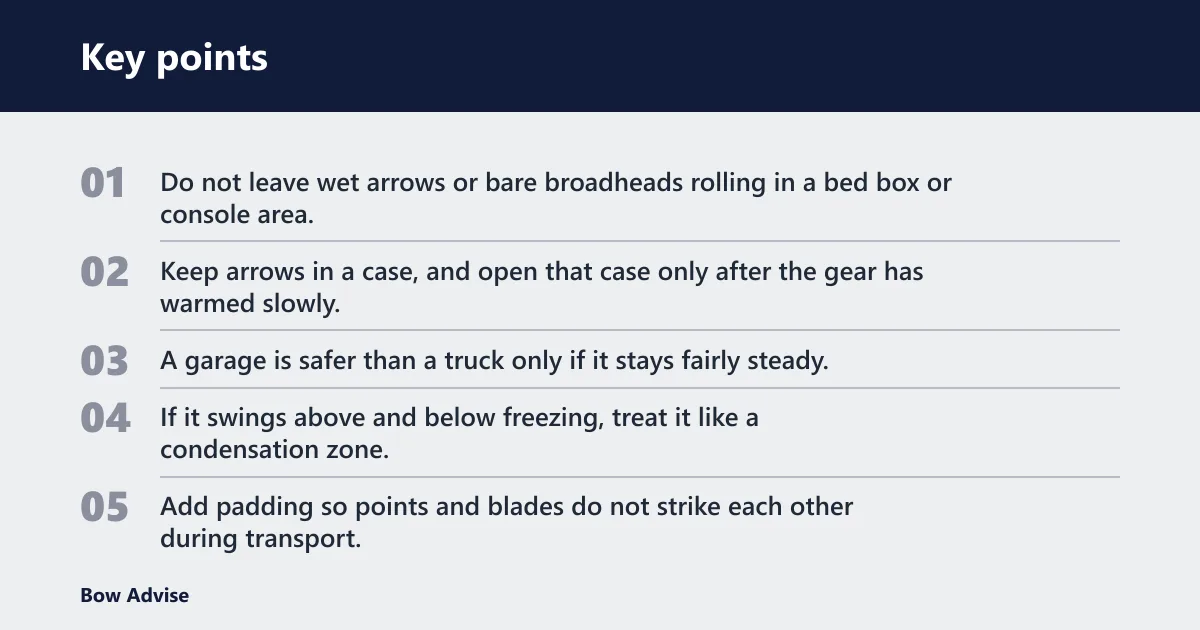
Do not leave wet arrows or bare broadheads rolling in a bed box or console area. If the truck warms up during the day and cools hard at night, condensation can form inside the case or directly on steel edges. Keep arrows in a case, and open that case only after the gear has warmed slowly.
Garage storage
A garage is safer than a truck only if it stays fairly steady. If it swings above and below freezing, treat it like a condensation zone. Store arrows in a padded case with silica gel, and avoid hanging broadheads where they can collect dust, vapor, or accidental bumps.
Hard case storage
A hard bow case or dedicated arrow case is often the best choice for winter storage because it helps seal out impact and slows moisture exchange. Add padding so points and blades do not strike each other during transport. Refresh desiccant packets on a regular winter interval, such as every few weeks, or sooner if the case feels damp inside.
Quiver storage
Quivers are useful for short periods and blind carry, but they are not the same as sealed storage. Hooded quivers give better blade control and noise reduction than open detachable styles. In cold weather, check arrow retention because foam, straps, and clips can stiffen and let arrows rattle.
Should broadheads stay on arrows in winter?
Sometimes, but only if the system stays protected and dry. Fixed-blade heads handle storage better when the blades are capped or fully enclosed. Mechanical broadheads need extra attention because moving parts can trap moisture and collect grit. If the arrows ride loose in a case or truck, separate the heads until hunt day.
Fixed-blade broadheads
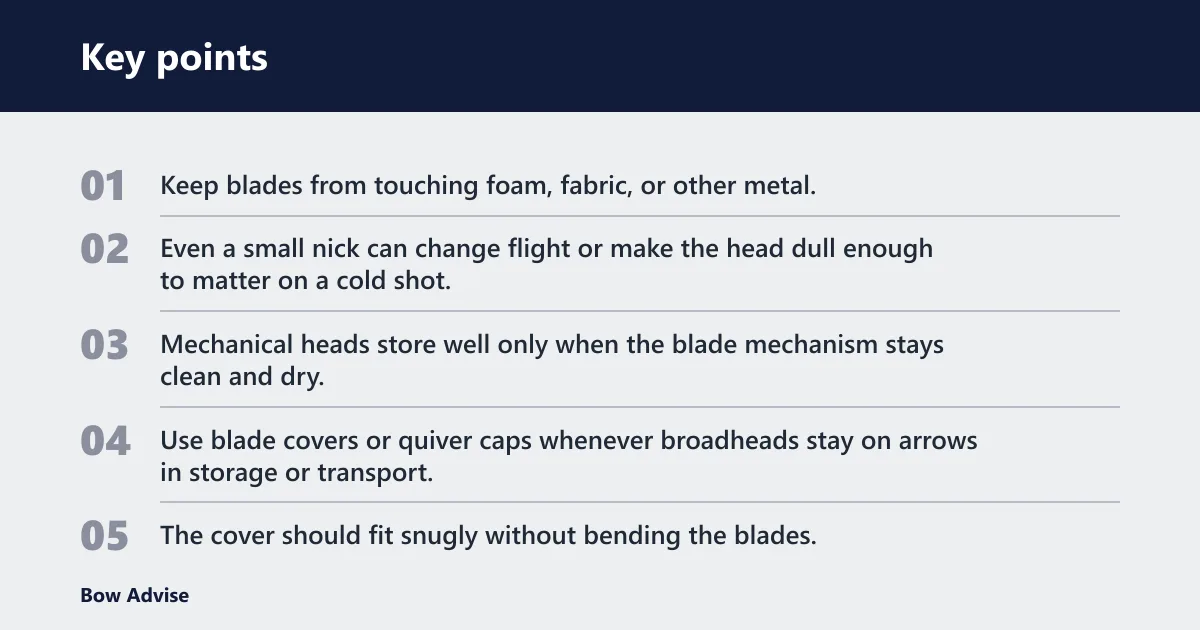
Fixed-blade heads are more exposed to edge damage, so they need blade guards, quiver caps, or a protected slot in a case. Keep blades from touching foam, fabric, or other metal. Even a small nick can change flight or make the head dull enough to matter on a cold shot.
Mechanical broadheads
Mechanical heads store well only when the blade mechanism stays clean and dry. Keep them capped if the design allows it, and avoid compressing the blades against foam that could snag the opening mechanism. Check the ferrule and blade housing for rust, because moisture in a moving head can create a problem you do not notice until opening day.
Blade covers and quiver caps
Use blade covers or quiver caps whenever broadheads stay on arrows in storage or transport. The cover should fit snugly without bending the blades. If the cap is loose, it can rub the edge, trap grit, or fall off in a truck or blind.
Light oil and corrosion control
A thin wipe of rust inhibitor or light oil can help steel broadheads in wet cold conditions. Put the oil on a cloth first, then wipe the metal and buff off the excess so the edge is protected without leaving a film on the shaft. Do not coat carbon shafts with extra lubricant; it can attract grit and make grip surfaces slick.
What should you inspect after a freeze-thaw cycle?
Inspect the shaft, insert, broadhead, and case any time gear moves from cold to warm and back again. Freeze-thaw cycles can open tiny cracks, weaken glue joints, and leave moisture where you cannot see it. The first cold dawn after a warm indoor trip is the time to check, not the moment to assume everything is fine.
- Check carbon shafts closely. Roll each shaft under a light and look near the nock end, insert end, and any impact marks. Carbon arrows can crack without dramatic splintering, so search for white lines, soft spots, or a sound change when lightly flexed only as the maker allows.
- Test insert and point tightness. Twist the insert, field point, or broadhead by hand. If a part turns, remove it, dry the socket, and rebond or reset it with the adhesive the arrow maker recommends, depending on the insert system.
- Inspect blades and ferrules. Look for rust, tiny edge rolls, or nicks on fixed-blade heads. Mechanical heads need a clean release path and no binding from dried moisture or grit.
- Open cases after warm-up. If a case moved from the truck to the house, wait the full 30 to 60 minutes before opening it. If you open too early, condensation can land on the shafts and broadheads right when the gear should be drying.
For example, gear that rides in a truck in freezing conditions overnight and then comes into a warm house before a dawn hunt can fog blades and insert ends If the case opens right away, fog can form on the blades and insert ends. Waiting about 30 to 60 minutes after warm-up helps keep that moisture on the outside of the case instead.
Suppose a carbon shaft takes a hard bump at the garage door and then sits through two cold nights. The crack may not show until the arrow is flexed, so a bright-light roll test and a point-tightness check matter more than a quick glance.
Common mistakes to avoid
Most winter problems come from moisture, movement, or rushed handling. Store gear dry, keep it protected, and slow the warm-up when temperatures change. That is the core routine.
- Leaving wet arrows in a closed case or blind bag
- Storing bare broadheads where blades can rub, chip, or rust
- Skipping the 30 to 60 minute sealed warm-up after cold transport
- Ignoring a loose insert or field point because the arrow still looks straight
- Using too much oil, which can leave residue on shafts and attract dirt
- Assuming a quiver replaces a sealed winter storage case
If that does not solve the risk, move to the next storage layer: dry the gear fully, cap the blades, and place the arrows in a sealed hard case with silica gel. If the case still fogs, replace the desiccant and check the seal, because repeated moisture usually means the storage container is breathing too much.
Prevention matters most at the handoff points. Keep a winter routine: dry, cap, seal, wait, then inspect before shooting.
Frequently asked questions
Should broadheads be left on arrows in the cold?
Yes only if they are protected by blade covers, a hooded quiver, or a sealed case with enough space that the blades do not rub. For loose transport, or if the gear will sit wet, separate the heads and store them dry to limit rust and edge damage.
Is it safe to keep arrows in a truck or garage overnight in winter?
Yes, if the gear is dry and protected from repeated warm-cold swings. A truck is best for short travel, not damp overnight storage. A garage works better when the temperature stays steady and the arrows sit in a padded case with desiccant.
Do carbon arrows crack if they freeze?
Freezing alone does not crack a sound carbon shaft, but cold can make existing damage easier to miss and harder to forgive. Inspect the nock end, insert end, and impact points under bright light before shooting. Any crack line, soft spot, or odd flex means the shaft should be removed.
How do I keep broadheads from rusting or dulling in wet cold conditions?
Dry them fully, use blade covers, and store them in a case with silica gel. For steel heads, a very light wipe of rust inhibitor or light oil helps, but wipe off the excess so it does not coat the shaft or collect grit on the edge.
Can freezing temperatures loosen glued-in inserts or field points?
Repeated freeze-thaw cycles and vibration can weaken a bond or expose an existing weak one. Check each insert and point by hand before the hunt, and rebond any part that turns or wobbles. Epoxy and hot-melt systems both need a clean, dry socket to hold well.
What case or container is best for winter arrow storage?
A hard bow case or dedicated arrow case is the best choice for long winter storage because it limits impact and slows moisture exchange. Add padding and silica gel inside, and keep broadheads capped so the blades do not hit each other during transport or storage.
Should I store arrows vertically or horizontally in winter?
Horizontal storage is usually safer in cases because it reduces stress on nocks and points and keeps the shafts from leaning against hard edges. Vertical storage is fine if each arrow sits in a secure holder, but avoid loose standing storage where blades, points, or inserts can bump into each other.