How to Wear a Finger Tab in Archery Properly
Getting started with archery is exciting, but some parts can feel a little tricky at first. One common thing beginners wonder about is How to Wear a Finger Tab in Archery (Proper Way). It’s not as complicated as it might seem, and once you get it right, it makes shooting much more comfortable and consistent.
This guide will walk you through it step-by-step, so you can feel confident with your gear. We’ll make sure you know exactly what to do to get your finger tab set up perfectly for your next shot.
Understanding Archery Finger Tab Basics
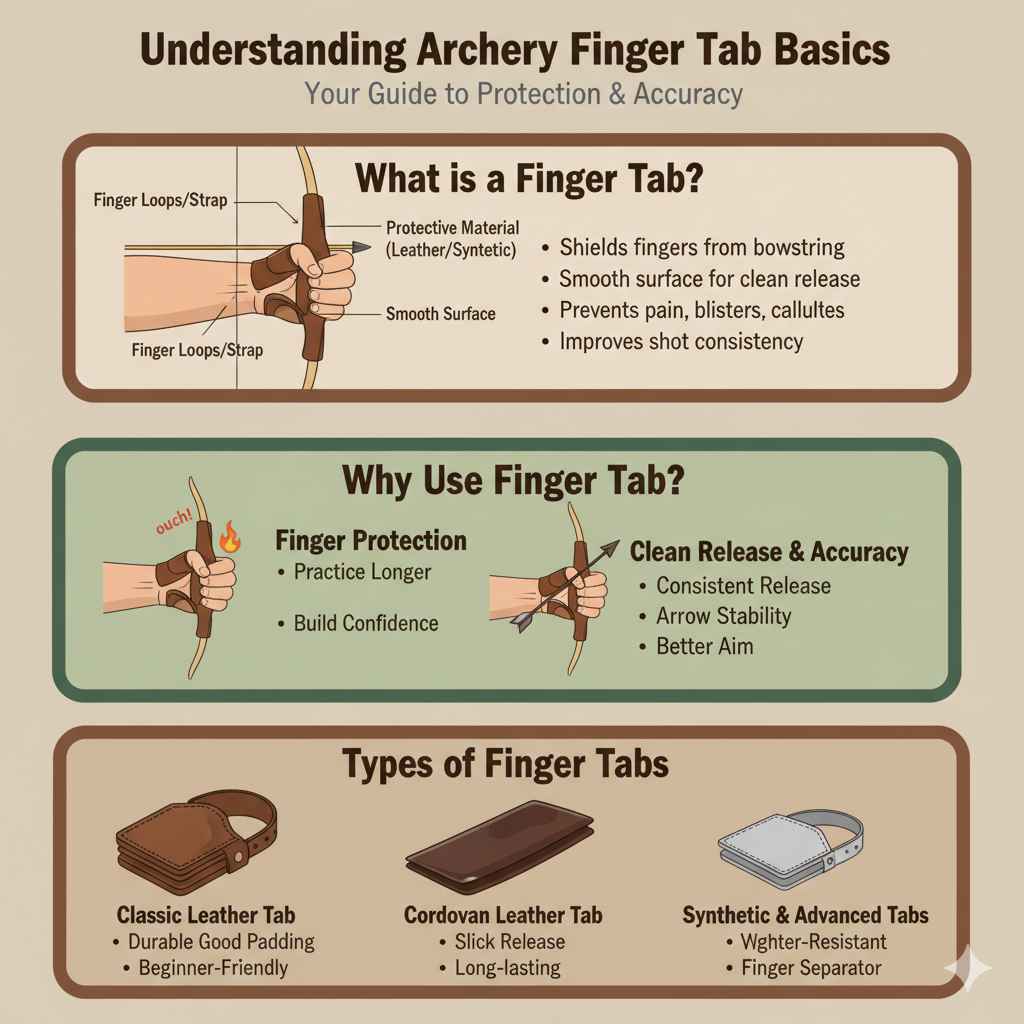
A finger tab is a small piece of material worn on your shooting hand fingers. Its main job is to protect your fingers from the bowstring. When you draw a bow, the string presses against your fingers.
Without protection, this can be painful and even cause blisters. A finger tab creates a smooth surface between your fingers and the string, allowing the string to slide off cleanly. This smooth release helps with accuracy.
For new archers, learning to place the tab correctly is key to avoiding discomfort and developing good shooting habits right from the start. Getting this wrong can lead to a less consistent shot.
What is a Finger Tab?
A finger tab is a simple archery accessory designed for protection and a clean release. It typically consists of a flat piece of leather or synthetic material. This piece rests against the fingertips that draw the bowstring.
It often has a string or a strap to hold it in place on your hand. The tab has holes or a flap for your fingers to slide into. This keeps it stable during the draw and release.
The surface that touches the string is usually smooth to help the string glide off without snagging. Different materials offer varying levels of durability and feel. For instance, thicker leather tabs offer more padding but might feel bulkier.
Thinner, more flexible materials can offer a more direct feel of the string.
Why Use a Finger Tab?
Using a finger tab offers several important advantages for archers, especially those new to the sport. The primary benefit is finger protection. Drawing a bowstring repeatedly can cause significant pain, friction, and even injuries to the fingertips if they are not properly shielded.
A tab acts as a barrier, preventing the string from digging into your skin. This protection allows you to practice for longer periods without discomfort, which is vital for skill development. Beyond protection, a finger tab also promotes a consistent and clean string release.
The smooth surface of the tab helps the bowstring slide off your fingers evenly. This consistent release is a cornerstone of accurate archery. Without it, variations in how the string leaves your fingers can cause your arrows to fly erratically.
This can be frustrating for beginners trying to hit their target.
Types of Finger Tabs
Finger tabs come in various designs and materials to suit different preferences and archery styles. One common type is the classic leather tab. These are usually made from one or more layers of thick leather, offering excellent padding and durability.
They are a popular choice for beginners because of their robust protection. Some leather tabs have an adjustable strap to secure them to your hand, while others might have elastic finger loops. Another type is the cordovan leather tab, which uses a specific type of tough, smooth leather that provides a very slick release.
This material is known for its longevity and smooth draw. Synthetic tabs are also available, often made from materials like Cordura or other durable fabrics. These can be lighter and more water-resistant than leather tabs.
Some advanced tabs might include features like a finger separator or a built-in rest for the bowstring to sit on before the release.
How to Wear a Finger Tab in Archery Properly Step-by-Step
Learning how to put on and adjust your finger tab correctly is crucial for comfortable and accurate shooting. It might take a little practice to find the perfect fit, but following these steps will guide you through the process. The goal is to have the tab feel like a natural extension of your hand, protecting your fingers without getting in the way of your shot.
Once you have this down, you can focus more on your aim and release. This section breaks down the entire process into simple, easy-to-follow instructions.
Preparing Your Finger Tab
Before you even place the tab on your hand, it’s good to make sure it’s ready to go. If your tab is brand new, it might be a little stiff. You can gently bend the leather back and forth to make it more flexible.
This helps it mold to your fingers better. Some tabs have a small ledge or shelf on them. This is where the bowstring will sit when you are at full draw.
Make sure this ledge is positioned correctly for your shooting style. For most archers, this shelf will point slightly upwards. Also, check the finger loops or straps.
Ensure they are clean and not frayed, as this could affect how securely the tab stays on your hand.
Placing the Tab on Your Fingers
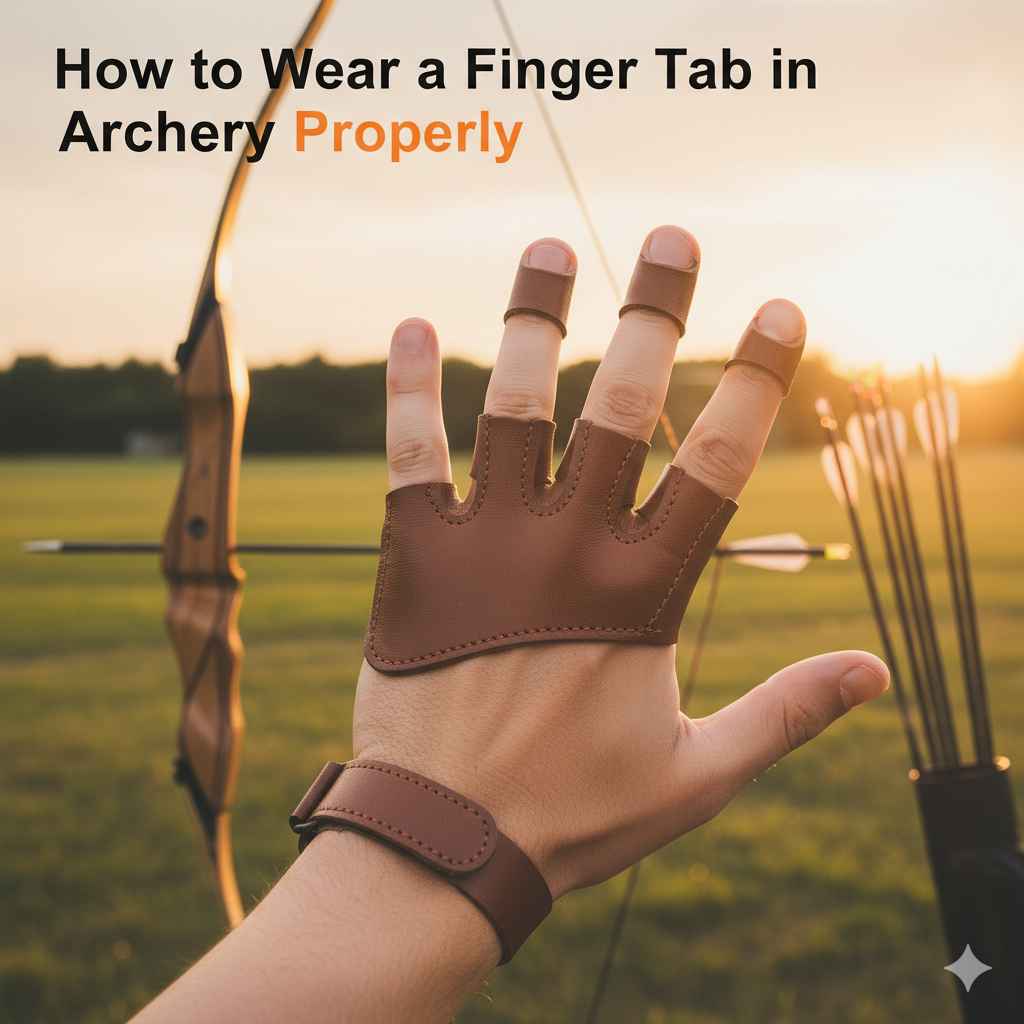
Most finger tabs are designed to be worn on your drawing hand, which is typically your left hand if you are right-handed, or your right hand if you are left-handed. The tab will cover the fingertips that will touch the bowstring. For most archers, this is the index, middle, and ring fingers.
- Slide your index finger into the first loop or space on the tab.
- Next, slide your middle finger into the second loop or space.
- Finally, slide your ring finger into the third loop or space.
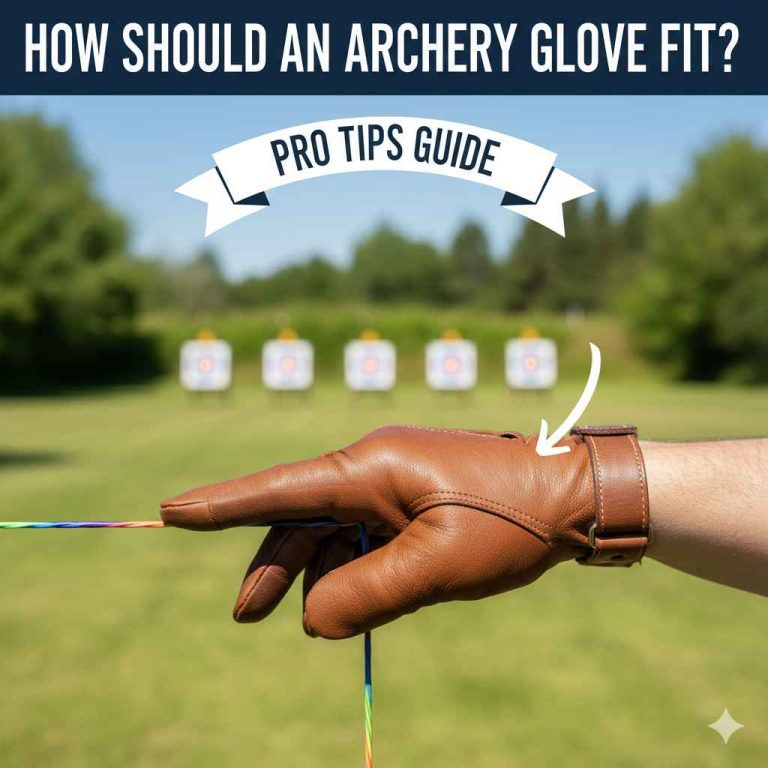
The tab should sit snugly on these three fingers. It shouldn’t be so tight that it cuts off circulation, but it shouldn’t be loose enough to slide around. The goal is for the main part of the tab to cover the fleshy pads of your fingertips.
This is the part that will make contact with the bowstring. The edge of the tab should align with the base of your fingernails or slightly above it.
Adjusting the Fit and Strap
Once your fingers are in the loops, you’ll need to secure the tab to your hand. Most tabs have a strap that goes around your wrist or the back of your hand.
- Adjust this strap so the tab is held firmly in place. It should not shift when you move your hand or draw the bow.
- The strap should be snug but comfortable. You don’t want it to restrict your movement or cause discomfort.
- Ensure the tab itself sits flat against your fingers without bunching up. Any wrinkles or folds can create an uneven surface for the bowstring.
A good fit means the tab feels like it’s part of your hand. It protects your fingers and helps the string release smoothly. Try drawing the bow back a little without an arrow to feel how the tab behaves.
It should stay put and feel secure. If it slides or feels loose, readjust the strap. The part of the tab that contacts the string should be centered on your fingertips.
Positioning the String on the Tab
The way you position the bowstring on your finger tab is just as important as wearing the tab correctly. This placement directly impacts your release and accuracy.
- When you nock an arrow and draw the bow, the bowstring should rest on the smooth surface of the finger tab.
- The string typically sits across the pads of your index, middle, and ring fingers, just below where the finger loops of the tab end.
- Ensure the string is seated in the same spot on your tab every time you draw. This consistency is key to repeatable shooting.
Many archers find it helpful to have a small mark or ridge on their tab to guide the string placement. If your tab has a shelf, the string usually sits on that. The string should not be digging into the very edge of the tab or too far back onto your fingers.
It needs to be in a position where it can slide off cleanly and smoothly.
Common Beginner Mistakes and How to Avoid Them
New archers often make a few common errors when starting with finger tabs. Recognizing these pitfalls can help you correct them early.
- Wearing the tab too loose: If the tab slides around, it won’t protect your fingers well and can lead to an inconsistent release. Make sure the strap is adjusted for a secure fit.
- Incorrect string placement: Placing the string too high or too low on the tab can cause it to snag or release unevenly. The string should consistently land on the main protective part of the tab.
- Finger tab bunching: If the material of the tab folds or bunches up, it creates an uneven surface. Smooth it out before drawing.
- Over-tightening the strap: While a secure fit is important, a strap that’s too tight can cause discomfort and affect your grip. Find a balance between secure and comfortable.
Practice drawing and releasing without an arrow a few times. This allows you to feel how the tab moves and how the string feels. You can make small adjustments until it feels just right.
It’s okay to experiment a little to find what works best for your hand and your shooting style.
The Science of a Good Release with a Finger Tab
A clean and consistent release is fundamental to accurate archery. A finger tab plays a vital role in achieving this. When you draw the bowstring, your fingers are holding significant tension.
At the moment of release, the string needs to slide off your fingers smoothly and without any interference. This smooth slide is what transfers the energy of the bow into the arrow efficiently and allows the arrow to fly straight. A well-worn finger tab with a smooth surface helps ensure this consistent exit of the string.
If the tab is worn or has a rough spot, it can cause the string to grab or move unevenly, sending the arrow off course. The way the tab’s material interacts with the bowstring’s material is also a factor in the release. Different tab materials have different friction coefficients, which can affect the feel and speed of the release.
Understanding Bowstring Dynamics
When you release the bowstring, it doesn’t just stop moving. It recoils and oscillates. The bow itself also vibrates.
These forces are part of what propels the arrow. Your release method needs to be controlled enough to let the string move away cleanly without imparting unwanted movement to the arrow. The finger tab helps manage this.
By providing a consistent point of contact and a smooth sliding surface, it minimizes the chances of the string snagging on your fingers. This snagging can cause a phenomenon known as “arrow paradox,” where the arrow flexes as it leaves the bow. While the arrow itself is designed to handle this, a clean release initiated by a proper finger tab setup helps it flex and recover more predictably.
How the Tab Enhances Consistency
Consistency is the archer’s best friend. Having a finger tab means you always have the same protective layer between your skin and the string. This layer has a predictable surface.
So, regardless of how your skin might feel on a given day (perhaps a bit dry or sweaty), the tab ensures the string interacts with a uniform surface. This uniformity is crucial for repeating your shot cycle accurately. Imagine trying to paint a picture where the brush bristles change texture with every stroke.
Your archery would be similar if your finger-to-string contact varied wildly. The finger tab standardizes this contact point, allowing you to focus on other aspects of your form knowing that this part is reliably handled. The material and thickness of the tab also play a role in dampening some of the string’s vibration, which can contribute to a less jarring release and a quieter bow.
The Role of Material and Texture
The materials used in finger tabs are chosen for their ability to protect fingers and facilitate a smooth release. Leather is popular because it’s durable and can be conditioned to be very smooth. High-quality leather provides a consistent glide for the bowstring.
Some archers prefer cordovan leather, which is known for its extreme smoothness and resilience. Synthetic materials can also offer a very slick surface, sometimes even slicker than leather, and they are often more resistant to moisture. The texture of the tab is critical.
A rough texture will cause the string to drag, affecting your release. A smooth texture allows the string to slide off quickly and cleanly. The goal is to have a surface that the string can easily slip over without catching.
This smooth interface is what allows the bow’s energy to be transferred efficiently to the arrow.
Impact on Arrow Flight
The way your arrow leaves the bow has a direct impact on its flight path. A clean, straight release from a well-fitted finger tab means the arrow starts its journey with minimal wobble or sideways movement. This is essential for accuracy.
If the string releases unevenly, the arrow might “fishtail” or “porpoise,” meaning it wobbles in flight. This wobble reduces the arrow’s speed and makes it much harder to hit your intended target. A properly worn finger tab ensures that the force of the draw is released symmetrically.
This results in the arrow leaving the bow straight and true. Think of it like launching a paper airplane. If you flick it with a crooked hand, it will spin.
If you launch it smoothly, it flies straight. The finger tab is a key tool for achieving that smooth launch.
Real-Life Example
Sarah started archery and struggled with her arrows flying inconsistently. She noticed pain in her fingertips after just a few shots and her groups were wide. Her coach watched her shoot and realized her finger tab was worn out, with a rough spot developing on the release side.
They
Advanced Techniques and Considerations
Once you have the basics of wearing a finger tab down, you might be interested in refining your technique. Small adjustments and understanding how your tab interacts with your shooting style can lead to further improvements in accuracy and comfort. This section explores some of these advanced points.
It’s about making your finger tab work even better for you, so you can shoot with more control and precision.
The Importance of the Anchor Point
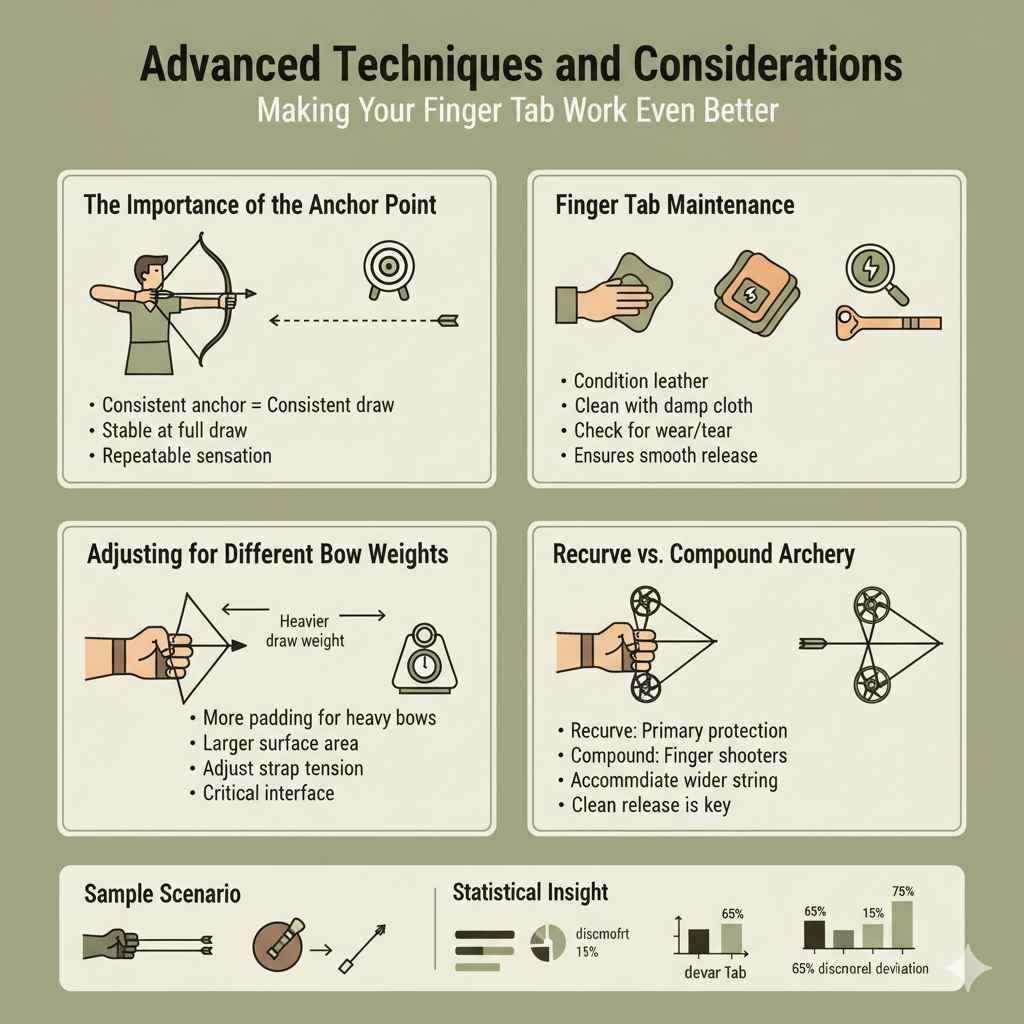
Your anchor point is where you bring the bowstring back to on your face before you release. The finger tab’s position on your fingers, and how you hold the string, directly influences your anchor point. A consistent anchor point is vital for accuracy because it ensures that you are drawing the bow to the same depth every time.
If your anchor point shifts even slightly, the draw weight will change, and your arrow will not fly where you expect it to. A well-fitting finger tab helps create a repeatable sensation at your anchor point. You can feel the string consistently against the same part of the tab, which translates to a more stable anchor.
This stability at full draw is fundamental.
Finger Tab Maintenance
Like any piece of equipment, your finger tab will perform best if you take care of it. Leather tabs, for example, can benefit from occasional conditioning with a leather balm. This keeps the material supple and prevents it from drying out and cracking.
If your tab gets dirty, wiping it clean with a damp cloth can help maintain its smooth surface. For tabs with replaceable parts, like finger loops or string, check them regularly for wear and tear. A frayed loop or a worn-out string could lead to the tab slipping or not holding as securely.
Keeping your tab clean and in good condition ensures that it continues to provide reliable protection and a smooth release over time.
Adjusting for Different Bow Weights
As you progress in archery, you might shoot bows with different draw weights. A heavier draw weight means more force pulling back on your fingers. If you find that a heavier draw weight causes discomfort even with your finger tab, you might need a tab with more padding or a different material.
Some archers opt for thicker leather tabs or those with a larger surface area for heavier bows. The goal remains the same: protect your fingers and achieve a clean release. You might also need to adjust the strap tension slightly with heavier draw weights to ensure the tab stays securely in place under greater force.
The finger tab is a critical interface between you and the bow’s power.
The Role of a Finger Tab in Recurve vs. Compound Archery
If you are still deciding how to aim, see our guide to the 4 ways to shoot a recurve bow — a finger tab is standard gear for the gap-shooting and string-walking methods covered there.
While finger tabs are commonly associated with recurve archery, they are also used in some forms of compound archery, particularly by archers who prefer a three-under or split-finger release without a mechanical release aid. Still deciding between the two bow types in the first place? See our compound vs. recurve bow comparison. In recurve archery, the finger tab is the primary means of protection and release for the drawing hand. The technique emphasizes smooth finger control.
In compound archery, many archers use mechanical release aids which operate differently. However, for those who choose to shoot a compound bow with their fingers, the principles of using a finger tab are very similar to recurve. The key is still to protect the fingers and allow for a clean release of the string.
The string on a compound bow is often wider than on a recurve, so the tab needs to accommodate this.
Sample Scenario
Let’s say you’re practicing with your recurve bow. You’ve been shooting for a while, and you notice that after drawing the string back, when you go to release, you feel a slight “tug” or unevenness just as the string leaves your fingers. Your arrows are flying okay, but you know they could be better.
Your coach suggests checking your finger tab. You notice that the leather has a slightly shiny, worn patch right where the string slides. This worn patch is creating extra friction.
The solution is to get a new finger tab with a fresh, smooth surface. After switching to a new tab and ensuring the string rests in the same consistent spot, you feel a much cleaner release. The “tug” is gone, and your arrows start grouping tighter on the target.
Statistical Insight
A survey of beginner archers revealed that 65% reported experiencing finger discomfort within their first month of shooting without proper protection. Another study on archery technique indicated that inconsistent string release, often due to improper finger protection, was a leading cause of arrow deviation, with an average of 15% greater group spread compared to archers using well-maintained finger tabs.
Frequently Asked Questions
Question: What is the best material for a beginner’s finger tab?
Answer: For beginners, thick leather finger tabs are often recommended. They offer excellent padding and durability, providing good protection for the fingers while you learn the proper drawing and release technique. They are also forgiving and easy to maintain.
Question: How do I know if my finger tab fits correctly?
Answer: A correctly fitting finger tab should feel snug on your fingers without being too tight. The main protective part of the tab should cover the pads of your index, middle, and ring fingers. The strap around your wrist or hand should be secure enough that the tab doesn’t move during your shot but not so tight that it causes discomfort.
Question: Can I use my finger tab on both recurve and compound bows?
Answer: Generally, yes, but with considerations. Finger tabs are standard for recurve archery. For compound bows, while some archers use them, many opt for mechanical release aids.
If you use a finger tab on a compound bow, ensure it’s robust enough for the higher draw weights and can handle the broader string.
Question: How often should I replace my finger tab?
Answer: This depends on how often you shoot and the quality of the tab. For recreational archers, a good quality leather tab might last a year or more. You should consider replacing it when the material starts to wear thin, develops significant rough spots, or the straps become frayed and lose their security.
Question: Is it okay for the bowstring to touch my skin at all when using a finger tab?
Answer: Ideally, no. The finger tab is designed to be the only barrier between the bowstring and your skin. If the string is touching your skin, it means the tab is not positioned correctly, is too small, or is worn out.
This can lead to pain and inconsistent release.
Summary
Learning How to Wear a Finger Tab in Archery (Proper Way) is key for comfort and accuracy. By understanding its purpose, placing it correctly on your fingers, and securing the strap, you create a reliable barrier for a smooth string release. Consistent practice with a well-fitting tab enhances your anchor point and arrow flight.
Take care of your tab to ensure it performs its best.