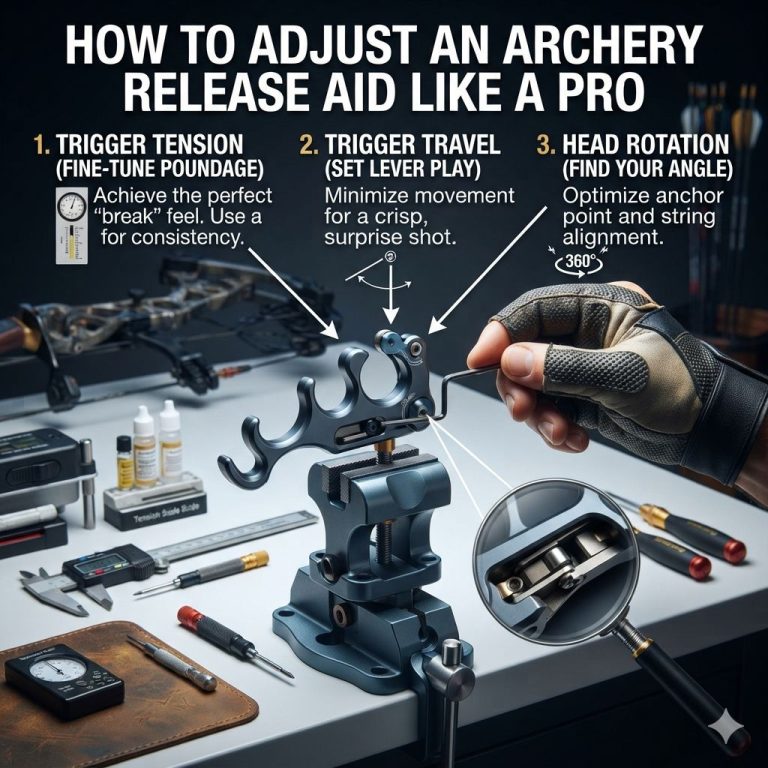
Understanding the sound your release aid makes after the shot is crucial for archers looking to fine-tune their equipment and technique. While a certain level of noise is to be expected, an excessive or unusual sound can indicate potential issues with your release, bow, or shooting form.
This post will break down the typical sounds a release aid might make, what those sounds signify, and how you can troubleshoot to achieve a quieter, more consistent shot.
Simply put, a release aid should make a minimal, crisp “click” or “thwack” sound after the shot, indicating proper function. Loud, sharp, or lingering noises often point to tuning issues, improper setup, or technique flaws that can affect accuracy and bow longevity.
Key Takeaways
- A normal release aid sound is a clean, sharp click or a muffled thwack after the arrow leaves the string.
- Excessive noise, like rattling, clanking, or loud pops, suggests potential problems with the release mechanism, arrow spine, or bow tuning.
- Understanding the different types of release aid sounds can help diagnose and fix shooting inconsistencies.
- Proper maintenance and setup of your release aid and bow are vital for a quiet and efficient shot.
- Troubleshooting often involves checking string slap, arrow rest contact, and release anchor consistency.
What is a Release Aid and Why Does Sound Matter?
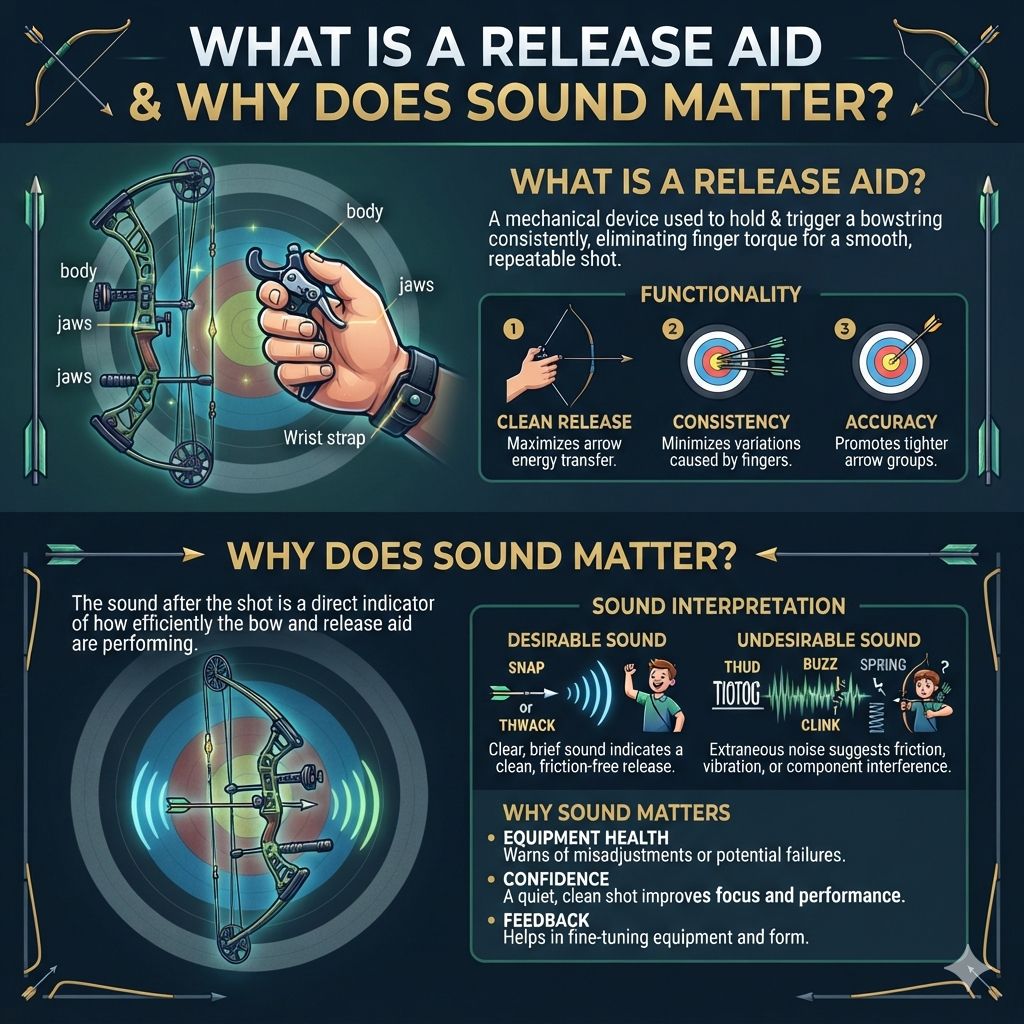
An archery release aid is a mechanical device that helps archers hold and trigger their bowstring more consistently than using fingers alone. It typically consists of a body, a trigger, and jaws that grip the D-loop on the bowstring. The primary goal is to eliminate finger-induced torque and promote a smooth, repeatable draw and shot execution.
The sound produced after a shot is a direct indicator of how efficiently the energy from your bow is being transferred to the arrow, and how cleanly the release aid is disengaging from the string. A clean shot cycle means the release aid cleanly opens and lets go, allowing the string to move unimpeded. Any extraneous noise can suggest friction, vibration, or interference during this critical moment.
Different types of bows and release aids will produce slightly different sounds. For instance, a compound bow, with its cams and stored energy, might have a more pronounced “thwack” than a traditional recurve. However, the quality of the sound – its clarity and brevity – is more telling than its volume.
- Functionality: Ensures a clean release, maximizing arrow energy transfer.
- Consistency: Minimizes variations caused by finger tension or torque.
- Accuracy: Contributes to tighter arrow groups by promoting a smooth shot.
- Equipment Health: Unusual noises can signal impending component failure or misadjustments.
- Archery Performance: A quiet, clean shot can improve confidence and focus.
Typical Release Aid Sounds and What They Mean
When you draw and release an arrow, the sound you hear is a combination of the string’s vibration, the arrow’s departure, and the release aid’s function. A well-tuned setup will result in a clean, sharp “click” from the release mechanism itself and a muffled “thwack” as the string propels the arrow.
However, various other sounds can occur, each with a potential cause. A loud “snap” or “pop” might mean the release aid isn’t opening smoothly or there’s a vibration transferring back through the string. A rattling or metallic “clank” often indicates loose parts within the release aid or something on the bow itself vibrating.
Sometimes, the sound isn’t directly from the release aid but is a consequence of its action. For example, “string slap” occurs if the string, after release, brushes against the arrow shaft or rest. This is less about the release itself and more about arrow spine or rest tuning.
- Clean Click/Thwack: Ideal sound indicating proper release function and arrow launch.
- Sharp Pop/Snap: May indicate a sticky trigger, overtightened spring, or string vibration resonating.
- Rattling/Clanking: Suggests loose components in the release aid, bow accessories, or string silencers.
- Squeaking/Grinding: Points to a need for lubrication or cleaning of the release aid’s internal mechanism.
- Fuzzy/Muffled Thump: Could signify an arrow that is too weak or too stiff, causing inconsistent flight.
Troubleshooting a Noisy Release Aid: Step-by-Step
When your release aid is making more noise than expected, it’s time for a systematic approach to identify and fix the problem. Start with the release aid itself, then move to the arrow and the bow.
Step 1: Inspect the Release Aid
First, examine your release aid for any obvious signs of damage, wear, or loose parts. Check that the jaws are closing and opening correctly and that the trigger feels consistent.
- Clean and Lubricate: Detach the release aid from your D-loop. Use a small brush or compressed air to clean out any dust or debris from the mechanism. Apply a tiny amount of specialized release aid lubricant (not WD-40) to any moving parts.
- Check for Loose Screws: Ensure all adjustment screws, especially the trigger tension screw, are snug but not overtightened. Some releases have locktite from the factory; reapply if necessary after adjustments.
- Test Trigger Function: Carefully dry fire the release (ensure no arrow is nocked!). Listen for any abnormal sounds. Does the trigger engage and disengage smoothly? Does it feel consistent shot after shot?
- Inspect Jaws: Look for any nicks, dents, or excessive wear on the jaws. Damaged jaws can create a rougher release, leading to more noise.
- Adjust Trigger Tension: If your release allows, try adjusting the trigger tension. Sometimes, too light a tension can lead to accidental misfires or inconsistent activation, causing a less-than-ideal sound. Conversely, too heavy a tension can cause you to punch the trigger.
Step 2: Examine the D-Loop and Bowstring
The connection between the release aid and the bowstring is critical. A worn or improperly tied D-loop can cause inconsistent engagement and noise.
- Inspect D-Loop: Check your D-loop for fraying, wear, or any signs of degradation. If it looks worn, replace it with a new, properly tied D-loop using quality serving material. Ensure it’s tied securely to prevent slippage.
- Bowstring Condition: Ensure your bowstring is in good condition, properly served, and that there are no frayed strands. A well-maintained string ensures a cleaner release.
- String Wax: Apply a good quality bowstring wax to your string and serving to reduce friction and noise.
Step 3: Assess Arrow Spine and Flight
The arrow itself plays a significant role. If the arrow is not the correct spine for your bow’s draw weight and length, it will flex improperly upon release, leading to a phenomenon called “arrow paradox” that can create noise and inaccuracy.
- Check Arrow Spine: Consult an arrow spine chart or your bow shop to ensure your arrows are correctly spined for your bow. Shooting spined-out (too stiff) or spined-under (too weak) arrows is a common cause of tuning issues and noise.
- Observe Arrow Flight: Watch your arrow’s flight. Does it leave the bow cleanly, or does it fishtail (wobble side-to-side)? Consistent fishtailing indicates a tuning problem, often related to arrow spine or rest setup.
- Arrow Rest Contact: Ensure your arrow rest is properly aligned and that the arrow isn’t making undue contact with it after release.
Step 4: Tune Your Bow and Release Anchor
Bow tuning and consistent release anchor are fundamental. Even a perfect release aid can’t compensate for a poorly tuned bow or inconsistent shooting habits.
- Paper Tuning or Bare Shaft Tuning: These are essential bow tuning methods to ensure your arrow is flying straight. Your local pro shop can help with this if you’re unsure.
- Arrow Rest Adjustment: Ensure your arrow rest is tuned to provide clearance for the arrow. Many rests have vertical and horizontal adjustment screws.
- Consistent Anchor Point: Make sure you’re pulling the bowstring to the exact same spot on your face or jawline every single shot. Inconsistent anchor points can cause the release to engage at slightly different angles, affecting sound and accuracy.
- Release Aid Hand Position: Ensure your release aid is being held consistently. Avoid “gripping” the release; let it hang and pull through the shot.
| Symptom | Possible Cause | Solution |
|---|---|---|
| Loud “Pop” or “Snap” | Sticky trigger, overtightened spring, string vibration | Clean/lubricate release, check spring tension, tune bow |
| Rattling/Clanking | Loose release components, accessories, or string silencers | Tighten screws on release and bow, check silencers |
| Squeaking/Grinding | Dry internal parts of release aid | Apply specialized release aid lubricant |
| String Slap | Arrow rest alignment, arrow spine | Tune arrow rest, ensure correct arrow spine |
| Inconsistent Trigger Feel | Trigger tension too light/heavy, inconsistent anchor | Adjust tension, practice consistent anchor |
Addressing these issues systematically will help you achieve the crisp, clean shot cycle that every archer desires for improved performance.
Common Release Aid Mistakes and How to Avoid Them
Even with the best intentions, archers can fall into habits that lead to noisy releases and reduced accuracy. Being aware of these common pitfalls is the first step to correcting them.
One of the most frequent mistakes is “punching” the trigger. This means the archer actively squeezes or jams the trigger with their finger rather than letting the release surprise them. This leads to jerky movements and inconsistent shot timing, which can translate into noise and poor arrow flight.
Another common error is improper anchor point consistency. If you don’t pull the bowstring back to the exact same spot on your face for every shot, the angle at which the release aid engages the string will vary. This inconsistency can cause the string to snap back differently, potentially hitting parts of the bow or creating unwanted vibrations.
- Punching the Trigger: Actively squeezing the trigger instead of allowing it to break.
- Inconsistent Anchor Point: Failing to return to the exact same contact point on the face.
- Over-Griping the Release: Tensing up and squeezing the release aid instead of letting it hang loosely.
- Incorrect D-Loop Placement: The release jaws not gripping the D-loop consistently.
- Ignoring Release Aid Maintenance: Neglecting cleaning and lubrication can lead to wear and noise.
- Shooting with a Damaged Release: Continuing to use a release with worn or broken parts.
- Improper Arrow Spine: Using arrows that are too stiff or too weak for the bow.
By actively focusing on a smooth trigger release, maintaining a solid anchor, and practicing good maintenance habits, you can significantly reduce unwanted noise and improve your archery scores.
Understanding Release Aid Types and Their Sounds
The type of release aid you use can influence the sound it makes. While the core function is the same, variations in design can lead to subtle differences in the post-shot noise profile. Understanding these differences can help you select the right tool for your needs and diagnose issues more effectively.
Mechanical release aids generally fall into a few categories: back-tension, hinge, thumb button, and trigger releases. Each has its own characteristics in terms of how they are activated and the resulting sound.
Back-tension releases are designed to be fired by applying increasing pressure to the back of the trigger mechanism, rather than consciously pressing it. This often results in a very clean, quiet release, as it encourages a surprise break. However, some back-tension releases might produce a slightly louder “snap” if the internal mechanism is particularly stiff or not well-lubricated.
| Release Aid Type | Activation Method | Typical Sound | Pros | Cons |
|---|---|---|---|---|
| Thumb Button | Pushing a button with the thumb | Clean, crisp click; can be loud if mechanism is stiff | Intuitive, easy to learn, good for beginners | Risk of punching the trigger if not careful; can be bulky |
| Back-Tension (Hinge) | Increasing pressure on the back of the release | Very clean, quiet “snap” or “click”; requires practice | Promotes surprise release, high accuracy potential | Steep learning curve, can be difficult to adjust tension initially |
| Carter/Tru-Fire Style (Adjustable Trigger) | Pulling a trigger with the index finger | Crisp click, similar to thumb button but often more refined | Adjustable trigger sensitivity, easier transition for some | Requires discipline to avoid punching the trigger |
| Rope/Sling Release | Pulling back on a rope loop | Quieter, often a softer click due to less metal-on-metal contact | Minimalist design, can be very quiet and smooth | Less common, may require specific D-loop setup |
Ultimately, regardless of the type, a well-maintained and properly set up release aid of any kind should facilitate a quiet, consistent release that doesn’t introduce unnecessary noise into the shot cycle. The sound is a feedback mechanism; listen to it carefully.
The Science Behind the Sound: Energy Transfer and Vibration
The sound produced after an arrow is shot from a bow is a direct consequence of energy transfer and resulting vibrations. When you draw and hold a bow, you are storing potential energy in the limbs. Releasing the string converts this stored energy into kinetic energy, propelling the arrow forward.
At the moment of release, the bowstring snaps forward. The release aid’s jaws open, and the string is freed. Ideally, this disengagement is clean and immediate, allowing the string to vibrate at its natural frequency.
The arrow, as it slides off the rest and away from the string, also experiences forces that can induce vibrations.
Any inefficiency or obstruction in this process creates additional vibrations, which we perceive as noise. For example, if the release aid’s jaws don’t open smoothly, they might momentarily snag or drag on the D-loop, creating a “snap” or “pop.” If the string vibrates erratically or strikes the arrow rest or the archer’s hand, it results in a “thump” or “slap.
- Potential Energy Storage: Energy is stored in the bow limbs as they bend.
- Kinetic Energy Transfer: Releasing the string converts stored energy into arrow motion.
- String Vibration: The bowstring vibrates at specific frequencies after release.
- Arrow Paradox: The arrow flexes and straightens as it leaves the bow.
- Resonance: Vibrations can resonate through the bow riser, limbs, and accessories.
- Friction and Drag: Any friction during release or arrow flight creates noise.
- Impact Points: String contact with rests, arrow shaft, or accessories creates audible sounds.
Understanding these physics principles helps explain why even minor tuning issues can result in noticeable sound changes. The goal is to minimize these extraneous vibrations for a cleaner, quieter, and more accurate shot.
Maintenance and Longevity of Your Release Aid
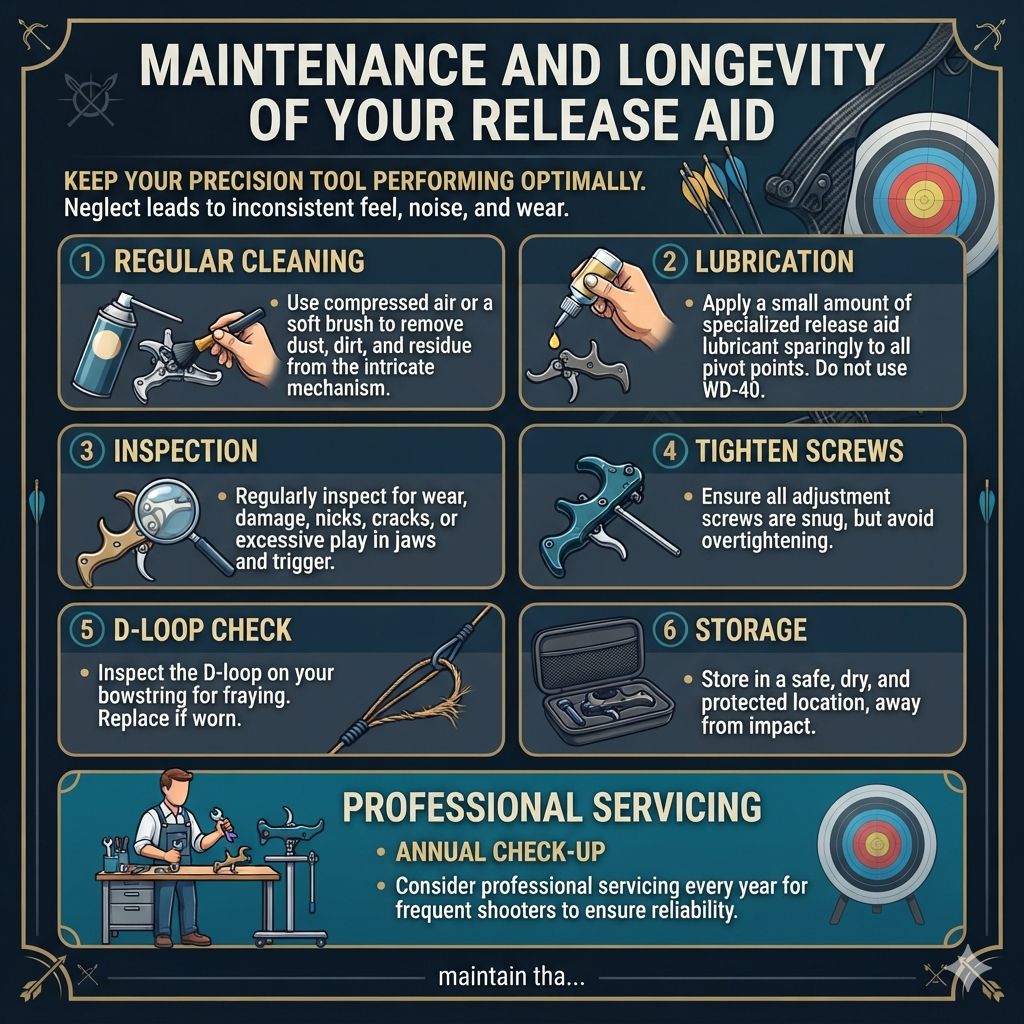
Just like any precision tool, your archery release aid requires regular maintenance to ensure it functions optimally and lasts for a long time. Neglecting maintenance can lead to inconsistent trigger feel, increased noise, and premature wear, ultimately affecting your shooting performance.
The most basic maintenance involves keeping the release aid clean and properly lubricated. Dust, dirt, and residue can accumulate in the intricate mechanisms, hindering smooth operation. Periodically, you should use compressed air or a soft brush to remove debris.
Following this, apply a very small amount of specialized release aid lubricant to any pivot points or moving parts. It’s crucial to use lubricants specifically designed for releases, as common lubricants like WD-40 can attract dirt and degrade plastic components.
Regularly inspect the release aid for any signs of wear or damage. Pay close attention to the jaws, trigger mechanism, and any adjustment screws. If you notice any nicks, cracks, or excessive play in the components, it might be time to consider a replacement or professional servicing.
A worn-out release can not only be noisy but also unreliable, leading to misfires or inconsistent shots.
- Regular Cleaning: Use compressed air or a soft brush to remove dust and debris from the mechanism.
- Lubrication: Apply specialized release aid lubricant sparingly to moving parts.
- Inspection: Check for wear and tear on jaws, trigger, and screws.
- Tighten Screws: Ensure all adjustment screws are snug but not overtightened.
- D-Loop Check: Inspect the D-loop for fraying and replace as needed.
- Storage: Store your release aid in a safe place, protected from moisture and impact.
- Professional Servicing: Consider having your release aid professionally checked and serviced annually, especially if you shoot frequently.
By adhering to a simple maintenance routine, you can extend the lifespan of your release aid, ensure consistent performance, and maintain that satisfyingly quiet post-shot sound.
Frequently Asked Questions
What is the ideal sound of a release aid after a shot?
The ideal sound is a clean, crisp “click” from the release mechanism itself, often accompanied by a muffled “thwack” as the arrow is propelled. There should be no rattling, clanking, or loud popping sounds.
Why is my release aid making a rattling noise?
A rattling noise typically indicates that a component within the release aid is loose. It could be an adjustment screw, an internal part, or even something as simple as a loose D-loop that isn’t seating properly. Check all screws and ensure everything is snug.
Can a noisy release aid affect my accuracy?
Yes, a noisy release aid can negatively impact accuracy. Unusual sounds often stem from inefficiencies in the release process, such as inconsistent jaw movement or trigger activation. These inefficiencies can cause the bowstring to oscillate differently, leading to less predictable arrow flight.
How often should I clean and lubricate my release aid?
It’s recommended to clean and lubricate your release aid at least once a year, or more frequently if you shoot in dusty or wet conditions. Regular inspections for wear and tear should be done more often.
Should I be concerned if my release aid sounds different than usual?
Yes, any change in the sound of your release aid from its normal operation should be investigated. A different sound can be an early warning sign of a mechanical issue, a tuning problem, or a developing technique flaw that needs to be addressed.
Final Thoughts
The sound your archery release aid makes after the shot is a vital diagnostic tool, offering insights into the overall health of your equipment and your shooting form. A quiet, clean release signifies efficiency, while unusual noises are often clues pointing towards issues that need attention. By understanding typical sounds, performing regular maintenance, and committing to proper tuning and technique, you can ensure your release aid contributes to a consistently accurate and enjoyable shooting experience.