Are Oneida Bows Compound or a Different Style of Bow
Yes, Oneida bows are a unique type of compound bow. They use a levering system with cams and cables to create let-off (reducing the holding weight at full draw), which is the defining feature of a compound bow. Their distinct design combines the outer limbs of a recurve bow with the mechanical advantages of a compound system.
Have you ever seen an Oneida bow and felt a bit confused? With its long, graceful limbs, it looks a lot like a traditional recurve bow. But then you notice the cams, cables, and complex riser, and it starts to look like a modern compound bow. This unique mix of old and new can leave many archers, especially beginners, scratching their heads and asking, “Are Oneida bows compound?”
If you’ve ever felt this way, you’re not alone! It’s a very common question. The good news is that the answer is simpler than you think. In this guide, I’ll walk you through everything you need to know about these fascinating bows. We’ll break down exactly what they are, how they work, and why they might just be the perfect bow for you.
What Exactly is an Oneida Bow?
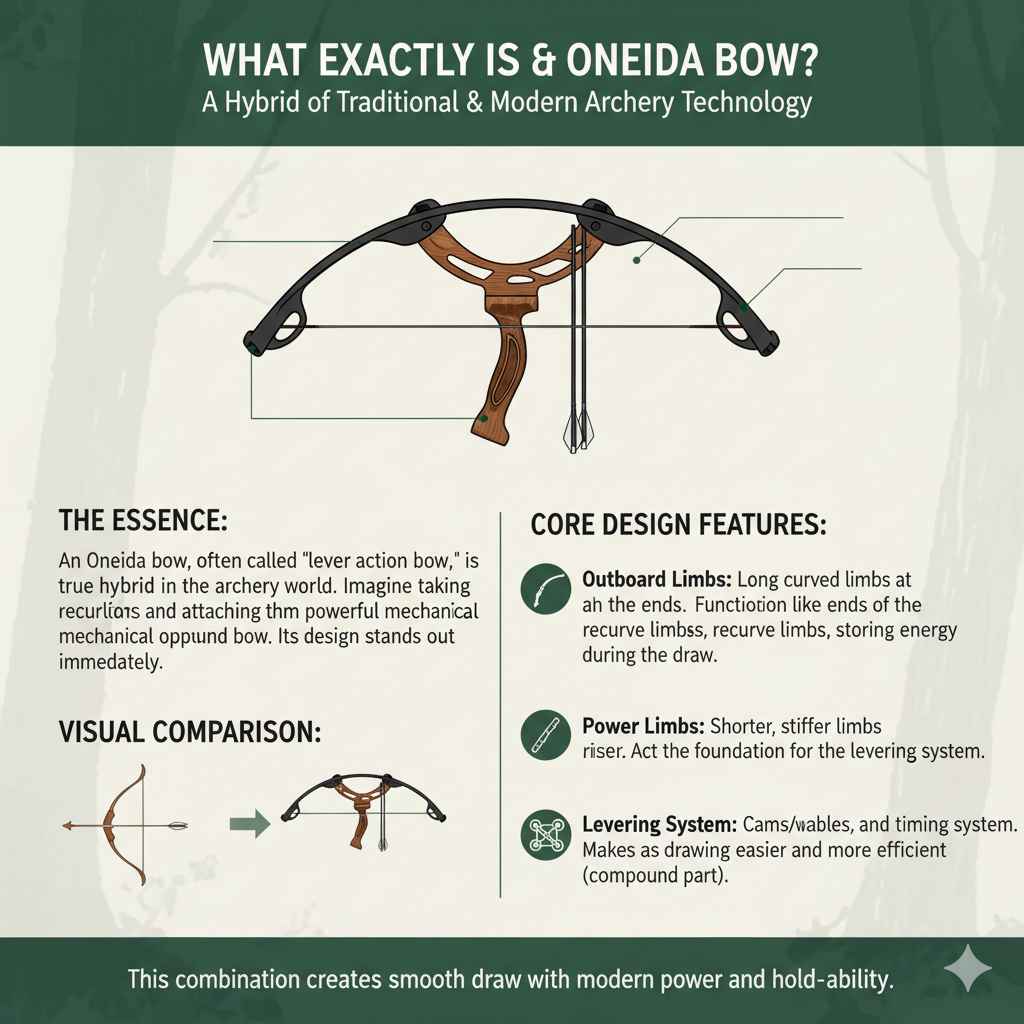
An Oneida bow, often called a “lever action bow,” is a true hybrid in the archery world. Imagine taking the elegant, sweeping limbs of a recurve bow and attaching them to the powerful, mechanical engine of a compound bow. That’s the essence of an Oneida bow. Its design stands out immediately on any archery range.
The core of the design features:
- Outboard Limbs: These are the long, curved limbs at the ends of the bow. They look and function like recurve limbs, storing energy as you draw the string.
- Power Limbs: These are shorter, stiffer limbs located closer to the riser (the handle). They act as the foundation for the levering system.
- Levering System: This is the “compound” part of the bow. It includes cams (or wheels), cables, and a timing system that work together to make drawing the bow easier and more efficient.
This combination is what creates the signature look and feel of an Oneida bow. It’s an engineering marvel designed to blend the smooth draw of a traditional bow with the power and hold-ability of a modern compound.
The Big Reveal: So, Is it a Compound Bow?
Let’s get straight to the point: Yes, an Oneida bow is classified as a compound bow.
The defining characteristic of any compound bow isn’t the shape of its limbs, but rather its use of a mechanical system to aid the archer. Specifically, a compound bow uses a system of levers, cables, and pulleys (cams) to create a feature called “let-off.”
Let-off is the magic behind a compound bow. As you pull the string back, the draw weight increases until it hits a peak. Then, as the cams roll over, the system takes over and the holding weight dramatically decreases. For example, a 60-pound compound bow might only require you to hold 12 pounds at full draw. This makes it much easier to aim steadily.
Since Oneida bows use this exact principle—a levering system with cams to produce let-off—they fall firmly into the compound bow category. They just achieve it with a different and very cool-looking design!
The Hybrid Design: Combining the Best of Both Worlds
To truly understand why an Oneida bow feels so different, let’s look at how its hybrid design brings together elements from both recurve and compound bows.
The Recurve Elements
The most noticeable recurve feature is the long, flexible outer limbs. In a traditional recurve bow, these limbs are responsible for storing all the energy. As you draw the string, they bend back, and when you release, they snap forward, propelling the arrow. Oneida bows use this same principle, which contributes to their famously smooth draw cycle. Many archers say drawing an Oneida feels more natural and less “harsh” than drawing a typical compound bow with aggressive cams.
The Compound Elements
The heart of the Oneida bow is its compound engine. Instead of the cams being mounted directly on the limb tips like on most compound bows, they are mounted inboard, closer to the riser. These cams are connected via cables to the power limbs and the outer limbs. As you draw the string, this lever system coordinates the bending of the limbs and manages the energy storage, ultimately providing that critical let-off at the end of the draw.
This clever system gives you the power and efficiency of a compound bow without sacrificing the smooth feel many people love about traditional archery.
Oneida vs. Traditional Compound Bow: What’s the Difference?
While both are technically compound bows, there are some key differences in performance, feel, and maintenance. Understanding these can help you decide which style is better suited for you.
| Feature | Oneida Bow | Traditional Compound Bow |
|---|---|---|
| Limb Design | Exposed outer recurve-style limbs and inner power limbs. | Solid or split limbs, typically shorter and stiffer. |
| Draw Cycle | Extremely smooth, often described as feeling like a recurve. | Can range from smooth to aggressive, with a more noticeable “hump and valley.” |
| Noise Level | Generally very quiet due to the limb design absorbing vibration. | Varies by model; often requires extensive dampening accessories to be quiet. |
| Maintenance | Can be more complex; requires knowledge of the timing system. | Standard maintenance procedures; most pro shops are familiar with them. |
| Feel at Release | Minimal hand shock and a very “dead in the hand” feel. | Hand shock varies greatly between models. |
| Finger Shooting | Excellent for finger shooters due to less string pinch. | Most are designed exclusively for a mechanical release aid. |
Oneida vs. Recurve Bow: A Tale of Two Styles
It’s also helpful to compare an Oneida to a true recurve bow to see just how much of a technological leap it represents, despite its traditional appearance.
| Feature | Oneida Bow | Traditional Recurve Bow |
|---|---|---|
| Let-Off | Yes, typically 65-80% let-off, making it easy to hold. | No let-off. You hold the full peak weight at full draw. |
| Arrow Speed | Significantly faster due to the compound levering system. | Slower. Speed is directly related to draw weight and limb efficiency. |
| Aiming | Much easier to hold steady for longer periods. Can use sights and peeps. | Requires more strength to hold steady. Aiming is typically instinctive or “gap” shooting. |
| Complexity | Many moving parts: cams, cables, timing system. | Very simple: a riser, two limbs, and a string. |
| Tuning | Requires tuning of cams, timing, and rest, similar to other compounds. | Simpler tuning, focused on brace height, nocking point, and arrow spine. |
Why Choose an Oneida Bow? The Advantages
So, with all the choices out there, why would an archer pick an Oneida bow? They offer a unique set of benefits that appeal to a specific type of shooter.
- Unmatched Smoothness: The number one reason people fall in love with Oneida bows is the draw cycle. It’s incredibly smooth from start to finish, without the jarring “hump” you can feel on some compound bows.
- Whisper-Quiet Shot: The design of the lever action system is naturally quiet. The long outer limbs help dampen vibration, resulting in a shot that has very little noise and hand shock. This is a huge advantage for hunters.
- Great for Finger Shooters: Because of their longer axle-to-axle length, Oneida bows have a less severe string angle at full draw. This reduces “finger pinch,” making them one of the few modern compound bows that are comfortable to shoot with fingers instead of a mechanical release.
- Aesthetic Appeal: Let’s be honest—they look amazing. The blend of classic curves and modern mechanics gives them a timeless look that stands out.
- Proven in Bowfishing: Oneida bows are legendary in the bowfishing community. Their smooth draw allows for quick “snap shooting,” and their durable design can handle the rough conditions of being on a boat.
What to Consider Before Buying: The Disadvantages
Of course, no bow is perfect for everyone. There are a few things to keep in mind before you decide to purchase an Oneida bow.
- Tuning and Maintenance: The unique levering system can be tricky to tune if you’re not familiar with it. Not all bow shops have technicians experienced with Oneida bows, so you might need to learn to do some maintenance yourself or find a specialist.
- Size and Weight: They are typically longer from axle-to-axle than most modern compound bows. This can make them a bit more unwieldy in a tight hunting blind or a dense forest.
- Cost: Oneida bows are premium-quality bows and their price reflects that. They are an investment, often costing as much as or more than high-end compound bows from other major brands.
- Accessory Compatibility: While most standard accessories will fit, you may need to be mindful of things like bow-mounted quivers due to the movement of the outer limbs.
A Brief History of the “Lever Action” Bow
The story of the Oneida Eagle Bow begins in the 1980s. The goal of the designers was revolutionary at the time: to create a bow that offered the technological benefits of a compound—speed, power, and let-off—while preserving the fluid grace and smooth draw of a traditional recurve. This vision led to the invention of the lever action bow.
The design quickly gained a devoted following, especially among hunters who valued its quiet shot and bowfishers who needed its unique performance characteristics. The history of archery is filled with innovations, and the Oneida bow holds a special place as a successful and enduring hybrid design. For a deeper look into the evolution of bow technology, resources like the Archery Hall of Fame provide a fascinating glimpse into the minds of inventors who shaped the sport.
Taking Care of Your Oneida Bow
Proper care is essential for any bow, and the unique design of an Oneida means you should pay attention to a few key areas. Here are some simple tips to keep your bow in top shape:
- Inspect Strings and Cables Regularly: Before each shooting session, run your fingers along the string and cables. Look for any signs of fraying, broken strands, or excessive fuzziness. Replace them if you see any damage.
- Keep It Clean: The levering mechanism has several moving parts. Keep the cams, axles, and limb pockets free of dirt, dust, and debris. A soft brush or a can of compressed air works well for this.
- Check Your Timing: The cams on an Oneida bow need to rotate in sync. Periodically check to make sure they are hitting the draw stops at the same time. If the timing is off, it will affect your accuracy.
- Never Dry-Fire Your Bow: This rule applies to all bows, but it’s worth repeating. Firing a bow without an arrow can cause a catastrophic failure, damaging the bow and potentially injuring you.
- Store It Properly: When you’re not using your bow, store it in a cool, dry place inside a protective case. Avoid leaving it in hot cars or damp basements, as extreme temperatures and humidity can damage the limbs and strings.

Frequently Asked Questions (FAQ)
Are Oneida bows good for beginners?
They can be, but they come with a learning curve. Their smooth draw is very forgiving, which is great for new archers. However, the maintenance and tuning can be more complex than a standard compound bow. A beginner can certainly learn on an Oneida, but it’s best to have access to an experienced mentor or a knowledgeable pro shop.
Can you shoot an Oneida bow with fingers?
Absolutely! This is one of their biggest strengths. Their longer design creates a less sharp string angle, which is much more comfortable for archers who prefer to shoot with a finger tab or glove instead of a mechanical release aid.
Are Oneida bows fast?
Yes, they are quite fast and powerful. While they may not always match the top speeds of the most aggressive, high-performance compound bows on the market, they produce more than enough speed and kinetic energy for hunting any big game animal in North America.
Why are Oneida bows so popular for bowfishing?
There are a few reasons. Their smooth draw allows for quick, instinctive shots at moving fish. They are also incredibly durable and can withstand the wet and rough environment of bowfishing. Many bowfishing models are also designed for low or no let-off, which is ideal for this style of shooting.
Are Oneida bows still made today?
Yes, they are. After a brief period of uncertainty, Oneida Eagle Bows is back to producing high-quality bows. They continue to innovate on their classic lever action design while serving their dedicated community of archers.
What is “let-off” on a bow?
Let-off is the percentage of peak draw weight that is reduced when you reach full draw. For example, a bow with 80% let-off and a 60-pound draw weight will only require you to hold 12 pounds of weight at the back wall, making it much easier to aim.
Do I need a special bow press for an Oneida bow?
Yes, in most cases, you will need a bow press that is compatible with Oneida bows. Because of their unique limb system, not all standard bow presses will work. It is crucial to use the correct equipment to avoid damaging the bow or injuring yourself.
Conclusion: A Unique Bow for a Unique Archer
So, are Oneida bows compound? The answer is a clear and resounding yes. They are a brilliantly engineered type of compound bow that uses a unique lever action system to deliver a shooting experience unlike any other. By blending the smooth draw and quiet release of a traditional bow with the power, speed, and hold-ability of a modern compound, Oneida has carved out a special niche in the archery world.
They may not be for everyone. Their unique maintenance needs and premium price point mean they are best suited for the archer who values their specific benefits. But for those who prioritize a silky-smooth draw, a whisper-quiet shot, and the versatility to shoot with fingers, the Oneida bow is more than just a piece of equipment—it’s a passion.
Whether you’re a bowhunter, a bowfisher, or simply an archer who appreciates fine engineering and a classic feel, the Oneida bow offers a rewarding and enjoyable journey. The most important thing is to find a bow that feels right in your hands and brings you joy every time you head to the range or the woods. Happy shooting!