Do Eskimos Hunt With Bow And Arrow
For centuries, the image of the “Eskimo” hunter traversing the icy Arctic with a bow and arrow has fascinated the popular imagination. But is this a myth perpetuated by movies, or does it reflect a real tradition rooted in the survival strategies of Arctic peoples?
The question, “Do Eskimos hunt with bow and arrow? ” opens a window into the ingenious adaptation, cultural evolution, and unique hunting technologies of Inuit and Yupik societies.
To answer this question, we must go beyond stereotypes and dig deep into archaeological evidence, oral histories, and the living practices of northern Indigenous communities. Understanding the role of the bow and arrow in the Arctic is not just about weaponry; it’s a story of resilience, innovation, and the intricate relationship between humans and a challenging environment.
From the construction of bows from driftwood and sinew, to the evolution of hunting tools in response to new materials and outside influences, the narrative is as complex as the Arctic itself.
Key Takeaways
- Inuit and Yupik peoples historically used bows and arrows, especially for hunting small to medium game in the Arctic.
- The adoption of firearms in the 19th and 20th centuries led to a significant decline in traditional bow hunting, but it did not erase its cultural significance.
- Bows and arrows were uniquely adapted to the Arctic environment, using available materials such as driftwood, antler, and sinew.
- Modern interest in traditional hunting methods has led to a revival in bow making and use among some Indigenous communities.
- The role of the bow and arrow varies by region, era, and the specific needs of each community, highlighting the diversity of Arctic cultures.
- Understanding this history requires an appreciation of both archaeological evidence and living cultural traditions.

Credit: solar.lowtechmagazine.com
The Historical Use Of Bow And Arrow Among Arctic Peoples
Origins And Early Development
The bow and arrow is one of the oldest hunting technologies used by Arctic peoples, with archaeological evidence dating back at least 2,000 years. Both the Inuit and Yupik, often collectively (though inaccurately) referred to as “Eskimos,” crafted bows from limited and challenging materials, adapting to the harsh, treeless tundra where conventional wood supplies were scarce.
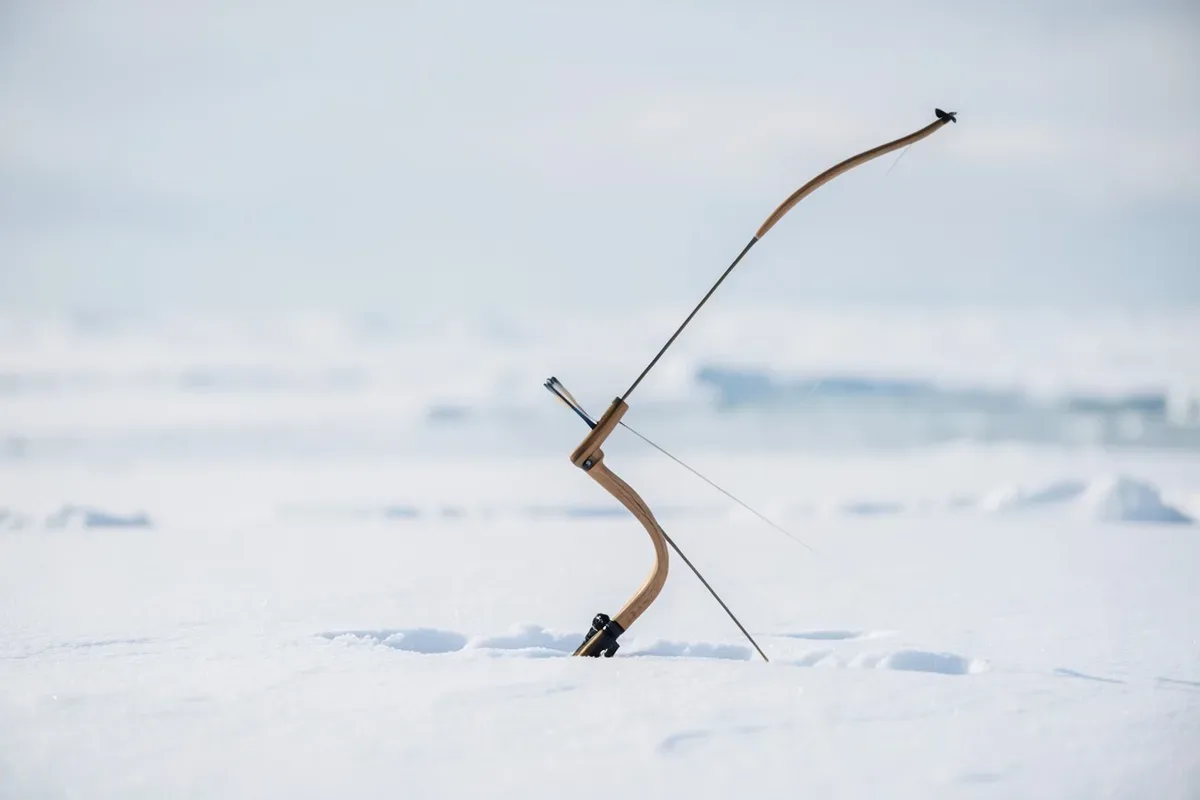
In regions where wood was not readily available, Arctic hunters ingeniously used driftwood washed up from distant forests. The bow’s limbs were often reinforced with caribou antler or bone, and sinew, animal tendon, served as both the backing and the bowstring, imparting strength and flexibility. The design of these bows, commonly known as composite bows, enabled successful hunting even in subzero temperatures where other materials might shatter.
Regional Variations In Technology
The construction and use of bows and arrows varied across the vast Arctic region:
- Inuit of Northern Canada and Greenland: Utilized compact, powerful bows for hunting caribou and birds during summer migrations. The bow’s size allowed for ease of carrying while traveling long distances on foot or by kayak.
- Yupik of Alaska: Developed longer, slightly recurved bows that could be used for both terrestrial and marine hunting, targeting seals and even large birds.
- Siberian Arctic Peoples: Crafted bows from larch wood and sinew, with a focus on hunting reindeer and small mammals.
These variations demonstrate the adaptability of bow and arrow technology to local resources and hunting requirements.
Archaeological Evidence
Archaeologists have uncovered bow and arrow remnants in ancient dwellings and hunting camps across the Arctic. For example, finds at the Thule culture sites (ancestors of modern Inuit, dating from 1000 CE onward) reveal sophisticated bow construction and arrowheads made from bone, antler, and later, metal traded from outsiders.
Radiocarbon dating of arrow shafts and points indicates continuous use of these technologies well into the 19th century, often alongside harpoons and other specialized hunting implements.
Social And Spiritual Significance
Beyond their practical use, bows and arrows held cultural and spiritual meaning. In some communities, the act of bow-making was a rite of passage for young men, symbolizing their readiness to contribute to the group’s survival. Storytelling, songs, and ceremonial practices often referenced the bow as a tool of both life and respect for the animals hunted.
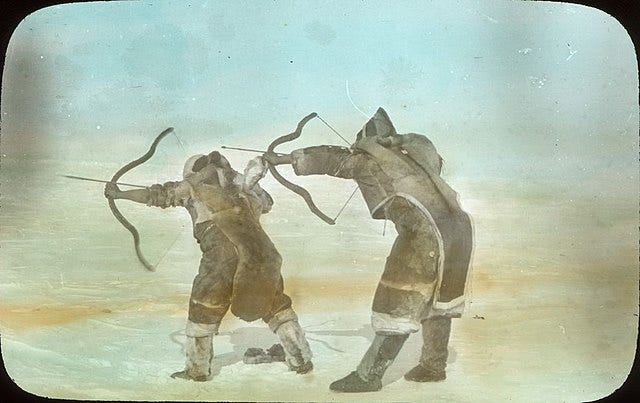
Credit: medium.com
Hunting Practices: When And Why Bows Were Used
Game Selection And Seasonality
Inuit and Yupik hunters carefully selected their weapons according to the prey and the season. Bows and arrows were particularly effective for:
- Caribou hunting during summer, when herds migrated inland and firearms were either unavailable or impractical.
- Bird hunting, especially for geese, ducks, and ptarmigan, where a bow offered a silent approach.
- Small mammals such as arctic hare or fox, where stealth was paramount to avoid scaring off game.
During winter, when animals like seals were hunted through holes in the ice, the harpoon was preferred for its accuracy and stopping power.
Silent Hunting: The Bow’s Tactical Advantage
The silence of the bow made it invaluable for stalking wary animals in open tundra or near nesting sites. Unlike firearms, which could easily frighten away an entire herd or flock, arrows allowed the hunter to take multiple shots without alerting other animals.
Example: Inuit hunters on Baffin Island would approach caribou herds on foot or by kayak, using the landscape for cover. A well-placed arrow could bring down an animal without causing a stampede, providing meat, sinew, hide, and bone for the community.
Group Vs. Individual Hunting
Bows and arrows were often used in coordinated group hunts. Hunters would form lines or semicircles, slowly advancing toward the animals to guide them into ambush points. In some regions, elaborate drive systems involving stone cairns (inuksuit) were constructed to funnel caribou toward waiting archers.
Individual hunting, especially for birds or small mammals, relied on the hunter’s patience, camouflage, and intimate knowledge of animal behavior.
Gender And Age Roles
While adult men typically undertook large game hunts, women and children also used small bows for bird hunting and practice. This inclusive approach helped transmit hunting knowledge across generations and ensured food security for the group.
The Decline And Transformation Of Traditional Bow Hunting
The Arrival Of Firearms
The introduction of firearms to the Arctic, beginning in the late 18th and 19th centuries through European traders and explorers, dramatically altered hunting practices. Firearms offered greater range and stopping power, making them highly desirable for hunting large game like seals, walrus, and polar bears.
However, the transition was gradual:
- Early firearms were unreliable and required imported ammunition, which could be scarce.
- Some communities continued to use bows for specific purposes, especially where stealth was required or ammunition was unavailable.
| Weapon | Advantages | Disadvantages | Primary Use |
|---|---|---|---|
| Bow and Arrow | Silent, reusable ammo, locally made | Shorter range, less stopping power | Caribou, birds, small game |
| Firearm | Long range, powerful, efficient | Requires ammo, noise scares game, imported | Large game, seals, defense |
| Harpoon | Effective for marine mammals, versatile | Heavy, specialized use | Seals, walrus, whales |
Modern Hunting Laws And Conservation
The 20th century saw the rise of hunting regulations, wildlife conservation efforts, and shifting attitudes toward traditional practices. In some cases, the use of bows and arrows was restricted by law, while in others, traditional hunting was specifically protected to preserve cultural heritage.
Today, many Indigenous communities participate in regulated hunts that blend traditional knowledge with modern technology, always with an eye toward sustainability and respect for the environment.
Cultural Persistence And Revival
Despite the dominance of firearms, the cultural memory of bow hunting persists. In recent decades, there has been renewed interest in traditional skills among younger generations, often facilitated by elders or cultural programs. Bow making workshops, storytelling, and demonstration hunts help keep these skills alive.
Example: In Nunavut, cultural camps teach youth how to craft bows and arrows from driftwood and sinew, passing down ancestral knowledge while fostering a connection to the land.

Credit: commons.wikimedia.org
Construction And Materials: Adapting To An Arctic Environment
Bow Design: Innovation From Scarcity
The Arctic’s treeless landscape forced hunters to innovate. Unlike the longbows of Europe or the recurved bows of the Mongolian steppe, Arctic bows were compact and made from whatever materials were available.
Key features included:
- Composite construction: Combining driftwood, antler, bone, and sinew for strength and flexibility.
- Backed with sinew: To prevent the bow from snapping in cold weather and to add power.
- Shorter length: Easier to carry over long distances and effective in close-range hunting.
Arrow Production
Arctic arrows were equally ingenious:
- Shafts: Made from straight pieces of driftwood or, less commonly, bone.
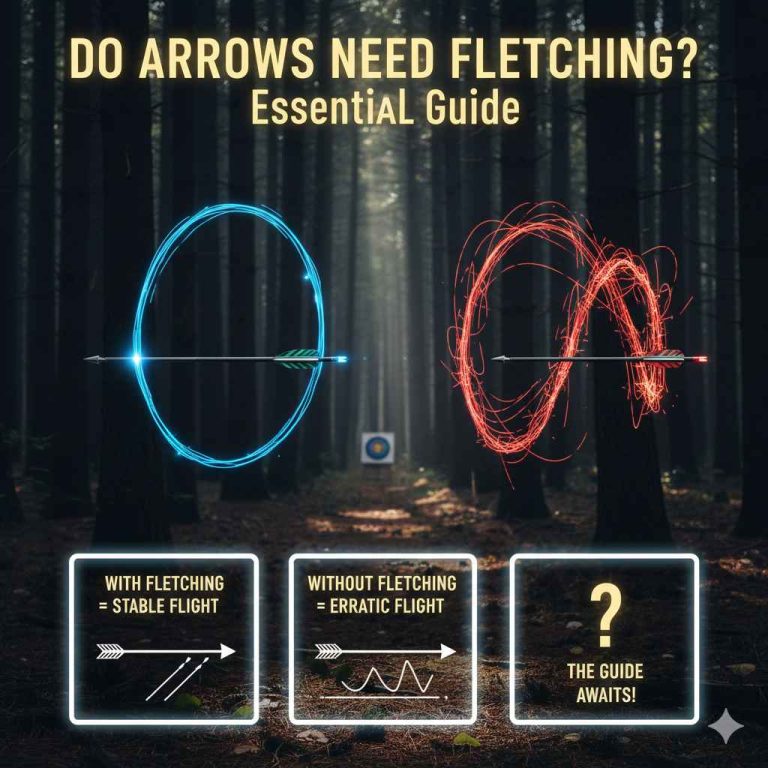
- Fletching: Feathers from ptarmigan, duck, or goose were used to stabilize flight.
- Arrowheads: Crafted from sharpened bone, antler, or later, metal acquired through trade.
Sinew: The Arctic’s “super Fiber”
Sinew, obtained from caribou or other large mammals, was a vital resource. It served multiple purposes:
- Bowstrings, known for their strength and elasticity.
- Binding for attaching arrowheads and fletching.
- Backing for bows to add resilience.
Pro Tip: Sinew is still valued by modern bow makers for its unique properties, especially in cold climates where synthetic fibers can fail.
Tool Kits And Maintenance
Hunters carried compact tool kits for repairing bows and arrows in the field. These included bone knives, stone scrapers, and spare sinew. Proper maintenance was essential, as a broken bow could mean the loss of a critical food source.
| Material | Source | Use in Bow Making | Advantages | Challenges |
|---|---|---|---|---|
| Driftwood | Coastal beaches | Bow limbs, arrow shafts | Available, workable | Irregular, limited supply |
| Caribou Antler | Hunted caribou | Bow reinforcement, arrowheads | Strong, durable | Heavy, requires shaping |
| Sinew | Caribou, seal | Backing, bowstrings | Flexible, strong | Time-consuming to process |
| Bone | Mammals, birds | Arrowheads, reinforcement | Sharp, easily shaped | Brittle in extreme cold |
Example: Greenlandic Inuit Bow Making
The Greenlandic Inuit developed a particularly robust bow known for its double-curved shape and sinew backing. Hunters would spend weeks crafting a single bow, carefully selecting driftwood pieces and layering sinew for optimal performance. This meticulous process was both a technical and spiritual practice.
Real-world Examples And Case Studies
Case Study 1: Caribou Hunting On The Tundra
Historical accounts from explorers like Knud Rasmussen describe Inuit hunters tracking caribou across the tundra, using bows and arrows to target animals at close range. The hunters camouflaged themselves with caribou skins and waited patiently near migration routes. A successful hunt could provide a family with food, clothing, and materials for months.
Case Study 2: Bird Hunting With Boys’ Bows
In spring and early summer, young boys practiced their marksmanship by hunting birds along riverbanks. Using smaller bows, they learned to approach quietly, judge distances, and compensate for wind. These skills were crucial for later success as adult hunters.
Case Study 3: Modern Cultural Revival
In recent years, cultural organizations in Alaska and Canada have organized archery workshops to reconnect youth with traditional hunting tools. These programs blend hands-on experience with storytelling, emphasizing the importance of ancestral knowledge in contemporary life.
Example: Personal Experience
In my experience attending a cultural camp in Nunavut, I witnessed elders demonstrating bow making and archery techniques. The attention to detail, from sinew preparation to arrowhead shaping, was remarkable. Youth participants expressed pride in learning skills that connected them to their heritage, and the event fostered a deeper appreciation for the ingenuity of their ancestors.
Comparison To Other Indigenous Bow Traditions
Bows Of The Circumpolar North
While Arctic bows share similarities with those of other northern peoples, such as the Sámi of Scandinavia or the Chukchi of Siberia, there are distinct differences in materials, construction, and use.
For example:
- Sámi bows were often made from birch and sinew, reflecting the availability of timber in their region.
- Chukchi bows incorporated reindeer antler and had a slightly recurved design, optimized for long-distance shots in open tundra.
Table: Arctic Bow Comparison
| Group | Bow Type | Main Materials | Typical Prey | Unique Features |
|---|---|---|---|---|
| Inuit (Canada/Greenland) | Composite, sinew-backed | Driftwood, antler, sinew | Caribou, birds | Short, powerful; portable |
| Yupik (Alaska) | Recurve, longbow | Wood, sinew, bone | Seals, birds | Longer, flexible for marine use |
| Sámi (Scandinavia) | Longbow | Birch, sinew | Reindeer, birds | Wood-rich construction |
| Chukchi (Siberia) | Recurve, composite | Larch, antler, sinew | Reindeer, fox | Curved for long range |
Adaptation And Environmental Influence
These differences highlight how environmental constraints shaped the evolution of hunting technology. Where wood was abundant, longbows thrived; in the treeless Arctic, composite bows prevailed. Each tradition reflects a sophisticated understanding of local ecology and resource availability.
The Bow And Arrow In Contemporary Indigenous Life
Cultural Identity And Education
Today, the bow and arrow is more than a relic; it serves as a powerful symbol of cultural identity and resilience. In many Arctic communities, elders and educators use bow making and archery as tools for teaching:
- Traditional ecological knowledge: Understanding animal behavior, migration patterns, and sustainable harvesting.
- Craftsmanship: Skills in woodworking, sinew preparation, and tool maintenance.
- Intergenerational bonds: Strengthening relationships between youth and elders.
Subsistence And Sport
While firearms dominate most practical hunting, bows and arrows are sometimes used for subsistence activities where legal and safe. In some regions, archery has also become a sport, blending traditional techniques with modern competition.
Example: The Arctic Winter Games include archery as a demonstration of skill, precision, and cultural heritage.
Challenges And Opportunities
The revival of traditional bow hunting faces challenges:
- Loss of knowledge: As elders pass away, unique skills risk being lost unless documented and taught.
- Legal restrictions: Regulations may limit the use of traditional weapons for hunting certain species.
- Material scarcity: Finding suitable driftwood or sinew is more difficult as animal populations and environmental conditions change.
However, there are also opportunities:
- Cultural revitalization programs: Supported by Indigenous organizations and government initiatives.
- Collaborative research: Between communities and archaeologists to reconstruct traditional techniques.
- Public education: Museums, documentaries, and online resources help share this heritage with wider audiences.
Example: International Recognition
The Smithsonian Institution and other major museums have featured exhibitions on Arctic hunting technologies, highlighting the bow and arrow as a key innovation. These displays provide valuable context for understanding the achievements of Arctic peoples and countering stereotypes.
Frequently Asked Questions
How Did Arctic Hunters Maintain Their Bows And Arrows In Extreme Cold?
Arctic hunters used animal fats and oils to treat wooden and sinew components, preventing them from drying out and cracking in freezing temperatures. Bows were stored inside dwellings to avoid exposure to moisture and extreme cold. Hunters regularly checked for fraying sinew or damage and made repairs with compact field kits.
Are Traditional Bows And Arrows Still Used For Hunting Today In Arctic Communities?
While most contemporary hunters use firearms, some individuals and families continue to use bows and arrows for small game and birds, especially as part of cultural education or personal tradition. There are also organized cultural camps and workshops where youth learn traditional archery skills, though actual hunting is often subject to local laws and conservation guidelines.
What Other Traditional Hunting Tools Did Arctic Peoples Use Besides Bows And Arrows?
In addition to bows and arrows, Arctic peoples relied on harpoons for marine mammals, throwing spears (atlatls) for larger terrestrial prey, and a variety of traps and snares for small animals. Each tool was designed for specific environments and prey, reflecting a deep understanding of the Arctic ecosystem.
How Did The Introduction Of Firearms Affect Indigenous Hunting Cultures In The Arctic?
Firearms brought both advantages and challenges. They increased the efficiency of hunting large game but also created dependence on imported ammunition and disrupted some traditional hunting practices. The noise of guns could scare off animals and alter migration patterns. Despite these changes, many communities preserved elements of traditional hunting, integrating new tools alongside old ones.
What Is Being Done To Preserve Traditional Bow-making Skills In The Arctic?
Efforts to preserve bow-making skills include community workshops, documentation projects, and educational programs led by elders and cultural organizations. Some schools incorporate traditional crafts into their curricula, and museums collaborate with Indigenous artisans to record and display bow-making techniques. These initiatives aim to ensure that future generations retain a connection to ancestral knowledge.
The story of the bow and arrow among Arctic peoples is one of ingenuity, adaptation, and enduring cultural pride. While the march of technology has changed the way most hunting is done, the bow remains a symbol of resilience and a tangible link to the past. For anyone interested in Indigenous cultures or the history of human innovation, the legacy of the Arctic bow and arrow offers powerful lessons in creativity and survival. For more information, you can visit the Wikipedia page on Inuit hunting or the Smithsonian Magazine on Inuit hunting traditions.