How Do You Score Archery
Archery is a captivating blend of precision, discipline, and tradition, enjoyed by millions worldwide, from Olympic athletes to backyard hobbyists. But while nocking an arrow and hitting the target may seem straightforward, scoring in archery is a nuanced process governed by strict rules and subtle techniques. Understanding how points are awarded, which scoring systems are used, and how to avoid common pitfalls is essential whether you’re competing, officiating, or simply seeking to appreciate the sport at a deeper level.
Grasping the intricacies of archery scoring not only enhances your gameplay but also deepens your appreciation for each shot’s significance. From the World Archery Federation’s elaborate scorecards to the fast-paced environment of local 3D shoots, the rules determine winners, shape strategies, and create legendary moments. This article provides a comprehensive guide to archery scoring, covering target types, tournament variations, scoring procedures, and real-world examples that highlight the sport’s complexity and charm.
Key Takeaways
- Archery scoring systems vary significantly based on format, target type, and governing body.
- Understanding the value of each ring, arrow placement, and scoring procedures is essential for fair play.
- Major tournaments like the Olympics use standardized scoring for consistency and fairness.
- Mistakes in scoring can lead to disqualification or lost points; accuracy is vital.
- Practical examples and case studies help clarify how rules are enforced in real competitions.
The Foundations Of Archery Scoring
Scoring in archery is not just about counting points, it’s about applying a universally accepted set of rules that ensure fairness and consistency. The foundations begin with understanding the types of targets, the rings or zones, and the basic scoring method.
Types Of Archery Targets
Three main target types dominate the sport:
- Standard target faces: Used in World Archery (WA) and Olympic competitions, these targets feature colored concentric rings with a gold center.
- Field targets: Usually black and yellow, used in field archery events with varying distances and terrain.
- 3D targets: Foam animal replicas used for hunting simulations and 3D competitions.
Each target type has its own unique scoring zones and rules.
The Anatomy Of A Target Face
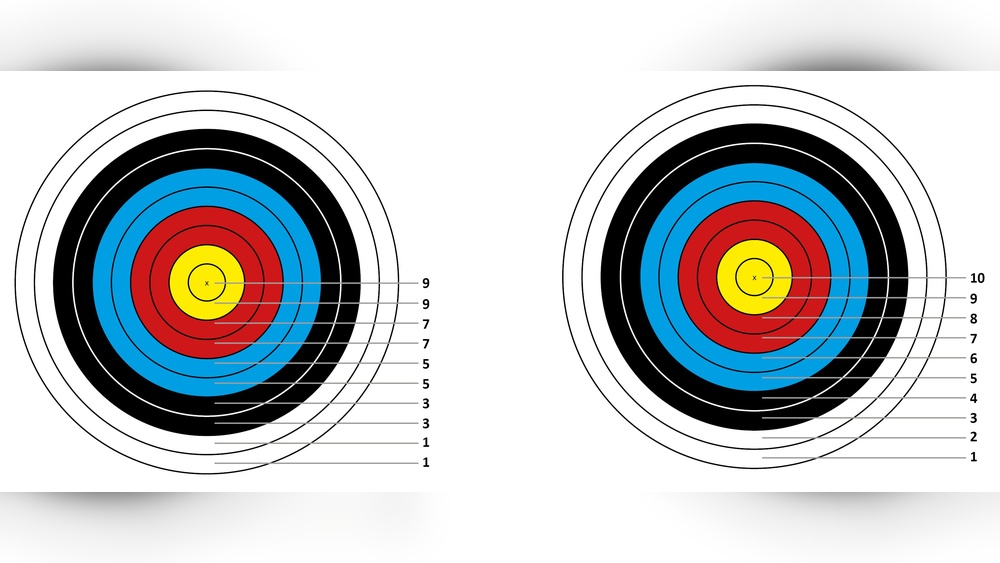
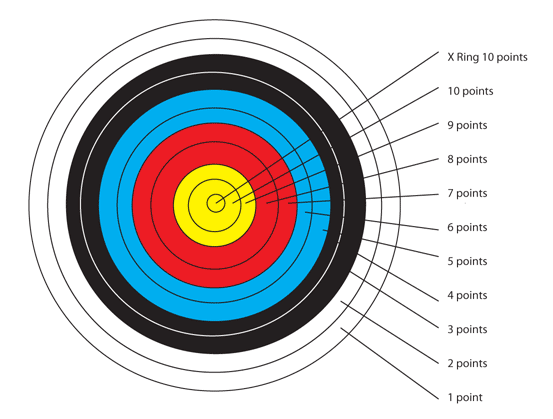
A standard World Archery target face is composed of ten concentric rings:
- Gold: Inner two rings (X/10 and 9)
- Red: Next two rings (8 and 7)
- Blue: Middle two rings (6 and 5)
- Black: Next two rings (4 and 3)
- White: Outermost two rings (2 and 1)
The highest score per arrow is 10 points, decreasing by one for each subsequent ring outward. The X-ring, the very center, serves as a tiebreaker in many competitions.
Arrow Value Determination
An arrow’s score is determined by the ring it touches or is closest to. If an arrow shaft touches the dividing line between two rings, the higher score is awarded. This “line-cutter” rule is universal, ensuring shooters are not unfairly penalized for marginal hits.
Scoring Procedure
In most competitions:
- Arrows are shot, commonly in ends of 3 or 6.
- Archers and scorers approach the target together.
- Arrow values are called by one archer and recorded by two scorers (to ensure accuracy).
- Disputes are resolved by a judge or official.
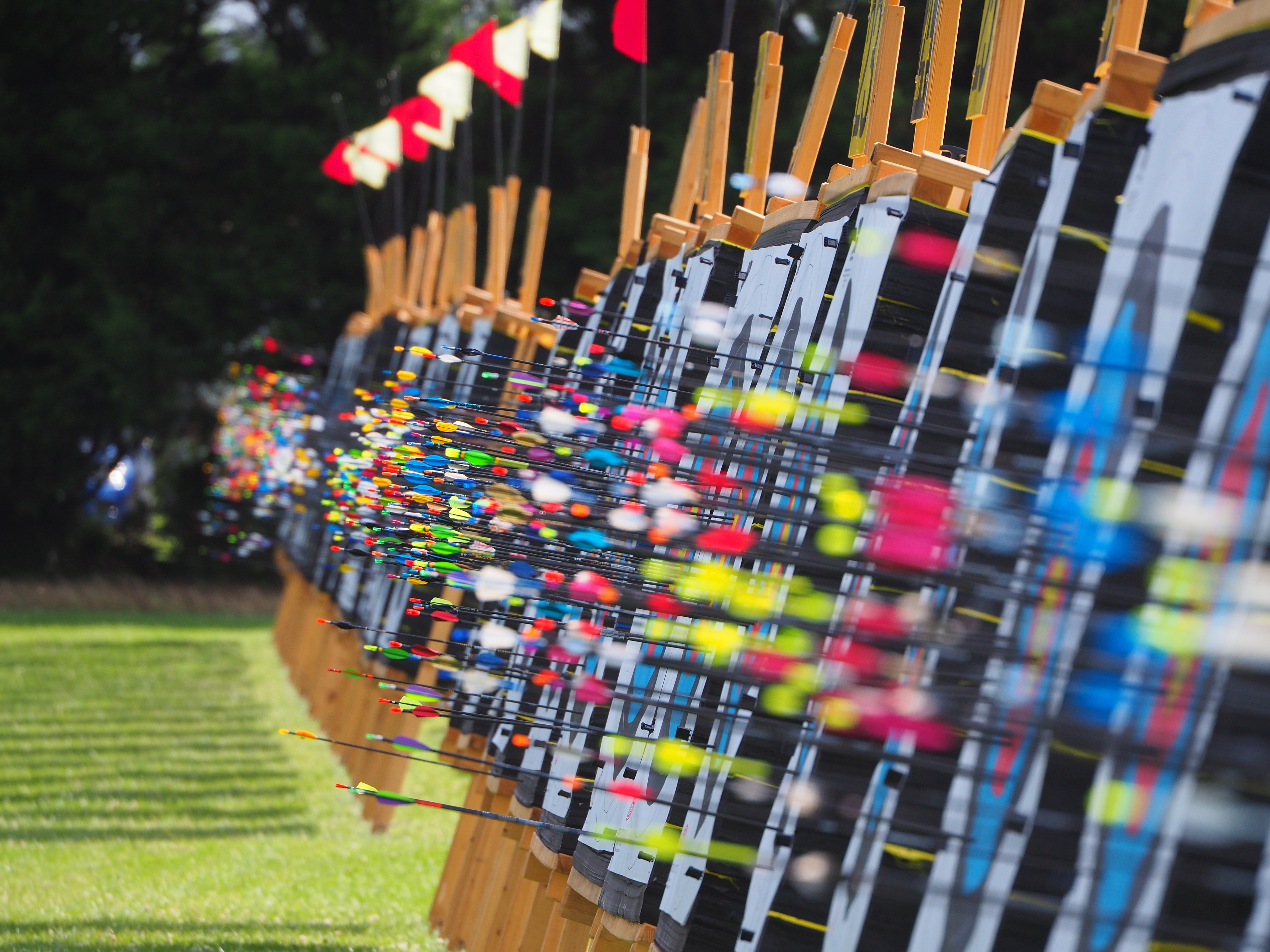
Pro Tip: Always leave arrows in the target until all scores are agreed and recorded. Removing arrows prematurely can lead to disputes or penalties.
Credit: startarchery.co.uk
Major Archery Scoring Systems Compared
Archery encompasses a range of disciplines, each with its own scoring nuances. Here’s how the most prominent systems stack up.
World Archery (wa) And Olympic Scoring
WA and Olympic competitions use standardized targets and procedures. For recurve and compound bows:
- 10-point system: Maximum per arrow is 10.
- Set system (for recurve): Matches are won by sets, not just total points.
- Cumulative scoring (for compound): Total score across all ends determines the winner.
National Field Archery Association (nfaa) Scoring
NFAA events feature:
- 5-ring targets: Scored 5 (center), 4, 3, 2, and 1.
- Field, hunter, and animal rounds with varying rules.
3d Archery Scoring
3D archery uses life-size animal targets with scoring rings:
- 12, 10, 8, 5 system: 12 for the smallest center ring, 10 for the vital zone, 8 for the body, and 5 for non-vital hits.
Indoor Vs Outdoor Scoring
- Indoor: Often uses 40cm or 60cm faces, closer distances (18m).
- Outdoor: Larger faces (80cm, 122cm), longer distances (up to 70m for Olympic recurve).
Scoring Table Comparison
Below is a comparison table of popular scoring systems:
| Format | Target Type | Rings | Max Score per Arrow | Special Rules |
|---|---|---|---|---|
| World Archery (Olympic) | Standard (122cm) | 10 | 10 | Set system for recurve, cumulative for compound |
| NFAA Field | Field face | 5 | 5 | Multiple distances/target types |
| 3D Archery | Animal replica | 4 | 12 | Bonus rings (12-point) |
| Indoor WA | 40cm face | 10 | 10 | Cumulative scoring |
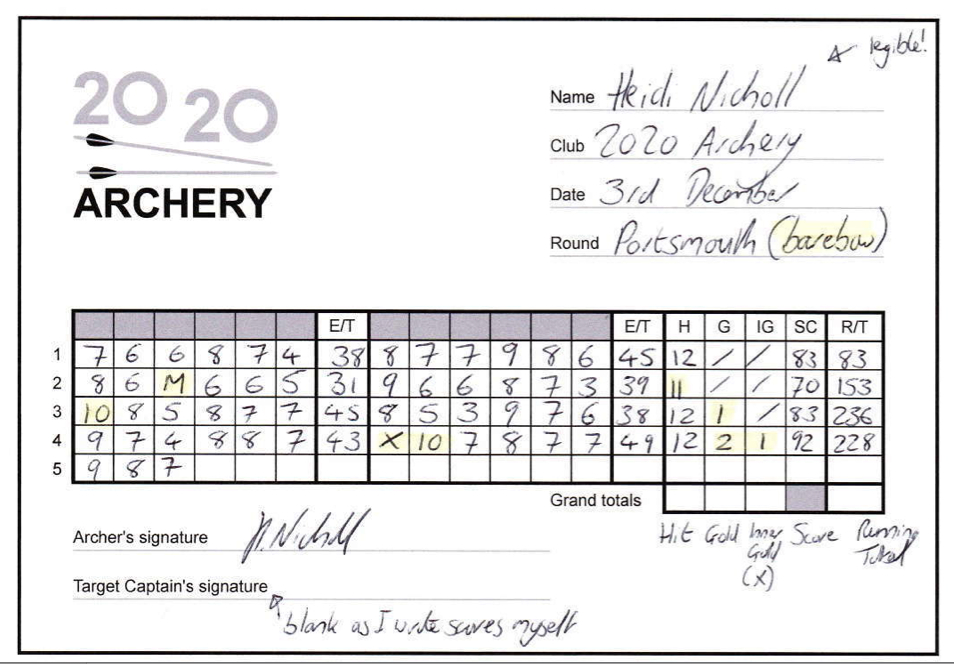
Credit: www.2020archery.co.uk
Step-by-step Guide To Scoring An Archery Round
Knowing the rules is one thing, applying them in a live event is another. Here’s a detailed walkthrough of how to score a typical archery round, from start to finish.
Preparing For Scoring
Before the round, scorers must:
- Gather scorecards (paper or electronic).
- Verify athlete names and target assignments.
- Review the event’s specific scoring rules.
Shooting And Arrow Retrieval
- Archers shoot designated arrows per end (often 3 or 6).
- Once the end is complete and signaled as safe, archers and scorers approach the target together.
Arrow Value Assessment
- Identify which arrows belong to which archer (initials or colors).
- Call out arrow scores from highest to lowest.
- Mark arrows with a distinctive mark (e.g., a dot) after scoring.
Score Entry And Verification
- Two scorers record each value independently.
- Archers check their scores for agreement.
- Discrepancies are resolved immediately, often in the presence of a judge.
Example: In my experience at a regional tournament, a line-cutter ruling changed a critical end’s outcome. The judge used a magnifying glass to confirm the arrow barely touched the higher ring, awarding the archer the higher score.
Handling Disputes And Errors
- If an arrow value is unclear, only a certified judge can make the final call.
- If arrows are pulled before scoring, the lowest possible value is usually awarded.
- Scorecards must be signed by both archer and scorer; unsigned cards may lead to disqualification.
End-of-round Procedures
- Total scores are calculated and double-checked.
- Scorecards are submitted to officials.
- Electronic scoring systems may prompt for confirmation before submission.
Credit: archery2017.wordpress.com
Rules, Penalties, And Common Scoring Mistakes
Adhering to scoring rules is critical. Even seasoned archers can lose points, or face disqualification, due to simple errors.
Common Scoring Rules
- Touching the line: Higher score is always awarded.
- Bounced-out or pass-through arrows: If witnessed, may be scored based on the judge’s assessment.
- Too many arrows: Only the lowest scoring arrows up to the allowed number are counted.
Typical Penalties
- Scorecard errors: Incorrect total or unsigned card may result in score reduction or disqualification.
- Shooting out of turn: Can result in the loss of the highest scoring arrow for that end.
- Foot faults: Stepping over the shooting line before completion can invalidate an end.
Mistakes To Avoid
- Failing to clearly mark scored arrows.
- Not verifying scores before signing.
- Removing arrows before scores are agreed.
Case Study: Scoring Error At A National Event
At the 2019 USA Archery Indoor Nationals, a leading competitor lost a podium finish when a scorecard was submitted with a math error. Despite the archer’s protest, rules required the lower total to stand, underscoring the importance of checking every detail.
Scoring Variations Across Archery Disciplines
While the core principles remain the same, different archery formats demand unique approaches to scoring.
Field Archery
- Targets are placed at varying, often unmarked distances.
- Scoring rings differ (center, inner, outer).
- Courses simulate real-world hunting scenarios.
3d Archery
- Life-size animal targets, often with multiple scoring zones.
- Fast-paced; archers shoot one arrow per target.
- Scoring rings can be hard to see, accuracy in calling scores is vital.
Indoor Archery
- Shorter distances (typically 18 meters).
- Smaller target faces increase difficulty.
- High scores are common; a single point often determines winners.
Traditional And Barebow Archery
- May use custom or historical targets.
- Scoring may be simplified or adapted for local rules.
- Emphasis on form and consistency over raw points.
Table: Field Vs. 3d Vs. Indoor Scoring
| Discipline | Target Type | Distance | Scoring Method | Unique Features |
|---|---|---|---|---|
| Field | Black/yellow rings | Varied/marked & unmarked | 5, 4, 3 | Outdoor, terrain-based |
| 3D | Animal replica | Varied, unmarked | 12, 10, 8, 5 | One arrow per target, hunting simulation |
| Indoor | 40/60cm face | 18m fixed | 10 to 1 | High scores, precision focus |
Archery Scoring In Major International Events
The world’s leading competitions showcase the highest standards of archery scoring. Understanding their systems gives insight into the sport’s rigor and the pressure athletes face.
Olympic Games
- Uses 122cm targets at 70 meters (recurve only).
- Matches consist of sets (first to 6 set points wins).
- Tied matches use a single-arrow shoot-off, closest to center wins.
World Archery Championships
- Similar to Olympic format, but includes compound bows.
- Compound uses cumulative scoring over 15 arrows (5 ends of 3).
Paralympic Archery
- Follows World Archery rules with adaptive equipment.
- Scoring systems are identical to Olympic events.
Notable Example: Gold Medal Shoot-off
At the 2016 Rio Olympics, Ku Bon-chan of South Korea clinched gold with a 10 in the shoot-off, demonstrating the pressure and precision required at the sport’s highest level. Such moments highlight the importance of every point.
Table: Olympic Vs. World Archery Championships
| Event | Bow Type | Target Size | Distance | Scoring System |
|---|---|---|---|---|
| Olympics | Recurve | 122cm | 70m | Set points |
| World Archery Champs | Recurve/Compound | 122cm/80cm | 70m/50m | Set (recurve)/cumulative (compound) |
Tools, Technology, And Best Practices For Accurate Scoring
Modern archery leverages technology and best practices to ensure accuracy and transparency in scoring.
Electronic Scoring Systems
- Used in major tournaments for real-time updates.
- Reduce human error in tallying scores.
- Integrated with live broadcasts and online leaderboards.
Scorecard Management
- Dual scorecards (paper and electronic) are often used for redundancy.
- Official scorekeepers are trained in recognizing and resolving common disputes.
- Frequent cross-checking between scorers and archers is standard practice.
Arrow Marking And Identification
- Use of colored fletching or initials on arrows.
- Marking arrow holes after scoring to prevent confusion.
- Replacement arrow procedures in case of equipment failure.
Pro Tip: Photographing Targets
Photographing scored targets before removing arrows can provide a backup record in case of disputes, especially in local or club-level events.
Example: Impact Of Technology At World Cup Events
At the Archery World Cup, electronic scoring pads and laser rangefinders have improved accuracy and transparency, as detailed on the World Archery Federation website. This technology allows athletes and spectators to track results instantly, enhancing the competition’s integrity.
Training For Scoring: Building Skills And Avoiding Pitfalls
Becoming a proficient scorer requires both knowledge and practice. Whether you’re an athlete or an official, continual learning is vital.
Scorer Certification
- Many governing bodies offer certification courses for scorers and judges.
- Training covers rulebooks, dispute resolution, and scorecard management.
- Ongoing education keeps scorers updated on rule changes.
Practice Drills
- Simulate scoring under time pressure.
- Practice identifying line-cutters and ambiguous hits.
- Review past events and case studies to understand real-world scenarios.
Learning From Experience
- Participate in club events as a scorer.
- Shadow experienced judges at tournaments.
- Attend seminars by national and international bodies.
Example: Learning Curve At A Local Club
At my local club, new scorers are paired with veterans for their first few events. This hands-on experience accelerates their learning and reduces scoring errors during actual competitions.
Frequently Asked Questions
How Are Ties Resolved In Archery Competitions?
Ties are usually resolved with a shoot-off. In major events, each archer shoots one arrow; the one closest to the center wins. If both arrows are equally distant, the process repeats until a winner emerges. Some tournaments use total X-rings as a secondary tiebreaker.
What Happens If An Arrow Bounces Out Of The Target?
If an arrow bounces out and is witnessed by an official, the archer is typically allowed to shoot a replacement arrow. If not witnessed, the arrow is scored as a miss. Always alert a judge immediately if this occurs to ensure fair resolution.
Can You Use Your Own Arrows In Any Competition?
Most tournaments allow archers to use their own arrows as long as they meet equipment regulations for size, weight, and markings. However, all arrows must be clearly marked for identification, especially in team events. Check the event’s specific equipment rules before competing.
Are There Differences In Scoring For Youth Or Beginner Divisions?
Yes, youth and beginner divisions often use larger target faces and shorter distances, making it easier to hit higher scoring zones. However, the actual scoring method remains the same as in adult divisions. Some leagues may have additional rules to promote safety and learning.
Where Can I Find Official Archery Scoring Rules?
Official rules are published by organizations like the USA Archery and the World Archery Federation. Always consult the latest rulebook before participating in or officiating a competition, as rules are periodically updated.
Mastering archery scoring is a journey that enhances both competitive performance and enjoyment of the sport. By understanding the rules, practicing accuracy, and staying current with best practices, you’ll ensure fair play and contribute to the rich tradition of archery.
Whether you’re aiming for the podium or supporting fellow archers as a scorer, your knowledge makes every arrow, and every point, count.