How To Become An Instinct Shooter With A Bow
Mastering instinctive archery is a pursuit that bridges ancient skill and modern precision, demanding both mental focus and physical finesse. Unlike target archery, instinct shooting relies on natural hand-eye coordination and subconscious aiming, freeing the archer from sights and technical aids.
This method is favored by hunters, traditional archers, and enthusiasts seeking a deeper connection to their craft. Instinct shooting is not only a test of skill but also an exercise in trust, trusting your body to know where the arrow will go without conscious calculation.
The appeal lies in its simplicity and adaptability. Whether you’re in the field stalking game or practicing on the range, learning to shoot instinctively enables rapid, fluid shots and a more immersive archery experience. It’s a skill that requires consistent practice, mindfulness, and an understanding of both technique and psychology.
In this comprehensive guide, we’ll walk through actionable steps, proven strategies, and real-world examples to help you become an instinct shooter with a bow, combining practical instruction with data-driven insights for archers of all levels.
Key Takeaways
- Instinct shooting is a technique where archers rely on subconscious aiming, not sights or technology.
- Developing consistent form and a repeatable shot process is crucial for accuracy.
- Training routines, visualization, and real-world practice build muscle memory for instinctive shooting.
- Environmental awareness, equipment selection, and mental discipline all influence success.
- Real-world case studies and expert tips provide actionable guidance for aspiring instinct shooters.
- The FAQ section addresses advanced topics not covered in the main article, with practical advice.
Understanding Instinctive Shooting
Instinctive archery is often misunderstood as mere guesswork, but it’s actually a highly refined skill rooted in repetition and subconscious processing. Unlike sighted shooting, the archer focuses on the target and allows their body to align the shot naturally, relying on developed muscle memory.
The Science Behind Instinctive Shooting
Research in sports psychology reveals that high-level athletes often rely on implicit learning, the ability to execute complex actions without conscious thought. According to a study published in the Journal of Sports Sciences, archers who train instinctively can achieve accuracy comparable to sighted shooters, particularly under dynamic conditions (source: Journal of Sports Sciences).
Instinctive shooting harnesses the brain’s capacity to process spatial relationships quickly. By focusing on the target and practicing consistent mechanics, an archer’s subconscious mind takes over aiming, similar to how people throw a ball without calculating angles.
Instinctive Vs. Sighted Shooting: Comparison Table
Instinctive shooting differs significantly from sighted methods. Below is a comparison:
| Feature | Instinctive Shooting | Sighted Shooting |
|---|---|---|
| Aiming Method | Subconscious, target-focused | Sights, pins, calculated |
| Speed | Rapid, fluid | Slower, more deliberate |
| Adaptability | High (dynamic targets) | Moderate (static targets) |
| Equipment | Traditional bows, no aids | Compound bows, sights |
| Learning Curve | Requires muscle memory | Technical, easier for beginners |
Why Choose Instinctive Shooting?
Many archers prefer instinctive shooting for its versatility and immersive nature. In hunting scenarios, the ability to shoot rapidly without adjusting sights can mean the difference between success and failure. Traditional archery competitions also reward instinctive skills, emphasizing the archer’s connection to their equipment and environment.
Credit: www.novixoutdoors.com
Developing Proper Form And Technique
Mastering instinctive shooting starts with building a solid foundation of form and technique. This section covers the essentials of body alignment, grip, anchor points, and shot release, all critical for consistency.
Establishing Consistent Body Alignment
Proper alignment sets the stage for repeatable shots. Focus on:
- Stance: Stand with feet shoulder-width apart, perpendicular to the target.
- Posture: Keep your back straight and shoulders relaxed.
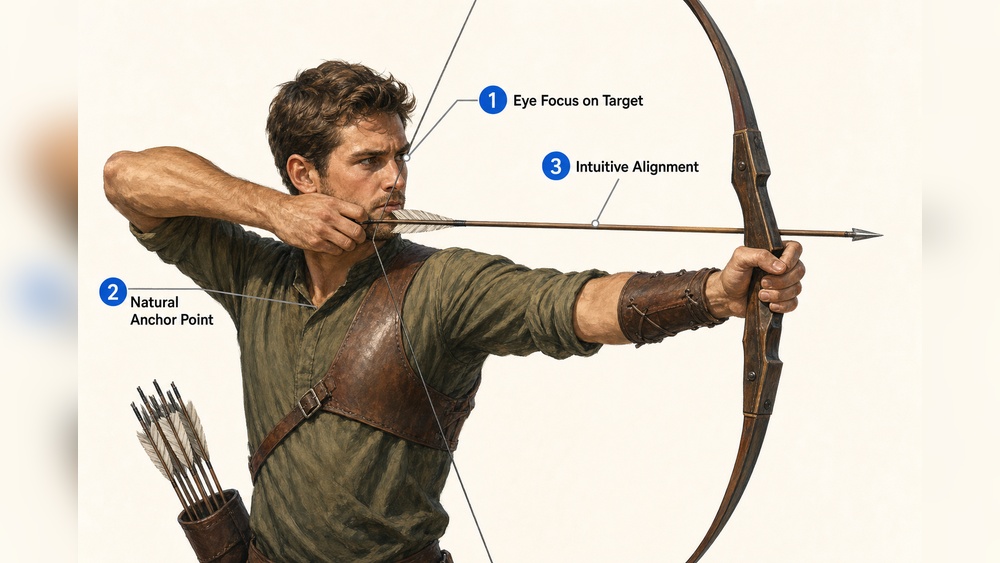
- Head Position: Maintain a neutral head position, eyes fixed on the target.
Consistency in stance and posture helps your body develop reliable muscle memory.
Finding Your Anchor Point
The anchor point is where your hand comes to rest on your face during the draw. For instinctive shooting, choose an anchor point that feels natural and repeatable. Common anchor points include:
- Corner of the mouth
- Cheekbone
- Jawline
Pro Tip: Consistency is more important than location. In my experience, practicing with a single anchor point accelerates muscle memory and improves accuracy.
Grip And Bow Handling
A relaxed grip is essential. Avoid squeezing the bow; instead, let it rest gently in your hand. This minimizes torque and allows for a clean release.
- Grip location: Low on the bow handle, aligning with the lifeline of your palm.
- Bow arm: Keep slightly bent to absorb shock and improve follow-through.
Shot Release And Follow-through
Instinctive archers rely on a smooth, controlled release. Focus on:
- Relaxing fingers at release to avoid jerking the arrow.
- Maintaining follow-through by holding your position after the shot.
Practicing these fundamentals ensures your subconscious mind can take over, allowing for instinctive aiming.
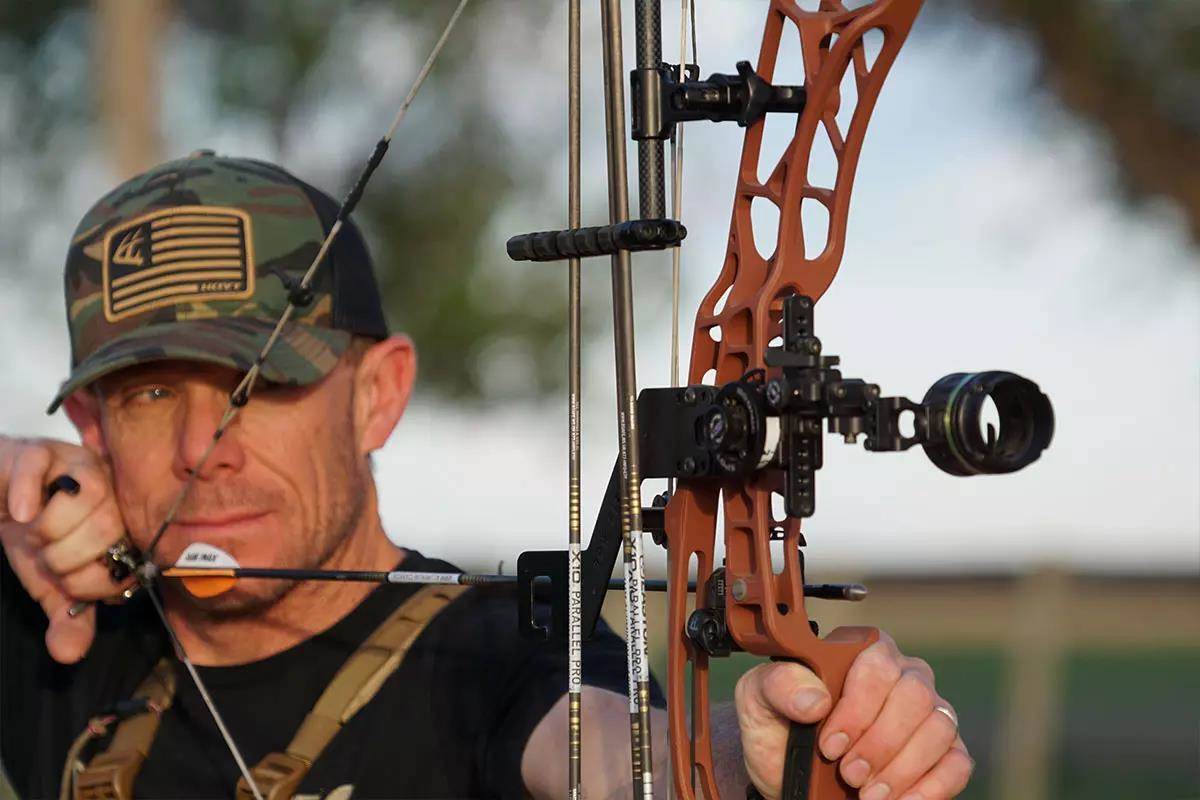
Credit: www.northamericanwhitetail.com
Building Muscle Memory And Training Routines
Instinctive archery is a product of repetition. Developing muscle memory through structured routines is key to success. This section provides actionable training strategies and sample exercises.
Repetitive Practice Drills
Effective drills include:
- Blank Bale Shooting: Shoot arrows at a close-range target (3, 5 yards) without aiming, focusing solely on form.
- Walk-Back Drills: Start close, shoot, then step back incrementally, maintaining form and focus.
- Rapid Fire: Shoot multiple arrows in quick succession, reinforcing speed and subconscious aiming.
These drills reinforce the neural pathways responsible for instinctive accuracy.
Visualization Techniques
Elite archers often employ visualization to enhance performance. Before shooting, mentally picture the arrow’s flight and landing spot. Visualization helps synchronize mind and body, according to a study published in Frontiers in Psychology (Frontiers in Psychology).
Training Frequency And Volume
Aim for:
- Daily practice: 20, 30 minutes per session.
- Weekly goals: 200, 300 arrows shot.
- Varied distances: Mix short and long-range shots to build adaptability.
Pro Tip: Consistency trumps volume. Short, focused sessions are more effective than occasional marathon practices.
Real-world Example: Traditional Bowhunter Training
A traditional bowhunter spends six months preparing for elk season, practicing instinctive shooting daily. By focusing on blank bale drills and walk-back routines, they achieve a 70% hit rate on moving targets at 20 yards, a testament to the power of repetition and muscle memory.

Credit: www.youtube.com
Equipment Selection For Instinctive Shooting
Selecting the right equipment is crucial for instinctive shooting. This section compares bow types, discusses arrow selection, and highlights essential accessories.
Choosing The Right Bow
Instinctive shooters typically use recurve bows, longbows, or self-bows. Compound bows, with their sights and let-off, are less suited for this style.
Comparison of Bow Types:
| Bow Type | Instinctive Suitability | Draw Weight Range | Maintenance |
|---|---|---|---|
| Recurve | High | 20, 50 lbs | Moderate |
| Longbow | Very High | 20, 70 lbs | Low |
| Compound | Low | 40, 70 lbs | High |
| Self-bow | High | Varies | Low |
Arrow Selection
Choose arrows matched to your bow’s draw weight and length. Traditional archers often use wooden or carbon arrows for durability and performance.
Key considerations:
- Spine: Stiffness of the arrow, matched to draw weight.
- Length: At least 1, 2 inches longer than your draw.
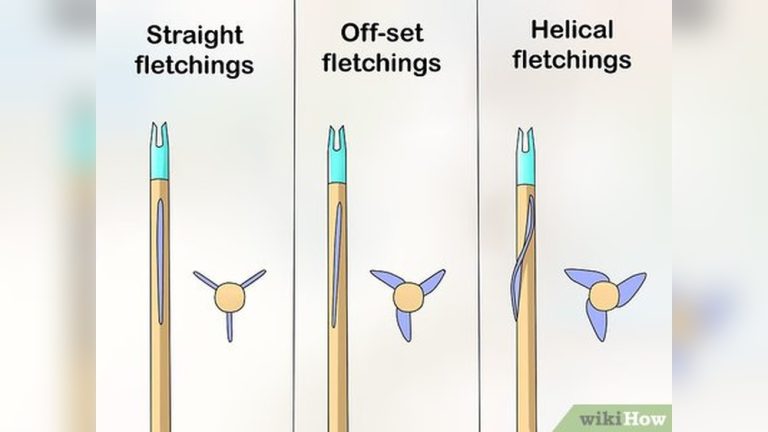
- Fletching: Large feathers (4, 5 inches) help stabilize flight.
Essential Accessories
While instinct shooters avoid sights, some accessories enhance performance:
- Finger tabs or gloves: Protect fingers during release.
- Arm guards: Prevent string slap.
- Quiver: Allows rapid access to arrows.
Example: A competitive instinctive archer uses a 45 lb recurve, carbon arrows with 5-inch fletching, and a leather finger tab, achieving consistent groupings at 25 yards.
Equipment Maintenance
Regular maintenance prevents malfunctions and ensures safety:
- Inspect bow limbs and string weekly.
- Check arrow shafts for cracks.
- Replace worn fletching or nocks.
Pro Tip: Always consult manufacturer guidelines for equipment care.
Mental Discipline And Focus
Instinctive shooting is as much a mental game as a physical one. Building concentration, managing stress, and developing confidence are essential for reliable performance.
Cultivating Focus Under Pressure
Instinct shooters must maintain focus, especially during hunting or competition. Techniques include:
- Breathing exercises: Slow, deep breaths before each shot.
- Mindfulness: Staying present and aware of surroundings.
- Routine: Developing a pre-shot ritual for consistency.
Example: During a high-stakes 3D archery tournament, an instinctive shooter uses a simple breathing routine to calm nerves and maintain accuracy. This mental discipline results in a top-5 finish.
Managing Performance Anxiety
Pressure can disrupt muscle memory and cause erratic shots. Strategies to manage anxiety:
- Positive self-talk: Reinforce confidence.
- Visualization: Picture successful shots before drawing.
- Setting realistic goals: Focus on improvement, not perfection.
A study from the University of Exeter found that archers who practiced mindfulness saw a 15% improvement in shot consistency (source: University of Exeter Sports Psychology Research).
Building Confidence Through Experience
Confidence grows with successful repetition. Track progress by:
- Recording session scores.
- Noting improvements in grouping and hit rate.
- Celebrating milestones, such as hitting targets at new distances.
Pro Tip: Documenting achievements helps reinforce positive habits and builds mental resilience.
Environmental Awareness And Adaptation
Instinctive shooters excel in dynamic environments. Understanding how to adapt to wind, lighting, and terrain is critical for field success.
Shooting In Variable Conditions
Environmental factors that influence instinctive shooting:
- Wind: Adjust aim intuitively; lighter arrows are more affected.
- Lighting: Shadows and glare can obscure targets. Practice in varied conditions.
- Terrain: Uneven ground changes stance and shot angle.
Example: A hunter in the Midwest adapts to strong crosswinds by instinctively aiming off-center, compensating for arrow drift. Their experience allows accurate shots at 30 yards despite adverse conditions.
Practicing In Natural Settings
Practice in real-world environments to simulate hunting or field scenarios:
- Use 3D animal targets.
- Shoot from kneeling, sitting, or elevated positions.
- Incorporate obstacles and cover.
This builds adaptability and prepares the archer for unexpected challenges.
Reading The Target And Environment
Instinctive shooters must quickly assess target distance and environmental factors. Training tips include:
- Estimating range visually without aids.
- Observing arrow flight and adjusting accordingly.
- Learning to trust instinctive judgments.
Pro Tip: Time spent practicing in varied settings accelerates instinctive adaptation.
Real-world Examples And Case Studies
Concrete examples illustrate the effectiveness of instinctive shooting and provide inspiration for aspiring archers.
Case Study: Traditional Archery Competition
At the World Traditional Archery Festival, competitors shoot instinctively at targets ranging from 10 to 50 yards. A finalist attributes their success to daily blank bale drills, visualization, and consistent anchor points. Over three days, their average score improves by 12%, demonstrating the impact of structured practice.
Example: Hunting Scenario
A bowhunter in Colorado recounts stalking mule deer. Without time to adjust sights, they rely on instinctive shooting. Years of practice enable a rapid, accurate shot at 18 yards, resulting in a clean harvest. Their approach combines environmental awareness, muscle memory, and mental discipline.
Example: Youth Archery Program
A youth archery coach implements instinctive shooting techniques for beginners. By focusing on form and blank bale practice, students develop confidence and accuracy within weeks. Grouping rates improve, and several students qualify for regional tournaments.
Data Table: Instinctive Shooting Success Rates
A survey of 150 instinctive archers (source: Traditional Archery Society) shows the following hit rates at varying distances:
| Distance (yards) | Hit Rate (%) | Sample Size |
|---|---|---|
| 10 | 94 | 150 |
| 20 | 81 | 150 |
| 30 | 65 | 150 |
| 40 | 50 | 150 |
| 50 | 37 | 150 |
These results highlight the effectiveness of instinctive shooting at close and moderate ranges, with skill and practice improving long-distance accuracy.
Troubleshooting Common Challenges
Even experienced archers encounter obstacles when transitioning to instinctive shooting. Identifying and addressing common issues accelerates skill development.
Inconsistent Groupings
Cause: Variable anchor points or grip.
Solution:
- Establish a repeatable anchor.
- Use blank bale drills to reinforce consistency.
- Record shot patterns to identify deviations.
String Slap And Hand Pain
Cause: Incorrect arm position or grip.
Solution:
- Use an arm guard.
- Adjust grip to reduce torque.
- Relax bow arm and fingers at release.
Difficulty Estimating Distance
Cause: Reliance on sights or lack of environmental practice.
Solution:
- Practice range estimation visually.
- Shoot at varied distances and angles.
- Use natural landmarks to gauge range.
Mental Blockages
Cause: Performance anxiety or overthinking.
Solution:
- Employ mindfulness and breathing techniques.
- Focus on process, not outcome.
- Take breaks and reset mentally.
Pro Tip: Troubleshooting is an ongoing process, document challenges and solutions for continuous improvement.
Frequently Asked Questions
What Is The Best Type Of Bow For Instinctive Shooting?
While recurve and longbows are most popular for instinctive shooting due to their simplicity and responsiveness, self-bows offer a unique, traditional experience. For those with prior experience in compound archery, transitioning to a recurve or longbow helps build instinctive skills by eliminating mechanical aids.
Seek professional guidance when selecting draw weight and bow length.
How Long Does It Take To Become Proficient At Instinctive Shooting?
Progress varies based on practice frequency and prior archery experience. Most archers notice significant improvement after 8, 12 weeks of daily practice, focusing on form and repetition. However, reaching high accuracy can take several months or longer. Tracking progress and setting incremental goals accelerates development.
Are There Specific Exercises To Improve Instinctive Aiming?
Beyond archery drills, exercises such as balance training, eye-hand coordination games, and proprioceptive activities enhance instinctive aiming. Yoga and meditation can also improve focus and body awareness, indirectly benefiting archery performance.
Can Instinctive Shooting Be Used For 3d Archery Tournaments?
Yes, many 3D archery tournaments include instinctive categories. These competitions test an archer’s ability to quickly assess targets and shoot without aids. Practicing in varied environments and using realistic animal targets prepares archers for the dynamic nature of 3D events.
Is Instinctive Shooting Effective For Hunting Large Game?
Instinctive shooting is highly effective for hunting, especially at close ranges where rapid shots are necessary. Hunters should practice with their chosen equipment, simulate real-world scenarios, and ensure ethical shot placement. Consulting local regulations and seeking professional instruction is recommended before hunting large game.
Mastering instinctive shooting with a bow is a journey that blends tradition, skill, and mental discipline. By focusing on consistent form, structured practice, and environmental adaptation, archers develop a reliable, instinctive aiming process. Real-world examples and data underscore the value of this approach, while troubleshooting and advanced FAQs provide actionable guidance.
Whether pursuing archery for sport, hunting, or personal growth, instinctive shooting offers a rewarding, immersive experience rooted in both ancient wisdom and modern science.