Amos Bow vs Compound Bow: Which Is Best for Archers?
Archery has grown from an ancient hunting skill to a modern sport enjoyed by millions around the world. Whether you are a beginner or an experienced archer, the choice between a recurve bow (often called an “amos bow” in some regions) and a compound bow is one of the most important decisions you’ll face. Each style has its own history, design, strengths, and drawbacks. Understanding their differences can help you choose the right equipment for your needs, skill level, and goals.
This article gives a detailed comparison of recurve (amos) and compound bows. You’ll learn how each works, their pros and cons, and which one might suit you best for target shooting, hunting, or competition. By the end, you’ll have a clear view to make a confident decision in the world of archery.


What Is An Amos (recurve) Bow?
The recurve bow is one of the oldest types of bows, used for thousands of years across cultures. The term “amos bow” is sometimes used in archery circles to describe the recurve’s classic, simple design. Its main feature is the way the limbs curve away from the archer when unstrung, giving it the “recurve” name.
A recurve bow has a long, slightly curved body, usually made from wood, fiberglass, or carbon. It does not use pulleys or cables. Instead, the energy comes directly from the archer’s pull and the bow’s natural flexibility. Modern recurve bows are often used in Olympic archery and are favored for their elegance and simplicity.
Key Features Of Amos (recurve) Bows
- Simple construction, No complex parts, just limbs, riser, string, and sometimes a basic sight.
- Lightweight, Easy to carry, making it suitable for beginners and traditional archers.
- Manual draw, Requires the archer’s strength for every shot; no let-off mechanism.
- Tradition, Used in historic battles, hunting, and modern sport competitions.
- Easy maintenance, Fewer moving parts mean less chance of mechanical failure.
How A Recurve Bow Works
When you pull the string, the bow’s limbs store energy. Releasing the string sends the arrow forward. The curve at the limb tips allows more power and speed from a shorter bow compared to a straight-limbed bow.
Pro Tip: Many beginners underestimate the importance of proper form with a recurve bow. Because there’s no mechanical aid, poor technique can lead to inconsistent shots or even injury.
What Is A Compound Bow?
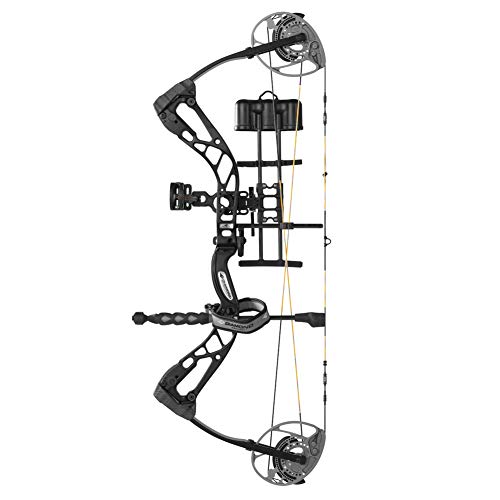
The compound bow is a modern invention, first developed in the 1960s. Its design uses a system of pulleys (cams) and cables to create mechanical advantage. This allows the archer to hold less weight at full draw (called “let-off”), making it easier to aim and shoot with accuracy.
Compound bows are known for their power and efficiency. They are popular in hunting, target archery, and competitive shooting due to their consistency and ease of use.
Key Features Of Compound Bows
- Cams and cables, Mechanical system gives greater control over draw and release.
- Let-off, Reduces the holding weight at full draw (often 65, 85%), allowing for steadier aiming.
- Adjustability, Draw weight and length can be customized for the archer.
- Speed and power, Can shoot arrows at higher velocities than most recurve bows.
- Heavier build, More parts and technology, making the bow heavier and sometimes bulkier.
How A Compound Bow Works
As you draw the string, the cams rotate and store energy in the limbs. Once you reach full draw, the let-off kicks in, so you hold much less weight. When you release, the energy transfers quickly to the arrow, propelling it at high speed.
Example: In my experience, switching from a recurve to a compound bow felt like moving from a manual car to an automatic. The compound’s let-off made it easier to hold and aim, especially for long practice sessions.

Credit: game8.co
Comparing Amos (recurve) And Compound Bows
The choice between these two bow types is not just about style. It affects your shooting experience, performance, learning curve, and long-term goals. Let’s look at the main factors that set them apart.
Design And Mechanics
| Feature | Amos (Recurve) Bow | Compound Bow |
|---|---|---|
| Main Material | Wood, fiberglass, carbon | Aluminum, carbon, composite |
| Draw Mechanism | Manual | Cams and cables |
| Let-off | None | 65, 85% |
| Weight | Lighter | Heavier |
| Length | Longer (48, 70 in.) | Shorter (28, 36 in.) |
Recurve bows offer a simple, elegant design. They are easier to maintain and repair. Compound bows have more moving parts, which means more maintenance but also more adjustability and precision.
Performance And Accuracy
Performance is where compound bows often shine, thanks to their engineering. Most compound bows can shoot arrows at speeds of 300, 370 feet per second (fps), while recurves usually range from 150, 200 fps. The let-off mechanism allows archers to hold the bow steady, improving accuracy, especially at long distances.
However, recurve bows reward skill and proper technique. Many traditionalists prefer the challenge and satisfaction of mastering a recurve.
Ease Of Use For Beginners
For new archers, the recurve is often recommended because of its simplicity and lighter weight. It teaches the basics of archery form and discipline. Compound bows, with their let-off and adjustable features, can be easier to shoot accurately but may feel intimidating at first because of their complex design.
Pro Tip: If you are teaching children or absolute beginners, start with a basic recurve. It builds a strong foundation and reduces the risk of developing bad habits.
Maintenance And Durability
Compound bows require regular tuning of cams, cables, and sights. If one part fails, the bow may become unusable until repaired by a professional. Recurve bows are easier to maintain in the field, if a string breaks, you can often replace it yourself.
Cost And Availability
| Aspect | Amos (Recurve) Bow | Compound Bow |
|---|---|---|
| Entry-level Price | $100, $300 | $250, $600 |
| Advanced Models | $500, $1,500 | $800, $2,500+ |
| Replacement Parts | Easy and cheap | Expensive and specialized |
| Availability | Very common | Common, but with more variety in specialized shops |
Recurve bows are more affordable and widely available. Compound bows cost more due to their complex mechanisms and require specialized parts for repairs.
Hunting Vs. Target Shooting
Hunting: Compound bows are favored for hunting because of their power, speed, and accuracy. The let-off allows hunters to hold at full draw longer while waiting for a clear shot. They are also easier to use in dense forests due to their shorter length.
Target shooting: Recurve bows are the only type allowed in Olympic archery. They demand skill and consistency, making them popular in traditional competitions and clubs. Compound bows are used in many field and 3D archery events.
Noise And Vibration
Compound bows tend to be quieter, as the cams and string dampeners reduce noise and vibration. This is important for hunting, where stealth is needed. Recurve bows can be noisier, especially if not tuned or if string silencers aren’t used.
Tuning And Customization
Compound bows offer more options for customization, sights, stabilizers, releases, and arrow rests. This lets you fine-tune your setup for your body and shooting style. Recurve bows allow some accessories, but most archers keep them simple.
Pros And Cons: Amos (recurve) Bow Vs Compound Bow
Every archer’s needs are different, so it’s important to know the strengths and limitations of each type.
Amos (recurve) Bow: Pros
- Simple design makes it easy to learn and maintain.
- Lighter weight helps with transport and long practice sessions.
- Affordable for beginners and casual shooters.
- Teaches good form; improves skill and discipline.
- Historical and Olympic use offers connection to tradition.
Amos (recurve) Bow: Cons
- Requires strength; no let-off means you hold full draw weight.
- Lower speed and power compared to compounds.
- Less forgiving of poor technique; mistakes affect accuracy more.
- No mechanical aids for aiming or shooting.
Compound Bow: Pros
- Let-off mechanism allows easier aiming at full draw.
- Higher arrow speed and flatter trajectory.
- Customizable draw weight and length for different shooters.
- Consistent accuracy even for less experienced archers.
- Better for hunting; compact and quiet.
Compound Bow: Cons
- Heavier and more complex; harder to carry and maintain.
- Higher cost for purchase and repairs.
- Needs professional tuning; not easy to fix in the field.
- Can be intimidating for absolute beginners.
Which Bow Is Best For You?
The right bow depends on your goals, body type, and experience.
- If you want a traditional experience or plan to compete in Olympic-style archery, a recurve (amos) bow is your best bet.
- If you seek maximum accuracy, power, and ease of use, especially for hunting or 3D archery, the compound bow will likely suit you better.
Key Questions To Ask Yourself
- What is my primary use? (target, hunting, competition)
- Do I prefer simplicity or technology?
- How much can I spend?
- Am I willing to learn complex tuning and maintenance?
- How important is portability?
Common Beginner Mistakes
- Choosing too high draw weight. Start light and build strength.
- Ignoring proper form. Take lessons or watch reputable tutorials.
- Neglecting maintenance. Both bow types need regular checks.
- Not testing before buying. Try different models in-store or at a range.
- Focusing only on speed. Accuracy and consistency are more important.
Pro Tip: Even experienced archers sometimes overlook the importance of arrow selection. Using the wrong spine or weight can ruin your accuracy, regardless of bow type.

Credit: www.youtube.com
Real-world Example: Olympic Archery Vs. Bowhunting
Olympic archers use recurve bows exclusively, emphasizing skill and discipline. For example, South Korean archers, who dominate the sport, train with simple, consistent equipment. In contrast, North American hunters often choose compound bows for deer and elk hunting due to their power and ease of use in the wild.
Which Bow Is More Popular?
According to the USA Archery organization, recurve bows are more popular in formal target competitions, while compound bows dominate hunting and recreational shooting in the United States. The trend toward compound bows has increased due to their efficiency and modern features, but the simplicity and tradition of recurve bows keep them relevant.
Side-by-side Summary
For a quick comparison, here’s a summary of how amos (recurve) and compound bows stack up in key areas:
| Aspect | Amos (Recurve) Bow | Compound Bow |
|---|---|---|
| Tradition | Strong | Modern |
| Ease of Use | Beginner-friendly | Intermediate/Advanced |
| Accuracy | Skill-dependent | Technology-assisted |
| Maintenance | Low | High |
| Cost | Lower | Higher |
| Portability | Better | Bulky |
| Customization | Limited | Extensive |
Non-obvious Insights For New Archers
- Resale Value: High-quality compound bows tend to lose value faster than recurve bows because technology changes quickly. Recurves, especially traditional models, can retain value or even become collectibles.
- Learning Curve: Many archers find it harder to switch from compound to recurve than the other way around. The recurve’s demand for proper form and strength means starting with it can make you a better all-around archer.

Credit: www.reddit.com
Where To Get More Information
If you want to read official rules and technical specifications, check out the World Archery Federation website. You’ll find details on competition standards and equipment regulations.
Frequently Asked Questions
What Is The Main Difference Between An Amos (recurve) Bow And A Compound Bow?
The primary difference is in their design and technology. An amos (recurve) bow has a simple, traditional structure and requires the archer’s full strength for every shot. A compound bow uses cams and cables for mechanical advantage, allowing for easier holding at full draw and generally higher power and accuracy.