Best Bowhunting Accessories for First-Time Deer Hunters
For a first deer hunt, the best first buy is a full-body harness with the proper tether or connection system if an elevated setup is on the plan, because a fall can end the season before shot placement even matters. After that, buy the pieces that keep shots ethical and the carry quiet. This guide ranks the best bowhunting accessories for first-time deer hunters in a practical purchase order.
Quick picks by need


If the goal is a small, usable starter set, buy the items that protect the hunter first, then help with distance, then concealment, then carry. That order keeps the setup simpler and avoids gear that adds weight or noise before it adds value.
- Safety and elevation: full-body harness and tether system, then tree stand or saddle-style setup if hunting off the ground.
- Distance and shot setup: rangefinder, broadheads matched to the arrow setup, and a release aid for a compound bow.
- Concealment and comfort: quiet camo layers, waterproof boots, and a ground blind if stand hunting feels too exposed.
- Carry and organization: a quiet bowhunting backpack, quiver, and a simple trail camera for scouting before the hunt.
What safety gear should you buy first?
Buy a full-body harness and the proper tether or connection system first if there is any chance of hunting from a tree stand. For a beginner, fall prevention beats every other accessory because it protects the hunter, not the shot. A tree stand, ladder, hang-on, or climber all demand the harness; if the hunt stays on the ground, a blind shifts more of the budget to comfort and concealment.
Tree stand basics for beginners
A tree stand can improve shot angle and hide movement, which helps in timber where deer appear through openings at short notice. The tradeoff is setup complexity, height, and the need to stay clipped in from the moment the feet leave the ground until the hunter is back down.
Out On A Limb offers gear for tree stand and saddle hunters, and the same shop also serves ground hunters with hunting chairs. That matters because beginners often need one clean path into the season, not a pile of unrelated accessories.
Suppose a first-time hunter plans a 15-foot ladder stand hunt on a small woodlot edge. The right first purchase is still the harness, not a long list of stand add-ons. The harness protects the hunter every time the climb starts.
When a ground blind makes more sense
A ground blind is often the easier first-season choice because it reduces height, simplifies access, and can calm nerves for a new hunter. It also works well for beginners on open edges, fields, or spots where a tree stand is hard to place safely.
The Swivel Stool is designed for mobile and blind hunting, and it is positioned as lightweight. That is useful because blind hunting tends to reward quiet movement and simple seating more than complex platform systems.
What should go in your bowhunting pack?
A beginner pack should hold only the items needed to stay quiet, feed a long sit, and solve small problems without digging through loose gear. The essentials are a knife, a first-aid kit, snacks, and water. Add room for a headlamp, tag, license, and a call only if you have practiced using one and expect to need it for the hunt. A small drag or utility item can also go in the pack if local rules allow it.
Why a quiet pack matters on all-day sits
On longer sits, a noisy zipper or a pack that forces constant rummaging becomes a problem. A quiet bowhunting backpack should carry the hunt kit in one place, stay easy to access, and hold enough water and food for an all-day sit without sounding like hard plastic when it brushes against a stand rail or blind wall.
What should stay outside the pack? Loose metal tools, oversized hard cases, and unnecessary scent-control products that do not change shot execution. A beginner does better with a simple, quiet loadout than with a pack stuffed full of gear that never leaves the compartment.
Rangefinder and broadheads
A rangefinder is worth buying for most first deer hunts because bow range errors are small and ethical shot windows are small too. It matters most in open country, food plots, field edges, and any setup where a deer can appear at unfamiliar distance. Broadheads are different from practice tips: practice tips are for target shooting, while broadheads are hunting-only arrow tips and must match the arrow setup and tune.
Fixed-blade or mechanical broadheads for beginners
Zero to Hunt recommends a backpack, arrows, broadheads, release, quiver, rangefinder, and binoculars. Zero to Hunt also says broadheads come in two primary designs. For beginners, fixed-blade heads can be the simpler choice when the bow is tuned cleanly, while mechanical heads still demand proper arrow flight, matching setup, and awareness of local legality and energy needs.
Broadheads should not be bought before the bow shoots the field-point setup cleanly. A broadhead that fails tune can cost a deer. That is why the purchase order starts with practice gear, then broadheads only after confirmation that the setup flies correctly.
Camo, boots, release, and quiver
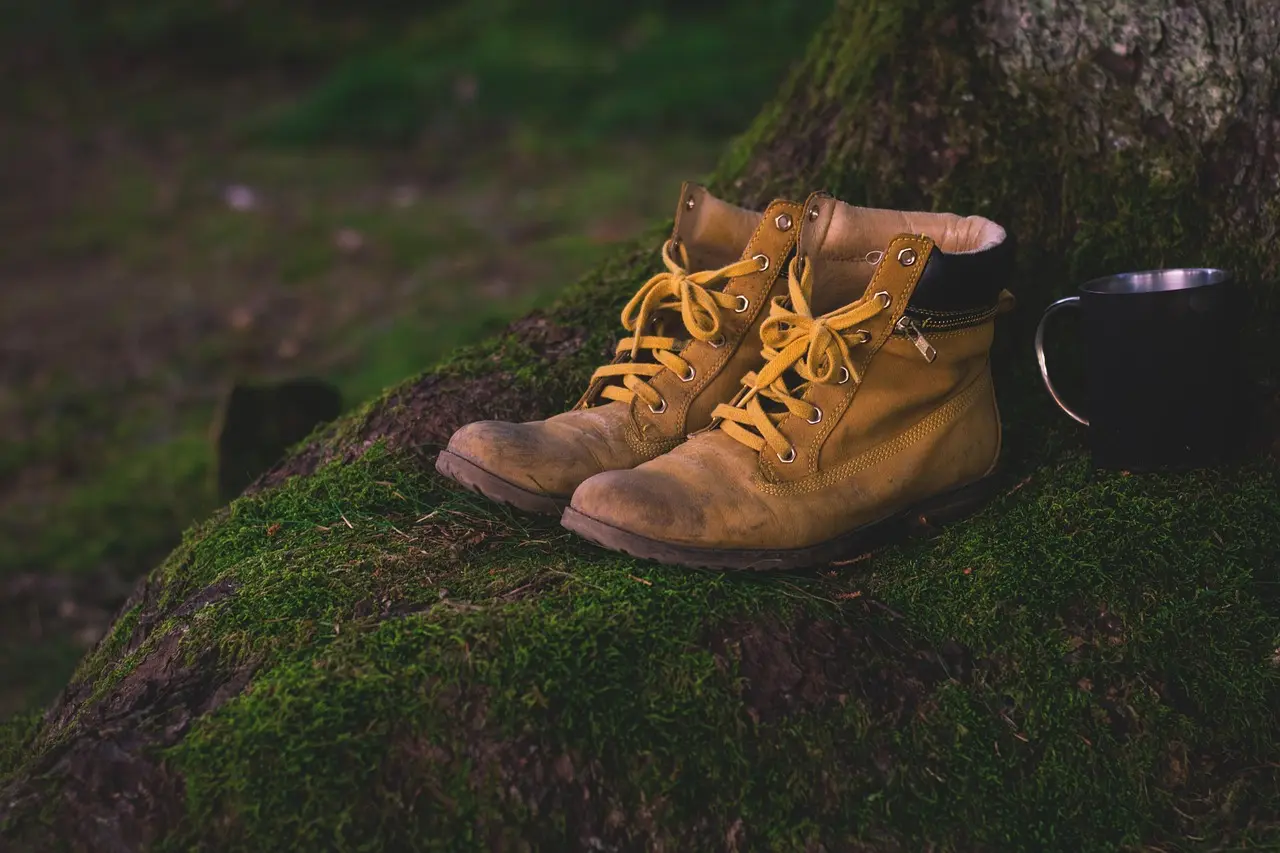
Quiet clothing, stable footwear, a correct release aid, and a functional quiver make the first hunt more usable than a stack of novelty accessories. These items do not create success by themselves, but they reduce noise, movement, and fumbling at the moment that matters.
How to choose a release aid for a compound bow
Many compound bowhunters use a release aid because it connects the string to the hand in a controlled way. Thumb releases and index-finger releases are the two common beginner choices. Thumb styles are often favored for cleaner hand position and consistent execution, while index-finger styles are familiar and straightforward for many new hunters.
The main beginner mistake is buying a release that feels clever instead of one that is comfortable through repeated shots. A release that fits poorly can create panic, collapse, or jerky anchor points. For a first bowhunting setup, repeatability matters more than novelty.
What to look for in hunting boots
Hunting boots should be waterproof, supportive, and quiet enough for rough ground, wet leaves, and short walks into a setup. Rubber boots can also help conceal scent in muddy or marshy ground, but scent control is limited and wind still matters far more. A bad boot can ruin a hunt faster than a mediocre accessory ever will.
Why a functional quiver matters in the field
A quiver should hold arrows securely and stay usable while hunting, not just while walking to the truck. A beginner needs arrows to ride quiet and stable in transit, then come off cleanly when a shot window opens. If the quiver rattles, catches brush, or blocks access, it is working against the hunt.
Camo clothing should be quiet and weather-appropriate, not just patterned. Layering matters for fall conditions because temperature swings can be large between the walk in, the sit, and the walk out. The best first-season clothing is the layer that stays silent and comfortable long enough for good shot decisions.
A common first-timer mistake is buying a heavy pack, a bulky quiver, and a complicated release before buying boots that can actually handle a half-mile walk in wet grass. The result is discomfort, more noise, and more fidgeting than necessary.
Bowhunting accessories table
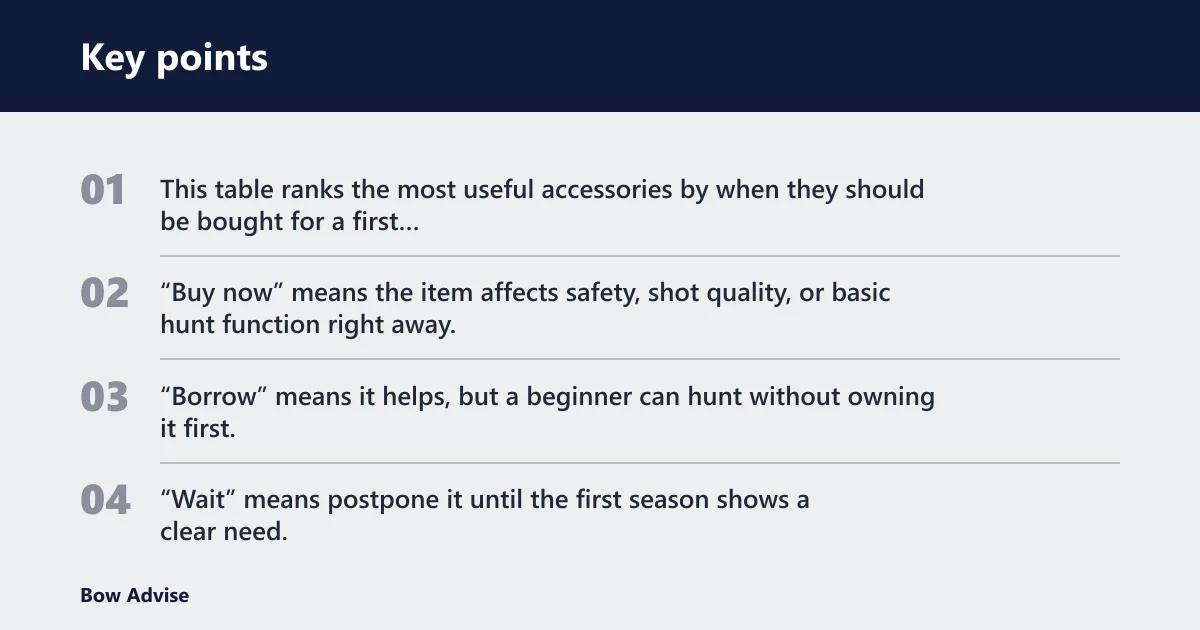
This table ranks the most useful accessories by when they should be bought for a first deer hunt. “Buy now” means the item affects safety, shot quality, or basic hunt function right away. “Borrow” means it helps, but a beginner can hunt without owning it first. “Wait” means postpone it until the first season shows a clear need.
| Accessory | Status | Hunt type | Why it matters | Common mistake | Estimated budget tier |
|---|---|---|---|---|---|
| Fall-safety strap | Buy now | Tree stand, saddle, elevated hunt | Prevents falls from height | Treating it as optional | Low to medium |
| Release aid | Buy now | Compound bow | Supports consistent shot execution | Choosing by price only | Low to medium |
| Rangefinder | Buy now | Any bowhunt, especially open country | Helps judge ethical shot distance | Guessing yardage | Medium |
| Broadheads | Buy now | All deer hunts with a tuned bow | Hunting-only arrow tips for the field | Using them before tuning | Low to medium |
| Bowhunting backpack | Buy now | All-day sit, public land, mobile hunts | Stores calls, knife, first-aid kit, snacks, water | Buying a loud or overbuilt pack | Medium |
| Hunting boots | Buy now | Any walk-in hunt | Support and waterproofing | Ignoring fit and noise | Medium to high |
| Quiver | Buy now | Stand, blind, short-sit hunts | Keeps arrows secure and handy | Picking one that rattles | Low to medium |
| Camo layers | Buy now | All deer hunts | Reduces visibility and manages weather | Buying thick gear that is noisy | Medium |
| Ground blind | Buy now or borrow | Fields, edges, beginner-friendly spots | Improves concealment and comfort | Ignoring entry path and setup time | Medium |
| Tree stand | Borrow or buy now | Timber, funnels, elevated shot angles | Improves concealment and angle | Using one without a harness plan | Medium to high |
| Trail camera | Borrow or wait | Preseason scouting | Shows deer movement without being present | Overrelying on one camera’s pattern | Medium |
| Extra stand accessories | Wait | Advanced stand setups | Adds convenience after the first season | Buying upgrades before learning the setup | Low to high |
How do you choose what to buy first?
Start by matching the gear to the hunt plan, not to a catalog. If the plan includes a tree stand, the harness comes first. If the hunt is a ground blind or field edge sit, shift budget toward quiet clothing, boots, and a rangefinder. If the distance is short and the setup is simple, borrow the camera gear and keep the first purchase list tight.
Match gear to your stand, blind, or ground plan
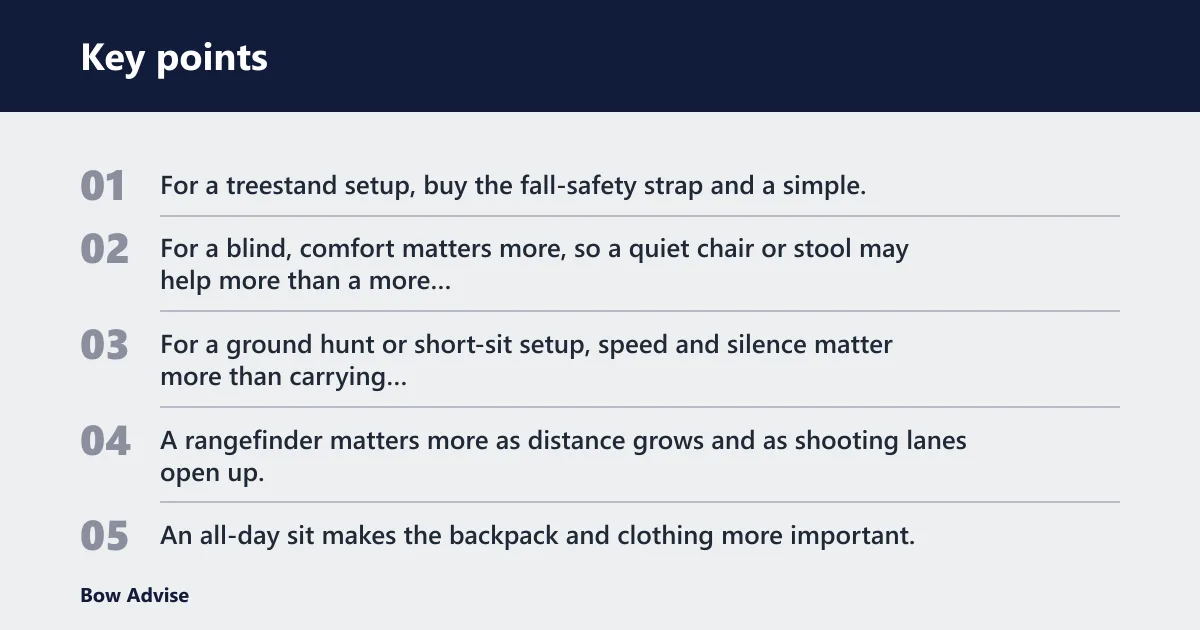
For a treestand setup, buy the fall-safety strap and a simple, stable way to carry the essentials. For a blind, comfort matters more, so a quiet chair or stool may help more than a more expensive pack. For a ground hunt or short-sit setup, speed and silence matter more than carrying capacity.
Match gear to distance, sit length, and budget
A rangefinder matters more as distance grows and as shooting lanes open up. An all-day sit makes the backpack and clothing more important. A short evening hunt may not need every upgrade on day one. That is why the best order is safety, shot control, carry, then convenience.
Picture a beginner hunting a narrow creek bottom where shots are usually inside 20 yards. A quiet quiver, release aid, and harness matter more than a trail camera purchased at the last minute. The setup should stay simple enough that the hunter can focus on wind, posture, and shot discipline.
What to postpone until after the first season
Postpone advanced stand add-ons, duplicate packs, extra optics, and specialty accessories that solve problems the hunter does not yet have. Also postpone scent-control gadgets that promise more than they deliver. A clean setup, a tuned bow, and calm shot execution matter more than a crowded gear bag.
Local regulations, licenses, and tags should be checked before buying the final hunt kit. Gear only matters if the season, weapon rules, and property rules allow it. That check belongs in the purchase order too.
Frequently asked questions
What bowhunting accessories do I actually need for my first deer hunt?
A practical first deer hunt typically calls for a tuned bow, arrows, broadheads matched to the setup, a release aid for a compound bow, boots, quiet clothing, and either a tree-stand fall protection system or a ground blind plan. A rangefinder and backpack are useful, but they can be borrowed or added later. Keep the list lean.
Which bowhunting accessories are must-haves for a beginner?
The must-haves are the items that affect safety, shot quality, and legal hunting: a fall-safety strap for elevated setups, a release aid, broadheads matched to the arrow setup, a rangefinder, and boots that handle the terrain. Everything else should be judged by how much it improves the first hunt, not by how much it adds to the cart.
Do I need a rangefinder for deer bowhunting?
For most beginners, yes. A rangefinder helps judge ethical shot distance, especially when deer stop at odd angles or appear farther than expected. It matters most in open country and on setups where yardage changes quickly. If the hunting lanes are very short and fixed, it is still a smart buy, just not the first item above safety gear.
What’s the difference between broadheads and practice tips?
Practice tips are for target shooting and tune work. Broadheads are hunting-only points built for field use. They are not interchangeable in practice, because broadheads must match the arrow setup and tune. A beginner should verify field-point flight first, then move to broadhead tuning before carrying them into the woods.
How do I choose a release aid for bowhunting?
Choose the release that feels stable through repeated shots and matches the bow hand, anchor, and trigger style that feels natural. Thumb and index-finger releases are the common beginner options. The right choice is the one that supports clean, repeatable execution without adding mental clutter on the shot.
What should go in a beginner bowhunting pack?
A beginner pack should carry the smallest useful set: a knife, a first-aid kit, snacks, water, a license or tag, and any small tools needed to stay quiet and organized. A call can be added if the hunter has practiced with one and expects to use it. The pack should be easy to access, quiet to open, and light enough for all-day sits without becoming a burden.