Different Crossbow Bolt Tips and What They’re Used For
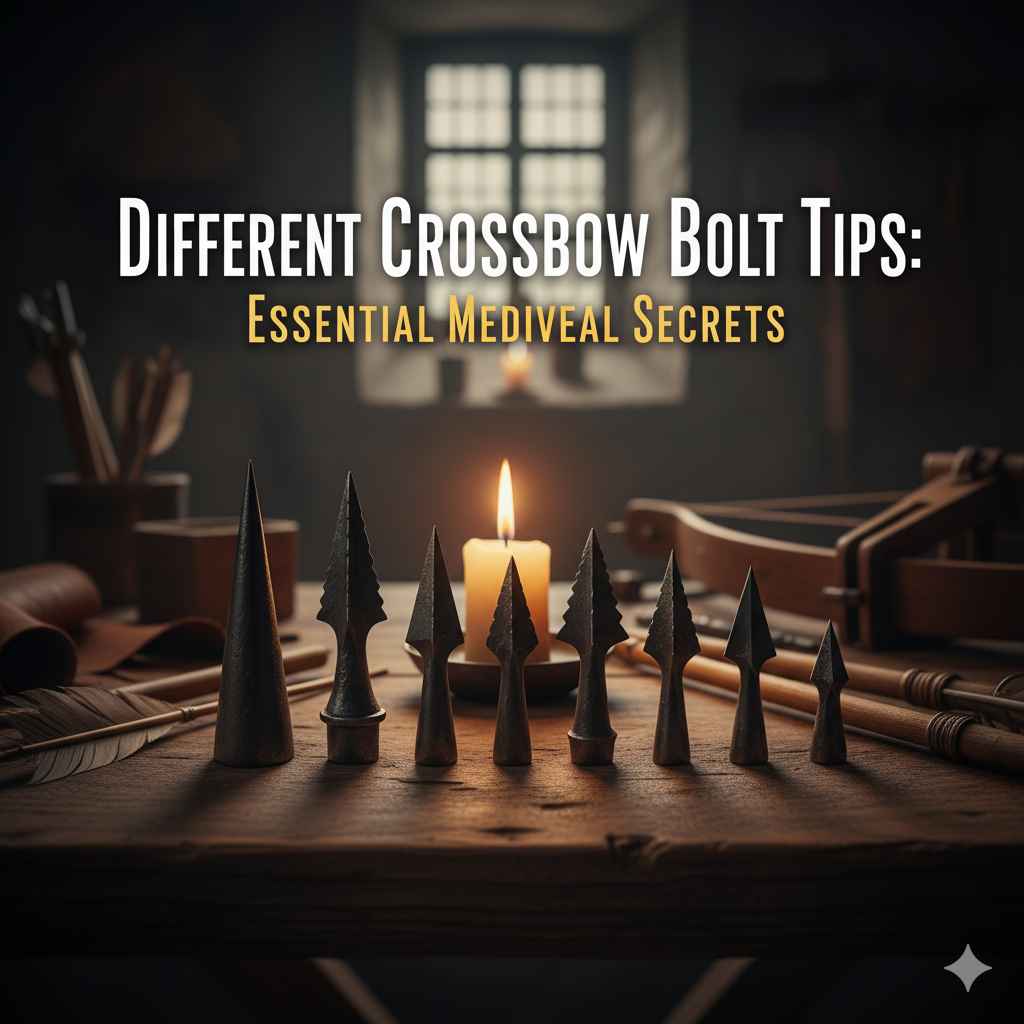
Discover the essential medieval secrets behind different crossbow bolt tips! From simple broadheads for hunting large game to specialized bodkins for armor piercing, choosing the right tip dramatically affects your accuracy, safety, and success in target practice or simulated hunting scenarios. We break down the core types simply, ensuring you select the perfect head for your crossbow adventure.
Welcome, fellow archer! It is easy to feel lost when looking at the array of bolt tips available today, especially when terms like “bodkin” or “broadhead” sound like they belong in a history book. As a guide who loves making archery simple, I want you to know this is perfectly normal. The tip, or “point,” on your crossbow bolt is crucial—it’s the business end! Choosing the wrong one can lead to frustrating misses or even damage your gear. Worry not; we are going to walk through these medieval marvels step-by-step, using plain language. By the end of this guide, you will confidently know which bolt tip suits your target, whether it’s paper, foam, or just a great piece of history you wish to emulate. Let’s unlock these essential secrets together!
Why the Bolt Tip Matters: More Than Just Sharpness
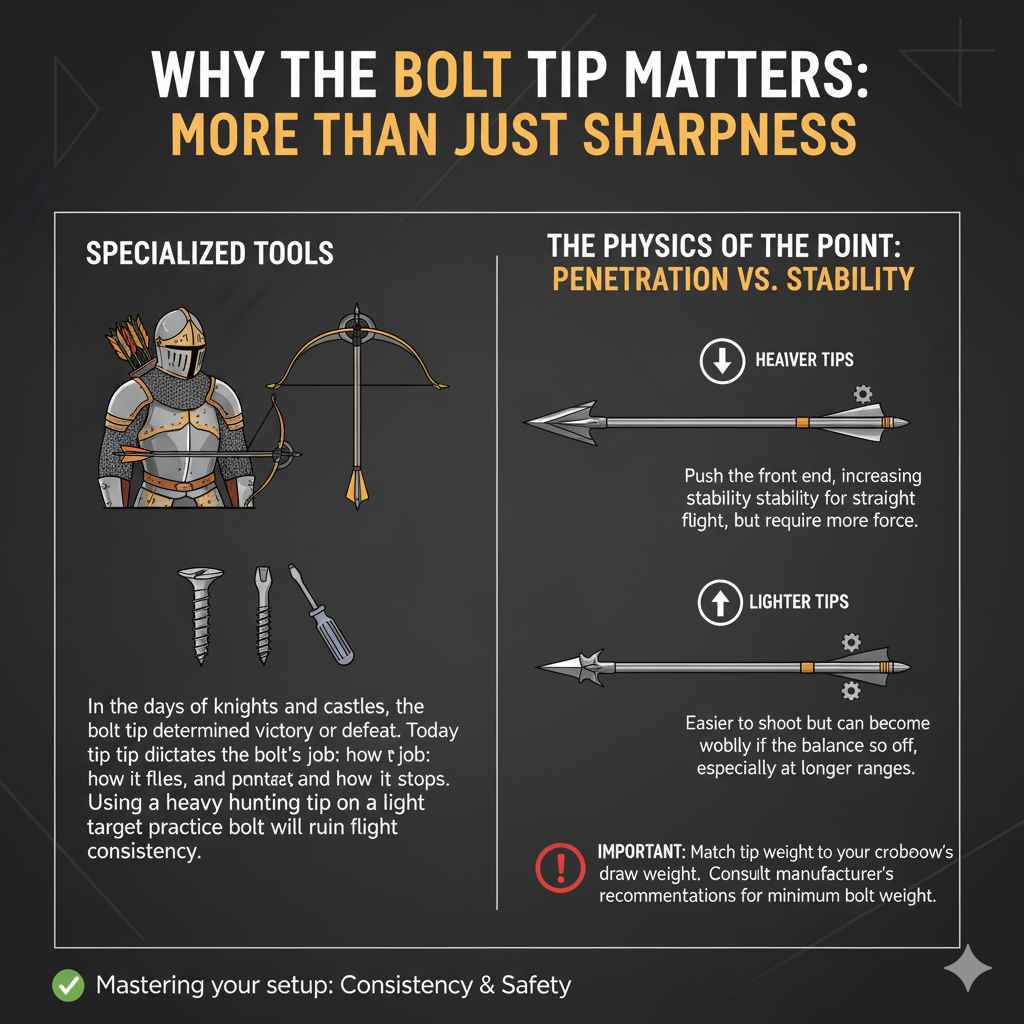
In the days of knights and castles, the bolt tip determined victory or defeat. Today, while we prioritize safety and fun, the principle remains the same: the tip dictates the bolt’s job. It influences how the bolt flies, how it penetrates, and most importantly, how it stops.
Think of it like specialized tools. You wouldn’t use a flat-head screwdriver to fix a Phillips screw, right? Similarly, using a heavy hunting tip on a light target practice bolt will ruin your flight consistency.
The Physics of the Point: Penetration vs. Stability
The shape and weight of the tip change the center of gravity (COG) of the entire bolt.
- Heavier Tips: Tend to push the front end forward, sometimes increasing stability for straight flight, but require more force to propel.
- Lighter Tips: Easier to shoot but can become wobbly if the balance is off, especially at longer ranges.
Understanding this balance is the first step toward mastering your crossbow setup. For beginners, consistency is key, and matching the tip weight to your crossbow’s draw weight is non-negotiable for safety. Always consult your crossbow manufacturer’s recommendations regarding minimum bolt weight.
Decoding the Medieval Arsenal: The Four Core Bolt Tip Types
When we look back at medieval crossbows, we see specialized tips designed for specific targets—armor, wood, or flesh. Modern target archery and recreational shooting borrow heavily from these designs. Here are the four main categories you will encounter, explained simply.
1. Field Points (Target Practice Champions)
If you are just starting out, the field point is your best friend. They are the modern equivalent of a simple, reliable practice point.
What They Look Like
Field points are typically small, cone-shaped, and very sharp (though less aggressively shaped than hunting tips). They are designed for maximum penetration into soft targets like foam blocks or straw bales without getting stuck too deeply.
Best Uses For Beginners
- Practice shooting at foam or paper targets.
- Learning consistent grouping and form.
- Archery leagues that prohibit broadheads (for safety).
Pros and Cons of Field Points
| Pros | Cons |
|---|---|
| Excellent flight consistency and predictable grouping. | Not suitable for real hunting situations (due to legality and ethics). |
| Easy to remove from most modern targets. | May not offer the heavy weight needed for very powerful modern crossbows. |
| Affordable and widely available. | Limited practical use outside of target shooting. |
2. Broadheads (The Hunting Essential)
Broadheads are the descendants of the medieval heads used for taking down large game. They are characterized by their sharp, wide blades designed to create a large wound channel for swift, humane results.
A Note on Modern Legality and Safety
It is critical to know that using broadheads is heavily regulated. In most jurisdictions, you cannot use them unless you are actively hunting big game, and specific licenses and seasons are required. Never use broadheads on standard foam targets unless the target is specifically designed for them, as they can easily shred foam or become lodged unsafely. You must always verify local hunting regulations, often found on state or provincial wildlife agency websites (e.g., check your state’s Department of Natural Resources guidelines).
Types of Broadheads You Might See
- Fixed Blade: Blades are permanently attached. Very durable and reliable.
- Mechanical (Expandable): Blades retract during flight and deploy upon impact. These are popular as they offer field-point-like aerodynamics during flight.
3. Bodkin Points (The Armor Piercers)
The bodkin point is perhaps the most historically fascinating tip. In medieval times, these were designed not just to pierce leather, but hardened steel plates or mail.
Characteristics of the Bodkin
A bodkin point is long, thin, and needle-like, often with a diamond or squared cross-section. It focuses all the impact energy onto a very tiny surface area, maximizing penetration depth against hard targets.
Modern Application
Today, bodkins are rarely used for ethical hunting. Their main modern use is either historical reenactment practice or very specialized target shooting against hardened materials (like thick layered wood, which is generally discouraged for safety reasons unless using very low-poundage bows).
Safety Warning: Because bodkins are designed for maximum penetration, they are extremely dangerous to standard foam targets and difficult to remove safely. Beginners should avoid them until they have several years of consistent, safe target practice under their belt.
4. Blunt/Small Game Tips (The Practice & Pest Control)
Blunt tips, often called “blunts” or “small game heads,” are the safest option for close-range fun or for dispatching very small animals (where legal).
What They Do
Instead of cutting, these tips transfer kinetic energy by blunt force trauma. They are designed to stick into soft targets without piercing deeply, making retrieval incredibly easy.
When to Use Blunts
- For practice when you want the fastest possible retrieval (e.g., shooting at hay bales or specialized rubber targets).
- For “eliminator” games where you knock over small knockdown targets.
- For ethical, legal small game hunting where you aim to break the spine or cause immediate shock (check local laws rigorously).
Matching the Tip to the Task: A Quick Reference Guide
Selecting the right tip is about matching the force of your crossbow to the intended target. Using a tip that is too light for your crossbow’s power can lead to catastrophic failure (the bolt breaking mid-flight), which is a major safety hazard. Always look for tips rated for your specific bolt spine stiffness (e.g., 20-inch, 0.340 spine).
Here is a table summarizing the ideal modern scenarios for each tip type:
| Tip Type | Primary Goal | Best Target Material | Beginner Recommendation |
|---|---|---|---|
| Field Point | Accurate, consistent practice | Foam block, 3D foam targets | High (Essential for starting) |
| Broadhead | Ethical large game hunting | Field dressing dummy/animal (where legal) | Low (Wait until experienced and licensed) |
| Bodkin | Maximum penetration against hard objects | Specialized hardened targets (Rarely needed) | Avoid |
| Blunt/Small Game | Easy retrieval, close-range impact | Hay, thick cardboard, or soft ground | Medium (Good for fun, fast-paced practice) |
The Importance of Weight Consistency (Tipping the Scales Safely)
This is where many beginners run into trouble. The weight of the tip must be uniform across all bolts used for the same task, and the total weight must be appropriate for your crossbow.
Why Tip Weight Matters for Flight
The weight at the front acts like the fletching at the back to stabilize the arrow in flight. If you put a 100-grain tip on one bolt and a 125-grain tip on another, they will hit different spots, even if everything else is identical. This is called “tuning.”
For beginners, the simplest path to accuracy is:
- Buy a set of matching bolts (e.g., all carbon 20-inch bolts).
- Use only one weight of field points (e.g., all 100-grain points) until you master your form.
How to Check Your Crossbow’s Minimum Bolt Weight
If you are considering moving to heavier broadheads, you must verify your crossbow’s manual. Modern compound crossbows are powerful. Shooting a bolt that is too light risks dry-firing energy, which can severely damage the limbs and the crossbow mechanism. Always err on the side of caution. If your manual recommends a minimum bolt weight of 380 grains, ensure your bolt (shaft + tip + nock) totals that weight or more.
Step-by-Step: How to Change Your Crossbow Bolt Tip
Changing tips is simple, but it requires care, especially when dealing with sharp edges. Always wear sturdy work gloves when handling sharp points!
Tools You Will Need
- Gloves (essential for safety).
- Tip wrench or specialized pliers (depending on the tip style).
- New tips (field points, broadheads, etc.).
- A clean cloth.
Process for Standard Screw-In Tips
- Safety First: Unload your crossbow completely. Store the cocked string safely away from the bow.
- Removal: Take the bolt you wish to modify. Grip the existing tip firmly with your wrench or pliers. If the tip is stuck, you can briefly apply gentle heat with a hairdryer (never a torch!) to loosen any thread locker residue, but usually, direct force works.
- Clean the Threads: Wipe down the threads on the bolt shaft with your cloth. Old thread locker or debris can prevent the new tip from seating correctly.
- Installation: Take your new tip. If you are using a field point for practice, you can often screw it in hand-tight.
- Securing for Accuracy: For hunting or serious practice, apply a small drop of removable thread locker (like blue Loctite) to the threads of the new tip. Screw the tip on until it is snug and perfectly straight relative to the shaft.
- Final Check: Ensure the tip is tight enough that it won’t wobble during flight, but not so tight that you damage the threads. Visually inspect that the tip sits perfectly straight.
A Note on Compression-Fit (Glue-On) Tips
Some very lightweight target tips or specialized historical replicas might be compression-fit or require specialized adhesive. If you see no threads, assume it needs professional application or follow the manufacturer’s specific glue-on instructions precisely, paying close attention to curing times before shooting.
Handling Broadheads Safely: When You Step Up Your Game
If you choose to move to broadheads, safety protocols must tighten up immediately. These are not toys; they can cause serious injury or ruin expensive gear if mishandled.
Broadhead Safety Checklist
- Never Touch the Blades: Use pliers or a dedicated tool to handle mechanical broadheads, even when they are in the closed position.
- Dedicated Targets: Only shoot broadheads into targets rated for them—usually layered bags or specialized blocks designed to stop the blades without getting permanently stuck. Never shoot them into standard foam blocks.
- Transport Safely: Use a quiver or case that completely shields the blades during transport to and from the range.
- Maintenance: Keep the edges razor sharp if you are using fixed blades, as a dull blade is an ineffective and potentially dangerous blade. You can find excellent sharpening guides from organizations dedicated to ethical hunting practices, such as those provided by the Archery Trade Association.
Troubleshooting Common Tip-Related Issues
Even simple tasks can sometimes lead to frustrating results. Here are common problems beginners face related to bolt tips and how to fix them.
Problem 1: Inconsistent Grouping
If your bolts are hitting all over the place, and you know your form is generally okay, the tips are the next suspect.
Solution: Check the weight uniformity. Use a precise digital scale (kitchen scales often aren’t accurate enough) to weigh every tip you use for target practice. If they vary by more than 5 grains, replace them with a matched set. Also, ensure every screw-in tip is seated perfectly straight.
Problem 2: Bolts Getting Stuck Deeply in the Target
This is common with heavy field points or light crossbows. The tip penetrates too easily, but the back end (fletching) catches, making removal tough.
Solution: Switch to a slightly lighter field point (if safe for your crossbow draw weight) or use a “stop collar” field point, which has a slightly wider base to prevent deep burial. For target retrieval, angling your target slightly away from you can help the bolt slide out more easily.
Problem 3: Flight Wobble or “Porpoising”
The bolt seems to arc up and down severely rather than flying straight.
Solution: This usually points to poor balance (Center of Gravity is too far back) or damaged fletching. Check the tip weight; you might need a slightly heavier tip to bring the balance point forward. If the tip weight is correct, inspect the fletching for tears or rips, as this creates drag and instability.
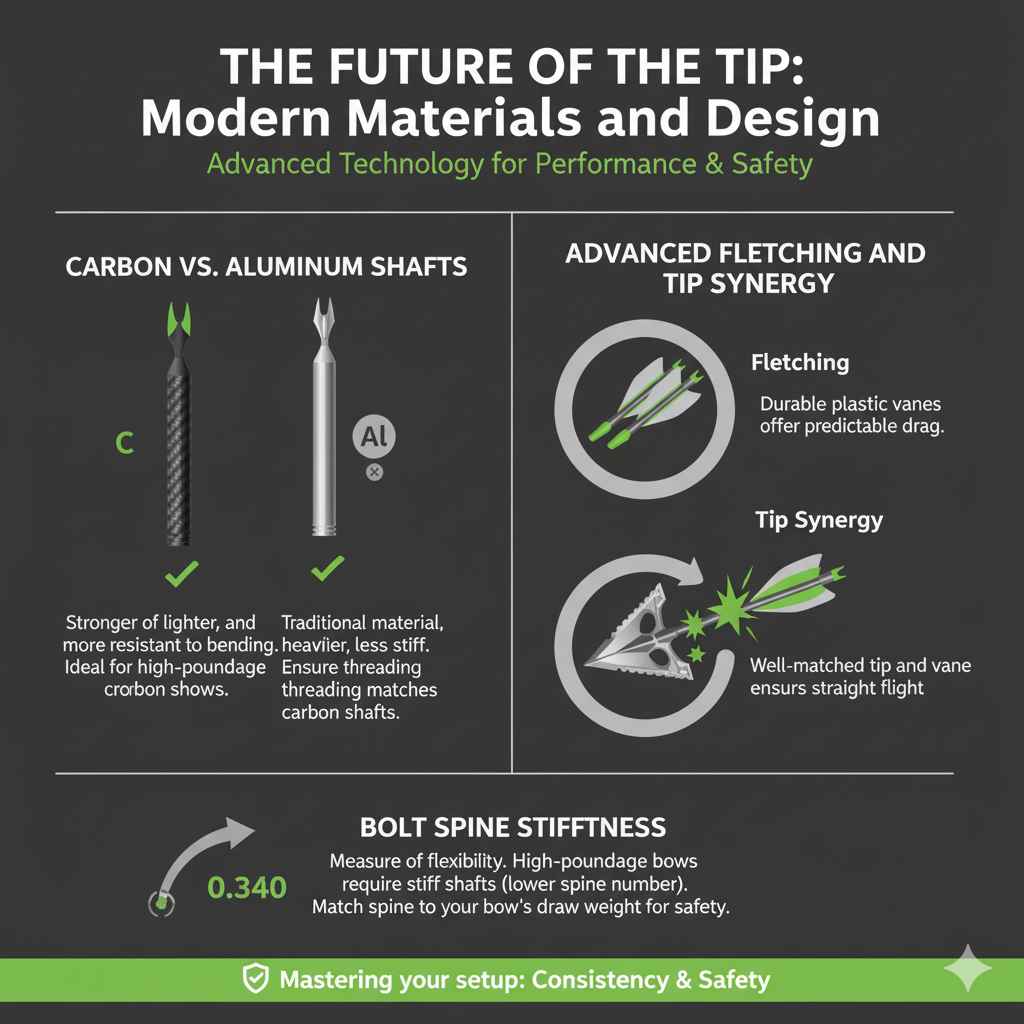
The Future of the Tip: Modern Materials and Design
While we cherish the history of the bodkin and broadhead, modern technology has refined these medieval concepts for better performance and safety.
Carbon vs. Aluminum Shafts
Most modern bolts use carbon fiber, which is stronger, lighter, and more resistant to bending than traditional wood or aluminum. This stiffness means they handle the stress of high-poundage crossbows much better. When you buy tips, ensure they match the threading standard of your carbon shafts.
Advanced Fletching and Tip Synergy
Today, the tip works in tandem with advanced plastic vanes (fletching). These vanes are more durable than traditional feathers and offer predictable drag. A well-matched tip and vane system ensures that even a heavier hunting head flies as straight as possible before impact.
A Quick Look at Bolt Spine Stiffness
While not about the tip directly, spine stiffness (a measure of flexibility, often written as 0.340) dictates how much stress the shaft can handle. High-poundage crossbows (over 200 lbs) require stiff shafts (lower spine number). Using a light tip on a shaft that is too flexible for your bow is a recipe for disaster, regardless of what the tip is designed for. For learning, stick to quality carbon bolts matched perfectly to your bow’s draw weight, as this offers the best margin for error when experimenting with different tips. For further deep dives into bolt tuning, resources from established archery associations often provide detailed charts on spine requirements relative to draw weight.
Frequently Asked Questions (FAQ) About Crossbow Bolt Tips
Q1: Can I use my regular archery arrows tips on my crossbow bolts?
Generally, no. Crossbow bolts are shorter and thicker than traditional arrows. While some lightweight carbon bolts can use standard arrow threads (like 8-32), you must confirm the thread size. More importantly, the weight difference means you must ensure the total bolt weight meets your crossbow’s minimum safety requirement.
Q2: Are modern hunting broadheads easier to tune than medieval ones?
Yes, significantly easier. Medieval bodkins and similar tips were very heavy and often required specific, heavy crossbows to fly correctly. Modern mechanical broadheads are designed to mimic the flight profile of field points, making tuning much simpler for the average user.
Q3: How do I clean rust or debris off old, blunt metal tips?
For surface rust on sturdy steel tips, you can use fine steel wool (0000 grade) very gently, followed by a light application of mineral oil or gun oil to protect the metal. Never use harsh abrasives that might change the shape of the point, especially on broadheads.
Q4: What is the ideal weight (in grains) for a beginner’s field point?
For most modern recreational crossbows shooting 20-inch bolts, 100 grains is the standard starting point. However, always default to the weight recommended by your crossbow manufacturer to ensure safe operation and good flight.
Q5: If I switch from a 100-grain tip to a 125-grain tip, will my arrows hit higher or lower?
Generally, moving to a heavier tip makes the bolt hit lower at the same distance. The extra weight pulls the trajectory down faster due to increased gravity effect over the flight time. You will need to adjust your scope or sight accordingly.
Q6: Can I use rubber practice tips for my crossbow?
Yes, rubber tips (often called impact tips or blunts) are excellent for teaching beginners sight alignment and form without risking damage to the target or the bolt. They are great for introductory sessions where maximum penetration isn’t the goal.
Conclusion: Choosing the Right Crossbow Bolt Tip
Understanding different crossbow bolt tips helps you shoot more safely and accurately. Each tip type has a specific purpose. Field points are best for target practice, broadheads are designed for hunting, bodkin points come from medieval armor-piercing designs, and blunt tips are useful for small game or quick-retrieval practice.
The most important rule is to match the tip to your shooting purpose and keep the weight consistent across your bolts. This helps maintain stable flight, better accuracy, and protects your crossbow from damage.
With the right bolt tip and proper setup, you can enjoy a smoother, safer, and more confident crossbow shooting experience—whether you are practicing at the range or exploring the fascinating history behind medieval archery.