DIY Target Stand Dimensions: Height, Width, Footprint
For most backyard archery targets, a common starting point is a stand about 6 feet tall and 4 feet wide, with a footprint of at least 2 to 3 feet deep for stability. Too-small legs let the stand tip, waste arrows, and put people, fences, and siding at risk. Size the stand to the target first, then adjust for wind, distance, and backyard safety. Before you set anything up, check local laws, HOA rules, and any range-safety requirements that may apply to your yard.
How target stand sizing works



Size the stand from the target outward. Measure the target’s outside height, width, and thickness first, then add clearance for mounting, a little side room, and a stable base. That order matters because a frame built to the target’s real size is easier to load, easier to aim at, and less likely to wobble.
Start with the target’s outside dimensions
Use the outside edge of the bag, block, or 3D body, not the aiming face alone. A target that measures 24 inches wide needs a frame opening slightly larger than 24 inches so the cover, straps, or foam do not pinch. A small gap also makes it easier to remove arrows without dragging on the frame.
Add clearance for mounting and arrow catch
Leave 2 to 4 inches of side clearance per side for a bag or block. For a 3D target, allow more at the shoulders and legs because the body shape is irregular. If the stand is too tight, the target can lean forward, bind at the corners, or shift when arrows strike off-center.
Match the frame size to the target type
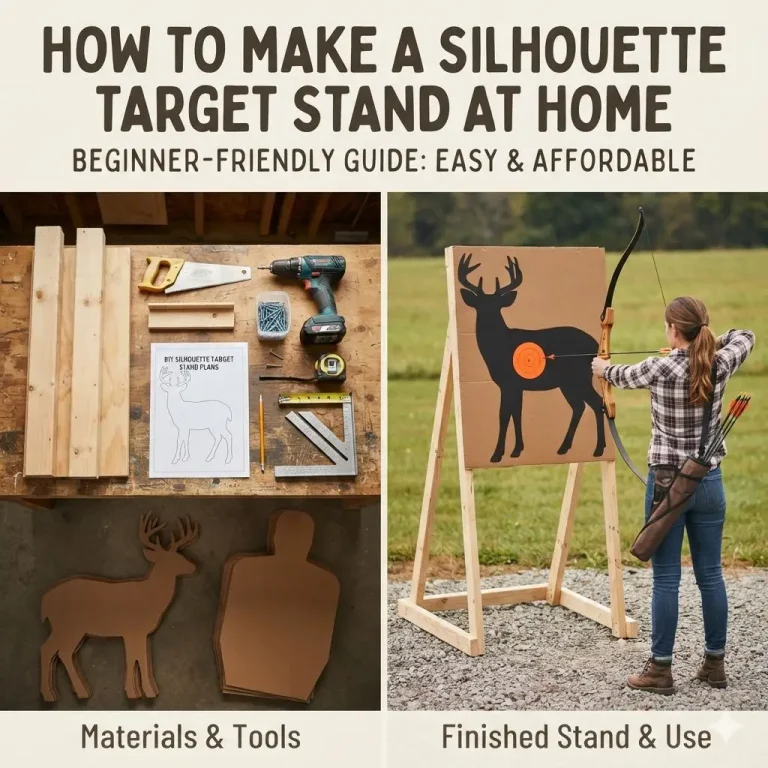
Bag targets usually need the most regular frame opening. Foam blocks fit well in a rectangular cradle. 3D animals need a wider stance or side supports because their body width is uneven and the center of mass may sit higher than the lowest point of the target.
How tall should a DIY target stand be?
Most backyard stands work well at about 5 to 6 feet tall, measured from the ground to the top of the frame. That range gives enough top clearance for a target while keeping the center of gravity low. A taller frame can help with oversized targets, but extra height also makes the stand easier to tip in wind or on soft ground.
Typical height ranges for backyard builds
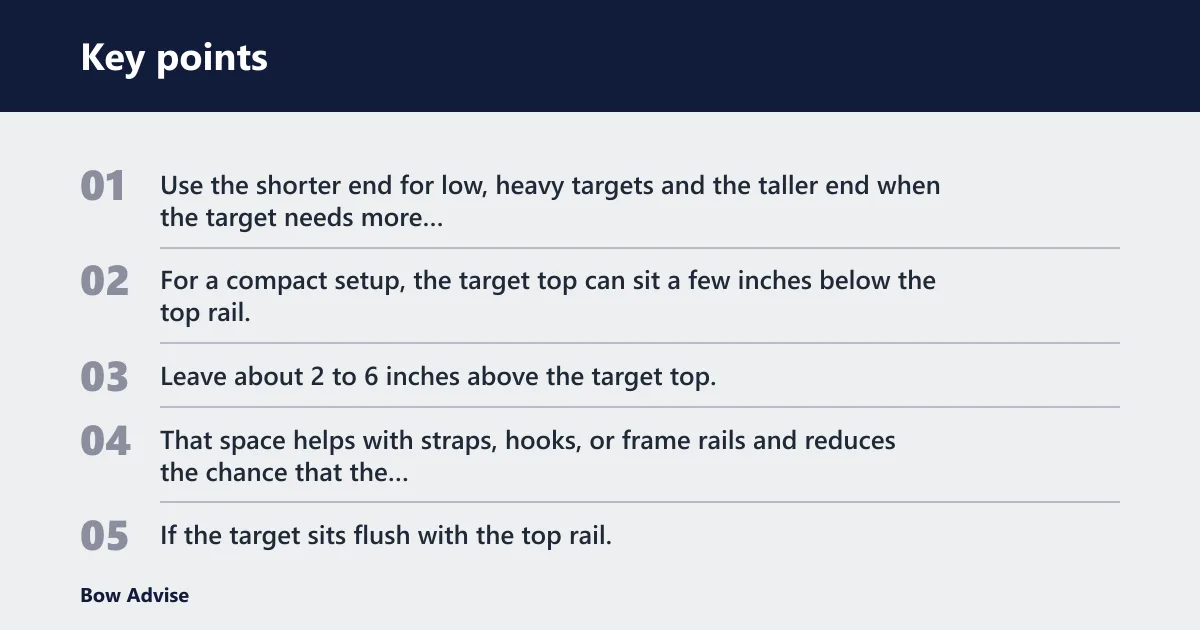
A common frame height is 60 to 72 inches. Use the shorter end for low, heavy targets and the taller end when the target needs more vertical support, such as a tall bag or a 3D deer with a high back line. For a compact setup, the target top can sit a few inches below the top rail.
How much top clearance to leave above the target
Leave about 2 to 6 inches above the target top. That space helps with straps, hooks, or frame rails and reduces the chance that the target rubs against the top bar. If the target sits flush with the top rail, the upper edge often shifts when arrows hit low or when the wind catches the face.
When a taller stand becomes less stable
A taller stand can work against you when the base stays narrow. As height rises, the tipping moment increases, especially with a heavier target or a bow that sends harder impacts into the frame. A taller build should usually get a wider footprint or added rear braces to keep the same stability.
How wide should a target stand be for a 24-inch bag or block?
For a 24-inch bag or block, a practical clear width is about 28 to 32 inches, with the full outside width of the stand often landing near 36 to 48 inches once the side legs or braces are included. The frame should be wider than the target, not equal to it, so the target can mount without rubbing the sides.
Bag target width rules
Bag targets do best with side clearance and simple strap support. A 24-inch bag usually fits cleanly in a 28- to 30-inch opening. If the bag hangs from straps, add enough width so the straps pull straight down instead of bowing inward against the uprights.
Foam block width rules
Foam blocks usually need a slightly tighter fit than bags, but still need room for the cover and any molded edges. A 24-inch block often works in a 28- to 32-inch opening. If the block is thick and heavy, a wider lower cradle is safer than a narrow top frame.
3D target body width and shoulder room
3D targets are sized by body width, shoulder spread, and leg position. A deer-shaped target with a 12- to 18-inch body width may still need a much wider stand because of the front legs and base. Plan for clearance at the shoulders so broadhead practice does not clip the frame.
How deep should the footprint be so the stand does not tip?
For most home stands, a footprint depth of about 24 to 36 inches is a good target. Depth is the front-to-back distance between the front contact point and the rear contact point. More depth gives the stand a stronger hold against tipping, especially when the target is heavy or when the stand sits on uneven ground.
Front-to-back depth and leg spread
A shallow base can still work if the target is light and the frame is low. Once the target gets larger or the stand gets taller, spread the legs farther front to back. A wider stance keeps the center of gravity inside the base when arrows hit and when the face swings slightly after impact.
How footprint size changes tip resistance
A deeper footprint raises the force needed to tip the stand forward or backward. That matters more with compound bows, heavier foam, and 3D animals that catch more wind. A light bag on a narrow base may stay upright in calm weather, then start rocking as soon as the first arrow lands off center.
Minimum backyard space around the stand
Leave a wide, unobstructed area on all sides, plus safe shooting space in front and a backstop behind. If the target sits 3 feet from a fence, a miss can still reach the fence. More open space also makes it easier to set a safe shooting line.
DIY target stand sizing table
Use the table below as a starting point, then adjust for target mass, bow energy, and available yard space. The height, clear width, and footprint depth all move together: a larger target usually needs more width and more base depth, while a portable build may stay at the low end of each range.
| Target size class | Target style | Recommended stand height | Clear width | Footprint depth |
|---|---|---|---|---|
| 18-inch class | Bag target | 48-60 inches | 22-26 inches | 20-24 inches |
| 18-inch class | Foam block | 48-60 inches | 22-28 inches | 24-28 inches |
| 18-inch class | 3D target | 54-66 inches | 26-34 inches | 28-36 inches |
| 24-inch class | Bag target | 60-72 inches | 28-32 inches | 24-30 inches |
| 24-inch class | Foam block | 60-72 inches | 28-34 inches | 28-34 inches |
| 24-inch class | 3D target | 66-78 inches | 32-42 inches | 32-40 inches |
| 36-inch class | Bag target | 72 inches | 40-48 inches | 30-36 inches |
| 36-inch class | Foam block | 72-84 inches | 40-50 inches | 34-42 inches |
| 36-inch class | 3D target | 78-90 inches | 44-56 inches | 38-48 inches |
Say your 24-inch bag target is mounted in a 30-inch clear opening on a 6-foot frame. If the base depth stays at 18 inches, the stand may feel fine on calm days, but the same build will rock more on grass or gravel. Moving the legs to 28 inches deep usually helps more than adding height.
Materials and hardware for the frame
For a simple home stand, 2×4 lumber fits most bag and smaller block builds, while 2×6 lumber helps when the target is heavier, wider, or mounted higher. Use standard or pressure-treated lumber based on outdoor exposure. The framing choice should match the target mass, not just the target shape.
2×4 versus 2×6 lumber choices
2x4s are easier to cut, lighter to move, and usually enough for upright posts, side rails, and cross braces on a portable stand. 2x6s work better for a base rail or any part that takes more load from a large block or 3D target. A mixed build is common: 2×6 base, 2×4 uprights.
Base rails, uprights, and cross braces
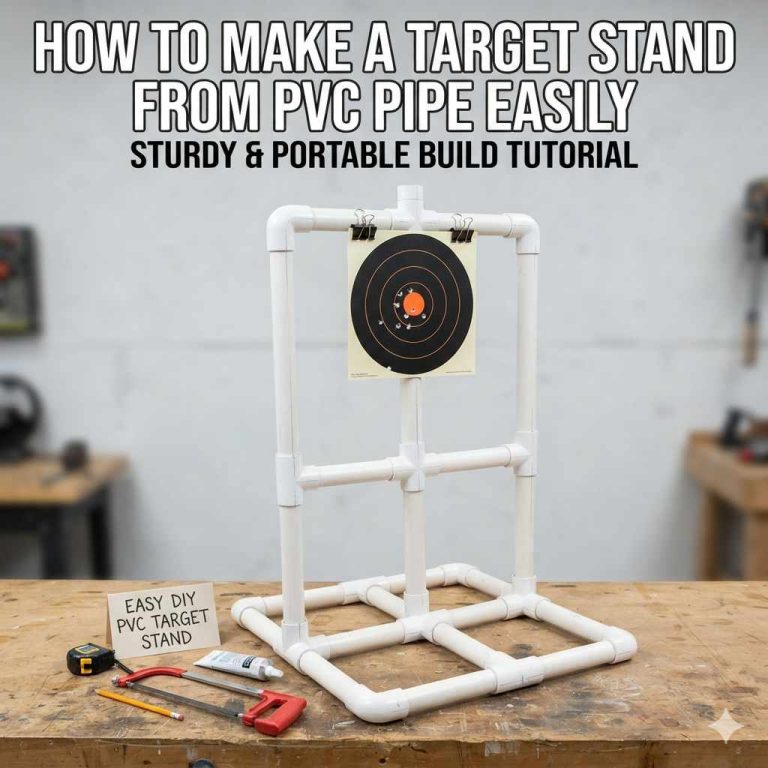
Use base rails for the footprint, uprights for height, and one rear or diagonal brace to control sway. A cross brace between the uprights can keep the target face square. If the frame is meant to break down for storage, the brace points need simple bolt or pin connections instead of permanent joints.
Screws, bolts, pipe fittings, and other connectors
Wood screws work for light-duty assembly and temporary alignment. Bolts with washers hold better when parts will be removed and reinstalled. Pipe fittings can make a knockdown frame easier to store, especially for portable setups. For frequent shooting, use hardware that resists loosening, then check it often.
How do angle and ground setup change dimensions?
A rearward lean changes the balance point, so the base often needs a little more depth. Ground condition matters too: grass, gravel, and concrete all change how much slip resistance the stand needs.
Rearward lean and arrow impact behavior
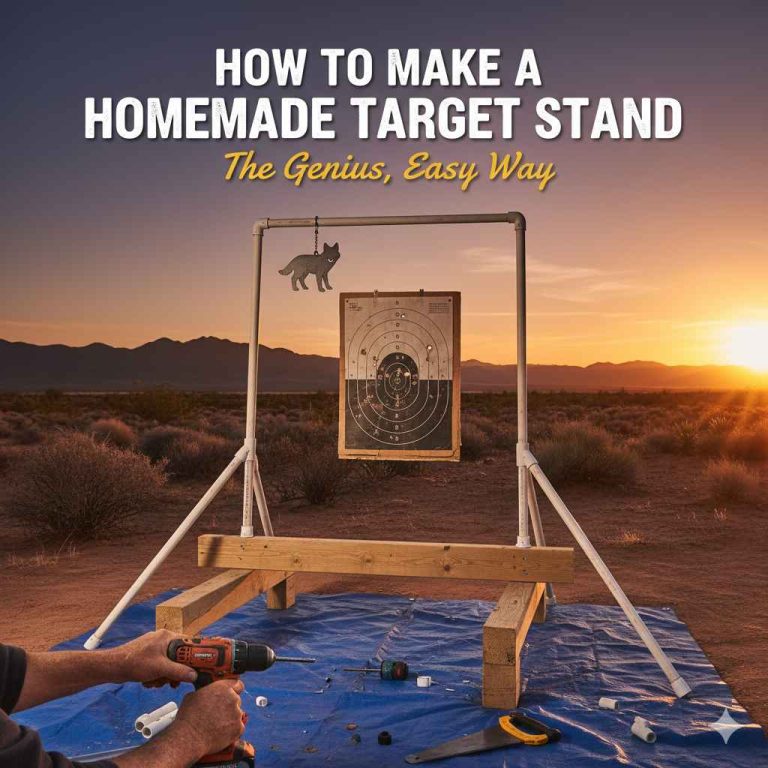
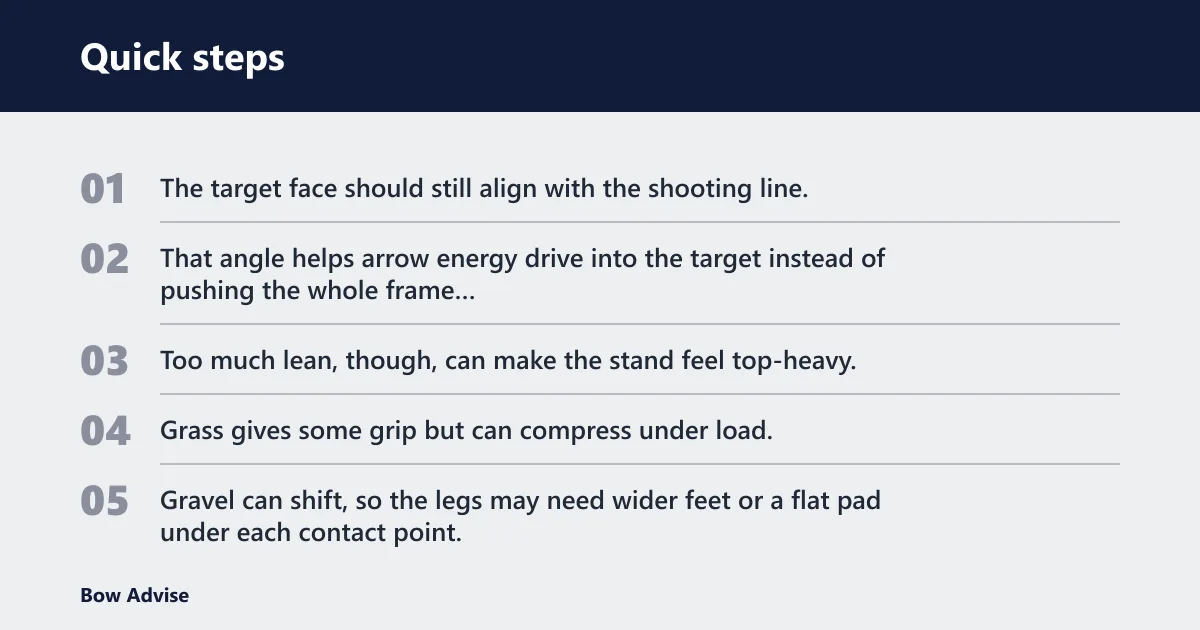
A modest rearward lean is usually enough. The target face should still align with the shooting line, but the top can sit a little farther back than the bottom. That angle helps arrow energy drive into the target instead of pushing the whole frame forward. Too much lean, though, can make the stand feel top-heavy.
Grass, gravel, and concrete setup differences
Grass gives some grip but can compress under load. Gravel can shift, so the legs may need wider feet or a flat pad under each contact point. Concrete is firm but slick, so slipping becomes the main issue. On any hard surface, the stand needs a level base and a way to keep feet from sliding.
Leveling, stakes, and slip prevention
On grass, stakes or ground pins can hold the frame in place. On gravel, use flat boards or pavers to spread the load. On concrete, rubber feet, sandbags, or non-marring pads help keep the stand from walking after repeated shots. Check that the frame is level before shooting.
Suppose a 36-inch foam block sits on a 5-foot stand with a narrow base and no rear brace. The first few shots may look fine, then the stand starts creeping backward on a concrete slab. Adding a deeper footprint and a non-slip foot changes the result more than making the frame taller.
What changes for portable or permanent builds?
Portable stands should stay light, simple, and easy to break down, so they usually use a smaller footprint and thinner lumber. Permanent builds can be wider, heavier, and more resistant to wind. The right choice depends on how often the target moves, what bow is used, and how much backyard space is available.
Portable stand priorities
Portable stands should favor quick assembly, modest weight, and a footprint that fits through doors or into a vehicle. Bolted joints, removable braces, and 2×4 framing are common. Keep the design compact enough to move, but do not shrink the base so far that the target becomes unstable after a few shots.
Permanent stand priorities
Permanent stands can use wider 2×6 base rails, heavier braces, and more anchoring. They can also tolerate a larger rear spread and a deeper footprint because transport is less important. If the stand stays outdoors, weather exposure and corrosion become part of the design, so the hardware should match that use.
Bow type and shooting distance adjustments
Compound bows usually send more energy into the target, so a larger or denser target benefits from a deeper footprint and firmer bracing. Recurve setups often work fine with lighter stands, especially for smaller bags or blocks. At longer distances, missed shots have more room to travel, so backstop placement matters even more.
Frequently asked questions
What size lumber do I need for a target stand?
Most small to medium stands work with 2×4 lumber for uprights and braces. Use 2×6 lumber for the base rails or for a heavier target that needs more support. A mixed build is common because it keeps weight reasonable while giving the base more stiffness.
How far apart should the legs be on a target stand?
For a backyard build, the legs should usually be spread far enough to create a 24- to 36-inch footprint depth. Wider leg spread gives the stand more resistance to tipping and keeps it from rocking when arrows strike off center. Bigger targets need more spread.
What is the best target stand size for a compound bow versus a recurve bow?
A compound bow setup usually benefits from a slightly deeper base and firmer bracing because the target receives more energy. A recurve bow can often use a lighter stand, especially with a bag target. In both cases, the stand should still be sized to the target first.
How much clearance should I leave around a target stand for safety?
Leave enough room to mount the target without squeezing it, plus extra space behind it for a backstop. Keep a wide, unobstructed area around the stand rather than relying on only a few feet of clearance. More space is better when the shooting lane is long or when bystanders may pass nearby.