How Much Does an Arrow Saw Cost?
For most DIY archers, a mid-range 3-in-1 arrow saw gives the best value because it cuts shafts, squares ends, and checks spin without pro-shop pricing. An arrow saw is commonly priced at about $40 to $200, with many home builders choosing models around $70 to $120; under $50 usually points to basic cutting, while $150-plus is often associated with better dust control and stronger durability. Buy too cheap and crooked cuts, rough ends, and faster blade wear show up fast.
Quick picks


| Buyer type | Best pick | Typical price band | Why it fits |
|---|---|---|---|
| Occasional home cuts | Budget arrow saw | $40 to $70 | Simple cutting for carbon or aluminum shafts, low footprint, limited extras |
| Regular DIY arrow building | Mid-range 3-in-1 saw | $70 to $120 | Good balance of cut quality, squaring help, and cleaner setup |
| Frequent custom builds or small shop use | Pro shop saw | $120 to $200 | Better dust control, stronger support gear, and more complete accessory setup |
For a concrete feature example, the ModSaw Modular Spinner includes saw, spinner, squarer, and vacuum port on one rail, and its RPM is listed at 11000. The SPG Archery 3-in-1 is described as a 3-in-1 arrow saw, spinner, and polisher, and it lists 12000 RPM. The Carbon Express Arrow Saw with Dust Collector is positioned as a pro-shop option.
Arrow saw cost table
| Tier | Expected saw price | Likely add-on costs | Who it fits |
|---|---|---|---|
| Budget | $40 to $70 | Extra blade $15 to $35, simple squaring accessory $10 to $20, basic dust hookup $10 to $25 | First-time buyers, occasional shaft trimming, small bench setups |
| Mid-range | $70 to $120 | Extra blade $20 to $40, squaring accessory $15 to $25, vacuum hookup $15 to $35, sanding discs $5 to $15 | DIY archers building carbon and aluminum arrows more often |
| Pro shop | $120 to $200 | Extra blade $25 to $50, vacuum hookup $20 to $40, squaring accessory $20 to $35, replacement clips $3 to $10 | Frequent custom builds, heavier use, cleaner dust management needs |
What drives arrow saw price?
Price moves most with motor speed, cut control, and how much of the arrow-building workflow the saw handles. A bare cutter costs less than a machine that also spins shafts, squares ends, and handles dust. Portability and bench footprint also matter, because compact tools usually give up some stability or accessory space.
Motor RPM and cutting speed
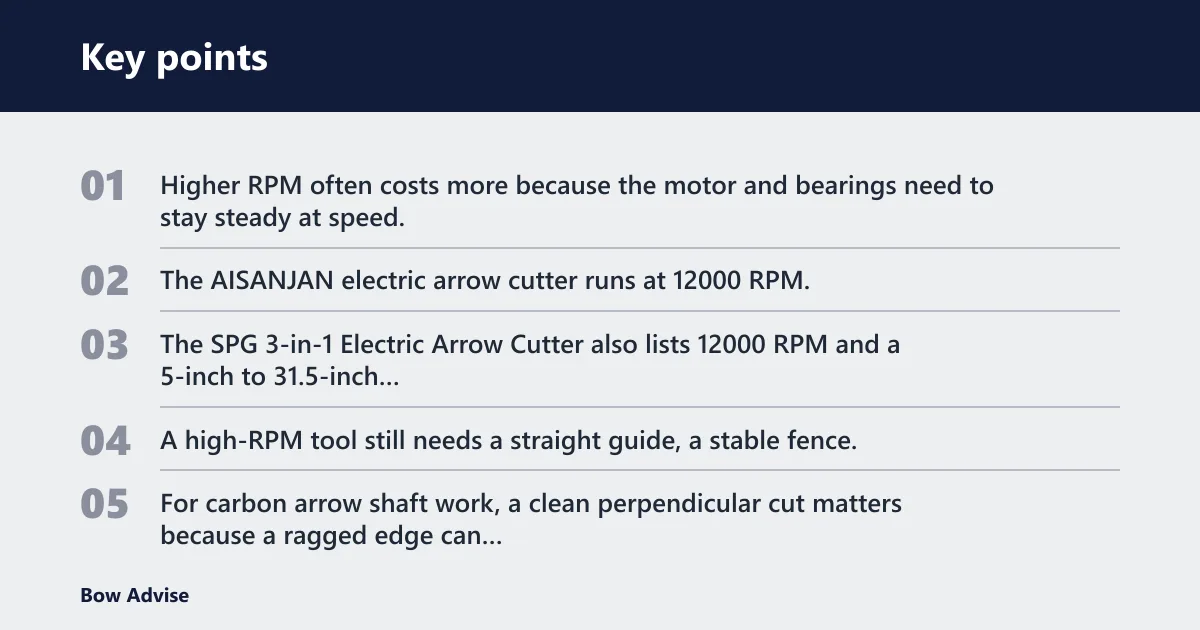
Higher RPM often costs more because the motor and bearings need to stay steady at speed. The AISANJAN electric arrow cutter runs at 12000 RPM, and it is described as compatible with carbon, aluminum, and fiberglass. The SPG 3-in-1 Electric Arrow Cutter also lists 12000 RPM and a 5-inch to 31.5-inch cutting range.
Speed alone does not set value. A high-RPM tool still needs a straight guide, a stable fence, and a blade that matches the shaft material. For carbon arrow shaft work, a clean perpendicular cut matters because a ragged edge can make squaring harder and can leave dust where you do not want it.
Blade type: diamond or standard
Diamond blades usually cost more than standard blades, and they are one reason a pro shop setup costs more upfront. Standard blades can be enough for light use, especially if the saw is only trimming carbon or aluminum occasionally. A diamond blade may cost more to replace, but it can be the better buy when the saw sees frequent use.
The hidden cost is not only the blade price. It is also the replacement interval. A saw that dulls quickly can turn a low purchase price into a higher long-term bill through more frequent blade swaps and more time spent correcting rough ends.
Dust control, vacuum port, and cleanup cost
Dust control adds cost because it adds parts: ports, hoses, fittings, and often a better shroud. The ModSaw Modular Spinner includes a vacuum port on one rail, and the Modsaw 3-in-1 is described as modular with vacuum and sanding-disc attachments. Those extras matter most for carbon shafts, where dust control is a real setup cost, not a luxury.
Shop-vac compatibility can be the cheaper way to get there. A vacuum hookup often costs less than a fully enclosed dust system, but it still adds to the purchase total. For buyers who cut often, cleaner collection can save time on cleanup and reduce the mess around the bench.
Spinner and squaring features
A spinner checks straightness after cutting. A squaring tool trues the shaft end so the insert or point seats better. Both tools are common in custom arrow building, and both can push a saw package into a higher price tier. The SPG Archery 3-in-1 is a 3-in-1 arrow saw, spinner, and polisher, while the ModSaw also combines saw, spinner, and squarer in one rail.
Those bundled tools can be worth the extra money if the buyer builds arrows often. If the saw is only for the occasional cut, a separate squaring tool may be cheaper than stepping up to a full 3-in-1 package.
How much does a budget arrow saw cost?
A budget arrow saw usually costs $40 to $70 and gives you basic shaft cutting without many extras. It is the cheapest useful tier for home use, especially if you only trim a few carbon or aluminum shafts at a time. The trade-off is simpler guides, less dust control, and fewer bundled accessories.
What a budget model usually includes
The GHA Archery Electric Arrow Saw is labeled as the budget option. A budget unit usually gives you the motor, a cutting guide, and a basic clamp or holder. It may work well for carbon and aluminum shafts, but it usually skips spinner checks, integrated squaring, and stronger dust collection.
A common first-timer mistake is buying the cheapest saw, then adding a blade, squaring tool, and vacuum fittings one by one. At that point, the “cheap” saw is no longer cheap.
What you still need to buy
Plan on at least one extra blade if you expect regular use. Add $10 to $25 for a basic squaring tool or sanding disc setup, and another $10 to $25 if you want a simple vacuum hookup. If the saw does not include a stable arrow holder, that part can also add to the bill.
Say your budget is tight and you only cut hunting arrows twice a season. A basic saw and a separate squaring tool may make more sense than paying for a 3-in-1 package you will barely use.
Who should stop at this tier?
Stop at the budget tier if you only need occasional cuts, already own a square-edge finishing tool, and do not mind a more compact bench setup. It is also the right ceiling for buyers who want a dedicated arrow cut off saw without paying for spinner or polisher functions they will never use.
Is a 3-in-1 arrow saw worth it?
A 3-in-1 arrow saw is worth the extra cost when the buyer builds arrows often enough to use all three functions: cutting, spinning, and squaring or polishing. If you only need one clean cut now and then, the extra price can be hard to justify. If you build for multiple bows or multiple shooters, the bundle can cut separate purchases.
Arrow spinner function
An arrow spinner is used for straightness checking after the shaft is cut and assembled. It is especially useful for custom arrow building, where a bent shaft can waste inserts, points, and time. Bundled spinner functions make sense when the builder wants one bench tool instead of separate gear for each step.
Squaring tool function
A squaring tool for arrows trues the shaft end after cutting. Some models integrate that step, while others use separate squaring posts or sanding discs. That added function matters most for carbon shafts, where a clean perpendicular end helps inserts seat correctly and reduces fit problems.
When the bundle saves money
Bundled tools save money when the buyer would otherwise purchase a saw, spinner, and squaring tool separately. They cost more upfront, but they can be cheaper than assembling the same setup piecemeal. The savings are strongest for frequent builders and small pro-shop setups.
Arrow saw ownership costs
The purchase price is only the first bill. A realistic ownership budget should include blades, dust control parts, sanding discs, and small replacement pieces. These costs are usually modest one by one, but they matter when the goal is to stay within a fixed budget.
Extra blade price
Replacement blades commonly land in the $15 to $50 range, depending on whether the blade is standard or diamond and whether the saw is a budget or pro model. If the saw will see frequent carbon cutting, a spare blade belongs in the budget from day one.
Vacuum hookup and dust control parts
Vacuum ports, hoses, and adapters can add $10 to $40, depending on what the saw includes. Pro-shop options such as the Carbon Express Arrow Saw with Dust Collector justify part of their higher price by reducing cleanup time and helping keep carbon dust contained.
Sanding discs and squaring accessories
Sanding discs or squaring accessories usually add $5 to $25, depending on the setup. The Modsaw 3-in-1 includes vacuum and sanding-disc attachments, which can save the buyer from sourcing those parts separately. That bundle matters most when the saw is part of a dedicated arrow-building bench.
Replacement clips or small parts
Small parts are easy to ignore until one wears out. Budget a few dollars for clips, holders, or similar hardware, and a bit more if the saw uses brand-specific pieces. These parts are minor, but they can be the difference between a usable setup and a stalled project.
Start with shaft type, then match the saw to how often you build arrows. Carbon and aluminum shafts both fit into the same broad saw categories, but carbon creates more dust concern and rewards a cleaner cut. Fiberglass compatibility matters too if the saw will be used across multiple shaft types.
- Pick the shaft material first: carbon, aluminum, or fiberglass.
- Check whether the saw gives a clean perpendicular cut and burr-free edge.
- Decide if you need spinner and squaring functions or only cutting.
- Compare dust control, especially if carbon shafts are part of the plan.
- Look at bench footprint and portability if shop space is limited.
- Choose a dedicated arrow saw only if the added precision is worth the price.
Dedicated arrow saw or cut-off saw
A dedicated arrow cut off saw is built for single-purpose shaft cutting, while a non-dedicated tool can be a cheaper entry point. The JOUNJIP TruePower Mini Cut-Off Saw is the non-dedicated option in the list. A generic cut-off saw can work for occasional trimming, but it usually gives up dust control, fence precision, and burr-free finishing.
Suppose you only need to shorten a few aluminum arrows for backyard practice. A cheaper non-dedicated saw may be enough. If you cut carbon shafts often and want a clean perpendicular end every time, a purpose-built arrow saw is the safer buy.
Bench footprint and portability
Compact saws are easier to move and store, but they may give up some stability or accessory space. Larger pro shop units usually take more bench space and cost more, yet they are better suited to repeated cutting, squaring, and cleanup tasks. That is why small home builders and pro shops should not shop from the same checklist.
Frequently asked questions
How much does an arrow saw cost?
An arrow saw usually costs about $40 to $200. Most DIY archers land around $70 to $120, which is enough for a solid cutting setup without paying for every extra feature. Budget models are cheaper, while pro shop units cost more because they add dust control, squaring, and spinner functions.
How much is a hand saw for cutting arrows?
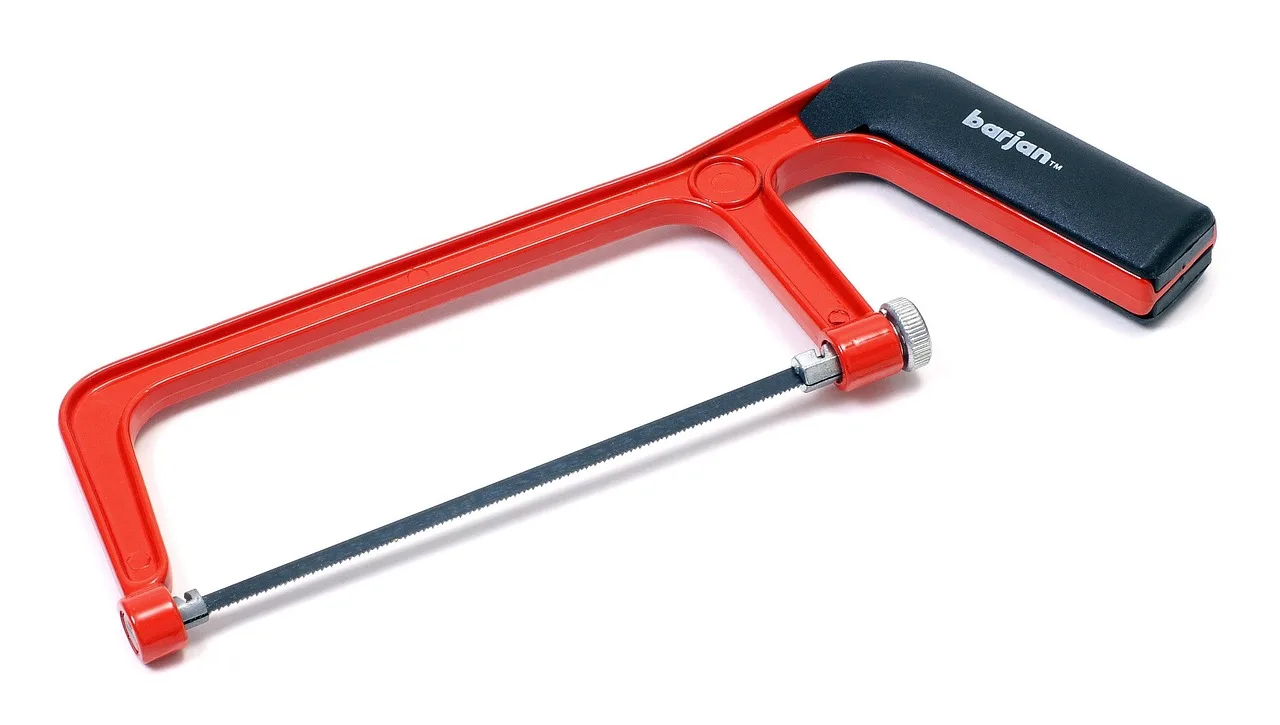
A hand saw is usually cheaper than a dedicated arrow saw, but it is not the same tool. It can cost very little upfront, yet it is harder to keep perpendicular and burr-free on carbon or aluminum shafts. For arrow building, the lower price can disappear in wasted shafts and extra finishing work.
What is the cheapest arrow saw for home use?
The cheapest useful option is usually a budget electric model in the $40 to $70 range. The GHA Archery Electric Arrow Saw is labeled as the budget option. It is the right fit for occasional trimming, but not for buyers who want spinner, squaring, or stronger dust collection built in.
Is a 3-in-1 arrow saw worth the extra cost?
A 3-in-1 arrow saw is worth it when you will actually use all three functions. The SPG Archery 3-in-1 combines saw, spinner, and polisher, and the ModSaw Modular Spinner combines saw, spinner, squarer, and vacuum port. Those bundles make sense for frequent builders and small shop setups.
Do I need an arrow saw for carbon shafts?
Carbon shafts do not require a dedicated arrow saw, but they do benefit from one. Clean perpendicular cutting helps prevent rough ends and makes squaring easier. Dust control also matters more with carbon, so a saw with a vacuum port or shop-vac compatibility is the better choice when carbon is a regular material.
Can I use a cut-off saw instead of an arrow saw?
Yes, but only if you accept the trade-offs. A non-dedicated tool like the JOUNJIP TruePower Mini Cut-Off Saw can handle occasional jobs, but it usually lacks the precision, burr control, and dust management of a purpose-built arrow saw. For frequent custom builds, the dedicated tool is the better buy.
Where can I buy an arrow saw?
Arrow saws are usually sold through archery retailers, pro-shop suppliers, and online marketplaces. Budget saws are common in broad ecommerce listings, while pro-shop models are more often sold by archery-focused sellers. Buying channels matter because replacement blades, squaring parts, and vacuum pieces are easier to source from archery-specialty sellers.
What’s the difference between a budget arrow saw and a pro shop model?
A budget saw focuses on basic cutting and lower entry cost. A pro shop model usually adds better dust collection, stronger materials, and more complete accessories. The Carbon Express Arrow Saw with Dust Collector is positioned as a pro-shop option, while the GHA Archery Electric Arrow Saw is labeled as the budget option.
How much do arrows cost?
Arrow cost depends on shaft material, length, and whether the build is basic or custom. That price is separate from the saw budget, but it matters because a better saw protects the time and money already spent on shafts, inserts, and points. If the saw budget is tight, factor arrow cost into the same purchase plan.