How to Anchor a DIY Target Stand So It Won’t Tip
Anchor a DIY target stand by matching the method to the surface: soil gets driven stakes or auger anchors, gravel needs cross-braced feet, and patios need sandbags or water weights plus guy lines. Poor anchoring can tip the stand, damage gear, and send arrows off target. This guide covers the right anchor for grass, gravel, and concrete, plus how much ballast and bracing each setup needs.
Best anchor for your stand

The right anchor depends on three things: what the stand is made from, what it sits on, and how much wind hits the face. A wider base helps, but it does not replace anchoring when the target is tall, the legs fold, or the ground is soft.
Use the least invasive method that still resists side load. Soil accepts stakes or auger anchors. Hardscape needs dead weight and tension. If the stand sits on a slope or in an exposed backyard, choose a method that resists lift and sideways push.
Match stand material to anchor type
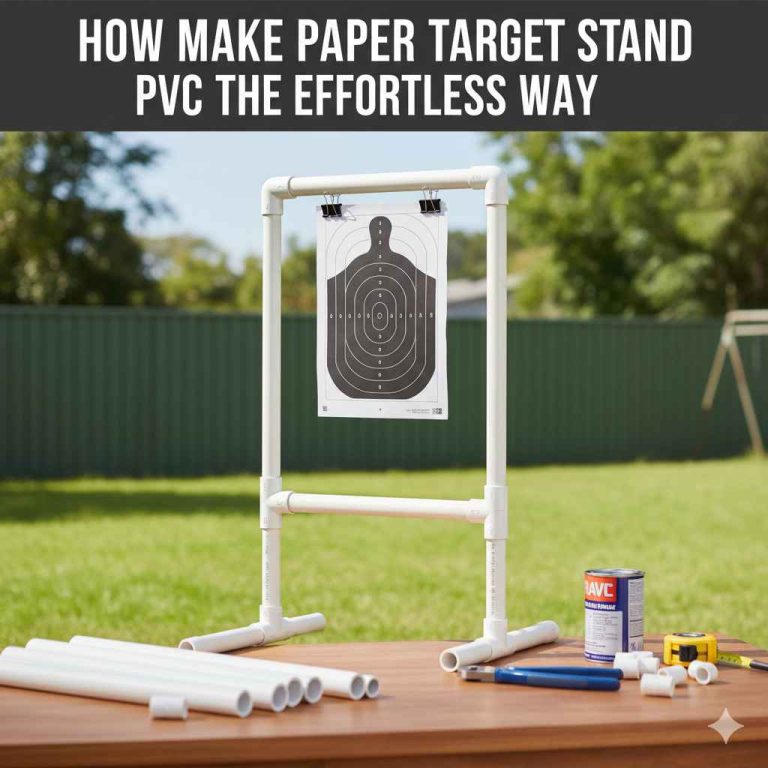
Wood frames, PVC builds, and conduit frames react differently in wind. Wood strips used as support arms need to be straight and evenly cut so both sides carry load evenly. Conduit is heavier and steadier outdoors, but that extra mass can make transport less convenient. PVC is light and cheap, but it is better for foam faces and lighter targets.
That material choice changes the anchor. A light PVC frame usually needs more help from ground anchors or ballast. A heavier timber or conduit frame may still need anchoring, but it resists small gusts better before movement starts.
Match ground surface to anchor type
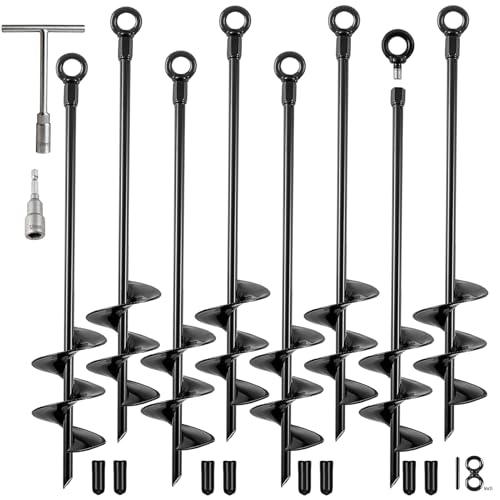
On grass or soft soil, stakes or auger anchors usually work best because they hold the frame against tipping and sliding. On gravel, cross-braced base pieces are often safer than shallow stakes that can loosen. On patios, decks, and concrete pads, use sandbags, water weights, or tie-down points that do not require digging.
Renters and shared ranges need no-dig choices. That usually means a weighted base, short guy lines to fixed posts, or a free-standing frame with enough dead weight to resist gusts without drilling or staking.
Match target weight to anchor type
Heavier targets need a stronger frame and a better anchor. A timber frame described as strong enough for targets up to around 15 kg can still tip if the target face is large or the legs are narrow.
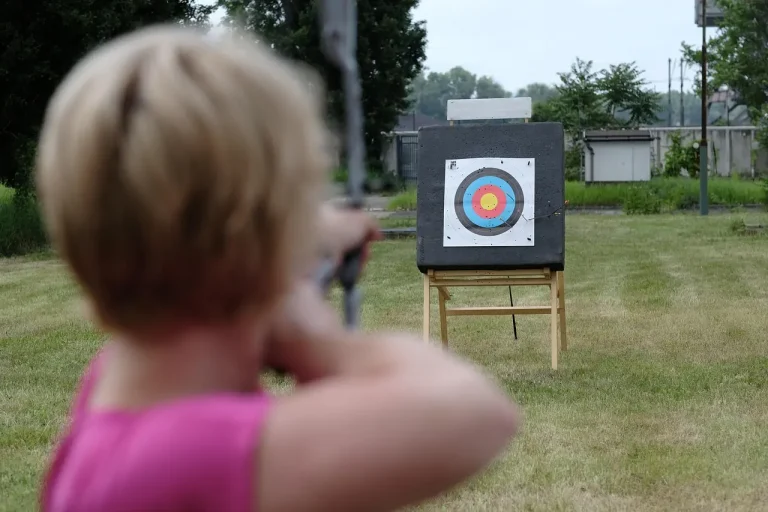
A B-27 silhouette target also needs enough stand width and anchor support because the face can catch more wind than a narrower support or block. Bigger faces act like a sail, especially when mounted high on light support arms.
| Stand material | Ground surface | Target load | Wind level | Safest anchor method |
|---|---|---|---|---|
| PVC frame | Grass or soft soil | Lighter foam face | Low | Two driven stakes plus short guy lines |
| PVC frame | Grass or soft soil | Foam or light paper face | Moderate | Auger anchors with front ballast |
| Timber frame | Grass or soft soil | Up to around 15 kg | Moderate | Stakes at the feet plus sandbag at the rear rail |
| Timber frame | Gravel | Moderate load | Moderate to strong | Buried or cross-braced feet with dead weight on top |
| Conduit frame | Grass or soft soil | Heavier target face | Strong | Auger anchors plus guy lines on both sides |
| Any frame | Patio or concrete | Any load that stays within frame capacity | Moderate to strong | Sandbags or water weights with low-angle guy lines |
How do you keep a target stand from tipping?
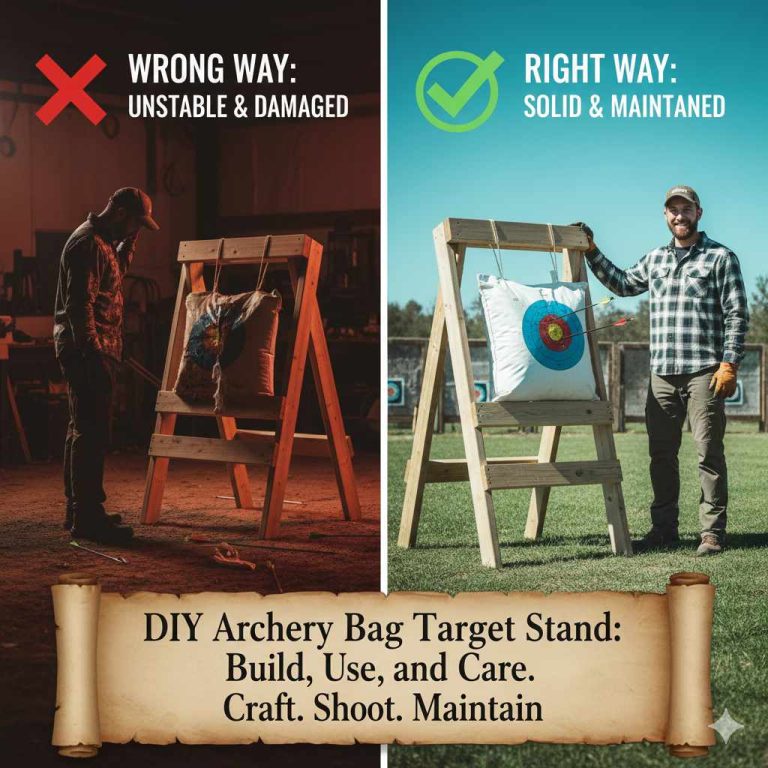
Start with base width, then remove top-heavy load and side sway before adding more ballast. A stand that rocks because the target sits too high needs lateral support, not only more weight at the bottom. If the feet are uneven, the stand can tip even with heavy bags on it.
Gusts push from the side, not only straight down. The safest fix is often a tighter frame, a lower target mount, or a guy line that stops the head from leaning before the legs start to lift.
Use base width as the first stability check
Foldable wooden legs help with storage and transport, but they can reduce stability if the spread is narrow. If the legs fold in too far, the stand may rock before the anchor even comes into play.
Reduce top-heavy loading and side sway
Keep wood strips straight and evenly cut so the target sits squarely on the frame. Uneven support arms create a lean, and a lean turns wind into a larger tipping force. If the target hangs high, move it lower before adding more ballast.
Say your B-27 silhouette target sits on a light timber A-frame and the top edge is above the crossbar. A small gust can start a side load, the frame twists, and the feet lift on the windward side. Lowering the face and widening the stance solves more than adding a second bag.
Add lateral support before adding more ballast
When a stand moves side to side, guy lines are often safer than piling on dead weight alone. Guy lines stop the top from swaying, while stakes or sandbags keep the feet from shifting. Used together, they control lift and slide.
For an A-frame, anchor the lower points first, then add tension above the center of gravity. If the tie point is too low, the frame can still rack. If it is too high and the line is steep, the line can pull the stand sideways instead of holding it upright.
Sandbags, stakes, or guy lines?
Each method solves a different problem. Sandbags resist lift and small shifts on hard ground. Stakes resist pull-out in soil. Guy lines resist sway and side load. The safest setup uses the method that matches the ground, then adds a second method only when the wind or target size demands it.
When dead weight is enough
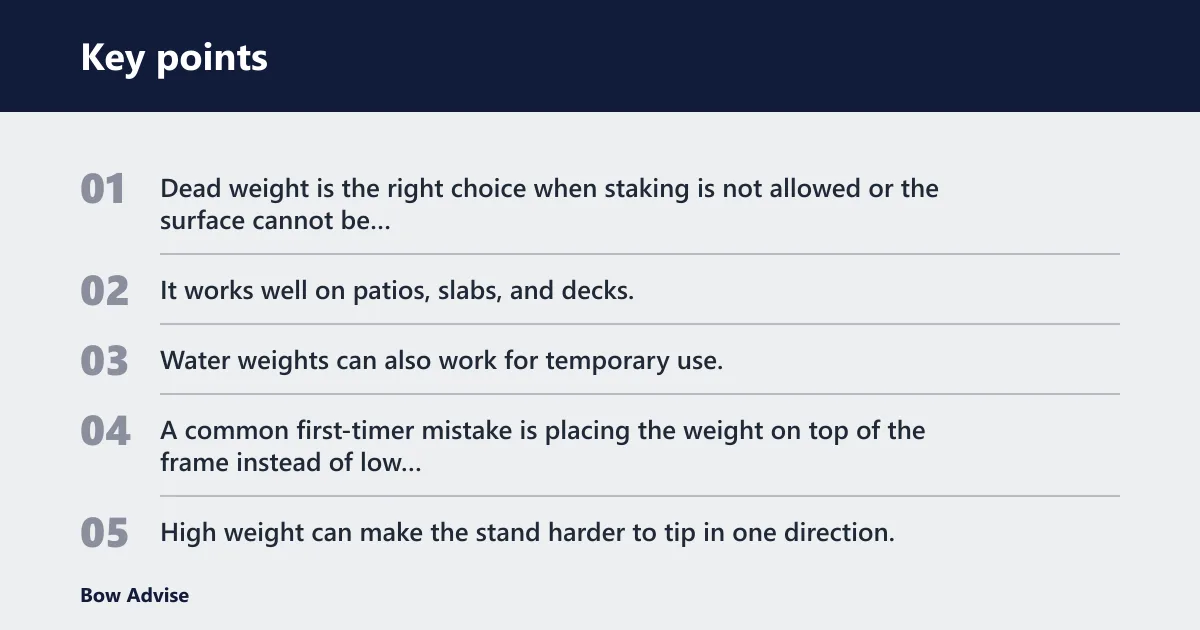
Dead weight is the right choice when staking is not allowed or the surface cannot be penetrated. It works well on patios, slabs, and decks, especially with a lower target and calm to moderate wind. Water weights can also work for temporary use, but they still need to sit low and clear of shooting lanes.
A common first-timer mistake is placing the weight on top of the frame instead of low and wide. High weight can make the stand harder to tip in one direction, but it does little against sway if it sits above the legs.
When stakes work best
Stakes work best in grass, clay, and firm soil where they can hold the feet against pull-out. They are especially useful for light PVC frames and for foldable wooden legs that otherwise spread or creep when the target is hit. Use them where the arrow path will not cross the stake heads or tie points.
For windy soil, deeper hold beats more weight. A stake that is barely into the ground can loosen after repeated impacts and gusts. If the stand still moves, upgrade to auger anchors or add guy lines rather than driving the same shallow stake again.
When guy lines are safer
Guy lines are safer when the stand is tall, the face is broad, or the wind comes in uneven bursts. They reduce side-load on the feet and keep the frame from rocking. They are also useful when the target is too light to benefit from more ballast alone.
Keep the lines short enough that they hold the frame before it leans far enough to shift the feet. Long, slack lines do not prevent the first tip. They only stop the fall after movement has started.
Grass, gravel, patio: what changes?
Ground type changes the anchor choice more than the frame shape does. Grass gives you penetration. Gravel gives poor purchase and can shift under load. Patio and concrete give no place to dig, so the anchor must work without soil contact.
Anchoring on grass or soft soil
Grass usually gives the best hold for stakes or auger anchors. On soft soil, place the anchors outside the arrow strike zone and angle them so the pull line resists both backward tip and side drift. If the soil is wet, check the anchor again after the first few rounds.
Burial can help here too. Some DIY builds place part of the base in the ground for balance, but only when the setup is meant to stay in one place and the arrow path stays clear of buried edges.
No-dig options for gravel and hardscape
Gravel and concrete usually need a no-dig setup. That means sandbags, water weights, or a weighted base with guy lines tied to a fixed post, wall anchor, or heavy separate object. A buried foot does not help on a slab, and loose gravel can hide a weak anchor point.
On gravel, cross-braced feet can keep the stand from skittering, but the feet still need weight or side support. Without that, the frame can inch forward with each gust or shot cycle.
Temporary setups for renters and shared spaces
Renters need anchors that leave no permanent mark. Sandbags, strap weights, and removable guy lines fit that need better than buried posts or drilled hardware. If rules allow it, a portable frame with fold-out legs and removable weights is the cleanest option.
For shared spaces, keep all tie points low and outside the shooting lane. Loose cords across a yard create a trip hazard, and hard objects near the target line can damage shafts if an arrow skims low.
Anchor method guide
Use this section as a build-side filter. The frame type decides how much anchor support it needs, but the surface still sets the final method. A strong frame on the wrong surface can still fail in a gust.
Wood frame with foldable legs
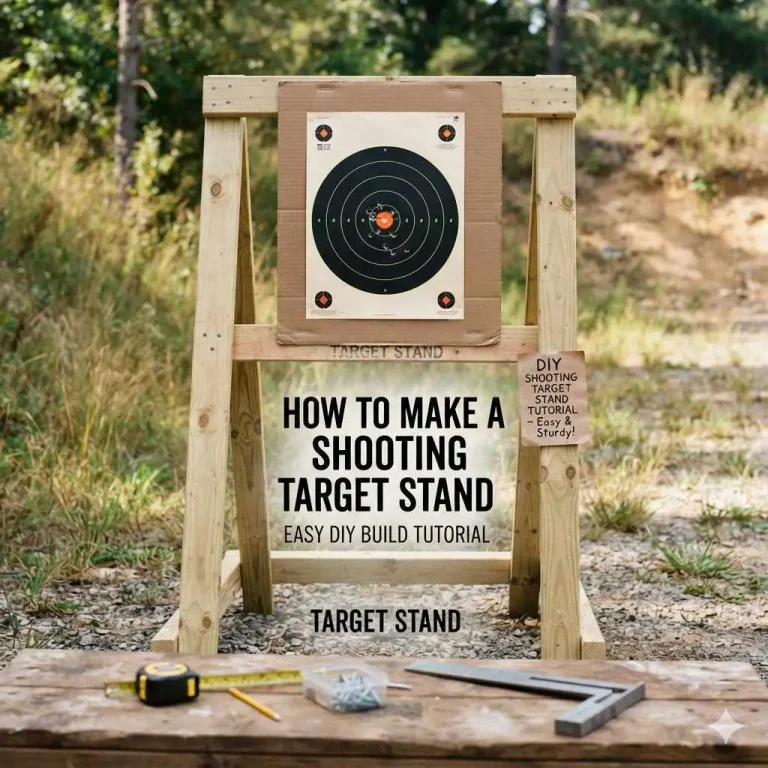
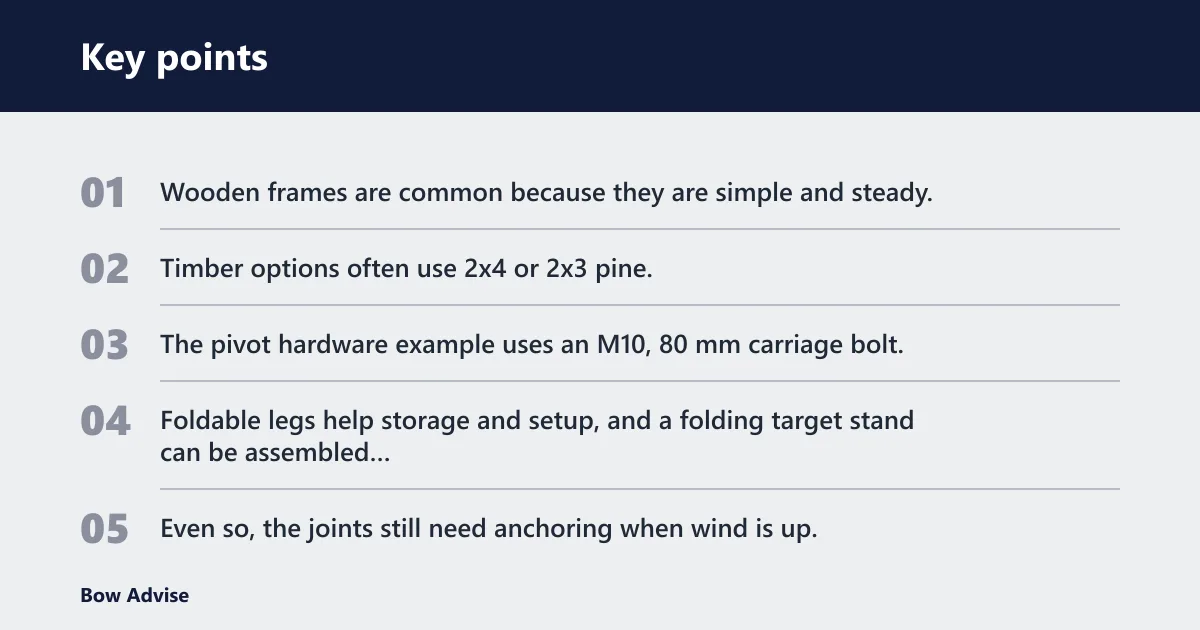
Wooden frames are common because they are simple and steady. Timber options often use 2×4 or 2×3 pine, and an example foldable build uses two lengths of 2×3 pine at 150 cm each with a 60 cm crossbar. The pivot hardware example uses an M10, 80 mm carriage bolt, and the spread limiter can be about 50 cm of chain or webbing.
Foldable legs help storage and setup, and a folding target stand can be assembled without tools in under two minutes once built. Even so, the joints still need anchoring when wind is up. On grass, stakes at the feet work well. On patio, add sandbags low on the frame and keep the legs wide.
PVC stand with T-sockets
PVC target stands commonly use about 1.5-inch PVC T-sockets for the top crossbar or support joints. That makes them light and quick to move, but they are best for foam faces and lighter targets. Standard PVC can crack in cold weather under repeated arrow impact vibration, so it needs careful use outdoors.
Because PVC is so light, it is the stand type most likely to blow over in the backyard if the face is large or the wind is gusty. Use stakes on soil or sandbags plus guy lines on hardscape. Do not count on the frame weight alone.
Conduit stand with heavier frame
Electrical conduit, meaning steel EMT, sits in the middle. It is heavier than PVC and usually steadier outdoors, so it resists small gusts better. The tradeoff is transport. The frame takes more effort to carry and store.
For windy yards, conduit is a solid choice when the stand still needs to be moved between sessions. Use a wide base and add anchors that keep the feet from sliding, because heavier metal can still tip if the target face acts like a sail.
B-27 target and other larger faces
Larger faces need more than a wide base. A B-27 silhouette target loads the stand with more surface area, so the anchor must resist side pull as well as weight. The safest fix is a broader stance plus guy lines or stakes, depending on the ground.
Picture a B-27 on a light timber frame with foldable wooden legs. The face fits the stand, but a crosswind catches the top corner. Without side support, the whole frame racks. With guy lines and a wider base, the same face stays upright far better.
Ground burial and in-ground support
Ground burial or in-ground support can improve steadiness when the setup is meant to stay put. Burying part of the base lowers the center of gravity and limits foot movement. It also reduces the need for loose ballast on top of the frame.
How buried support changes balance
Burial changes the balance by locking part of the structure into the earth. That helps most when the target is tall or the wind is steady rather than bursty. It works less well if the buried section is shallow or uneven, because the stand can still twist above ground.
Keep in mind that buried support is not the same as a loose stake. It should anchor a planned permanent or semi-permanent setup, not a frame that needs to be moved every session.
Where burial makes sense
Burial makes sense on private ground where the stand stays in one place, and where the arrow line can clear the buried portions. It also fits heavier timber frames that benefit from fixed feet. If the yard gets wind from one direction, buried support plus a rear brace can work well.
Where burial is not allowed
Do not bury or stake into surfaces where it is forbidden or unsafe. That includes many rentals, shared lawns, and hardscape backyards. In those settings, use removable ballast, removable lines, or a stand that rests on a weighted platform instead.
Target stand stability checklist
This checklist is the fastest way to find the failure point. Check the legs, then the face, then the anchor, then the shooting lane. Fix the first problem before adding more weight.
- Confirm the legs sit level and the frame does not rack under hand pressure.
- Check that wood strips are straight and cut evenly so the target hangs square.
- Make sure the target face does not sit higher than needed.
- Inspect for sail effect from large foam or silhouette faces.
- Use stakes only where the ground allows deep hold.
- Use sandbags or water weights on patios and other no-dig surfaces.
- Add guy lines if the stand sways before it shifts at the feet.
- Place anchors outside the arrow path and away from low misses.
- Keep cords, stakes, and weights clear of walkways to avoid trip hazards.
- Move hard objects far enough away that a stray shaft will not strike them.
If the stand still tips after all that, change one variable at a time. More weight is not the first answer when the real issue is a narrow base, a tall mount, or a face that catches too much wind.
Frequently asked questions
How do you anchor a DIY target stand so it won’t tip in wind?
Match the anchor to the surface first. Soil takes stakes or auger anchors, gravel often needs cross-braced feet, and concrete or patios need sandbags or water weights with guy lines. If the target is tall or broad, add lateral support before adding more dead weight.
What is the best way to weight a target stand for outdoor shooting?
The best weight is the one that keeps the feet planted without creating a trip hazard or blocking the arrow path. On hardscape, low sandbags or water weights work well. On soil, anchors usually beat extra ballast because they resist pull-out and side drift better.
Should I use sandbags, stakes, or guy lines on a target stand?
Use stakes on grass or firm soil, sandbags on patios and other no-dig surfaces, and guy lines when sway is the main problem. Many windy setups need two of those methods together. The safest choice depends on the frame, the ground, and the target size.
How deep should I bury or stake a target stand base?
Use burying or staking only on soil or grass where the anchor can resist pull-out and side load; on hard surfaces, use removable ballast instead.
Will PVC target stands blow over in the backyard?
They can, especially with a large face, gusty wind, or a narrow base. PVC is light and cheap, but it is suited to lighter targets and foam faces. On grass, stakes help. On hard surfaces, use sandbags plus guy lines, or switch to a heavier frame.
Can I anchor a target stand without making it permanent?
Yes. Use removable stakes where soil allows them, or use sandbags, water weights, and short guy lines on patios and in shared spaces. A foldable frame with removable ballast stays portable, but it still needs enough low, stable weight to resist gusts.