How To Be More Steady When Shooting A Bow
Mastering the art of archery requires more than just strength and a keen eye, it demands unwavering steadiness with every shot. Whether you’re aiming for a bullseye at a local competition or practicing for hunting season, the ability to remain steady while shooting a bow is the foundation upon which accuracy and consistency are built.
Yet, many archers, from beginners to seasoned enthusiasts, find themselves battling trembling hands, unsteady posture, and mental distractions that sabotage their performance.
Understanding what it truly means to be “steady” with a bow goes beyond simply standing still. It encompasses physical conditioning, correct form, mental resilience, and the right equipment choices. Through targeted training and a thoughtful approach, you can transform shaky shots into repeatable, confident releases.
This guide distills the expertise of coaches, biomechanical insights, and practical experience to help you develop rock-solid steadiness and elevate your archery skills to the next level.
Key Takeaways
- Steadiness in archery is a blend of physical, technical, and mental factors.
- Proper stance, grip, and consistent anchor points are fundamental for stability.
- Focused strength training and flexibility exercises enhance shot steadiness.
- Equipment setup, bow weight, stabilizers, and draw length, directly affects stability.
- Mental techniques and routine practice are crucial for overcoming shot anxiety.
- Comparing archery techniques and gear helps tailor strategies to individual needs.
Understanding Steadiness: The Foundations Of Stable Shooting
Developing steadiness with a bow requires more than simply holding still; it involves a complex interplay of body mechanics, muscle control, and mental focus. Understanding the science behind each factor is essential for any archer seeking to shoot with greater consistency and precision.
The Role Of Body Alignment
Proper body alignment forms the cornerstone of steady shooting. A study published in the Journal of Sports Sciences found that archers who maintained consistent skeletal alignment experienced significantly less muscle fatigue and improved shot accuracy. When your skeletal structure supports the bow’s draw weight, your muscles work less to maintain position, reducing tremors.
Key alignment steps include:
- Keeping feet shoulder-width apart for balance.
- Aligning the hips and shoulders perpendicular to the target.
- Maintaining a straight spine and relaxed shoulders.
Muscle Engagement And Fatigue
Steadiness relies on the engagement of large muscle groups over smaller, fatigue-prone muscles. Over-reliance on the forearms or hands can lead to shaking as these muscles tire quickly. Instead, archers should focus on engaging the back muscles (rhomboids and latissimus dorsi) during the draw and hold phases.
Pro Tip: Practice “scapular retraction” exercises to strengthen the muscles responsible for drawing and holding the bow steady.
The Psychology Of Stillness
Mental state is as critical as physical preparation. Anxiety or overthinking can trigger adrenaline surges, causing involuntary muscle tremors. Mindfulness and breathing techniques are proven methods to reduce stress and promote stillness at full draw. According to this research on sports performance, athletes who incorporate mindfulness training show reduced performance anxiety and improved motor control.
Real-world Example: Olympic Archery Analysis
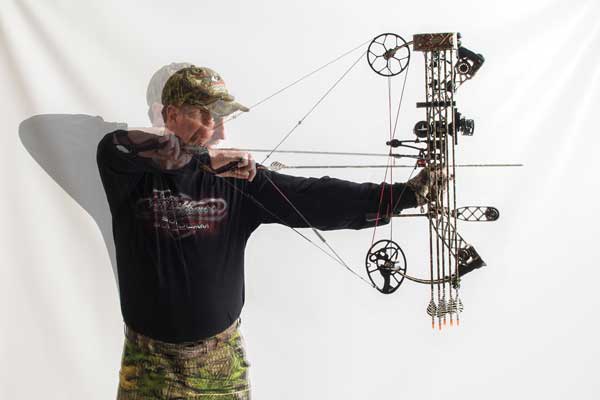
Olympic archers are renowned for their steady form under pressure. Video analysis of the 2020 Tokyo Olympics revealed that top competitors spent up to 70% of their shot cycle focusing on setup and anchor, with minimal visible movement during the hold.
Their routine includes a deliberate mental “quieting” phase just before release, highlighting the importance of mental preparation in achieving steadiness.
Credit: www.bowhunter.com
Perfecting Your Archery Stance And Grip
A stable stance and a consistent grip are the physical foundations of steady shooting. Subtle variations in how you stand or hold your bow can dramatically affect stability and accuracy.
Establishing A Solid Stance
There are three primary stances used in archery:
- Square Stance: Feet parallel and shoulder-width apart, both toes aligned with the shooting line.
- Open Stance: Front foot angled slightly away from the target, providing more balance for some archers.
- Closed Stance: Rear foot set behind the front, sometimes used for specific shot requirements.
| Stance Type | Stability | Best For | Potential Drawbacks |
|---|---|---|---|
| Square | High | Beginners, Target Archery | Less adaptable to terrain |
| Open | Moderate-High | Field Archery, Advanced Shooters | Requires more muscle engagement |
| Closed | Variable | Specific Shot Angles | Potential for imbalance |
Pro Tip: Experiment with each stance to find what provides the most natural stability for your body type and shooting environment.
The Importance Of A Relaxed Grip
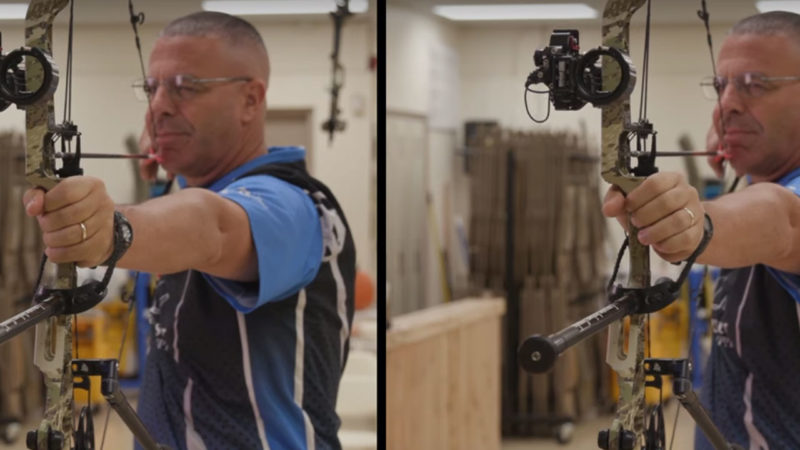
Tension in the bow hand is a leading cause of torque, which reduces shot stability. The ideal grip is both firm and relaxed, allowing the bow to pivot naturally during the shot. Many elite archers use a “neutral grip,” where the pressure runs along the thumb pad, minimizing side-to-side movement.
- Avoid “white-knuckling” the bow.
- Keep fingers loosely wrapped, not squeezing the grip.
- Use a wrist sling to maintain control without excessive tension.
Consistent Anchor Points
A reliable anchor point, where your hand, string, or release aid contacts your face, ensures repeatable alignment. Inconsistent anchor points introduce subtle variations that disrupt steadiness.
Common anchor points include:
- Corner of the mouth
- Jawline or cheekbone
- Under the chin (Olympic style)
Example: Tournament Archer’s Routine
Competitive archer Lisa Unruh credits her steadiness to a strict pre-shot checklist: confirming her stance, loosening her grip, and mentally rehearsing her anchor point before every shot. This ritual reduces physical and psychological variance, resulting in a steadier aim.
Credit: www.bowhunting.com
Building Physical Strength And Endurance For Stability
Physical conditioning is a key pillar of steadiness in archery. Strong, balanced muscles allow you to hold the bow at full draw with less effort, reducing unwanted movement and fatigue-induced shaking.
Essential Strength Training Exercises
Focus on exercises that target the shoulders, back, core, and forearms:
- Rows and Pull-Ups: Strengthen the back muscles essential for drawing and holding.
- Planks and Side Planks: Build core stability for better posture.
- Shoulder Raises and Rotator Cuff Work: Prevent fatigue and injury.
Aim for a balanced routine, working both sides of the body to avoid muscular imbalances that can lead to instability.
Flexibility And Range Of Motion
A flexible upper body allows for smoother, steadier motion through the shot cycle. Incorporate stretching routines that target the shoulders, chest, and neck.
- Shoulder stretches (arm crossovers, wall angels)
- Neck rotations and gentle spinal twists
- Dynamic warm-ups before shooting sessions
Cardiovascular Endurance
Shooting multiple arrows in succession can be surprisingly taxing. Improved cardiovascular fitness helps you maintain steadiness throughout long practice sessions or competitions. Activities like brisk walking, cycling, or swimming are effective for building overall endurance.
Example: High School Archery Team Results
A high school archery team incorporated a structured strength and flexibility program into their training. Over a 12-week period, the number of tremor-induced misses per archer dropped by 18%, demonstrating the direct link between physical conditioning and shot steadiness.

Credit: www.youtube.com
Optimizing Your Equipment For Maximum Steadiness
Even the most skilled archer can be hampered by poorly tuned or ill-fitting equipment. Customizing your setup for balance and comfort is essential for minimizing unnecessary movement and maximizing control.
Bow Weight And Draw Weight
Selecting the appropriate draw weight is crucial. Using a bow that’s too heavy can quickly fatigue your muscles, leading to shaking and loss of control. Conversely, a bow that’s too light may not provide enough stability at full draw.
- Beginners should start with a manageable draw weight (typically 15, 25 lbs for recurve/compound).
- Increase gradually as your strength and form improve.
Stabilizers And Balance
Modern bows allow for the addition of stabilizers, weighted rods that dampen vibration and aid balance. A well-configured stabilizer system can drastically reduce bow movement at full draw and upon release.
| Stabilizer Type | Main Benefit | Typical Length | Best For |
|---|---|---|---|
| Front Stabilizer | Reduces front-to-back movement | 24, 36 inches | Target Archery |
| Side Stabilizer | Balances side torque | 10, 15 inches | Competitive Shooters |
| Short Stabilizer | Portable, moderate stabilization | 8, 12 inches | Field/Hunting |
Pro Tip: Adjust stabilizer weights incrementally and test your steadiness at full draw to find the optimal balance.
Release Aids And Arrow Rest
Compound archers often use release aids to minimize finger-induced torque and promote a cleaner release. Similarly, an arrow rest that supports consistent arrow positioning eliminates subtle inconsistencies that disrupt steadiness.
- Test different release mechanisms (thumb, hinge, wrist) to see which feels most stable.
- Use a high-quality arrow rest for consistent launch angles.
Proper Bow Fit And Customization
Your bow should be tailored to your draw length, hand size, and shooting style. Custom grips, adjustable sights, and limb dampeners can all contribute to a steadier shot.
Example: In my experience, switching to a custom-molded grip eliminated a persistent leftward drift in my shots, highlighting how minor equipment tweaks can make a major difference in steadiness.
Mastering Shot Execution: From Draw To Release
True steadiness is revealed during the shot cycle, specifically, the transition from full draw to release. Consistency and control during this phase separate elite archers from the rest.
The Draw And Hold
At full draw, the goal is to achieve a “wall”, a point where muscle tension is balanced and the sight picture remains steady. Avoid rushing this phase; allow your body to settle before proceeding.
- Keep the bow arm slightly flexed, not locked.
- Maintain even pressure between the drawing and bow arms.
- Focus on breathing slowly and evenly.
Breathing Techniques
Proper breathing reduces tension and steadies the shot. Many archers use a “breathe in, exhale, and hold” pattern:
- Inhale deeply as you raise the bow.
- Exhale slowly as you draw.
- Hold your breath gently (never forcefully) as you aim and release.
This method calms the nervous system and minimizes subtle body sway.
The Release
A smooth, surprise release is key to maintaining stability. Jerky or anticipated releases introduce unnecessary motion.
- For finger shooters: Roll your fingers off the string rather than plucking.
- For release aids: Squeeze gradually, not suddenly.
Follow-through
Holding your position after the release, called follow-through, ensures that you do not influence the arrow’s flight with late movement. Keep your bow arm extended and your eyes on the target until the arrow lands.
Example: Olympic Coach’s Drill
A renowned Olympic coach recommends the “blind bale” drill: shoot arrows at a blank target from close range with eyes closed. This removes visual distractions and trains the body to repeat the same steady movement cycle, ingraining muscle memory for steadiness.
Mental Strategies To Enhance Steadiness
Physical training alone won’t ensure steadiness, your mental approach is equally crucial. Managing stress, building confidence, and maintaining focus can transform your performance at critical moments.
Visualization And Mental Rehearsal
Top archers use visualization to prepare for each shot. By mentally rehearsing the perfect sequence, stance, draw, anchor, aim, and release, you prime your mind and body for steady execution.
- Spend a few minutes before practice visualizing flawless, steady shots.
- Use all senses: Imagine the feel of the grip, the tension in your back, the sight picture.
Pre-shot Routine
A consistent pre-shot routine reduces anxiety and promotes muscle memory. This could include:
- Deep breaths
- Visual checks of stance and grip
- A specific word or phrase to trigger focus (“smooth,” “steady,” etc.)
Managing Pressure And Distractions
Competitive or high-stakes shooting introduces mental pressure that can erode steadiness. Techniques for managing this include:
- Mindful breathing to calm nerves.
- Focusing on process, not outcome (the steps, not the score).
- Accepting occasional errors as part of growth.
Example: Target Panic Recovery
Many archers face “target panic”, the inability to hold steady on the target due to anxiety. Recovery strategies include blank bale shooting, reduced bow weight, and seeking coaching to rebuild confidence and muscle memory.
Practice Routines And Drills For Lasting Steadiness
Deliberate practice is essential for embedding steadiness into your archery technique. Structured routines and targeted drills help develop both physical and mental stability.
Blank Bale Shooting
Shooting at a large, close-up target without aiming at a specific mark removes the pressure to hit a bullseye. This allows you to focus solely on form and steadiness.
- Shoot 30, 50 arrows per session at a blank bale.
- Concentrate on smooth draw, anchor, and release.
Holding Drills
Build endurance and control by holding at full draw for extended periods without releasing. This conditions the muscles and mind for steadiness.
- Draw and hold for 10, 30 seconds, then let down (without shooting).
- Repeat for 5, 10 sets, gradually increasing duration.
Sighting And Aiming Practice
Dedicate sessions to simply aiming (without releasing) at a target. This trains your body and mind to remain steady while under tension.
Video Analysis
Record your shooting sessions and analyze body movement, especially during the hold and release phases. Look for unnecessary motion and adjust your technique accordingly.
| Drill | Main Focus | Session Length | Recommended Frequency |
|---|---|---|---|
| Blank Bale Shooting | Form, Muscle Memory | 30 min | 2, 3x/week |
| Holding Drills | Endurance, Stability | 20 min | 2x/week |
| Sighting Practice | Aiming, Mental Focus | 15 min | Every session |
| Video Analysis | Technique Correction | 10 min review | 1x/week |
Pro Tip: Combine physical drills with mental rehearsal for maximum benefit, visualize your actions before each repetition.
Troubleshooting Common Steadiness Issues
Every archer encounters setbacks that challenge their steadiness. Identifying and addressing these issues is vital for progress.
Shaking And Muscle Fatigue
If you experience excessive shaking:
- Reassess your draw weight, lower it if necessary.
- Incorporate more rest between shots.
- Focus on endurance training for relevant muscle groups.
Inconsistent Anchor Points
Variability in your anchor can cause erratic groupings.
- Use tactile reference points (jawbone, corner of mouth).
- Practice drawing with eyes closed to internalize the feel.
Bow Torque And Hand Pressure
Torque from the bow hand often results from an uneven grip.
- Check your grip placement and relax the fingers.
- Use a bow sling to encourage a lighter grip.
Anxiety And Target Panic
Mental blocks can undermine physical steadiness.
- Employ breathing and mindfulness techniques.
- Take breaks when frustration builds, quality over quantity.
Example: Hunter’s Adjustment In The Field
A bowhunter reported frequent misses due to shaking during high-adrenaline moments. By lowering draw weight and practicing holding drills in full gear, their field steadiness and success rate improved dramatically.
Frequently Asked Questions
How Can I Maintain Steadiness In Windy Conditions?
Shooting in the wind requires wider stances for better balance, lower bow profiles to reduce sway, and timing shots during lulls in wind gusts. Use heavier arrows and stabilize your bow with additional weights to counteract environmental factors. Practicing in various weather conditions builds confidence and adaptability.
What Role Does Nutrition Play In Archery Steadiness?
Proper hydration and balanced nutrition support muscle function and energy levels. Dehydration can increase muscle tremors, while skipping meals may lead to fatigue mid-session. Incorporate complex carbohydrates, lean protein, and electrolytes before training for optimal performance.
Are There Technological Aids To Improve Steadiness?
Yes, some archers use wearable sensors and smartphone apps to analyze movement and shot execution. Devices such as the Mantis X8 or KSL Shot Trainer provide real-time feedback on stability, helping you identify and correct sources of instability during practice.
How Does Age Affect Steadiness In Archery?
Aging can impact muscle strength, flexibility, and reaction time, which may reduce steadiness. However, with regular strength and flexibility training, many older archers maintain high levels of stability. Adjust equipment (e. g. , lighter draw weights) as needed to accommodate physical changes.
Should I Consult A Professional Coach For Steadiness Issues?
Absolutely. An experienced archery coach can identify subtle form errors, recommend personalized drills, and adjust your equipment for optimal stability. Personalized feedback accelerates improvement and can address unique challenges that general advice may not cover. Seek out certified professionals through organizations like USA Archery or the World Archery Federation.
Steadiness in archery is a skill developed through deliberate practice, informed equipment choices, and mindful mental preparation. As you refine your stance, strengthen your body, and sharpen your focus, each shot will become a testament to your dedication and progress. Remember, every archer’s journey is unique, embrace the process, celebrate small gains, and continue striving for that perfect, steady release. For additional in-depth resources, consider consulting Wikipedia’s archery page and seeking guidance from certified coaches.