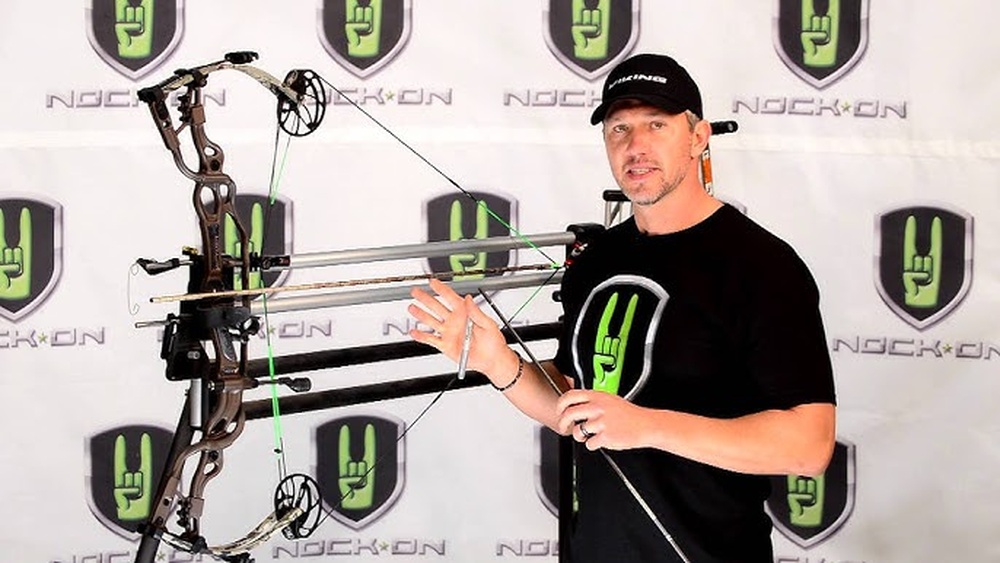
How To Adjust The Draw On A Compund Bow
Modern archery has evolved into a blend of tradition and technology, with the compound bow standing out as a pinnacle of mechanical innovation. Mastering a compound bow requires more than just strength and aim; it demands fine-tuned adjustments to suit the unique physique and shooting style of each archer. One of the most critical, and often misunderstood, elements is adjusting the draw length and draw weight. A poorly adjusted draw not only hampers accuracy but can also lead to physical discomfort and even injury. Whether you’re a beginner trying to hit your first bullseye or a seasoned bowhunter seeking optimal performance, learning to properly adjust your compound bow’s draw is essential for consistency and precision.
Drawing from both expert insight and firsthand experience, this guide explores the step-by-step process of adjusting the draw on a compound bow. We’ll break down the mechanics, tools required, safety considerations, and practical tips, all while referencing the latest manufacturer recommendations and archery best practices.
By the end of this comprehensive walkthrough, you’ll be equipped with the knowledge and confidence to customize your bow for peak performance, bringing you one step closer to mastering the art and science of compound archery.
Key Takeaways
- Proper draw adjustment is vital for accuracy, comfort, and safety in compound archery.
- You need specific tools and knowledge of your bow’s make and model to make safe adjustments.
- Adjusting both draw length and draw weight allows for a personalized shooting experience.
- Always check manufacturer guidelines and consult professionals when in doubt.
- Regular maintenance and re-evaluation ensure consistent performance as your skills and needs evolve.

Credit: www.youtube.com
Understanding The Draw On A Compound Bow
Getting the draw settings right is foundational to effective archery. The draw length is the distance from the nocking point on the string to the grip’s pivot point (plus 1.75 inches), when the bow is fully drawn. The draw weight is the amount of force needed to pull the bowstring back to full draw.
The Mechanics Behind Draw Length
Draw length impacts both comfort and accuracy. If the draw length is too long, you may overextend, affecting form and control. Too short, and you won’t achieve full power or optimal sight alignment. Most compound bows allow for draw length adjustments in increments, typically ranging from 24 to 32 inches, but this varies by model.
The Role Of Draw Weight
Draw weight affects the arrow’s speed and penetration power. Beginners often start with lower draw weights to build strength and perfect their technique, while seasoned hunters may opt for higher weights for maximum impact. Draw weight is typically adjustable within a range (e.
g. , 40, 70 lbs) via limb bolts on the riser.
Let-off And Its Impact
A unique feature of compound bows is let-off, the percentage of draw weight reduced at full draw thanks to the cam system. Higher let-off means you hold less weight at full draw, improving stability and aim. Most modern bows offer let-off values between 65% and 85%.
Manufacturer Variations
Each bow manufacturer utilizes distinct cam designs, limb configurations, and adjustment systems. Always consult your bow’s manual before attempting adjustments. Some bows require specialized modules or specific tools, while others feature tool-free systems for quick changes.
Tools And Preparations For Safe Adjustment
Before making any adjustments, assembling the right tools and preparing your workspace is critical for both safety and effectiveness.
Essential Tools
- Allen (hex) wrenches: Most limb bolts and modules use standard sizes, but verify your specific requirements.
- Bow press: Required for certain cam or string adjustments, especially with split yoke or binary cam systems.
- Draw length/measuring arrow: For accurately checking your adjusted draw length.
- Scale: To verify draw weight post-adjustment.
- Safety glasses and gloves: To protect yourself during high-tension adjustments.
Preparing Your Bow And Workspace
- Unstring or relax tension on the bow before major adjustments to avoid injury.
- Clear your workspace: Ensure ample lighting and a flat surface.
- Inspect your bow: Check for signs of wear, cracks, or damage.
- Review your manual: Each bow is unique, follow the manufacturer’s step-by-step procedures.
Safety Considerations
Compound bows store considerable energy. Mishandling or improper adjustment can cause sudden releases, string derailment, or component failure. Always:
- Wear safety gear.
- Use a bow press for string or cam changes.
- Never over-loosen limb bolts beyond manufacturer limits.
- Confirm all hardware is tight before drawing the bow after adjustment.
Example: Preparation Checklist In Practice
When I adjusted my own Hoyt PowerMax, I laid out all my Allen keys, verified the manual’s adjustment sequence, and double-checked limb bolt rotation limits. Taking these steps prevented potential damage to the limbs and ensured a smooth, safe process.
Credit: shootingtime.com
Step-by-step Guide: Adjusting Draw Length
Tailoring draw length is crucial for proper form and repeated accuracy. Here’s how to adjust it safely and effectively.
Step 1: Determine Your Ideal Draw Length
The most common method is the arm-span divided by 2.5 formula:
- Stand with arms extended, palms facing forward.
- Measure fingertip-to-fingertip span (in inches).
- Divide this measurement by 2.5.
Alternatively, consult a professional at a pro shop for a precise fit.
Step 2: Locate Adjustment Modules
Most compound bows utilize either rotating modules or interchangeable modules for draw length adjustment:
- Rotating modules: Adjust via screws, often without removing the cams.
- Interchangeable modules: Require swapping out parts, sometimes necessitating a bow press.
Refer to your manual for specific locations and procedures.
Step 3: Adjust The Module
- Loosen the module screws using the proper Allen wrench.
- Rotate or replace the module to the desired draw length marking.
- Tighten the screws securely.
Pro Tip: Always adjust both cams to the same draw length setting to maintain synchronization.
Step 4: Verify And Fine-tune
- Nock an arrow and draw the bow.
- Check that the anchor point aligns with your jaw or cheek.
- The release hand should comfortably reach your face without overextension.
- Repeat minor adjustments if necessary.
Step 5: Test For Consistency
Shoot several arrows to ensure the adjustment feels natural and repeatable. Minor tweaks may be required as you adapt to the new setting.
Example: Draw Length Adjustment On A Mathews V3
The Mathews V3 features a user-friendly rotating module. After loosening the module screws, rotate to the new setting, tighten, and test draw. This modular system allows for quick, precise changes without a bow press, ideal for archers seeking flexibility.

Credit: shootingcabin.com
Step-by-step Guide: Adjusting Draw Weight
Adjusting draw weight tailors the bow’s resistance to your strength and shooting style. Here’s how to safely modify it.
Step 1: Identify Limb Bolt Locations
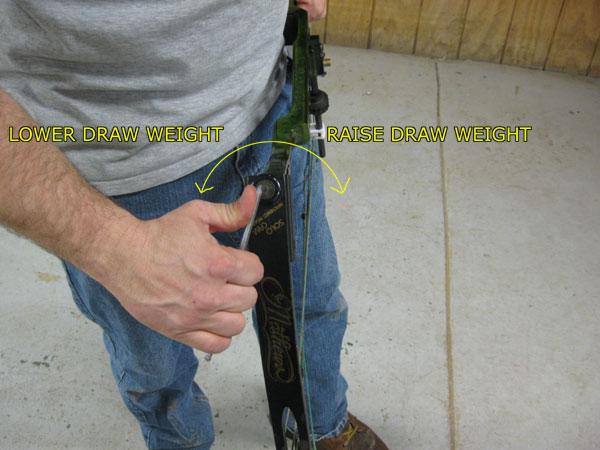
Limb bolts, located above and below the grip, are the primary means of adjusting draw weight. Turning them clockwise increases draw weight; counterclockwise decreases it.
Step 2: Loosen Or Tighten Limb Bolts
- Use an Allen wrench of the correct size.
- Adjust each bolt in equal increments (half or full turns) to maintain limb balance.
- Count the number of turns for reference.
Warning: Never back out limb bolts more than recommended (usually 3, 5 turns from maximum) to avoid limb instability.
Step 3: Measure The New Draw Weight
Attach a bow scale to the string and draw to full anchor. Record the measured weight, adjusting further as needed.
Step 4: Recheck Arrow Spine Compatibility
Higher draw weight requires stiffer arrows, while lower weights can use more flexible shafts. Consult spine charts or a pro shop to ensure your arrows match the new draw weight.
Step 5: Test Shoot
Shoot a group of arrows to assess comfort and control. If you struggle to draw smoothly or maintain proper form, reduce draw weight.
Real-world Example: Incremental Weight Adjustment
When preparing for a field tournament, I increased my draw weight by 2 lbs weekly, allowing my muscles to adapt while maintaining accuracy. This gradual approach prevented strain and improved long-term performance.
Fine-tuning Draw Settings For Maximum Performance
Once the basics are set, fine-tuning ensures your bow matches your evolving skills and shooting conditions.
Synchronizing Cams
Cam timing is critical for smooth shooting and consistent arrow flight. Out-of-sync cams can cause erratic shots and string slap.
- Use a bow press to relax tension.
- Compare cam orientation at full draw (some cams have timing marks).
- Adjust yoke cables or string twists as needed.
Adjusting Let-off
Some bows allow let-off customization by altering module positions. More let-off means holding less weight at full draw, which can be helpful for target archers seeking steadiness.
- Check your bow’s manual for let-off settings.
- Adjust modules or cams as specified.
Checking And Setting Draw Stop Position
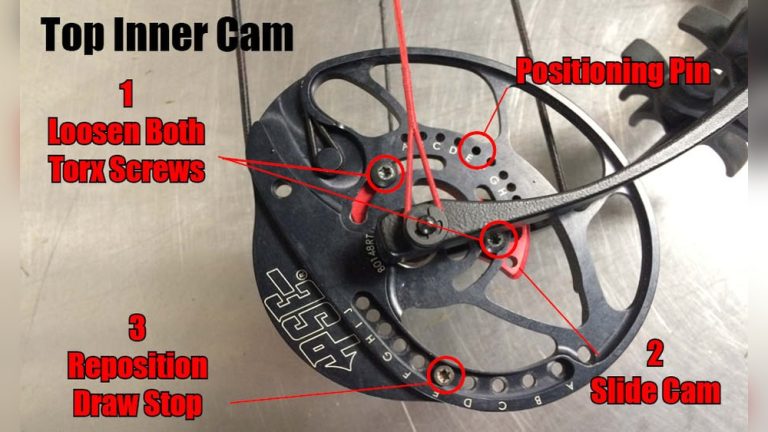
Most compound bows feature a draw stop, a physical barrier for consistent anchor points. Adjusting its position can slightly modify draw length and wall firmness.
- Locate the draw stop (typically on the cam).
- Move it to the desired stop setting.
- Test for a solid back wall at full draw.
Paper Tuning For Arrow Flight
After adjusting draw, paper tuning helps ensure arrows leave the bow cleanly.
- Shoot an arrow through a sheet of paper at close range.
- Analyze the tear (bullet hole is ideal).
- Adjust nocking point, rest, or draw length/weight for optimal results.
Case Study: Achieving Perfect Tune
A competitive archer preparing for the USA Archery Nationals spent two weeks fine-tuning cam timing and draw stop position. By paper tuning after each adjustment, they eliminated left-right tears and improved groupings, resulting in a personal best score at the event.
Troubleshooting Common Draw Adjustment Issues
Even with meticulous adjustments, archers may encounter persistent challenges. Understanding and resolving these issues is vital for consistent performance.
Draw Feels “mushy” Or Inconsistent
A soft or inconsistent back wall can stem from:
- Loose draw stop.
- Incorrect cam synchronization.
- Worn out limbs or bushings.
Solution: Inspect draw stop and cams, tighten or replace components as needed.
Difficulty Reaching Full Draw
Struggling to achieve full draw may indicate:
- Draw length set too long.
- Draw weight set too high.
- Form issues or insufficient upper body strength.
Solution: Shorten draw length or reduce weight incrementally, and practice proper form.
String Derailment Or Cam Lean
If the bowstring slips out of the cam track or cams appear tilted:
- Limb bolts may be uneven.
- Cables or yokes are improperly adjusted.
- Bow is damaged or out of spec.
Solution: Re-set limb bolts to equal positions, check yoke tuning, or consult a professional.
Arrow Flight Problems After Adjustment
Erratic arrow flight can result from:
- Incompatible arrow spine.
- Incorrect nocking point or rest position.
- Incomplete tuning after draw adjustment.
Solution: Match arrows to new draw weight, re-tune rest, and perform paper tuning.
Example: Diagnosing Draw Issues In The Field
During a hunting trip, an archer noticed arrows consistently veered right after draw length adjustment. A quick paper tune at camp revealed a high tear, which was corrected by slightly lowering the nocking point, restoring accuracy for the remainder of the hunt.
Comparison Table: Draw Length And Weight Adjustment Features By Popular Compound Bow Brands
Choosing the right bow often comes down to adjustability and ease of use. Here’s how top manufacturers compare:
| Brand | Draw Length Adjustment | Draw Weight Adjustment | Tool Required | Let-Off Range |
|---|---|---|---|---|
| Mathews | Rotating module (no bow press) | 10-20 lbs range via limb bolts | Allen wrench | 80-85% |
| Hoyt | Interchangeable module (may need bow press) | 10-15 lbs range via limb bolts | Allen wrench, bow press (sometimes) | 75-85% |
| Bear Archery | Rotating module (easy adjust) | 15-20 lbs range via limb bolts | Allen wrench | 70-75% |
| Bowtech | Rotating module (no bow press) | 10-20 lbs via limb bolts | Allen wrench | 80-90% |
| PSE | Rotating/interchangeable modules | 10-15 lbs via limb bolts | Allen wrench | 75-80% |
Real-world Examples And Case Studies
Understanding adjustment in theory is one thing, but seeing it in practice highlights the real impact.
Example 1: Youth Archer Customization
A 12-year-old beginner started with a Bear Cruzer G2 set to the minimum draw weight and shortest draw length. As their technique improved, the parent increased the draw length by 0.5 inch and the weight by 2 lbs every few months. This gradual, measured approach allowed the young archer to develop without strain, leading to consistent gold-ring hits at 20 yards.
Example 2: Bowhunter’s Pre-season Setup
A bowhunter using a Hoyt Ventum started pre-season practice by lowering draw weight to 55 lbs for high-volume shooting. Once form and stamina peaked, the hunter incrementally raised weight to 65 lbs, the preferred hunting setting. The draw length was shortened by 0.25 inch to improve anchor stability while wearing bulky hunting clothing, resulting in higher shot confidence in the field.
Example 3: Target Archer’s Precision Adjustment
A target archer with a Mathews TRX 38 discovered that a 0.25-inch reduction in draw length eliminated face contact with the string, improving shot-to-shot consistency. The archer also reduced draw weight by 3 lbs for indoor competitions, which helped maintain form over long sessions and led to a personal record at a state event.
Maintenance And Ongoing Evaluation
Proper draw adjustment is not a set-and-forget task. Regular evaluation and maintenance ensure safety and optimal performance.
Seasonal Re-checks
Changes in temperature and humidity can slightly alter bowstring and cable lengths, affecting draw settings. It’s wise to recheck:
- Draw length and weight at the start of each season.
- Cam timing and synchronization regularly.
String And Cable Maintenance
Frayed or stretched strings/cables can impact draw and overall bow integrity. Replace strings every 1, 2 years or as recommended by the manufacturer.
Hardware And Limb Inspection
Periodically inspect all bolts, limbs, and modules for tightness and wear. Address any signs of cracking or deformation immediately.
Professional Tune-ups
Annual checkups at a pro shop can catch issues you might overlook. Technicians use precision tools to verify cam timing, draw length, and weight, and provide expert recommendations.
Example: Impact Of Neglected Maintenance
A recreational shooter ignored routine checks and experienced a sudden limb failure during a 3D shoot. Upon inspection, a hairline crack, likely aggravated by repeated over-adjustment, was discovered. Regular inspections could have prevented this costly and dangerous incident.
Data Table: Draw Weight And Arrow Speed Correlation
Arrow speed depends significantly on draw weight. Manufacturers publish IBO (International Bowhunting Organization) speed ratings based on standardized settings.
| Draw Weight (lbs) | Arrow Speed (fps) – 350 grain arrow | Suitable Arrow Spine | Common Use |
|---|---|---|---|
| 40 | 235-250 | 600-500 | Youth, beginners |
| 50 | 250-275 | 500-400 | Recreational, women, small game |
| 60 | 275-300 | 400-340 | Target, hunting |
| 70 | 300-330 | 340-300 | Big game hunting, competition |
Source:Bowhunting.com
Advanced Tips For Experienced Archers
For those ready to optimize every aspect of their shooting, advanced techniques can make a significant difference.
Micro-adjustable Modules
Some high-end bows offer modules with micro-adjustment features, allowing for changes as small as 1/8-inch increments. This precision is ideal for competitive archers seeking perfect anchor alignment.
Custom Cam Mods And Let-off Tweaks
- Install custom modules for unique draw cycle characteristics.
- Tweak let-off by swapping module settings to match specific shooting needs (e.g., less let-off for a firmer wall).
Yoke Tuning For Cam Lean
Fine-tune yoke cables to correct cam lean, especially important for bows with split yoke systems. Use a draw board for precise adjustments.
Digital Draw Length Measurement
Utilize digital calipers or laser measurement tools for exact draw length verification, ensuring repeatable results across different sessions.
Example: Competitive Archer’s Edge
A national-level competitor used micro-adjustable modules and digital measurement tools to dial in draw length with 1/16-inch accuracy. This meticulous approach contributed to consistent podium finishes and superior arrow groupings.
Frequently Asked Questions
How Often Should I Adjust The Draw On My Compound Bow?
Adjustments should be made whenever you experience changes in shooting comfort, form, or if you switch shooting environments (e. g. , adding layers of clothing for hunting). Additionally, revisit draw settings annually as part of routine maintenance or after significant physical changes such as growth in youth archers.
Can I Adjust The Draw Length And Weight Without A Bow Press?
Most modern compound bows with rotating modules allow for draw length changes without a bow press. However, some bows with interchangeable modules or certain cam systems will require a bow press for safe adjustment. Draw weight adjustments via limb bolts never require a press.
Always check your bow’s specific requirements in the manual.
What Are The Signs That My Draw Length Is Incorrect?
Common indicators include difficulty anchoring consistently, overextending the bow arm, string contact with your face or nose, and poor arrow flight. If you notice fatigue, shoulder pain, or inconsistent groupings, your draw length may need adjusting.
How Do I Know If My Arrows Are Compatible After Changing Draw Weight?
After increasing draw weight, consult an arrow spine chart to ensure your arrows have the proper stiffness for your new setup. Arrows that are too weak for higher draw weights can flex excessively, reducing accuracy and increasing the risk of breakage.
Local pro shops can test your setup and recommend suitable arrows.
Is It Safe To Make Adjustments Myself, Or Should I Always Visit A Pro Shop?
Routine draw length and weight adjustments with the correct tools are safe for most archers familiar with their equipment. However, for major modifications (like cam swaps, string replacement, or suspected bow damage), it’s best to consult a certified technician. Pro shops also provide access to specialized equipment and expertise for precision tuning.
Additional Resources
For further reading on compound bow tuning and adjustment, visit the official Wikipedia page on Compound Bows or consult manufacturer-specific guides and YouTube channels specializing in archery instruction.
Properly adjusting your compound bow’s draw transforms not only your shooting accuracy, but also your long-term enjoyment and safety. Whether you’re preparing for your first tournament or refining your hunting setup, taking the time to fine-tune every detail pays off with every arrow you release.
With the guidance provided here, you’re now equipped to make informed, confident adjustments, empowering your archery journey for seasons to come.