How To Bow Hunt Hogs
Bowhunting hogs is a pursuit that blends primal challenge with practical benefit. Wild hogs, also called feral pigs or boar, are among the most prolific and destructive game animals in the United States. Their intelligence, nocturnal habits, and keen senses make them a formidable quarry, while their explosive population growth causes billions in agricultural and ecological damage annually.
For the committed bowhunter, hogs offer an adrenaline-fueled hunt that also helps manage an invasive species.
Unlike hunting deer or elk, pursuing hogs with a bow demands a unique approach. Their unpredictable behavior, thick hide, and tough skeletal structure present both tactical and ethical challenges. Success requires not just marksmanship, but an understanding of hog habits, specialized gear, and adaptability to varying terrain.
Whether you’re drawn by the thrill, the meat, or the stewardship aspect, this comprehensive guide will equip you with the experience-driven strategies, tools, and ethical considerations needed for effective hog bowhunting.
Key Takeaways
- Wild hogs are highly adaptable and challenging prey that require specialized hunting tactics and gear.
- Proper shot placement and equipment selection are critical due to hogs’ anatomy and tough hide.
- Scouting, stand placement, and wind management significantly increase your odds of a successful hunt.
- Safety, legal compliance, and ethical considerations are vital, given hogs’ aggressive tendencies and invasive status.
- Real-world examples and data-driven advice can help both novice and experienced bowhunters refine their approach.

Credit: nabowhunter.com
Understanding Wild Hogs: Behavior, Habitat, And Impact
Biology And Behavior
Wild hogs (Sus scrofa) are among the most intelligent and adaptable mammals in North America. Their keen sense of smell, up to 1,000 times more sensitive than humans, makes them difficult to approach, especially with archery equipment. Hogs are typically nocturnal, especially in pressured or hot environments, and travel in groups known as sounders.
Habitat Preferences
Feral hogs thrive in a variety of habitats, from dense forests and swamps to agricultural fields. They prefer areas with access to water, thick cover, and abundant food sources. In the southern US, they are especially common in river bottoms and pine forests, whereas in the Midwest, they frequent corn and soybean fields.
Population And Environmental Impact
According to the US Department of Agriculture (USDA), wild hogs cause over $2.5 billion in agricultural and ecological damage annually in the US (USDA). Their rooting behavior destroys crops, disrupts native vegetation, and spreads disease. State wildlife agencies often encourage hog hunting year-round, with liberal bag limits and methods, to help control populations.
Example: Texas Hog Invasion
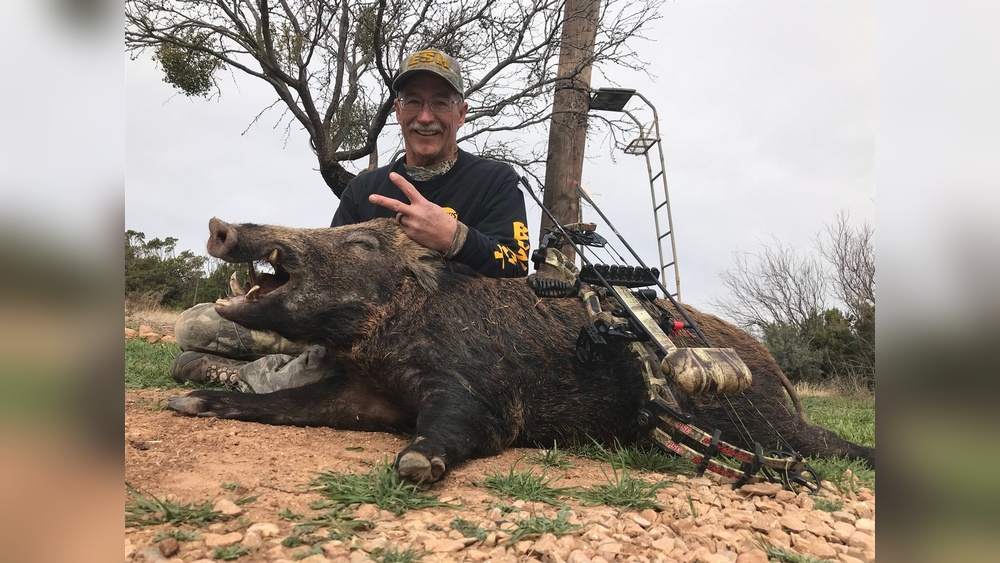
Texas is home to the largest feral hog population in the US, estimated at over 2. 6 million. Landowners there frequently invite hunters to help manage hog numbers, illustrating the scale and urgency of the problem.
Credit: www.bowhunting.com
Essential Bowhunting Gear For Hogs
Choosing The Right Bow
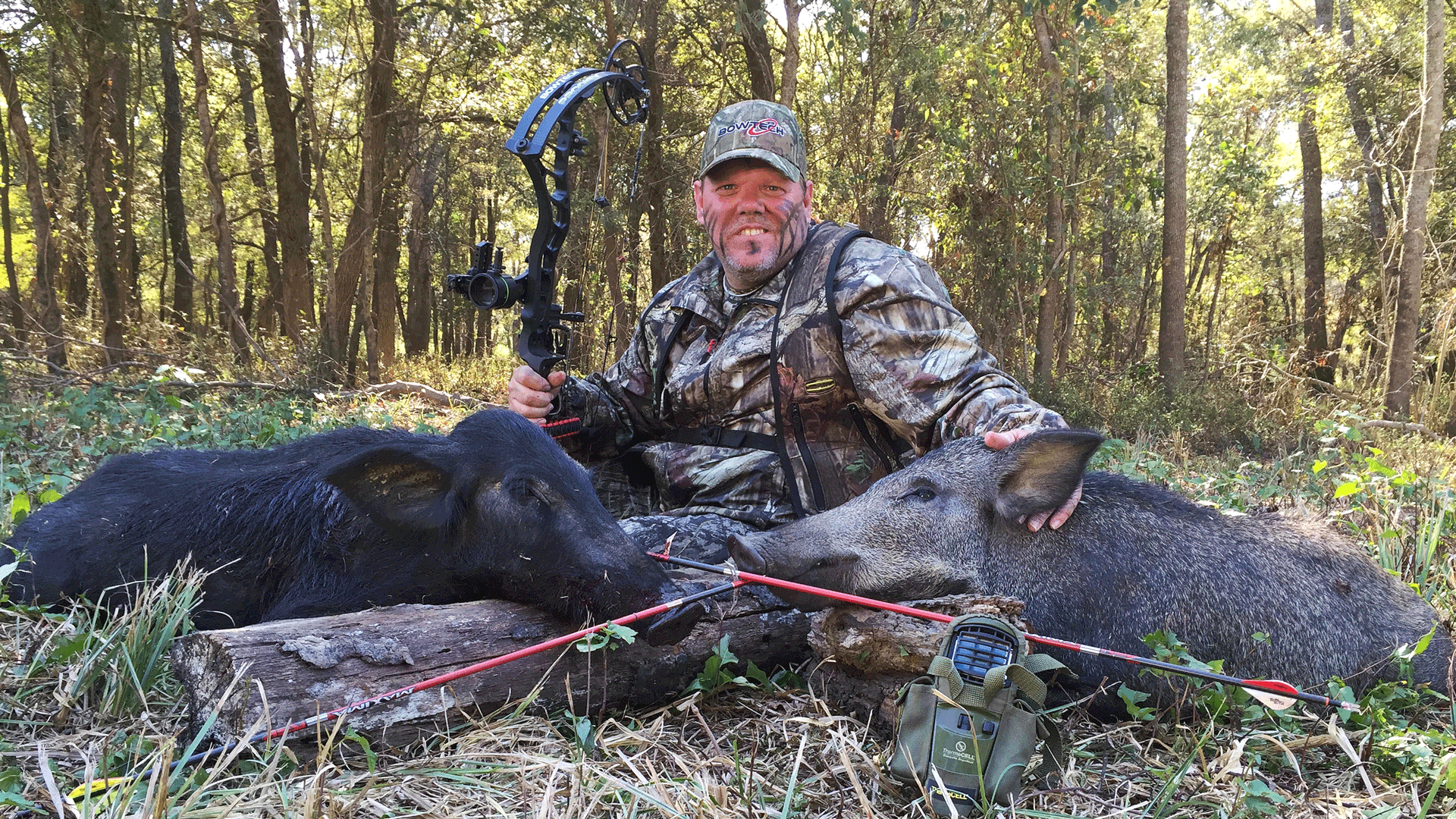
Selecting a bow for hog hunting is a balance of power, accuracy, and maneuverability. Compound bows are most common, but recurve and longbows are viable for experienced archers.
| Bow Type | Draw Weight | Effective Range | Pros | Cons |
|---|---|---|---|---|
| Compound | 50-70 lbs | Up to 50 yards | High power, accuracy, let-off | Heavier, more complex |
| Recurve | 45-60 lbs | Up to 30 yards | Simple, reliable | Lower power, less forgiving |
| Longbow | 45-60 lbs | Up to 25 yards | Traditional feel, lightweight | Requires skill, limited range |
Arrows And Broadheads
Hogs’ tough hide and thick shoulder bones demand strong, heavy arrows and razor-sharp broadheads.
- Arrow Weight: 400-500+ grains for sufficient penetration.
- Broadhead Style: Fixed-blade broadheads (2- or 3-blade) are preferred for their durability; mechanicals can work if they have a robust design.
- Cutting Diameter: 1 to 1.5 inches is ideal for deep penetration.
Sights, Rests, And Accessories
- Single-pin or multi-pin sights for quick target acquisition.
- Drop-away or whisker biscuit rests for reliability.
- Lighted nocks help track arrows during low-light shots.
- Quiet quivers and stabilizers reduce noise and vibration.
Clothing And Scent Control
Wear camouflage appropriate to your environment, but prioritize scent control. Hogs rely on smell more than sight. Use scent-eliminating sprays, wash clothes in unscented detergent, and avoid strong odors.
Night Hunting Gear
In states where night hunting is legal, thermal scopes and night vision optics can significantly improve your odds. Quality headlamps, handheld spotlights, and backup batteries are essential.
Example: Gear Checklist For A Successful Hunt
A seasoned hog hunter in Florida shared a minimalist gear list: 60-lb compound bow, 475-grain arrows with 125-grain fixed-blade broadheads, lightweight camo, knee-high rubber boots for swamp travel, and a red-filtered headlamp for nighttime stalking.

Credit: www.youtube.com
Scouting And Locating Hogs
Reading Hog Sign
Look for the following signs:
- Rooting: Torn-up earth where hogs search for food.
- Wallowing: Muddy depressions near water sources.
- Tracks: Distinctive, rounded prints with splayed toes.
- Droppings: Scattered, pellet-like scat.
Trail Cameras And Technology
Deploy trail cameras at suspected travel corridors, feeders, or water sources. Set them at knee height to catch hog activity. Cellular-enabled cameras allow real-time scouting without repeated intrusion.
Patterns And Movement
Hogs are most active at dawn, dusk, and night. In pressured areas, they may go fully nocturnal. Use scouting data to predict their travel routes from bedding to feeding areas.
Spot-and-stalk Vs. Stand Hunting
- Spot-and-Stalk: Effective in open country or when hogs are actively feeding. Requires stealth and wind discipline.
- Stand Hunting: Ideal near feeders, water, or travel corridors. Tree stands or ground blinds are both effective, depending on visibility and wind.
Example: Using Aerial Maps
A bowhunter in Georgia overlays aerial maps with trail camera data to pinpoint wallows and travel routes, then sets stands 20 yards downwind of entry points for optimal shot opportunities.
Strategic Stand Placement And Wind Management
Stand Types And Placement
Choose between tree stands, tripod stands, and ground blinds based on habitat:
- Tree Stands: Offer height advantage in wooded areas.
- Tripod Stands: Useful in open or brushy terrain.
- Ground Blinds: Provide concealment at eye level, especially near feeding areas.
Place stands:
- Downwind of likely travel corridors.
- Within 20-30 yards of likely shot opportunities.
- With back cover to break your silhouette.
Wind Direction And Scent Control
Always hunt downwind of expected hog approaches. Use wind-checkers (powder or feather puffs) to monitor changes. Scent-eliminating sprays and ozone generators can help, but nothing replaces wind discipline.
Entry And Exit Routes
Plan routes to your stand that avoid crossing likely hog paths. Minimize noise and scent left behind. Enter and exit quietly, especially if hunting near bedding areas.
Timing: Day Vs. Night Hunts
- Day Hunting: Focus on bedding areas and travel routes.
- Night Hunting: Target food sources or water, using red or green lights to avoid spooking hogs.
Example: Wind Blunders
In my experience, a single misjudged wind shift can end a hunt. On one occasion in South Texas, a sounder winded me from 80 yards and vanished into thick brush, underscoring the need for meticulous wind management.
Effective Shot Placement And Shooting Techniques
Understanding Hog Anatomy
Unlike deer, a hog’s vital organs are positioned lower and more forward, shielded by a thick shoulder plate (“shield”). This makes shot placement critical.
| Shot Angle | Recommended Placement | Risk Level | Notes |
|---|---|---|---|
| Broadside | Low, just behind the front leg | Low | Most forgiving, aim for heart/lung area |
| Quartering Away | Behind the last rib, angling into vitals | Moderate | Good penetration, avoid paunch |
| Head-on/Frontal | Base of neck | High | Not recommended, high risk of wounding |
| Quartering To | In front of shoulder | Very High | Shield may deflect arrows |
Ethical Shots And Passes
Always wait for a clear, unobstructed view of the vital zone. Avoid shooting at running or heavily shielded hogs. Practice at various angles and distances to build confidence.
Arrow Penetration And Follow-up
Expect limited blood trails; hog fat and hide can plug wounds. Mark the spot where the hog stood, listen for direction of flight, and wait 30-60 minutes before tracking unless you see the animal fall.
Tracking Wounded Hogs
Look for:
- Sparse blood sign (often dark, thick drops).
- Disturbed vegetation or broken brush.
- Bedding areas within 100-300 yards.
Bring a flashlight, tracking partner, and, if legal, a tracking dog for difficult recoveries.
Example: Perfect Vs. Poor Shot
A Florida bowhunter reported a quick recovery after a double-lung shot at 25 yards, while a quartering-to shot resulted in a long, unsuccessful search, highlighting the importance of patience and shot selection.
Safety, Legal, And Ethical Considerations
Legal Requirements And Regulations
- Licensing: Most states require a basic hunting license; some require additional permits for hogs.
- Season and Methods: Many states allow year-round hunting with few restrictions, but check for local regulations on night hunting, baiting, and equipment.
- Landowner Permission: Always secure written permission for private land hunts.
Texas Parks & Wildlife provides comprehensive hog hunting regulations and resources.
Safety Precautions
- Hogs can be aggressive, especially when wounded or cornered. Be alert, carry a sidearm where legal, and never approach a downed hog too quickly.
- Wear gloves when field dressing to avoid zoonotic diseases (e.g., brucellosis, leptospirosis).
- Night hunting increases risk of tripping, snake bites, or getting lost, carry navigation tools and hunt with a partner.
Ethical Hunting Practices
- Quick, humane kills are the goal. Pass on marginal shots.
- Respect private property and posted boundaries.
- Utilize your harvest: Hog meat is excellent table fare if handled properly; donate excess to local charities where possible.
Disease Awareness
Wild hogs can carry diseases transmissible to humans and livestock. The Centers for Disease Control and Prevention (CDC) recommends proper handling and thorough cooking of meat.
Example: Safety Incident
A Georgia hunter suffered a minor bite when approaching a “dead” hog that sprang to its feet. This reinforces the need to approach with caution and ensure the animal is truly expired.
Real-world Strategies: Proven Hog Bowhunting Tactics
Baiting And Feeders
Legal in many southern states, baiting concentrates hogs for shot opportunities. Use corn, soured grain, or commercial attractants to draw them in. Set feeders on timers and hunt during peak activity.
Calling And Decoys
Predator calls (distressed piglet or coyote howls) can trigger curiosity or aggression. Decoys are less common but can work in open areas.
Still-hunting And Stalking
Move slowly through likely habitat, using wind and cover. Pause frequently to glass and listen. Still-hunting is most effective in thick cover or when hogs are actively feeding.
Hunting With Dogs
In some regions, trained dogs are used to bay or track hogs, allowing the hunter to close for a shot. This method requires special skills and legal consideration.
Example: Nighttime Feeder Success
A Mississippi bowhunter reported consistent success by setting a feeder to dispense corn at dusk, then waiting in a ground blind 20 yards downwind. Most hogs arrived within 30-45 minutes of feeding.
Processing, Meat Care, And Field Dressing
Field Dressing Basics
- Work quickly to cool the meat, especially in warm climates.
- Wear gloves and avoid puncturing the intestines.
- Remove the hide and quarter the animal for transport if needed.
Meat Quality And Safety
Wild hog meat can be delicious, but proper handling is essential:
- Cook to 160°F internal temperature to kill parasites.
- Avoid meat from obviously sick animals.
- Freeze meat promptly or process into sausage, jerky, or roasts.
Trophy Considerations
Some hunters choose to mount tusks or skulls. Clean with dermestid beetles or by boiling, and display as a memento of the hunt.
Donating Meat
Organizations like Hunters for the Hungry accept wild hog donations in some states. Always check local regulations before donating.
Example: Sausage-making Success
After a successful hunt, a South Carolina family processed 150 pounds of wild hog into smoked sausage, sharing it at community events and with local charities.
Frequently Asked Questions
What Is The Best Time Of Year To Bow Hunt Hogs?
Wild hogs can be hunted year-round in most states, but late winter and early spring are often best. Food sources are scarcer, and hogs are more active during daylight hours. In hot climates, focus on water sources and hunt during cooler parts of the day or at night.
How Do I Avoid Detection By A Hog’s Sense Of Smell?
Scent control is critical. Use scent-eliminating sprays, store gear in scent-free containers, and always hunt with the wind in your face. Avoid using strong-smelling soaps or deodorants before your hunt, and minimize sweating by dressing appropriately for the weather.
What Should I Do If I Encounter An Aggressive Hog?
If a hog charges, try to climb a tree, get behind a large object, or use a loud shout to deter it. Carrying a sidearm for backup is recommended where legal. Avoid cornering hogs, especially sows with piglets, as they are more likely to become aggressive.
Is Wild Hog Meat Safe To Eat?
Yes, wild hog meat is safe if handled and cooked properly. Always wear gloves when field dressing, avoid meat from sick animals, and cook to at least 160°F to kill any parasites or bacteria. Freezing meat before consumption can also reduce the risk of disease.
Can I Hunt Hogs On Public Land?
Many state and federal lands allow hog hunting, but always check specific regulations regarding seasons, methods, and licensing. Some wildlife management areas require special permits or restrict hunting during certain game seasons.
Bowhunting hogs is a rewarding pursuit that tests skill, patience, and adaptability. With the right preparation, gear, and tactics, you can enjoy thrilling hunts while contributing to the control of a destructive invasive species. Remember to prioritize safety, ethical practices, and responsible harvest.
Whether you’re after meat, adventure, or land stewardship, each successful hog hunt adds to your experience and legacy as a bowhunter.