How to Shoot a Traditional Bow Accurately: Full Guide
To shoot a traditional bow accurately, focus on mastering a stable stance, a consistent anchor point, a smooth draw and release, and proper follow-through. Start with the right equipment, practice regularly, and break down each step deliberately for consistent results. For more on this, see our related guide on Do Snap on Nocks Affect Accuracy in Traditional Archery.

AF Bow&Arrow
AF Archery 54" Tatar Recurve Bow Traditional…
- [Premium Quality Materials] The bow handle and tip are made of maple wood. The limb is compressed by the bamboo and glass fiber la…
- [UNIVERSAL DESIGN] Fits both left- and right-handed archers with 54 inch bow length, 48 inch bowstring length, and 32 inch maximum…
- [Detailed Design] The arrow release point above the handle is filled with hard bone chips to make it more wear-resistant and incre…
As an Amazon Associate I earn from qualifying purchases.
Ever felt a bit frustrated when your arrows don’t fly quite where you aim them with your traditional bow? You’re not alone! Many beginners find that hitting the target consistently with a longbow or recurve takes a little know-how and practice. Unlike modern compound bows, traditional bows require a slightly different, more intuitive approach. It can feel tricky at first, but the reward of sending an arrow exactly where you want it is incredibly satisfying. This guide is designed to break down the process into easy, actionable steps. We’ll cover everything from setting up your shot to releasing the arrow with purpose. Get ready to see your accuracy improve, arrow by arrow!
Understanding Your Traditional Bow
Before we get into the specifics of shooting, it’s important to appreciate the unique nature of traditional bows. These are often referred to as “stick bows” and include longbows and recurve bows. They don’t have the complex sights, pulleys, or let-off mechanisms found on compound bows. This simplicity is their charm, but it also means that you are the primary aiming system. Your consistency in form is what makes the difference between a bullseye and a miss. Understanding this fundamental difference will help you focus on the right areas for improvement in your shooting.

Essential Equipment for Accuracy
While traditional bows are simpler, having the right accessories can significantly boost your accuracy and comfort. Don’t feel pressured to buy everything at once, but consider these as you progress:
- Arrows: The right arrows are crucial. They need to be the correct spine (stiffness) for your bow’s draw weight, the right length, and properly fletched. Mismatched arrows are a common cause of inaccuracy.
- Bowstringer: This is a safety essential. Using a bowstringer correctly ensures you don’t damage your bow or yourself when stringing and unstringing it. You can learn more about safe archery practices from reputable sources like the National Field Archery Association (NFAA) website.
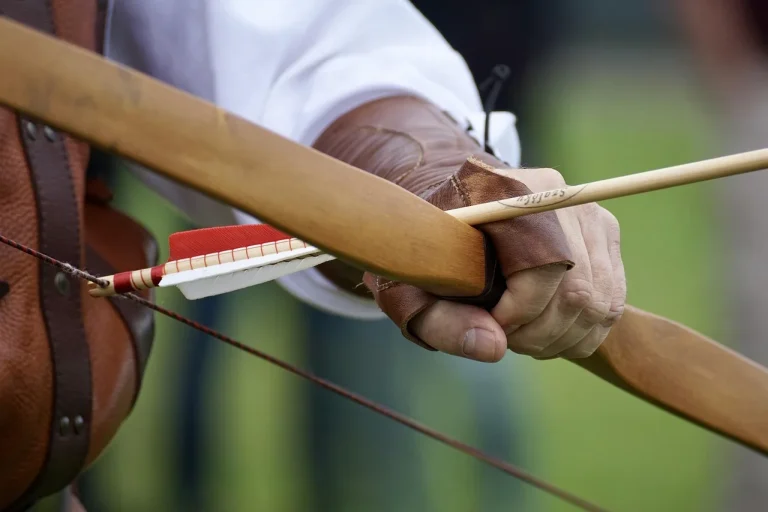
- Glove or Tab: Protects your fingers from the string and provides a consistent surface for drawing.
- Armguard: Prevents your forearm from getting slapped by the bowstring, which can be painful and break your concentration.
- Quiver: Holds your arrows. Side quivers keep them accessible, while back quivers offer a more traditional feel.
- Target: Practice makes perfect, and a good target allows you to see where your arrows are hitting.
The Stance: Your Foundation for Accuracy
A solid stance is the bedrock of accurate shooting. It provides stability and allows your body to remain consistent from shot to shot. Think of it as the base of a strong building – if it wobbles, the whole structure is compromised.
1. Feet Placement
Stand with your feet shoulder-width apart, perpendicular to the target. Imagine a line running from the target through your front foot. Your feet should be roughly on this line, or the line should pass through the middle of your stance. Some archers prefer a slightly open stance (leading foot angled slightly towards the target) or a slightly closed stance (leading foot angled slightly away), but for beginners, a square, neutral stance is usually best.
2. Body Alignment
Keep your body upright and relaxed. Avoid leaning too far forward or backward. Your shoulders should be square, and your head should be stable, looking towards the target. Imagine an invisible string running from your ear, through your shoulder, and down to your ankle – this line should be relatively straight.
3. Weight Distribution
Distribute your weight evenly between both feet. You should feel balanced and grounded, not on your toes or heels. This even weight distribution helps prevent any swaying or shifting during your draw and shot.
Nocking the Arrow: Setting the Stage
When you nock an arrow, you’re preparing it to be fired. This step needs to be done correctly and consistently.
1. Arrow Orientation
Most arrows have a “slot” in the nock that fits onto the bowstring. One fletching (the feather or plastic vane) should be perpendicular to the riser (the part of the bow you hold). This is often called the “index fletching” or “cock feather” (though modern terminology prefers “index vane”). This ensures it clears the bow when you release.
2. Placement on the String
Place the nock onto the bowstring, typically just above or on your finger or release aid. Many traditional bows have a “arrow rest” or a simple carpet/leather pad. Place the arrow so it sits snugly and securely on this rest.
3. The “Click”
You should feel a slight “click” as the nock snaps onto the bowstring. Ensure it’s securely seated and won’t fall off during your draw.
The Draw: Power and Control
Drawing the bow is where you build the potential energy for your shot. Consistency here is key to accuracy.
1. Grip on the Bow
This is critical for traditional archery. You want a “relaxed” or “open” hand grip. Cradle the riser in the palm of your bow hand, but don’t squeeze it tightly. Imagine holding a small bird – you want to hold it firmly enough that it can’t fly away, but gently enough that you don’t crush it. The pressure should be primarily on the meaty part of your palm, between your thumb and index finger. This relaxed grip helps prevent “torque” (twisting) on the bow, which can send arrows flying erratically.
2. Drawing the String
Use the fingertips of your drawing hand (usually your index, middle, and ring fingers) to grip the bowstring. Form a hook with these fingers. Draw the string back smoothly and steadily, using the muscles in your back and shoulder, not just your arm. Imagine pulling your elbow back straight behind you. Avoid plucking the string or jerking it back.
3. The Anchor Point: Your Consistent Reference
This is perhaps the most crucial element for traditional archery. Your anchor point is where your drawing hand stops at the back of your draw. It must be the same every single time you shoot.
Common anchor points include:
- The corner of your mouth
- Your index finger touching your cheekbone
- Your thumb tucked against your jawbone
Experiment to find an anchor point that feels natural and repeatable for you. Once you find it, your drawing fingers should make light contact with your face in the exact same spot with every draw. This repeatable contact point helps ensure your draw length is consistent, which directly impacts arrow trajectory.
Aiming: The Art of Traditional Shooting
Traditional archery is often about “gap shooting” or “point-of-aim.” Unlike compound bows with sights, you’re using your eye and estimation.
1. Gap Shooting
This involves using the arrow itself as an aiming reference. You look at the target and mentally estimate where the arrow will land relative to where you’re aiming. For close targets, you might aim directly at the bullseye. For farther targets, you’ll aim lower. The “gap” is the space between where you aim and where the arrow will hit. This gap varies with distance and the arrow’s trajectory.
2. Point of Aim
With this method, you pick an object on the target or just below it and align the arrow tip with that point. As the distance changes, the point you aim at will also change.
3. Instinctive Aiming
Many experienced traditional archers develop a form of instinctive aiming. This is less about conscious calculation and more about a learned ability to point the bow and shoot naturally, much like pointing your finger. It comes with thousands of consistent shots and building muscle memory. Don’t worry about this initially; focus on consistent form and simple aiming methods.
The key is consistency. Whichever method you choose, stick to it. You are essentially creating a consistent reference point that your brain learns to associate with a specific arrow trajectory. This consistent aiming process, combined with your consistent form, is what leads to predictable results.
The Shot: Smoothness is Key
The moment of release is where everything comes together. It needs to be a smooth, controlled transition.
1. Holding at Full Draw
Once you reach your anchor point, hold the string steady. Don’t linger for too long, as muscles will fatigue, leading to inconsistency. However, don’t rush. Take a calm breath, settle into your anchor, and prepare to release.
2. The Release
This is where many beginners falter. Instead of “tensing up” or “flicking” the string with your fingers, focus on a smooth back-tension release. Continue to gently pull with your back muscles. As you do this, allow your drawing fingers to relax and release the string smoothly. Think of it as letting the string slip from your fingers rather than actively letting go.
A common technique is to lightly draw a bit further with your back muscles, stretching the string from your fingers. This is subtle and occurs after you feel the tension in your drawing hand at the anchor.
3. Surprise!
The ideal release is a “surprise” release. You should not anticipate the arrow leaving the string. If you know exactly when the arrow will be released, you’re likely tensing up and influencing the shot. The smooth, back-tension pull naturally leads to the string leaving your fingers without conscious effort.
Follow-Through: The Finish
Don’t drop your bow or relax immediately after the shot! Your follow-through is just as important as the draw and release. It helps ensure your form remains stable and controlled even after the arrow has left.
1. Maintain Your Position
After the release, keep your bow arm pointed towards the target and your drawing hand in the same position or moving smoothly back as if you were still drawing. This controlled movement ensures you don’t “slap” the bow or disturb the shot as the arrow leaves.
2. Hold and Observe
Hold this position for a second or two. Watch the arrow fly towards the target. This helps train your brain to associate your form with the arrow’s flight path and reinforces good habits.
3. Assess and Repeat
Only after the arrow has left and you’ve held your follow-through should you relax and lower your bow. Then, evaluate your shot. Was your stance solid? Was your draw smooth? Was your release clean? This self-analysis is vital for improvement.
Common Mistakes and How to Fix Them
Even with the best intentions, new archers often make similar errors. Identifying and correcting these will accelerate your progress.
| Common Mistake | Why It Happens | How to Fix It |
|---|---|---|
| Target Panic / Jerking the Bow | Anticipating the shot, squeezing the bow too hard. | Focus on a surprise release and relaxed bow hand grip. Practice drawing and holding, then releasing without squeezing. |
| Inconsistent Anchor Point | Fingers not hitting the same spot on the face. | Trace your anchor point on your face with your fingertip. Feel the exact spot and aim to replicate it every time with light contact. |
| Swaying or Shifting Stance | Poor weight distribution or muscular fatigue. | Ensure feet are shoulder-width apart and weight is balanced. Practice maintaining a stable stance while drawing and holding. |
| Plucking the String | Flicking fingers off the string rather than a smooth release. | Practice drawing with back tension, allowing the string to slip from relaxed fingers. Imagine the bow moving forward as the string is released. |
| Torquing the Bow | Gripping the riser too tightly or at an angle. | Use a relaxed, open-hand grip. The pressure should be on the fleshy part of your palm. Avoid wrapping your fingers tightly around the grip. |
Practice Regimen for Accuracy
Accuracy isn’t magic; it’s the result of consistent, focused practice. Here’s how to make your practice sessions count:
- Short, Frequent Sessions: It’s better to shoot 15-20 arrows every day than 100 arrows once a week. This builds muscle memory and prevents fatigue-induced bad habits.
- Quality Over Quantity: Focus on perfect form for each shot, even if it means shooting fewer arrows. One shot with perfect form is more valuable than ten sloppy ones.
- Start Close: Begin at a short distance (5-10 yards) where you can focus entirely on your form without worrying about the arrow’s trajectory. Once your form is consistent, gradually increase the distance.
- Vary Your Practice: Don’t just shoot at a giant target. Try shooting at smaller dots, different targets, or even practice shooting from different, safe positions once you’re comfortable.
- Record Your Progress: Keep a journal of your practice sessions. Note distances, conditions, and how you felt. This can help you identify patterns and areas for improvement.
- Seek Feedback: If possible, have an experienced archer watch you shoot. They can often spot issues you might not notice yourself.
Safety First, Always!
Archery is a fantastic sport, but safety should always be your top priority. Always follow these guidelines:
- Never Dry Fire. Never draw and release a bowstring without an arrow nocked. This can seriously damage your bow and is dangerous. Always use a bowstringer to string and unstring your bow to prevent injury and damage.
- Know Your Target and Beyond. Ensure you have a safe backstop behind your target. Never shoot if there’s a risk of hitting anything or anyone unintended.
- Treat Every Bow as Loaded. Handle your bow with respect and caution at all times.
- Wear Proper Gear. Always wear an armguard and consider finger tabs or a glove.
- Supervise Novices. Ensure beginners are always supervised by experienced archers.
- Check Your Equipment. Regularly inspect your bow, string, and arrows for any signs of damage.
For more comprehensive safety information, consult resources like those provided by USA Archery, which offers extensive guidelines for safe shooting practices.

Frequently Asked Questions About Traditional Bow Accuracy
Q1: Is it normal for my arrows to be all over the place when I start?
Absolutely! Learning to shoot a traditional bow accurately is a journey. It takes time to develop muscle memory and consistency in your stance, draw, and release. Don’t get discouraged; focus on making each shot a deliberate practice of your form.
Q2: How far away should I practice from when I’m a beginner?
Start close, around 5 to 10 yards. This allows you to focus on perfecting your shooting form without the added challenge of judging distance or arrow trajectory. As your form becomes more consistent, you can gradually move back.
Q3: What’s the most important thing to focus on for accuracy?
Consistency is king! Specifically, a consistent anchor point and a repeatable release are paramount. If you do the exact same things every single shot, your arrows will start to group together.
Q4: I keep hitting to the left (or right) of my target. What could be wrong?
For a right-handed shooter, a consistent hit to the left often indicates you’re “plucking” the string with your fingers or “torquing” (twisting) the bow. For a left-handed shooter hitting to the right, the causes are similar. Focus on a clean release and a relaxed bow hand without squeezing or twisting.
Q5: How long does it take to become accurate with a traditional bow?
This varies greatly depending on how often and how effectively you practice. Some people pick up the basics within a few weeks, while achieving true mastery can take years. The joy is in the process and the gradual improvement.
Q6: What’s the difference between gap shooting and instinctive shooting?
Gap shooting involves consciously aiming at a point on or near the target, often below it for distance, using the arrow as a reference. Instinctive shooting is more subconscious, where you aim by simply pointing the bow and releasing, relying on deeply ingrained muscle memory and visual focus. Most beginners start with gap shooting or a simple point-of-aim method.
Q7: Do I need to use a finger tab or glove from the start?
While not strictly mandatory for very light bows, it’s highly recommended. A finger tab or glove protects your fingers from the sting of the bowstring (which can quickly become painful and disrupt your form) and provides a smoother, more consistent surface for drawing and releasing the string, contributing to better accuracy.
Related pick: Check today's price on Amazon